Man Threatened With Divorce Because He Keeps Bringing Dogs Home Despite Knowing That His Wife Fears Them

A 28-year-old woman came home to a surprise Doberman puppy in the living room, and her day went from bad to divorce-level fast. Her husband had returned from a work trip, dropped the dog on her like it was no big deal, and left her to deal with the fallout in their tiny apartment.
Here’s what makes it messy: she has a real fear of big dogs, and he already knew that. Instead of asking, negotiating, or even considering a smaller breed, he insisted it had to be a Doberman, basically overriding her comfort and turning “compromise” into a dead end.
By the time she told him she wanted a divorce, the puppy wasn’t the only problem anymore.
OP writes

And the story kicks off

OP's husband gets a dog
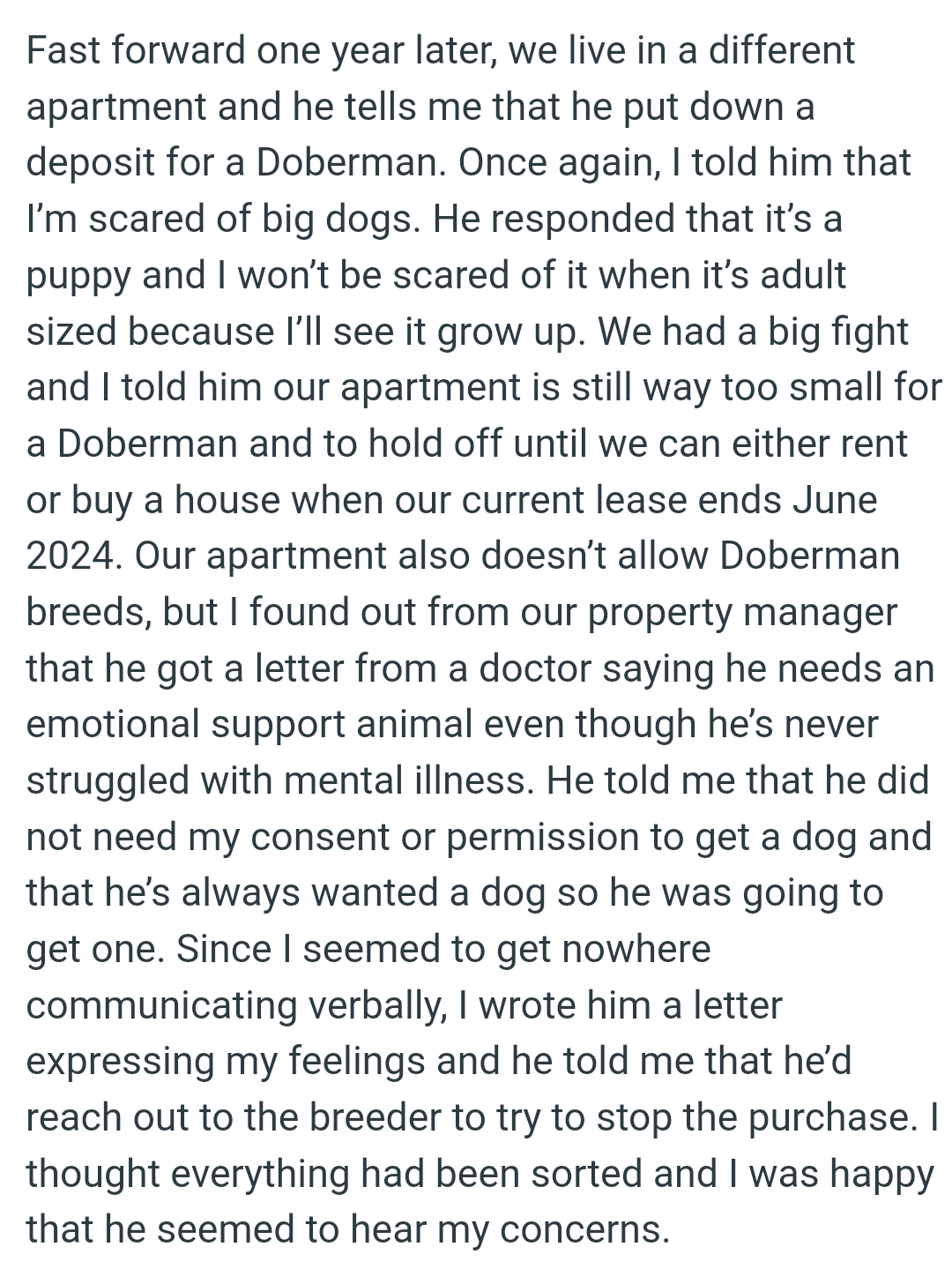
OP’s husband didn’t just bring home a dog, he brought home a Doberman, right after a work trip, with zero warning in their cramped living room.
The article highlights a troubling dynamic in relationships when one partner's behavior exacerbates the other’s fears.
Now the OP wants a divorce
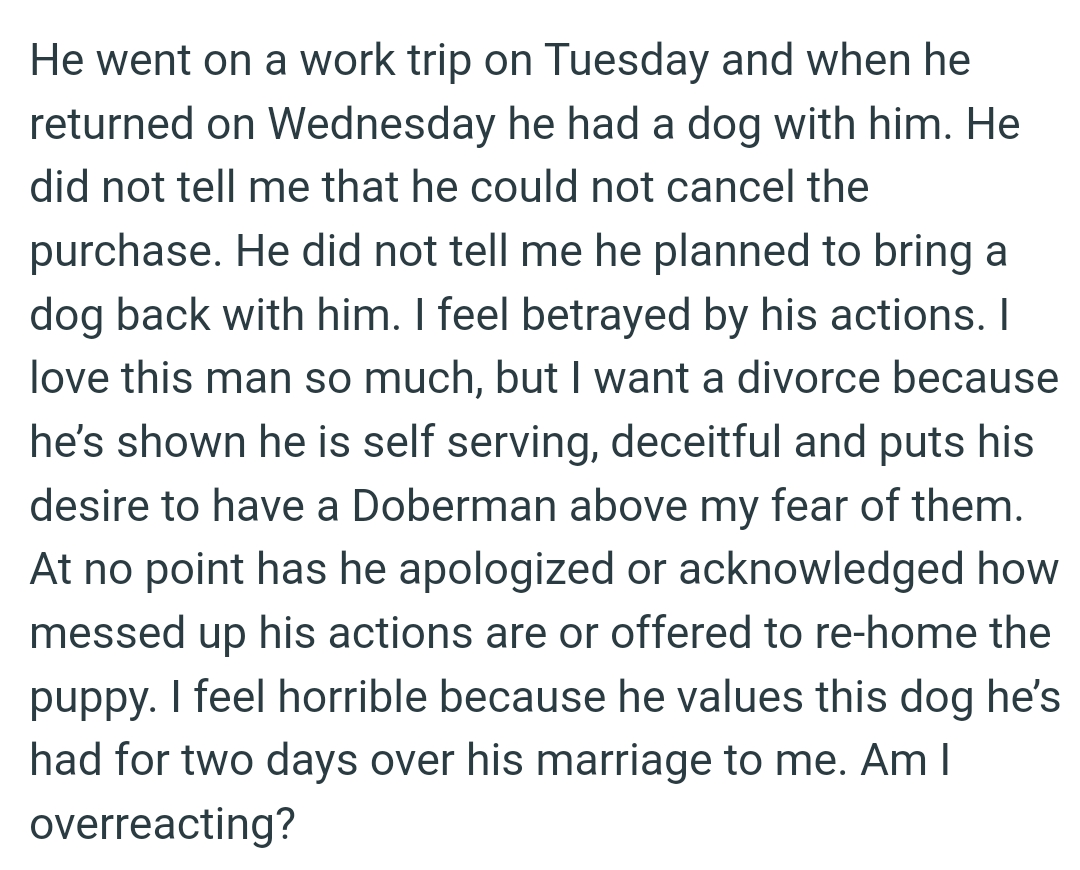
OP provided a summary of her story
I came home from work, and my husband had a Doberman puppy in the living room. He had just returned from a work trip, and I had no idea he would be bringing back a puppy. I’m scared of big dogs, and we live in a small apartment. Two days later, I told him I wanted a divorce.
And the comments roll in...
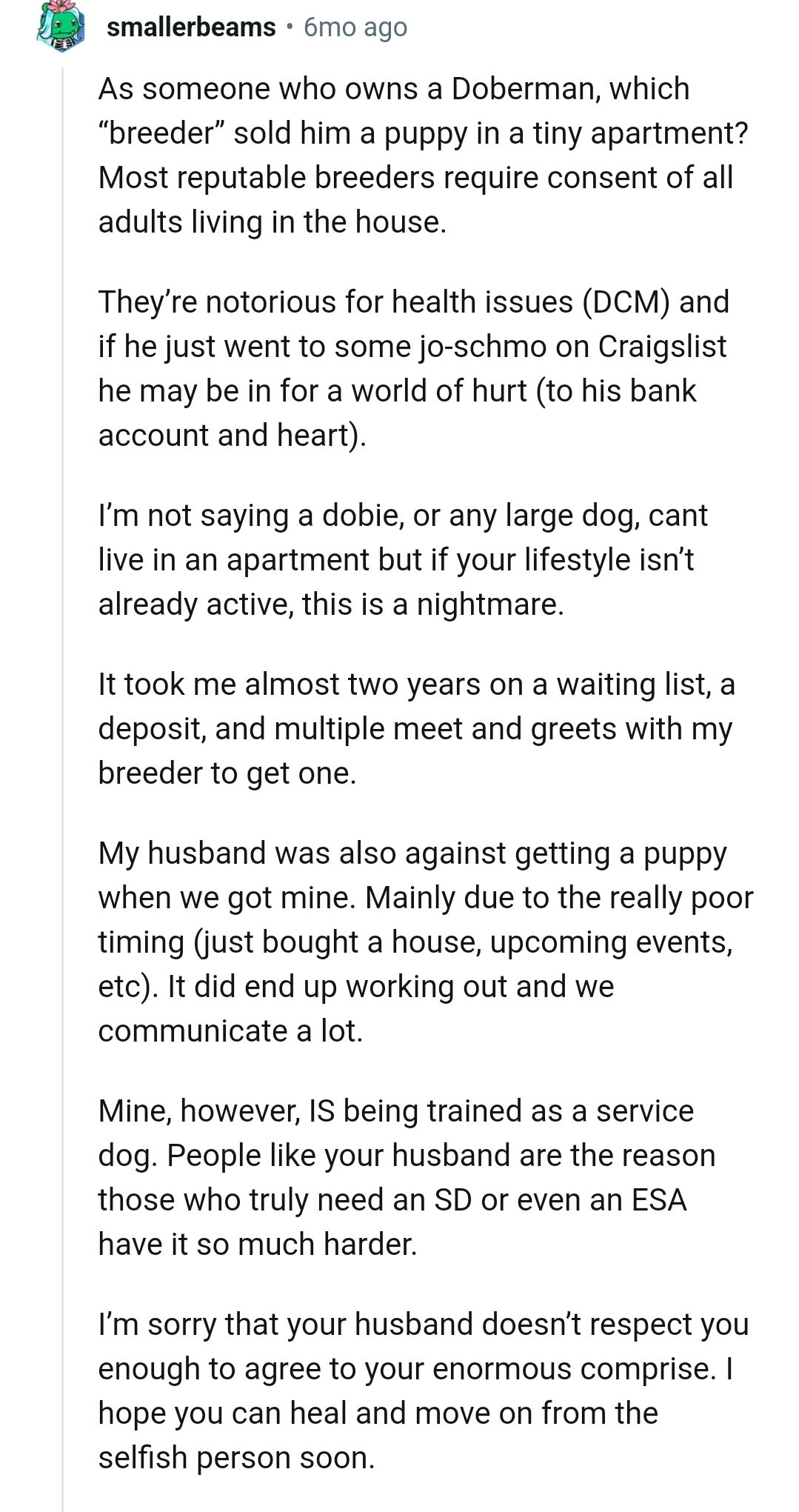
Notorious for health issues
After two days of living with the surprise puppy, OP said she wanted a divorce, and suddenly everyone had opinions about what “compromise” should even look like.
The situation presented in this article highlights a profound disconnect between the couple regarding emotional needs and boundaries.
This also mirrors a man whose wife put her dogs ahead of him and harmed her family.
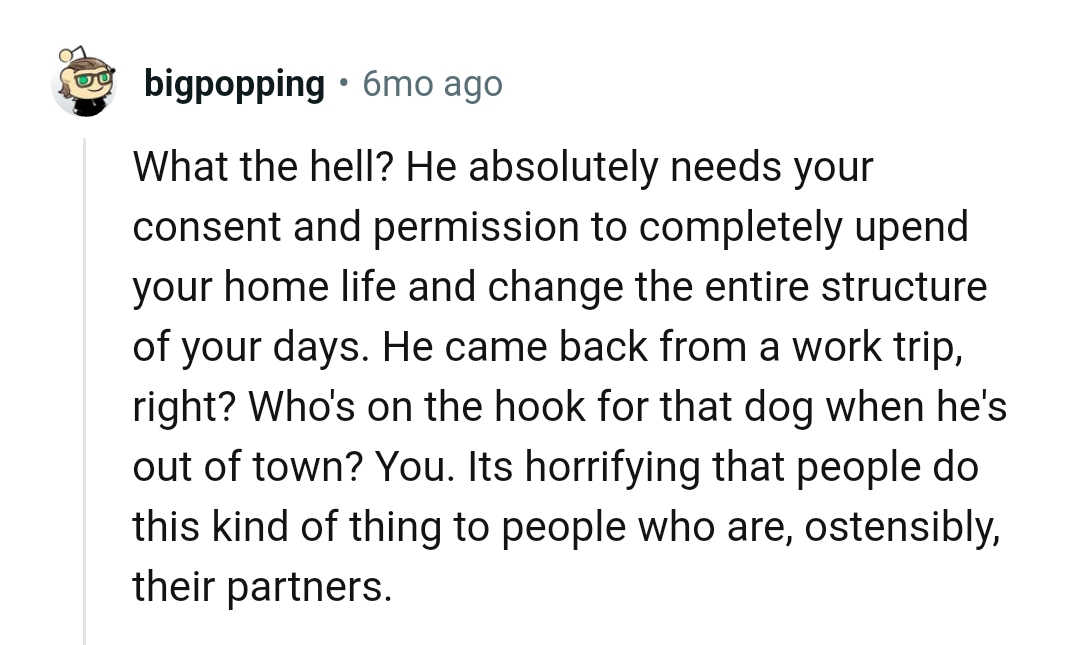
He needs the OP's consent
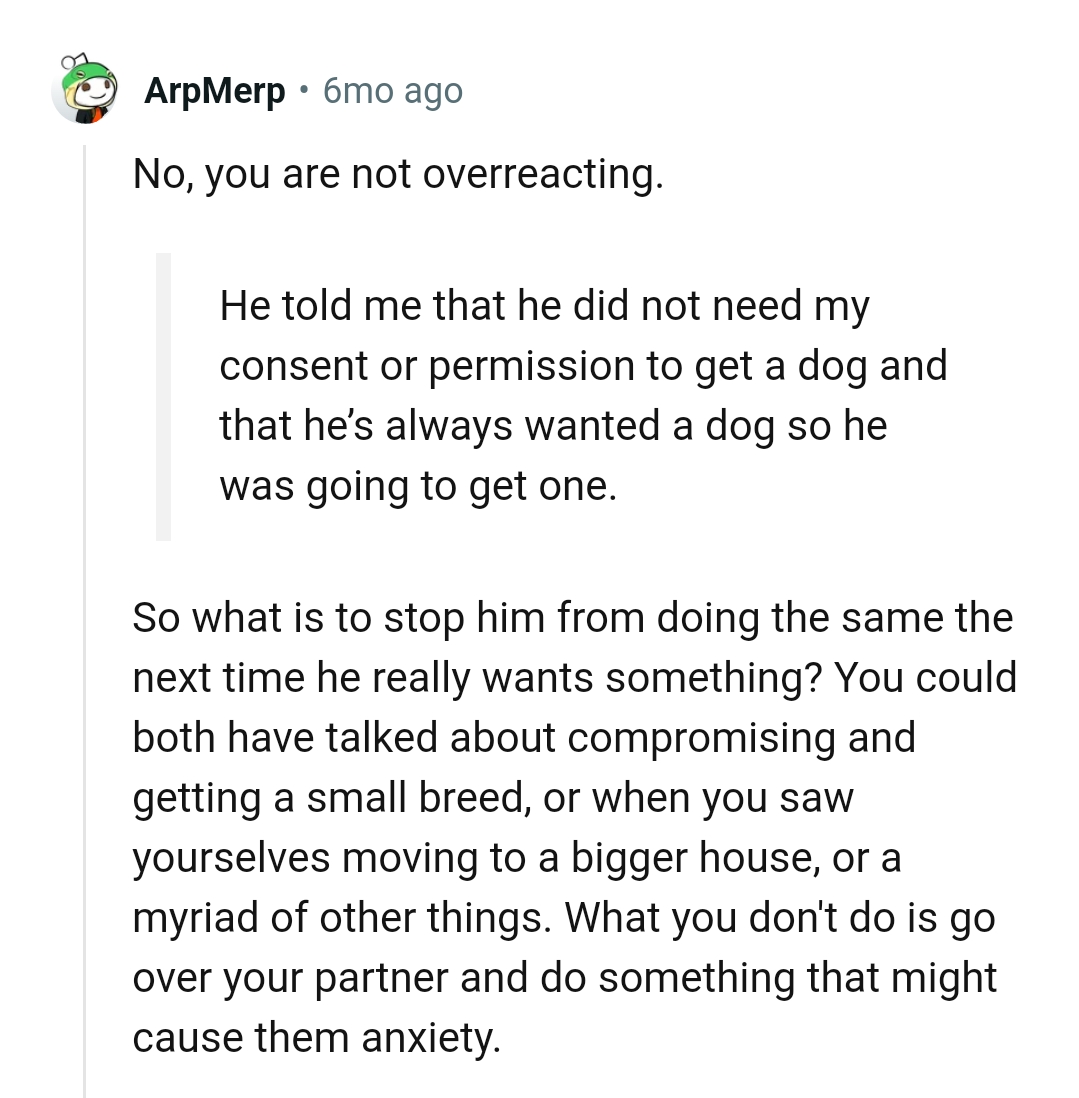
Talking about compromise
The OP addressed this to respond to some comments
I did try to compromise on a smaller breed. He was completely against that. It had to be a Doberman. I also understand that getting a house doesn’t solve my fear, but it would
1. Give the dog a dedicated space to run around and 2. Provide more physical space to roam around the house without the two of us being on top of each other
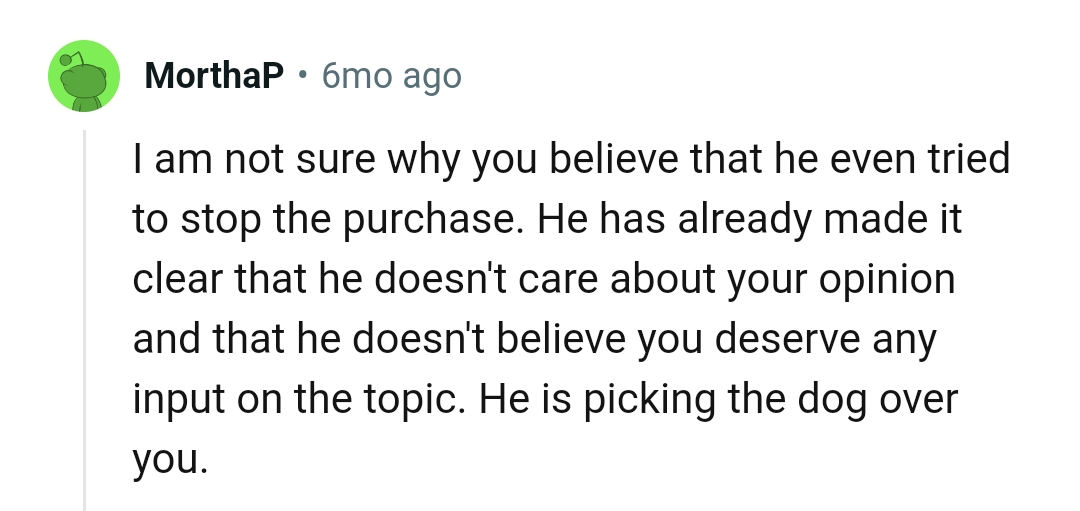
He has no respect for the OP

OP tried to meet him halfway with a smaller breed, but he shut it down, insisting the dog had to be a Doberman no matter how terrified she is.
Exploring Compromise in Relationships
Negotiation is a vital skill in any relationship, especially when partners have differing comfort levels with pets.
Couples who engage in open dialogue about preferences and fears often find creative solutions that respect both partners' needs.
He handled it poorly
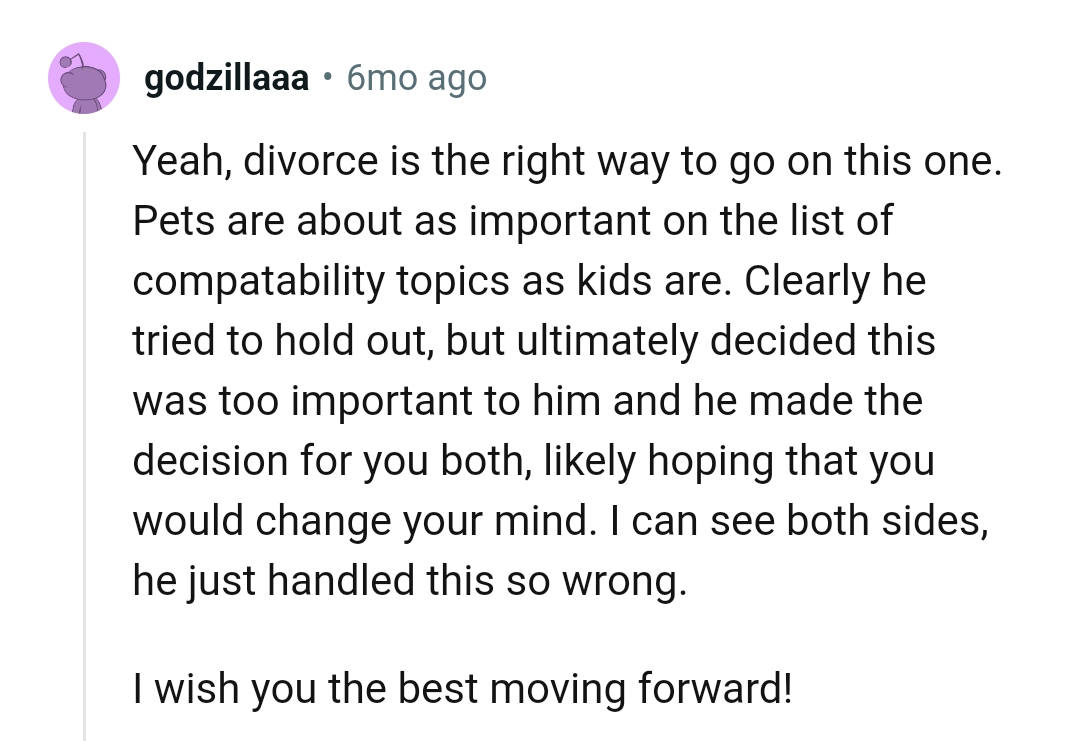
They're both incompatible

The dog needs space to roam

The whole debate boiled down to whether he respected her fear and boundaries, or whether getting a house was supposed to magically fix the problem.
Conflict resolution strategies can also play a significant role in navigating these issues.
If someone wants to own a high-energy working breed, they must be prepared to provide their pet with a strict schedule, especially if they live in an apartment. These breeds are generally quite productive when working with a regular program or timetable because they are accustomed to having a daily task to do.
These dogs begin to exhibit negative, destructive behaviors if their daily needs for energy and mental stimulation are not satisfied. So Redditors hoped OP's husband knew what he signed up for.
Empathy is a cornerstone of healthy relationships, yet it can sometimes falter when faced with differing fears. Emotional awareness is key to maintaining closeness.
The situation described in the article highlights the complexities that arise when one partner's phobia clashes with the other's desires. The husband's repeated decision to bring dogs home, despite knowing his wife's fear, reflects a significant disconnect in their communication and emotional understanding. This conflict underscores the importance of empathy in relationships, as the wife's phobia is not just a minor preference but a genuine source of distress that affects her daily life.
To navigate such challenges, couples must engage in open dialogue that fosters understanding. The husband needs to recognize the emotional weight of his wife's fear, while she may need to express how this issue impacts her sense of safety and comfort within their shared space. This situation calls for both partners to adapt and grow, seeking solutions that honor each other's feelings and create a more harmonious living environment.
Now he’s stuck realizing a puppy can’t replace consent.
For another dog-related threat, see how his fiancée tried to get rid of his dog.
Share this article: