Redditor Fears For Their Child's Safety And Clashes With Parkgoer After Asking Him To Put A Leash On His Golden Retriever

One walk in the park turned into a tense standoff after a Redditor spotted an unleashed golden retriever and immediately worried about their child’s safety. What should have been a simple request to put the dog on a leash quickly escalated into a clash with the dog’s owner, and the whole thing left the parent shaken.
The post, shared on r/AmItheAsshole by u/AnyPercentage1242, centers on a public space, a loose dog, and two people who saw the situation very differently. The Redditor says they felt scared for their son, while the dog owner apparently believed the retriever was harmless.
That disagreement is exactly what set Reddit off.
Here's the original post by Reddit user u/AnyPercentage1242:
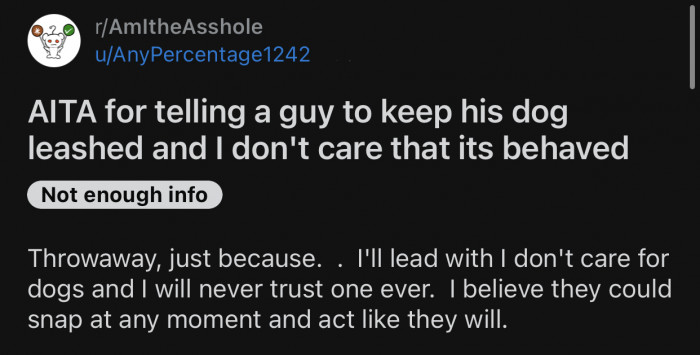
OP never had to deal with this issue before since most dogs are usually leashed.
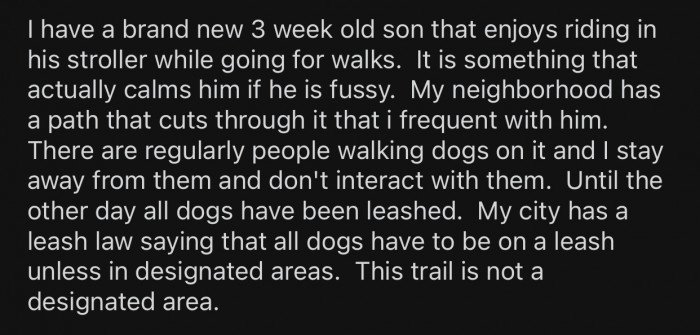
OP eventually came across an unleashed Golden Retriever and feared for their son's life.
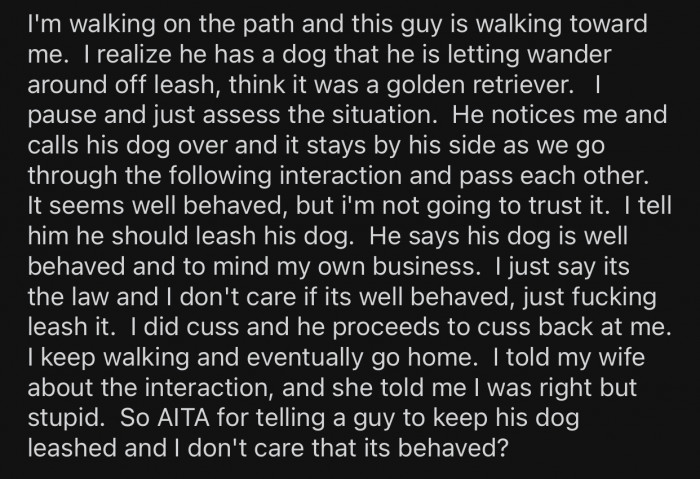
The recent clash between a concerned parent and a parkgoer highlights the tension that can arise in leash-free communities. In a situation where a child’s safety is perceived to be at risk, such as encountering a rambunctious golden retriever, it is understandable that a parent would voice their concerns. However, this protective response can lead to confrontations with dog owners who may prioritize their pets' freedom over others' fears. The incident illustrates the delicate balance that must be navigated in shared public spaces, where the differing priorities of pet owners and parents can sometimes clash dramatically.
In the encounter between the concerned parent and the parkgoer with the unleashed Golden Retriever, fear plays a pivotal role in shaping their interaction. The parent's instinct to prioritize their child's safety understandably stems from their anxiety surrounding dogs, a sentiment that many can relate to. This fear is magnified in public spaces where unleashed animals roam freely, creating a sense of unease for those who may not share the same trust in dogs.
This situation underscores the importance of empathy in navigating such conflicts. Recognizing the parent's apprehension can pave the way for more productive conversations about responsible pet ownership and the need for safety measures in communal areas. When both parties acknowledge each other's perspectives, it fosters a more cooperative environment where both pet owners and parents can find common ground.
Here's how the Reddit community reacted to u/AnyPercentage1242's post:
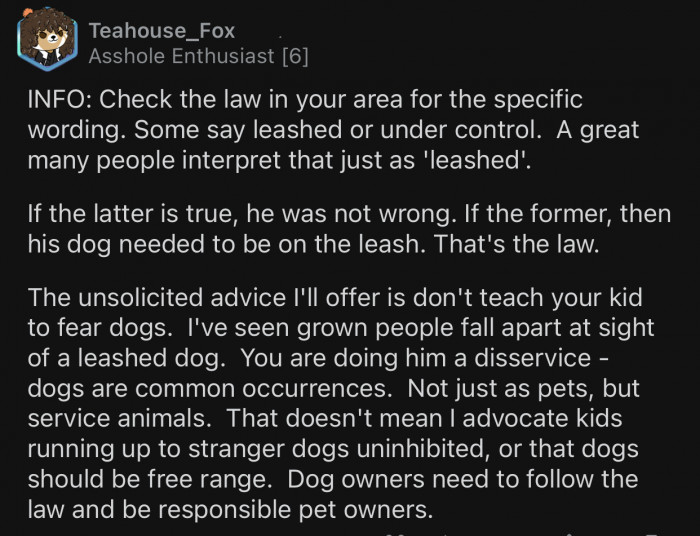
Kids will be taught to fear dogs and distance themselves from them.
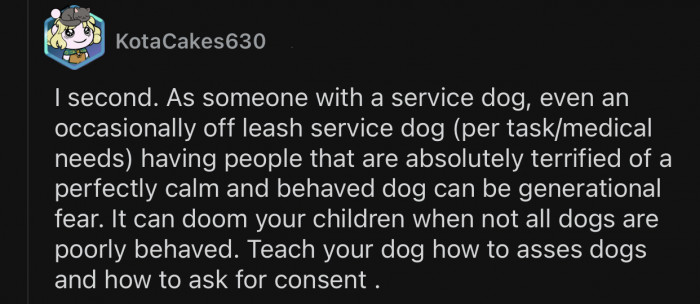
Even if your dog is friendly, it doesn't really matter.
Research shows that parental anxiety can significantly influence children's perceptions of animals.
Social psychology highlights the importance of perceived threat in shaping our responses to others. When individuals feel threatened, whether by a physical presence or an emotional response, it can lead to defensive behaviors. Research suggests that enhancing communication and understanding can significantly reduce feelings of threat and promote healthier interactions.
In this context, fostering dialogue that addresses concerns about safety can help bridge the gap between dog owners and those who may feel uncomfortable around dogs.
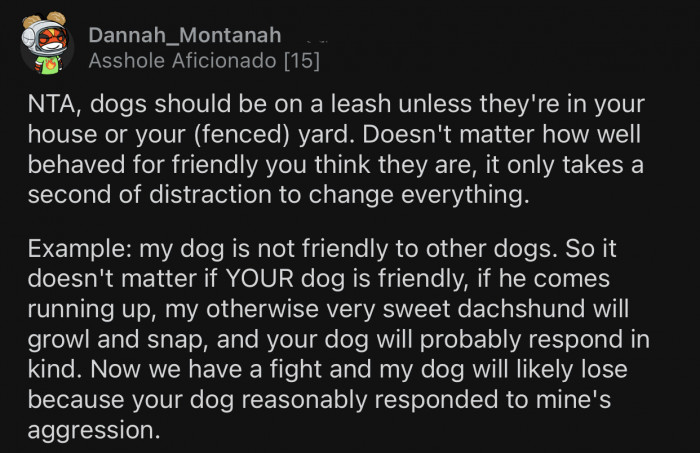
Dogs are sometimes unfriendly and aggressive towards other dogs.
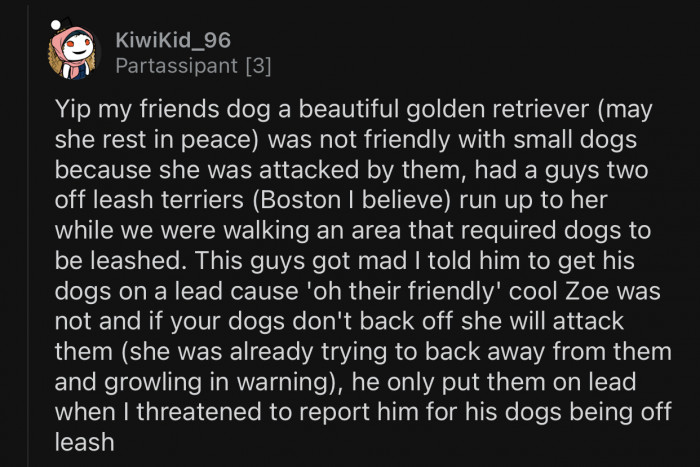
You can never be too sure. Accidents happen.

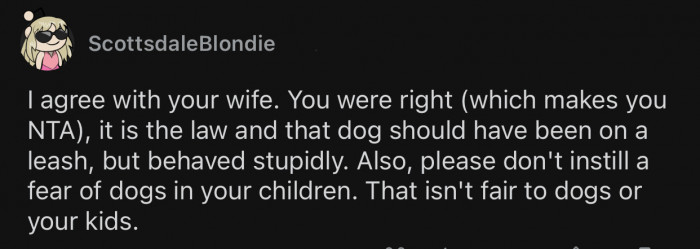
It's not fair to dogs or the future generation.
The Role of Communication in Addressing Fears
Using 'I' statements to express concerns can help reduce defensiveness and promote cooperation.
Engaging in open dialogues can lead to more positive interactions and reduce tension in public spaces.
This also echoes the dog owner using a shock collar instead of a leash, while another owner feared an attack.
Effective Strategies for Managing Fear
Managing fear, especially in public settings, requires understanding and addressing both emotional and cognitive components. Cognitive-behavioral therapy (CBT) techniques have been shown to help individuals reframe their thoughts about fear-inducing situations. Research indicates that gradually exposing individuals to their fears in a controlled manner can help reduce anxiety and improve coping strategies.
In this case, encouraging the individual to engage with dogs in a safe setting may help alleviate their fears over time. Building positive associations with dogs can foster a sense of safety and comfort.
Stupidity is inevitable. You have to take extra precautions to avoid unpleasant situations.
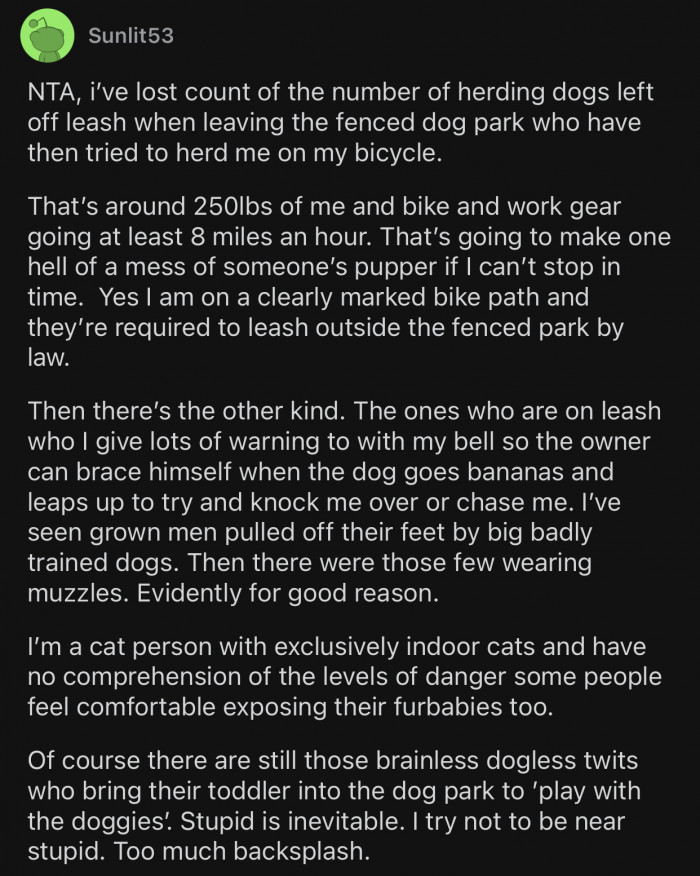
Dogs can sometimes make bad decisions without any prior notice.
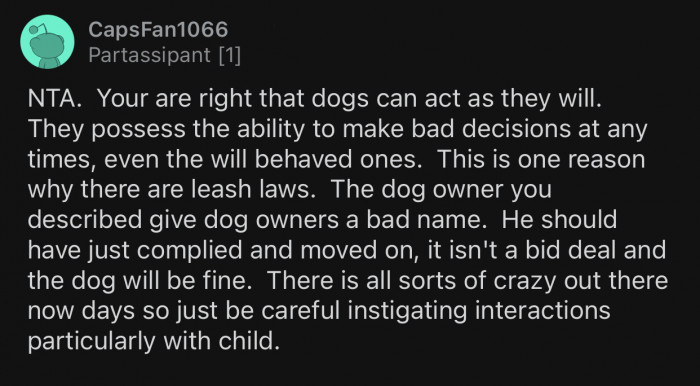
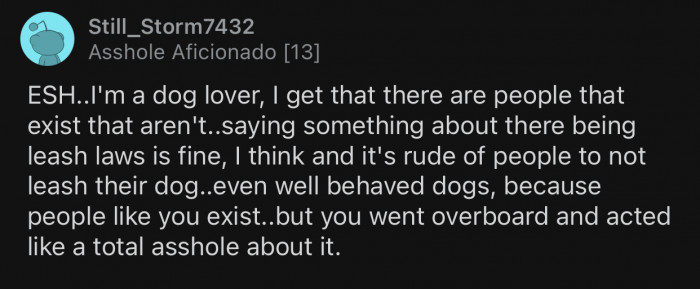
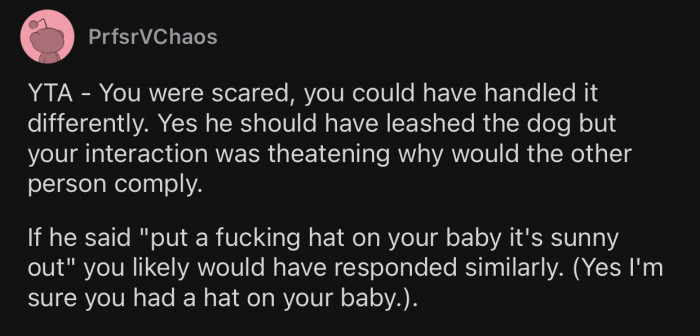
The dog owner was in the wrong, but OP could've dealt with the situation more appropriately.
Studies in social psychology suggest that effective communication can alleviate anxiety and improve relationships between parents and dog owners.
By expressing fears openly, parents can create an environment that fosters empathy and cooperation.
Working toward mutual understanding can lead to safer interactions for both children and pets.
Conflict resolution in situations involving fear and anxiety often requires patience and empathy.
That should have been more than enough.
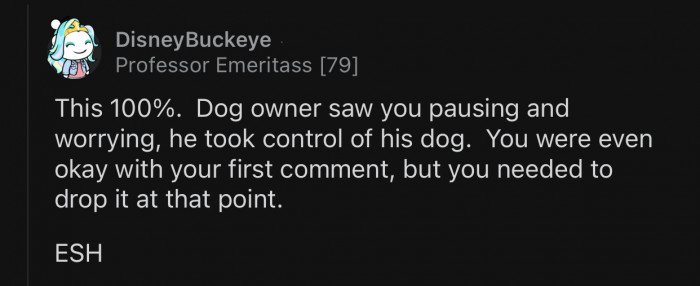
The approach was not pleasant.
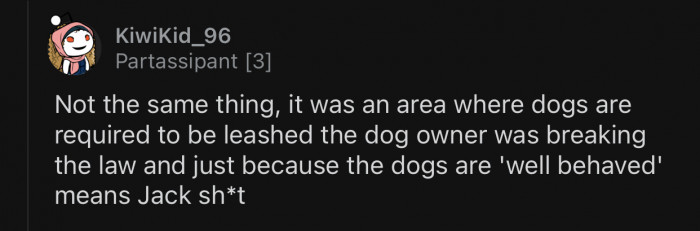
The dog owner was breaking the law. Period.
Building Confidence Around Dogs
Helping children build confidence around dogs involves gradual exposure and positive reinforcement.
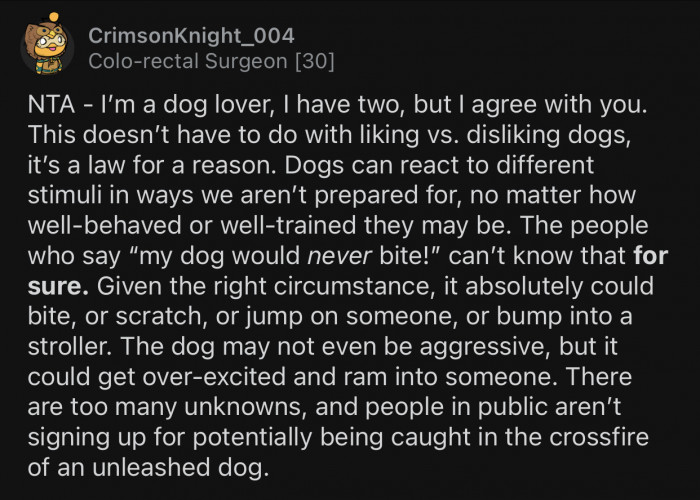
There is a law for a reason.
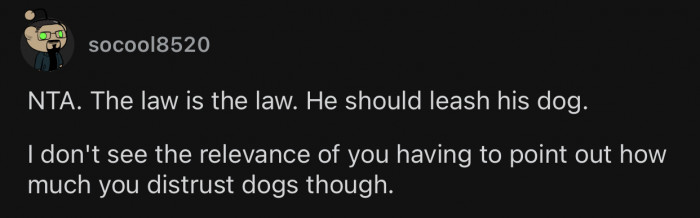
We get it. You don't trust dogs.
If it's growling and snapping, it's not really that friendly.
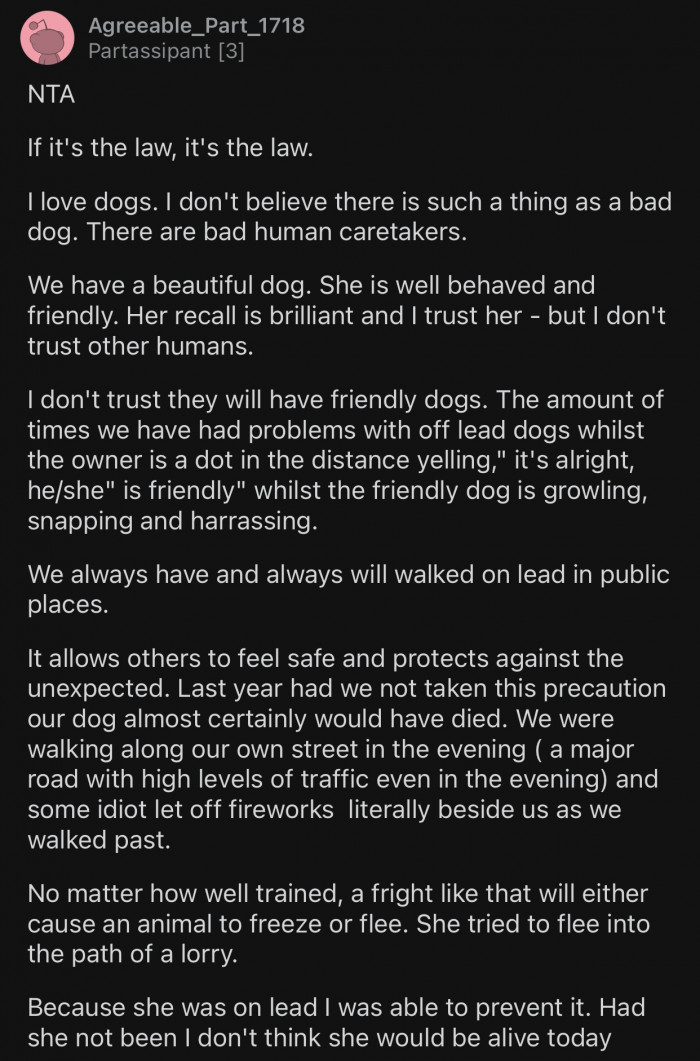
It's safer for the dog and everyone else.
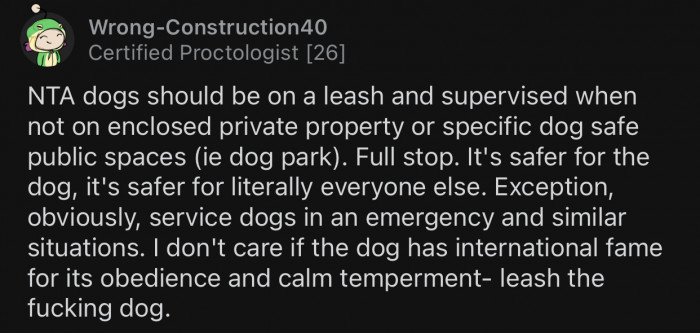
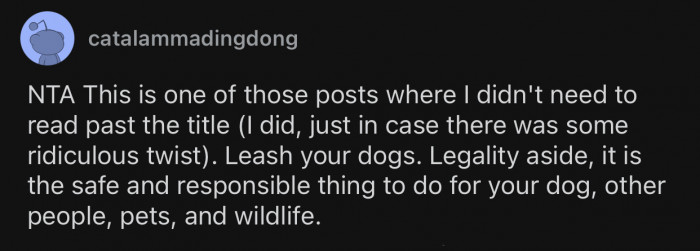
It's the responsible thing to do, even if your dog is friendly.
OP should have a friendlier approach next time.
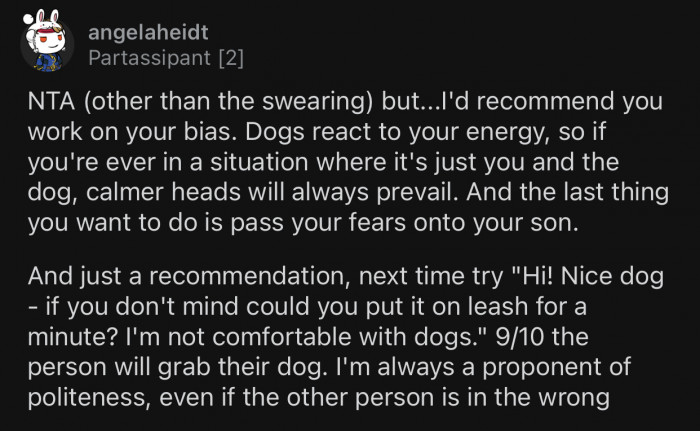
OP had every right to fear for the safety of their child. However, they could have approached the situation in a more pleasant manner, and that stranger might have cooperated.
The dog owner broke the law and should have leashed his dog to prevent issues of this sort. If your actions make people uncomfortable, then you should probably reconsider them.
In this situation, the clash between the concerned parent and the dog owner highlights the complexities of pet ownership and community safety. When a parent feels their child's safety is at risk, as demonstrated by the Redditor's plea for the dog to be leashed, it underscores a fundamental need for understanding and respect among parkgoers. The article illustrates how the perception of a threat can escalate tensions, especially when the dog owner is confident in their pet’s behavior. Promoting open communication and empathy is crucial in these encounters, as it allows for a shared understanding of safety concerns while fostering a sense of community. By encouraging dialogue, both dog owners and parents can work together to ensure that public spaces remain safe and enjoyable for all.
The situation involving the Redditor's request for a leash highlights the complex interplay between fear and trust in public settings. Parents naturally prioritize their children's safety, and this instinct often clashes with the relaxed attitudes of dog owners who believe their pets are well-behaved without restraints. This scenario illustrates the need for better communication strategies. By fostering open dialogues, parents might better express their concerns, while dog owners could gain insight into the apprehensions that accompany children’s encounters with dogs.
Moreover, the article emphasizes the importance of creating a community that values empathy. Encouraging understanding between parents and dog owners can bridge the gap of fear, leading to a more harmonious environment in shared spaces like parks. Ultimately, as more families engage in these conversations, it may pave the way for increased safety and comfort for both children and pets alike.
Want the same kind of confrontation, see the dad who dropped an F-bomb on a pet owner.
Share this article: