Striking Bird With A Clownlike Appearance That Is Sure To Make Your Heads Turn

Some birds are memorable for their song, and others stand out because they look like they walked straight out of a costume party. This chestnut-breasted malkoha falls firmly into the second group, with a bright red face, pale eyes, and a look that makes it seem permanently surprised.
It is often compared to a rooster or even a tiny jester, but its quirks go beyond appearance. Unlike many cuckoo species, it does not rely on brood parasitism, it builds its own nest and raises its own young, which makes this odd little bird even more interesting.
Found across parts of Southeast Asia, this species has been known to birdwatchers for centuries. Read on for a closer look at the clownlike bird that keeps turning heads.
Meet The Chestnut-Breasted Malkoha
The bird with a fun clown-like appearance.
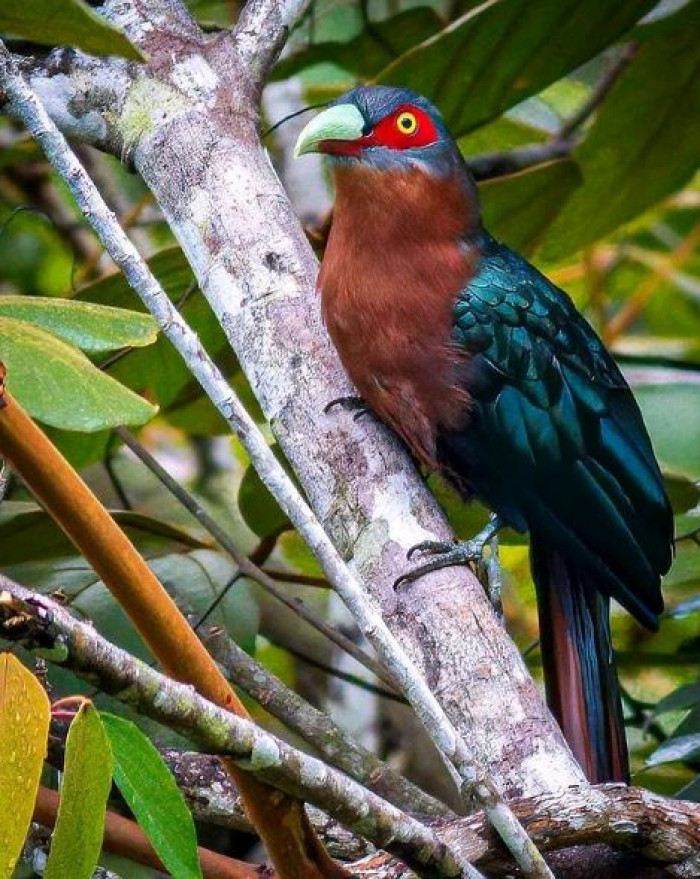
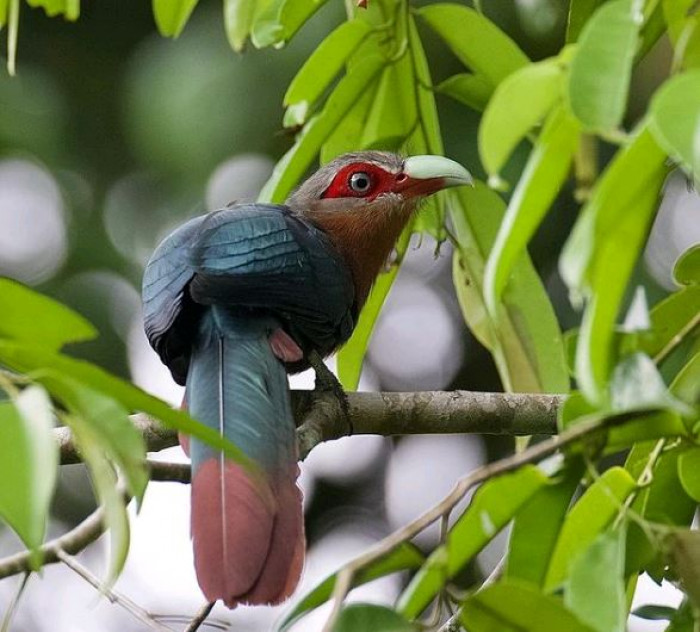
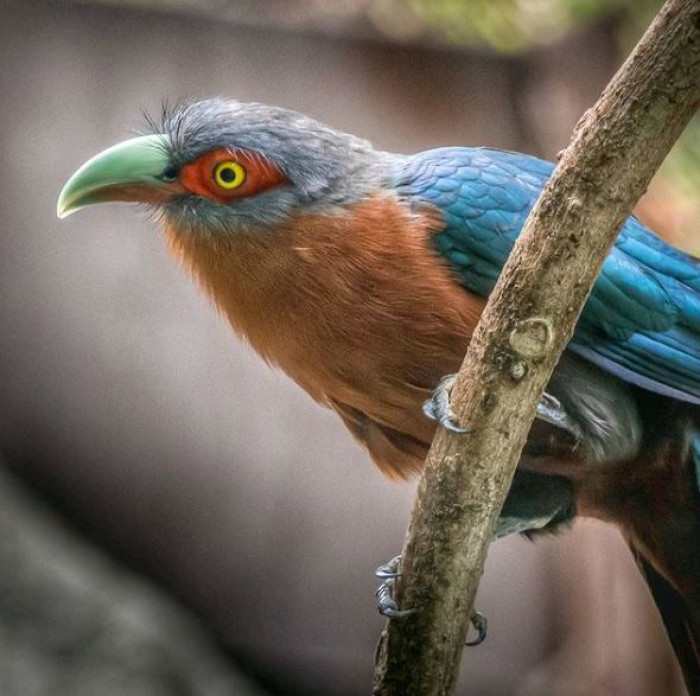
The chestnut-breasted malkoha (Phaenicophaeus curvirostris) is a species of cuckoo characterized by its bright red face and enticing pale eyes, with equally pale upper and red lower mandibles that contribute to its clown-like appearance. Its wings have a dark glossy green finish, accompanied by a rich chestnut-brown chest, hence its name.
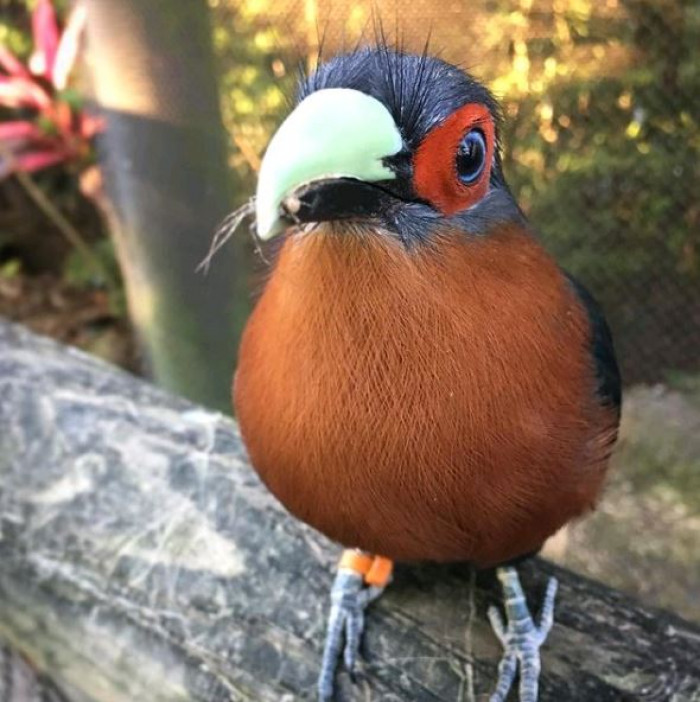
It usually measures 42-49 centimeters in length. It features a large and curved pale yellow upper mandible with a darker red lower mandible.
It also has a bare red patch of rough skin around its eyes, which highlights its extraordinary appearance. Its head is grey, and its wings fade to blue from green as it matures.
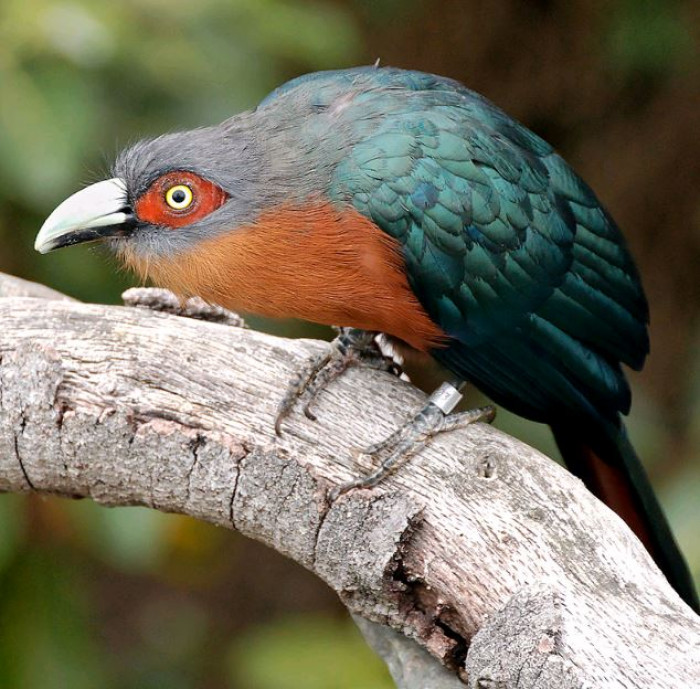
Its underparts are colored chestnut, with its feet dark grey.
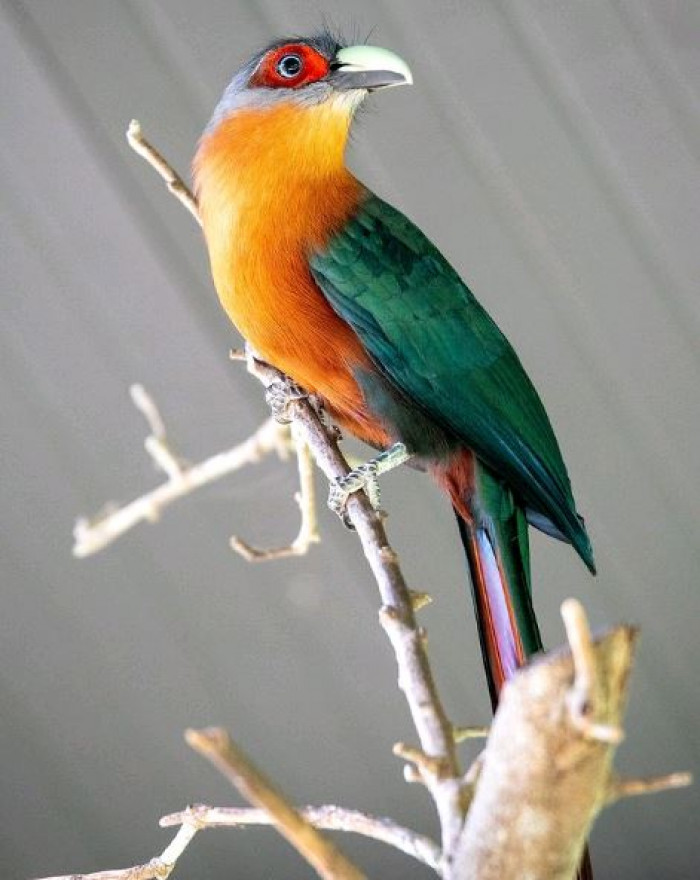
That devil-red eye stare is the same kind of “run for cover” energy as the Stygian owl’s reflected, red reflected eyes.
Females are quite similar to males; however, males have a pale blue iris while females have yellow.
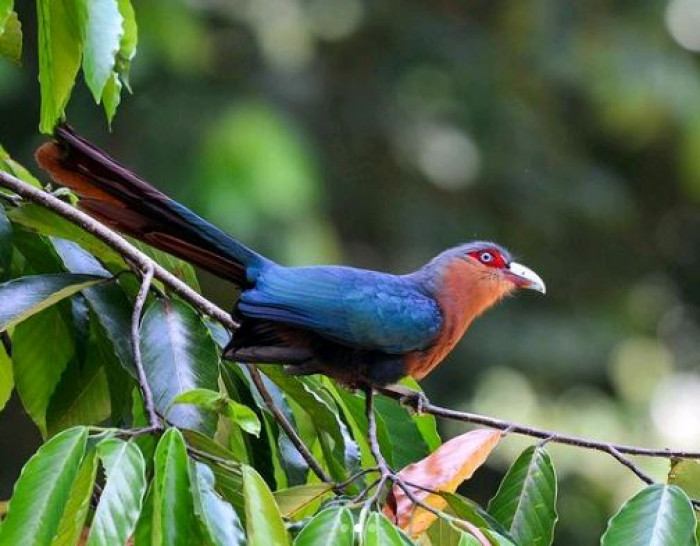
The chestnut-breasted malkoha is endemic to Thailand, Myanmar, Borneo, Sumatra, Java, Bali, Indonesia, and the islands of Palawan in the Philippines. They are usually found beneath tropical forests, mangroves, dry tropical scrublands, secondary-growth forests, rural gardens, and plantations.
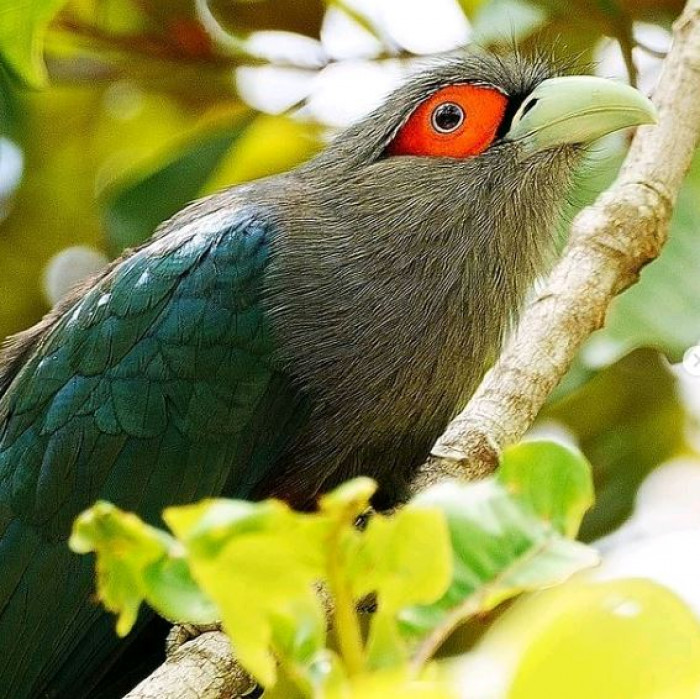
They enjoy feeding on insects, such as caterpillars, grasshoppers, cicadas, cockroaches, beetles, and spiders. They may also occasionally eat lizards, frogs, crabs, and even young birds.
Unlike most species in the cuckoo family, the chestnut-breasted malkoha actually raises its own young and isn't predatory towards other nests. The nest is built through the cooperation of both parents, formed with a bowl of branches, twigs, and leaves.
This species is quite common even at present, and there is no record of any declines or substantial threats to classify its existence as endangered.
Check out the chestnut-breasted malkoha in action!
This bird certainly has the "it" factor, and it is truly evident with its unusual yet striking appearance that you couldn't easily ignore. Isn't it just extraordinarily and weirdly charming?
Comment with your thoughts, or share these lovely photos with your family and friends, especially the bird-loving ones!
For more camouflage drama, check out the Malabar giant squirrel’s patchy colors that help it avoid detection.
Share this article: