
Redditor Requested Payment From Sister For Taking 4 Days Off To Care For Her Puppies

Some people don’t recognize a favor, they recognize an open calendar. That’s exactly what happened when one Redditor was asked to take four days off work to cover her sister’s pet emergency, aka two puppies that needed watching.
OP’s sister expected her to step in for two dogs for almost a whole workweek, no trade, no discussion, just a straight-up request. OP felt stuck between family loyalty and the very real cost of losing paid time, especially when she wasn’t sure if asking for payment would make her the “bad sister.”
And once OP pushed back, the whole sibling dynamic turned into the real storyline.
Taking time off to work to take care of someone else's puppies is certainly a huge ask.

Original Post
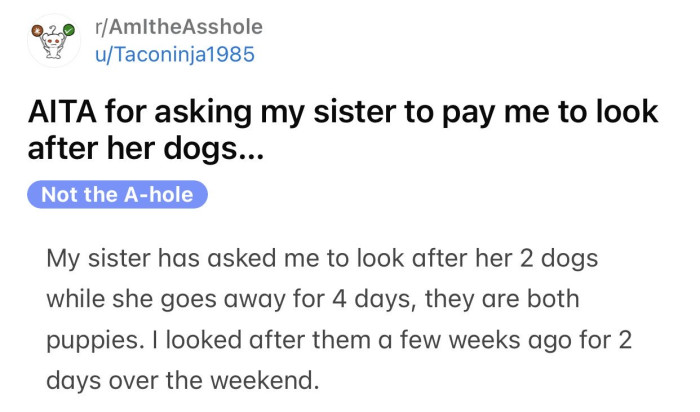
OP's sister expected her to take 4 days off work to take care of her 2 dogs.
The Emotional Burden of Caregiving
Taking care of pets can evoke a complex emotional landscape for caregivers.
Understanding the psychological impact of pet ownership can help clarify the stakes involved in caregiving situations.
The situation involving the Redditor asking for payment from their sister for taking time off to care for her puppies underscores the emotional complexities of caregiving. While the act of caring for pets can bring a sense of fulfillment and purpose, it also carries the risk of emotional burnout, particularly when the caregiver feels taken for granted.
This scenario illustrates the delicate balance that pet owners must navigate between their responsibilities to their furry companions and their own well-being.
OP felt unsure whether it was fair for her to ask for payment since the favor was for her sister.

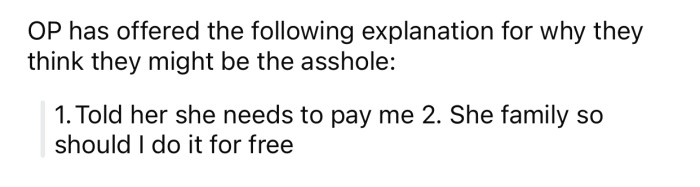
OP thinks she might potentially be the a-hole for the following reason:
Here's how the Reddit community reacted to u/Taconinja1985's post:
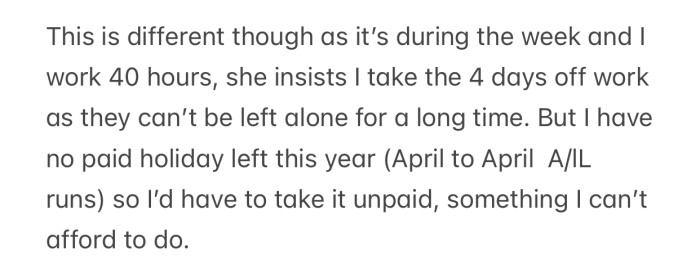
OP didn’t just watch the puppies, she had to give up four days of work because her sister assumed the favor would be automatic.
Social psychology highlights the phenomenon of 'social exchange theory,' which posits that people assess relationships based on perceived costs and benefits. This theory can apply to the situation where one sibling feels entitled to compensation for caring for another sibling's pets.
Research indicates that when individuals perceive a lack of reciprocity, resentment can breed, affecting the quality of the relationship.
Open discussions about expectations can alleviate tension and foster a more collaborative caregiving environment.
From a psychological standpoint, the expectation of payment for caregiving reflects deeper issues of boundary-setting and value in relationships.
Studies suggest that when boundaries are unclear, individuals may feel resentful, leading to conflicts and misunderstandings.
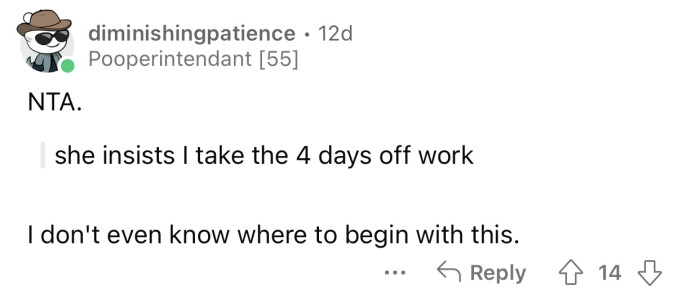
The puppies are the sister's responsibility, and she shouldn't dump that on someone else.

That's a ridiculous and enormous ask.

OP's sister looked after her son before, so she felt her favor was justified.

The awkward part is OP kept wondering if it was “fair” to charge her sister, even though the dogs were her sister’s responsibility.
Caregivers should practice saying no when necessary and offer alternatives, ensuring that their well-being is prioritized while still supporting loved ones.
When one party feels they are giving significantly more than the other, resentment can build, leading to conflict.
This principle emphasizes the importance of open dialogue about needs and expectations in familial relationships.
OP needs money to take care of her son, and she will miss out on it by taking time off.
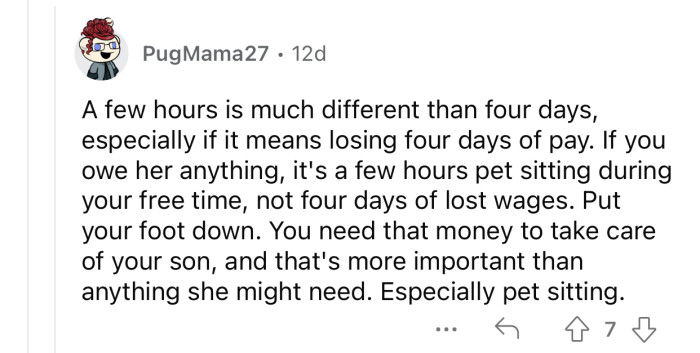
OP's sister can always hire a professional pet sitter.
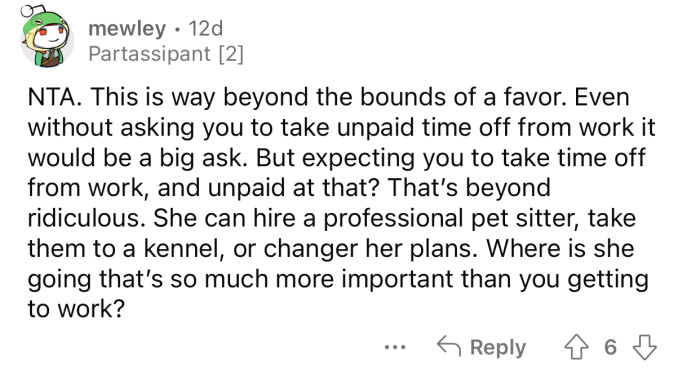
The reason why OP's sister wants her to take time off isn't good enough.

The situation presented in the article highlights the complexities of pet ownership and the emotional responsibilities that come with it. Caring for pets can provide significant mental health benefits, offering companionship and emotional support that many individuals rely on during tough times. However, when unexpected circumstances arise—like needing someone to step in for pet care—the emotional stakes can become complicated. The bond between a pet and its owner fosters a sense of responsibility, which can lead to tension when that care is delegated to others, such as family members. Understanding these emotional ties is crucial for siblings involved in such scenarios, as it underscores the importance of empathy and support in familial relationships, especially when pets are considered part of the family.
This is the same kind of family fallout as when the Redditor refused to keep helping her sister’s dogs after three years, then got labeled selfish.
Psychologists emphasize that discussing financial aspects of caregiving doesn't have to be a taboo subject.
If this is a recurring problem, the sister needs to find a more permanent solution.
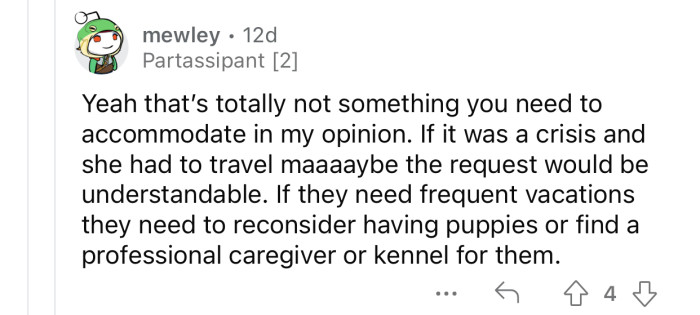
Some people are allowed to bring their pets along while working.
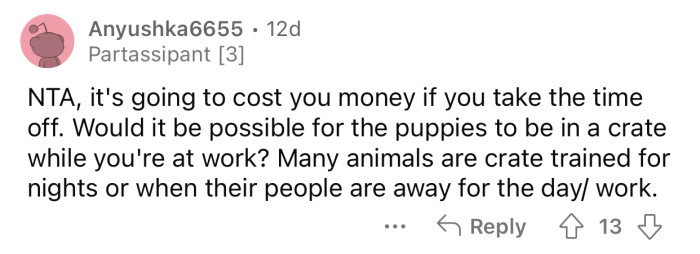
The sister refuses the alternative solutions OP offered.

That’s when the Reddit discussion kicked in, because people started weighing whether OP was setting boundaries or being petty about time off.
Negotiating Caregiving Responsibilities
When it comes to negotiating caregiving roles, collaboration is key to enhancing relationship satisfaction.
Self-Care for Caregivers
Caregivers often neglect their own needs, leading to stress and burnout.
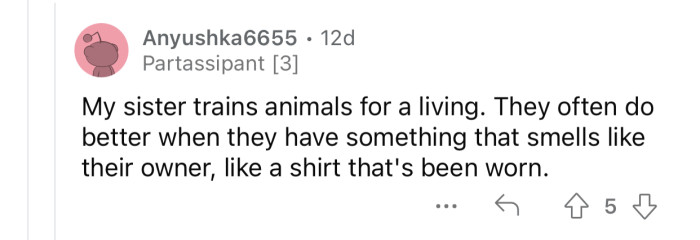
Pets feel more comfortable when they can smell their owners.
It's extremely important for dogs to socialize with their peers.

It's an insane request, and the sister should reevaluate what she constitutes as a reasonable favor.

Emotional intelligence plays a critical role in managing caregiving dynamics. Research published in the International Journal of Environmental Research and Public Health indicates that those with higher emotional intelligence are better equipped to navigate stress and communicate effectively.
Building these skills can help caregivers articulate their needs and feelings more clearly, aiding in conflict resolution.
Engaging in workshops or reading materials on emotional intelligence can be beneficial for both parties involved.
By the time commenters were debating reciprocity and resentment, OP’s sister’s original “just take the days” request was doing all the damage.
Research from the Journal of Family Psychology reveals that unaddressed caregiver resentment can lead to long-term relational damage.
By prioritizing open communication about needs and feelings, caregivers can avoid these pitfalls.
Simple practices like regular family meetings can facilitate this dialogue.
One's livelihood should be prioritized over everything.
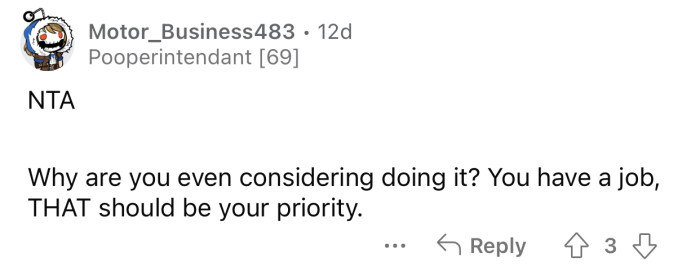
It's ridiculous to ask something that major.

The sister can always hire someone to take on that role.

Effective communication is vital in any caregiving relationship.
Encouraging open dialogue about responsibilities can foster a more supportive environment, allowing everyone to express their needs and limitations.
Seeking Professional Support
Therapists often recommend that caregivers seek support from professionals to help navigate complex family dynamics.
Expecting someone to take unpaid time off work to take care of your dogs is downright absurd. OP's sister needs to lower her expectations and stop trying to dump her responsibilities on her sister.
If you enjoyed reading this, make sure to check out similar content on our platform.
Ultimately, caregivers must recognize the importance of their own well-being in order to provide effective care for others.
The situation surrounding the Redditor's request for payment from their sister for caring for her puppies highlights the intricate dynamics of caregiving within family relationships. This incident underscores the emotional complexities that arise when responsibilities are shared among family members, particularly when pets are involved. The Redditor's insistence on compensation reflects a need for recognition of the time and effort involved in pet care, while also hinting at the potential for misunderstandings that can arise in familial obligations.
This case serves as a reminder that fostering open communication about caregiving responsibilities can lead to healthier family interactions. It emphasizes the importance of acknowledging each other's contributions and the necessity of self-care in maintaining both personal well-being and harmonious relationships.
The situation presented in the article highlights the intricate dynamics of caregiving, especially when it involves family and pets. The Redditor’s request for payment from their sister for caring for her puppies for four days underscores the often-overlooked emotional and financial responsibilities tied to pet ownership. This scenario serves as a reminder that while furry friends bring joy, they also demand a level of commitment that can strain relationships if not addressed openly. By recognizing the emotional stakes involved, families can foster an atmosphere of mutual respect that honors the needs of both pets and caregivers. In this case, effective communication and emotional understanding are not just beneficial; they are essential for maintaining harmony within the family unit while ensuring the well-being of the pets involved.
Nobody wants to lose four workdays for free, especially when it’s their sister calling the shots.
Want the next twist, where a sister demanded dog-sitting pay for eight weeks? That Redditor asked if she was wrong for expecting payment.
Share this article:





