Woman Gets Back At Cheating Ex By Messing Up His Stuff And Claims A Stray Cat Did It, But Reddit Users Aren't Buying It

A 28-year-old woman didn’t just leave her cheating ex’s place, she went out of her way to leave a mess behind, then blamed it on a stray cat. The whole thing reads like petty revenge fan fiction, except it’s happening in real life and Reddit users are side-eyeing every detail. But when she started taking her stuff from his apartment, she says she found a cat outside his sliding door, and that’s where her story gets convenient. The messy part is the timing, the attitude, and the way the blame magically lands on the one animal nobody can question.
Here’s the full story, and Reddit is not buying the cat excuse.
The original poster kicks off the story but first, the title

The OP starts by saying that this was an honest mistake and she promises that she has grown from this experience

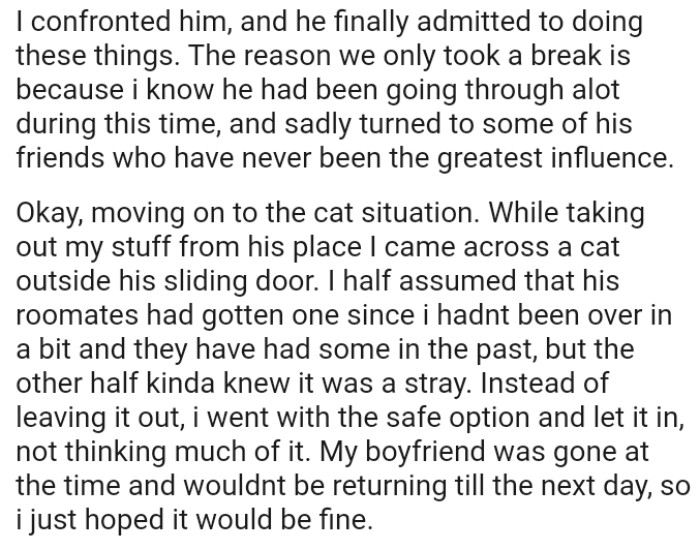
While taking out her stuff from his place, she came across a cat outside his sliding door
The tale of a woman seeking revenge on her cheating ex highlights the complex emotions that often accompany betrayal. While many might see her actions as a way to reclaim power, it is essential to recognize that such behavior can lead to unintended fallout. The article reveals how the woman cleverly deflected blame onto a stray cat, which speaks to the lengths people will go to justify their actions. However, this tactic may not provide the fulfillment she seeks. Instead of achieving closure, engaging in revenge could deepen the emotional wounds and perpetuate a cycle of conflict.
Moreover, the broader implications of revenge are significant. This situation serves as a reminder that while the desire for retribution can feel justified, it often leads to more harm than healing. Recognizing these patterns is crucial for anyone grappling with similar feelings, as healthier coping mechanisms are essential for maintaining relationships and personal well-being.
This situation illustrates a common response to betrayal known as revenge-seeking behavior. This tendency can be understood as an emotional response to perceived injustice, where individuals feel compelled to 'level the playing field.'
Understanding the psychological underpinnings of revenge can help individuals recognize that these feelings, while natural, often perpetuate a cycle of negativity and conflict.
The OP kicks off with the “I messed up, I learned” speech, but the cheating ex’s apartment is where the vibe flips fast.
The emotional turmoil that follows infidelity is palpable, as seen in the woman's response to her cheating ex. The article highlights how feelings of betrayal can spiral into a whirlpool of anger and sadness, prompting individuals to seek revenge. In this case, the woman's choice to "mess up" her ex's belongings suggests a deeper struggle with the violation of trust. This reaction points to the complex human emotions that often accompany such heartbreak, illustrating how the aftermath of betrayal can lead to impulsive behaviors that may ultimately worsen the situation. Rather than finding constructive outlets for her pain, she resorts to a tactic that not only reflects her distress but also complicates her narrative by claiming a stray cat was responsible. This misdirection indicates a desire to distance herself from the destructive actions while simultaneously showcasing the lengths to which individuals will go when grappling with their emotions.
The story of a woman seeking revenge on her cheating ex by claiming a stray cat was responsible for the destruction of his belongings reflects a complex emotional landscape. The impulsive nature of her actions underscores how deeply feelings of hurt and betrayal can drive individuals to reclaim a sense of power. While the act may seem humorous on the surface, it reveals a deeper truth about how unresolved emotions can lead to decisions that complicate one's life further. The narrative serves as a cautionary tale about the importance of managing emotional responses in a constructive manner, rather than resorting to actions that may bring temporary satisfaction but ultimately lead to greater distress.
OP began getting multiple texts from his friends and close family, telling her that what she did was wrong

OP has offered the following explanation for why they think they might be the a-hole:
The action I took is letting a stray cat into my ex boyfriends room, and this might make me the asshole because the cat ended up breaking a few items in his room.
Here are some of the most upvoted comments from other Redditors for you to read through below
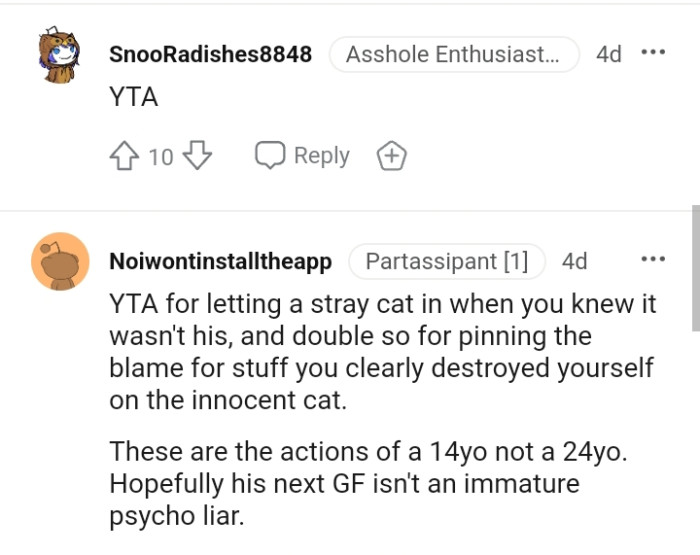
They don't just tear up crap that's lying around

Moreover, the concept of cognitive dissonance plays a significant role in how individuals justify their actions.
Recognizing these underlying emotions can help individuals address their feelings more constructively, reducing the urge to seek revenge and instead focusing on healing.
That’s when she says she spotted a cat outside the sliding door, and suddenly the “stray” is doing heavy lifting in her explanation.
Research published in the Journal of Marriage and Family indicates that individuals who experience infidelity often report feelings of inadequacy and self-doubt, which can fuel further negative behaviors.
Understanding this emotional landscape is crucial for individuals seeking to navigate the aftermath of betrayal.
This situation reflects a common struggle with emotional dysregulation, where individuals act out of intense feelings without considering the consequences.
Practicing emotional awareness can help individuals recognize triggers and choose healthier responses.
This is similar to a girlfriend dealing with her boyfriend kicking a cat, right on her leg.
It's not something many people would be a fan of their partner doing

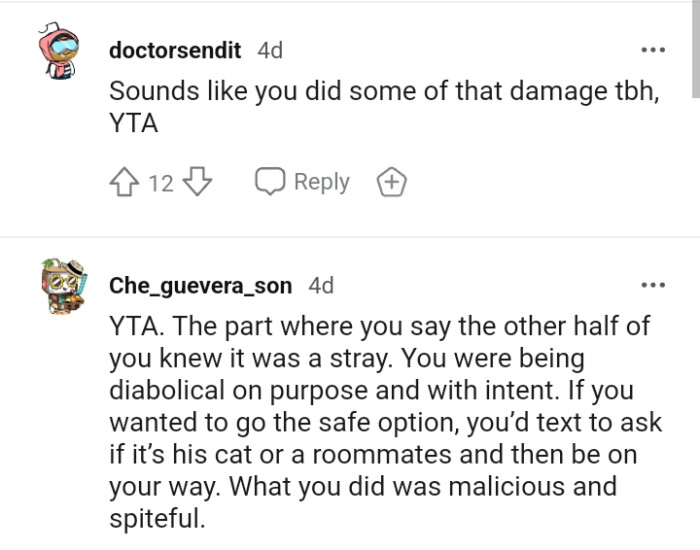
This Redditor believes that the OP was malicious

The OP were being diabolical on purpose and with intent
Practical Alternatives to Revenge
To break the cycle of revenge, individuals can explore healthier coping strategies, such as engaging in creative outlets or seeking support from friends. Activities like journaling or art can provide a constructive release for pent-up emotions. Research in the Journal of Positive Psychology suggests that creative expression can lead to emotional healing and resilience.
Additionally, mindfulness practices can help individuals process their feelings without resorting to harmful behaviors, allowing for reflection and emotional growth.
The Cycle of Negative Emotions
Engaging in revenge can create a vicious cycle of negative emotions that impact not only the individual but also their social relationships. Research indicates that retaliatory actions can exacerbate feelings of guilt and shame, leading to further emotional distress. A study published in the Journal of Conflict Resolution emphasizes that unresolved negative emotions can hinder personal growth and relational harmony.
To break this cycle, individuals must actively engage in emotional processing and self-reflection to understand their motivations and feelings. This process allows them to move beyond revenge and toward healing.
As she keeps describing the aftermath while packing up her things, Reddit starts zeroing in on what she changed, what she broke, and what she conveniently didn’t admit first.
Coping Mechanisms and Their Impact
Exploring coping mechanisms is essential for individuals dealing with the aftermath of infidelity.
Taking time to reflect on one's feelings can be a powerful tool for emotional regulation.
By identifying the root causes of feelings, individuals can develop healthier coping mechanisms that prevent impulsive actions.
This Redditor doesn't even buy if there is a cat at all

The OP could have called it texted the boyfriend about the cat

Cats' propensity to scratch furniture, carpets, and other items of personal property is sometimes described as "inappropriate" and needs to be stopped. Cats, however, are genetically predisposed to scratching, making it completely acceptable behavior (maybe not).
Still, a verdict had to be passed, and the OP was declared the AH. You can drop your thoughts about this story in the comments section below.
Research in emotional intelligence supports the idea that recognizing and processing emotions can lead to more balanced responses.
Practical Strategies for Healthy Emotional Expression
One effective strategy is to practice mindfulness techniques that promote emotional awareness and regulation.
Engaging in mindfulness exercises can help individuals observe their feelings without immediately reacting, allowing for more thoughtful responses.
Additionally, journaling can provide a safe outlet for expressing emotions and processing complex feelings, leading to greater clarity and understanding.
By the time the cheating ex is stuck dealing with the fallout, the cat blame looks less like an accident and more like a cover story.
The saga of the woman who retaliated against her cheating ex by wreaking havoc on his belongings raises important questions about emotional management. The impulsive decision to blame a stray cat for the damage reflects a deeper struggle with emotions and accountability. Rather than confronting her feelings directly, she opted for a vengeful act, which is often rooted in unresolved pain and betrayal. This situation highlights the importance of self-awareness and constructive coping mechanisms. If individuals can learn to channel their emotional turmoil into healthier responses, such destructive behavior can be avoided. As this story unfolds in the Reddit commentary section, it serves as a cautionary tale about the consequences of allowing anger to dictate actions rather than seeking understanding and resolution.
To promote healing, individuals should consider engaging in reflective practices, such as journaling or seeking professional counseling.
Ultimately, fostering self-compassion is vital in the recovery process following infidelity.
The emotional aftermath of infidelity is often tumultuous, as seen in the case of the woman seeking revenge on her unfaithful ex. The article highlights how she channeled her hurt into a misguided act of destruction, claiming that a stray cat was responsible for the damage. This reaction underscores a common struggle: the difficulty in processing feelings of betrayal and the temptation to externalize blame. Instead of fostering healing, such actions can perpetuate a cycle of negativity and resentment. The woman's decision to disguise her actions reflects an internal conflict that many face after being wronged, illustrating how pivotal it is to confront one's emotions directly rather than misdirecting them onto others or their belongings.
Practical solutions for addressing feelings of betrayal involve cultivating emotional awareness and seeking constructive outlets for anger. Therapy can provide valuable tools for processing these emotions in a healthy manner. Research shows that individuals who engage in therapeutic practices report lower levels of anger and higher levels of emotional well-being.
Additionally, journaling can serve as a powerful tool for self-reflection, allowing individuals to articulate their feelings and explore alternative responses to hurt.
Ultimately, addressing feelings of betrayal and anger requires a commitment to emotional healing and self-compassion.
The actions of the woman who sought revenge on her cheating ex by damaging his belongings reveal a common, yet destructive, response to feelings of betrayal. While it may seem satisfying in the moment, such behavior tends to perpetuate a cycle of negativity rather than promote healing. The article highlights how many pet owners are quick to blame their cats for household destruction, which parallels the way individuals might deflect responsibility for their own harmful actions. Instead of resorting to revenge, embracing emotional awareness and seeking constructive ways to process anger can foster personal growth and healthier relationships in the long run. Ultimately, the focus should shift towards self-compassion and understanding, both for oneself and others, to break free from these cycles of hurt.
Seeking therapy can also provide valuable insights into feelings of anger and hurt, enabling individuals to process emotions in a safe space. Professional guidance can help reframe negative thoughts and encourage more constructive ways of dealing with conflict.
In this situation, the motivations behind the woman’s actions reveal a deeper emotional struggle.
He might be happier in a different apartment, but she’s the one Reddit can’t stop questioning.
Reddit users still side-eye this “cat did it” claim, just like the woman who tried blaming her laptop-biting cat.
Share this article: