Stray Cat Chooses New Family, But Her Original Owner Isn’t Ready To Let Go

A stray cat basically adopted OP and her boyfriend first, showing up for regular visits like she owned the place. At first it was just friendly hellos, but over time she stuck around, warmed up to their own cats, and turned into a full-on “family friend” they actually looked forward to seeing.
Then OP made the move to adopt her for real. That’s when the plot twist hit: the cat is apparently a neighbor’s cat, and the neighbor claims her as their own. The problem is, the neighbor can’t prove ownership, so OP is stuck in this awkward back-and-forth where the cat has bonded with her, but the original owner is not ready to lose her.
And now OP and her boyfriend are moving out of state soon, with the neighbor watching closely and OP wondering if taking the cat without telling them is the wrong move. Here’s the full story.
Let’s dig into the details

OP and her boyfriend were getting regular visits from a female cat. Over time, they socialized it with their own cats, and it became a family friend
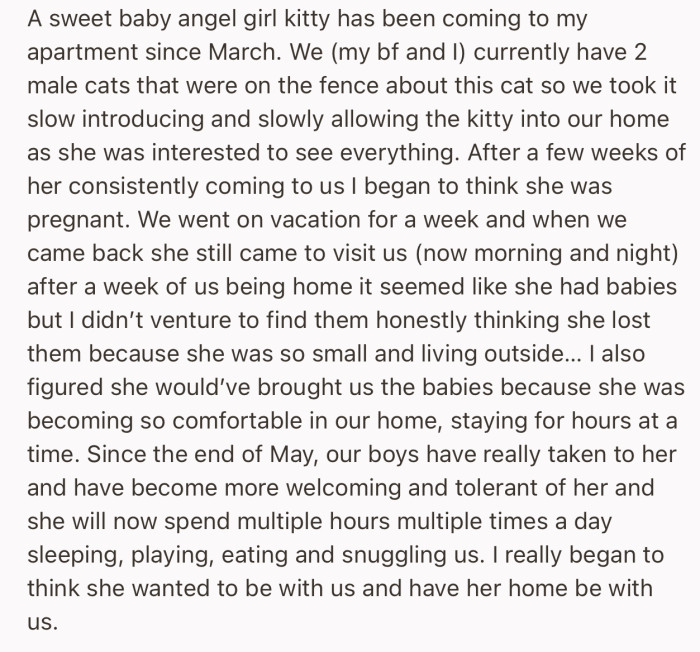
OP finally decided to adopt the kitty. But in the process, she found out that the kitty belongs to her neighbor
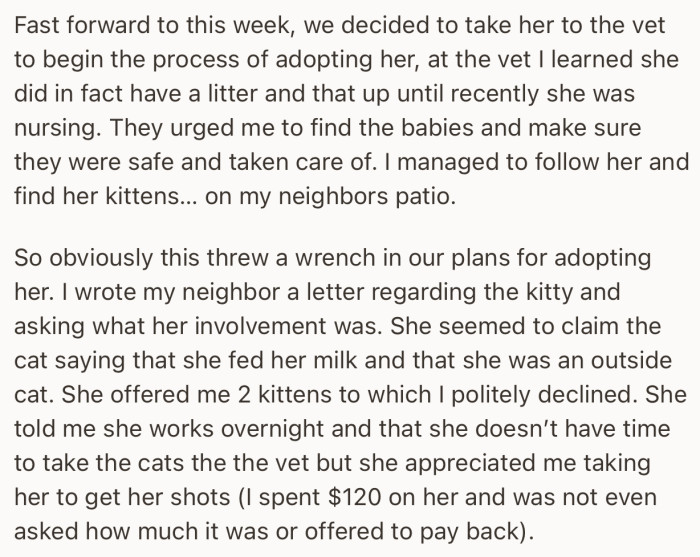
OP’s cat routine got so normal that it felt like the neighbor was just a background character, until the adoption paperwork made the past owner suddenly very real.
The story of the stray cat that found her way to a couple's door highlights the complex emotional dynamics between felines and their human companions. This particular cat, who displayed an affectionate demeanor despite her stray status, exemplifies how cats often seek out reliable and emotionally attuned individuals for companionship. The couple's welcoming presence likely provided the security she yearned for, allowing her to form a bond that transcends the traditional owner-pet relationship.
As the narrative unfolds, it becomes evident that the original owner’s reluctance to let go of the cat complicates matters. This situation underscores the importance of recognizing and respecting the emotional connections that animals forge with humans. For the couple who have embraced the cat into their lives, understanding her bond with her past owner is crucial as they navigate their newfound responsibility and the potential for a shared affection that may not easily fade.
Practical Solutions for Stray Cats
Furthermore, they suggest establishing a feeding schedule and a safe space for the cat, reducing the likelihood of it feeling the need to roam between homes. By collaborating with neighbors and local shelters, families can develop a sustainable approach to managing the stray animal population in their community.
OP and the neighbor have been going back and forth ever since she discovered that the neighbor doesn’t have any proof of ownership
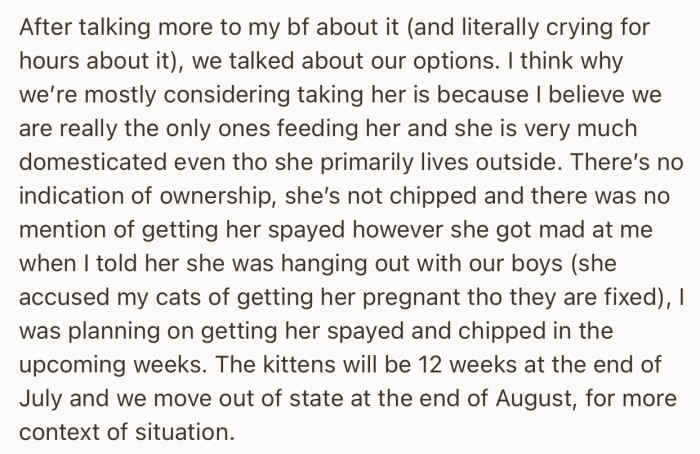
OP and her boyfriend would be moving out of state pretty soon, and she wants to know if it’s right to take the cat along without informing the neighbor, who can’t prove ownership

We gathered some interesting comments from the Reddit community
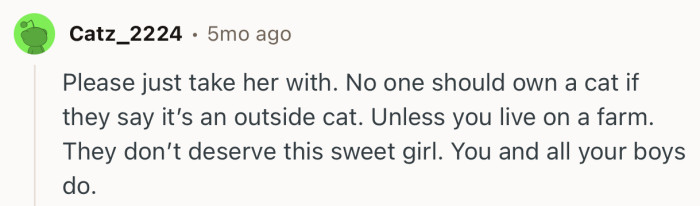
Once OP found out the neighbor claims the cat, the “family friend” situation turned into a real standoff, especially since the neighbor has no proof of ownership.
They recommend that if someone finds a stray cat, they should first check for a microchip and try to locate the original owner before claiming the pet as their own. This not only honors the bond formed between the cat and its prior owner but also fosters responsible pet ownership in communities.
It’s the same kind of turf war as the missing-cat balcony showdown that turned into a neighborhood fight.
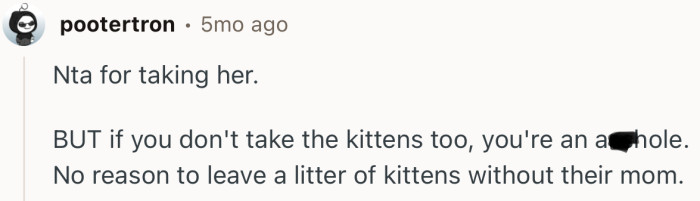
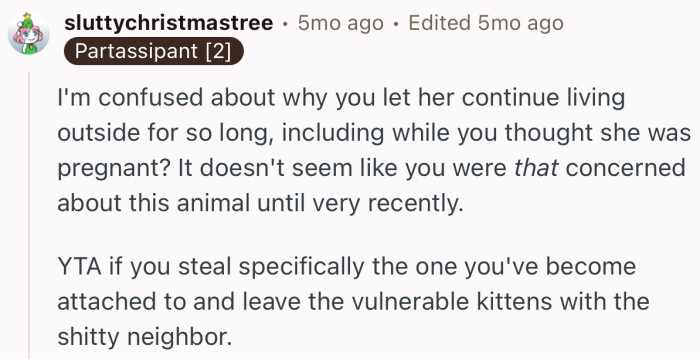
“Nta for taking her. BUT if you don't take the kittens too, you're an a**hole.”
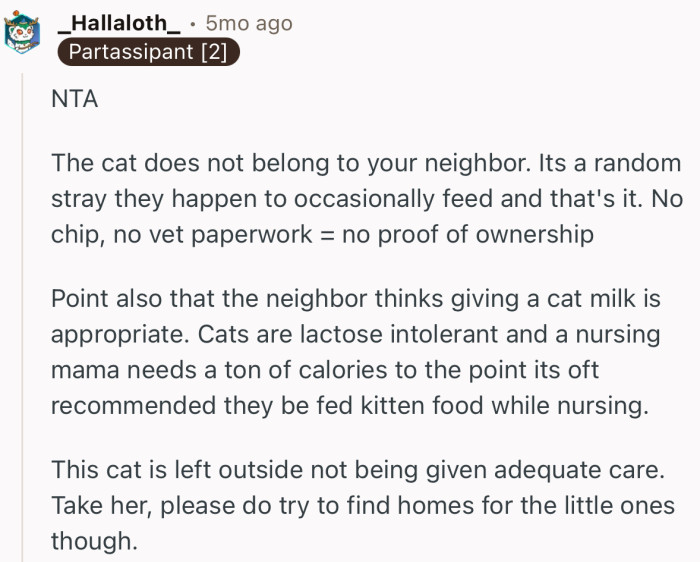
“The cat does not belong to your neighbor. Its a random stray they happen to occasionally feed and that's it.”
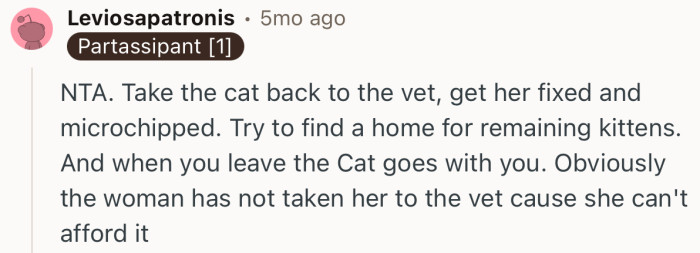
“NTA. Take the cat back to the vet, get her fixed and microchipped.”
The cat is already bonded with OP and her boyfriend’s household, but the move out of state deadline is what really forces the decision.
The Emotional Impact on Pets
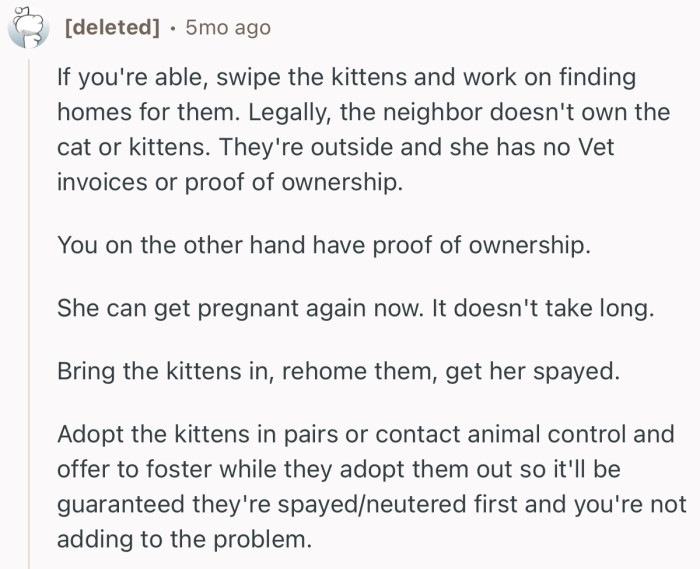
“If you're able, swipe the kittens and work on finding homes for them. Legally, the neighbor doesn't own the cat or kittens.”
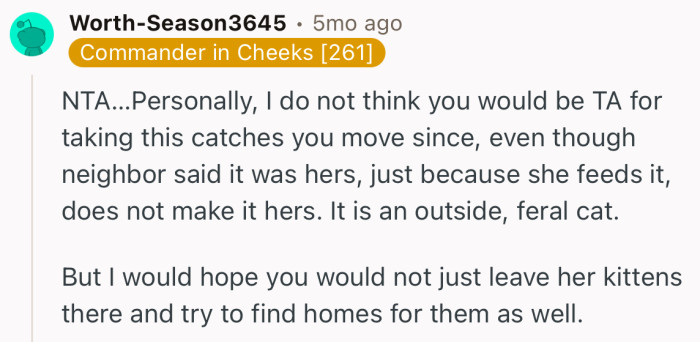
“But I would hope you would not just leave her kittens there and try to find homes for them as well.”
Every time OP and the neighbor go back and forth, it’s like the cat is the prize, even though she’s the one who chose the couple in the first place.
As stray cats often form bonds with more than one household, the rules of pet ownership can become blurry.
To prevent conflicts like the one described, it’s essential for communities to create a shared understanding of pet ownership. Establishing community guidelines around stray animal care can help mitigate confusion and encourage cooperative relationships among neighbors.
This one’s tough because both sides have some claim to the cat.
In addition, OP noted that the neighbor still hasn’t been able to provide any proof of ownership, which makes her claim a bit suspicious.
The cat herself seems to have already made her choice, and that complicates everything.
Whether taking her would be wrong or simply compassionate depends on how you see ownership when it comes to animals that roam freely.
What do you think? Should the couple take the cat or leave her behind?
This unfolding story illustrates the intricate emotional layers inherent in human-animal relationships. The couple's growing bond with the cat, marked by daily interactions and nurturing care, transcends mere ownership; it speaks to the deep connections that can develop in such circumstances. Their affection and routine have woven the cat into the fabric of their lives, making her absence a poignant loss. On the other hand, the original owner seems to approach the situation from a different angle, viewing her as a possession rather than a beloved companion. This contrast in perspectives underscores how varied interpretations of responsibility and connection can lead to conflict, as the couple and the original owner grapple with their respective claims on the affectionate feline.
The situation surrounding the stray cat highlights the delicate balance of pet ownership and the emotional ties that can form unexpectedly. The cat's daily visits to her new family illustrate how quickly these bonds can develop, yet they also raise questions about the original owner's attachment. The article suggests that understanding these dynamics requires more than just personal feelings; it calls for a community approach to stray animal care.
By establishing collaborative guidelines that promote responsible pet ownership and provide support for strays, neighborhoods can create environments where all parties—both the wandering animals and their human caretakers—can coexist harmoniously. This case emphasizes the importance of fostering a culture of compassion that honors existing relationships while also embracing the needs of animals in transition.
OP might end up having to choose between keeping the cat she raised and dealing with the neighbor who still won’t let go.
Before you decide who gets custody, read about an AITA post where someone wanted to rehome a cat after a month.
Share this article: