
Parent Tells Dog Owner To “Choke Out” Their Dog After Elevator Encounters With Child Keeps Going Wrong

A dog owner in an apartment building just tried to keep the peace, and somehow it spiraled into a whole elevator drama. The worst part? It wasn’t even a random incident, it was a repeat situation, same kid, same barking, same awkward run-ins.
OP says their dog barks every time it sees one particular child in the elevator, and the child’s parents have already warned them to “control” it. Instead of smoothing things over, the warnings make everything feel tenser, so OP starts trying to avoid them by only using the elevator when they’re not around, which still doesn’t prevent the inevitable collisions.
And then the “choke out” comment enters the chat, turning a noisy elevator moment into something much uglier.
Let’s dig into the details

OP’s dog has a habit of barking each time it sees on particular kid in the elevator
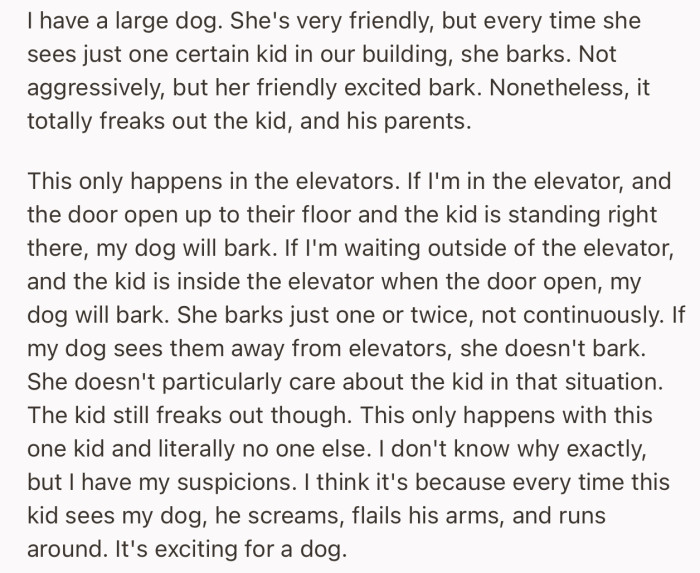
The parents of the child have warned OP to control their dog
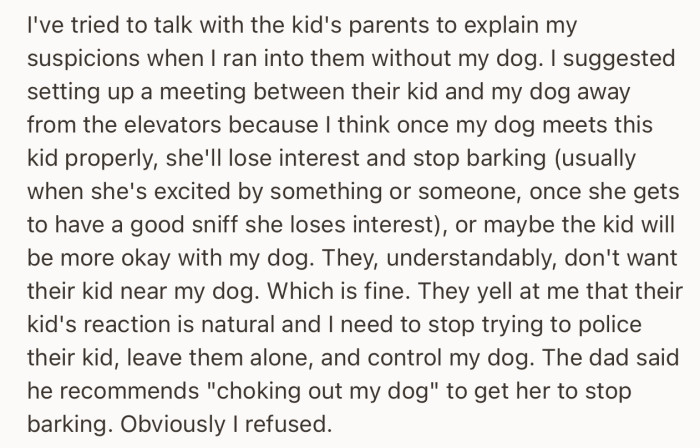
Right away, the building’s elevator routine becomes the battleground, with OP’s dog barking as soon as that kid steps in.
This incident highlights a common misunderstanding of canine behavior in shared living spaces.
Strategies for Positive Interactions
Gradual exposure in a controlled setting allows both parties to acclimate to each other.
Using treats and praise can reinforce positive interactions, helping the dog associate the child with good experiences. This approach not only aids in reducing barking but also builds a safer and more enjoyable living space for everyone.
OP has decided to avoid them completely by using the elevator when they’re not around.
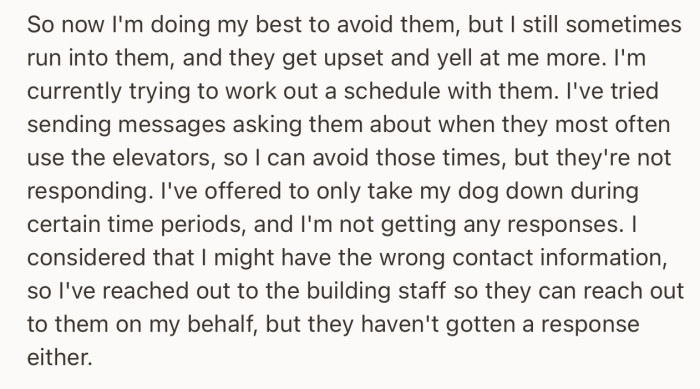
Unfortunately, they still end up bumping into each other, and as usual, the dog barks
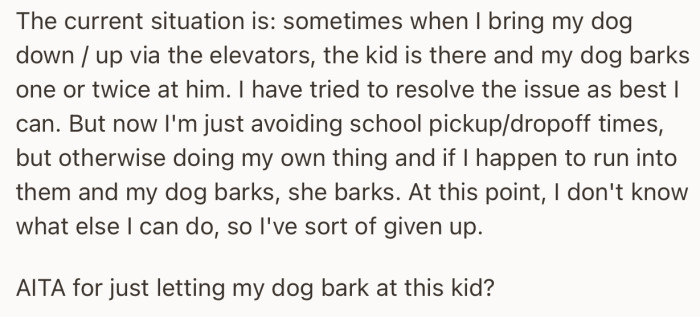
We gathered some reactions from the Reddit community
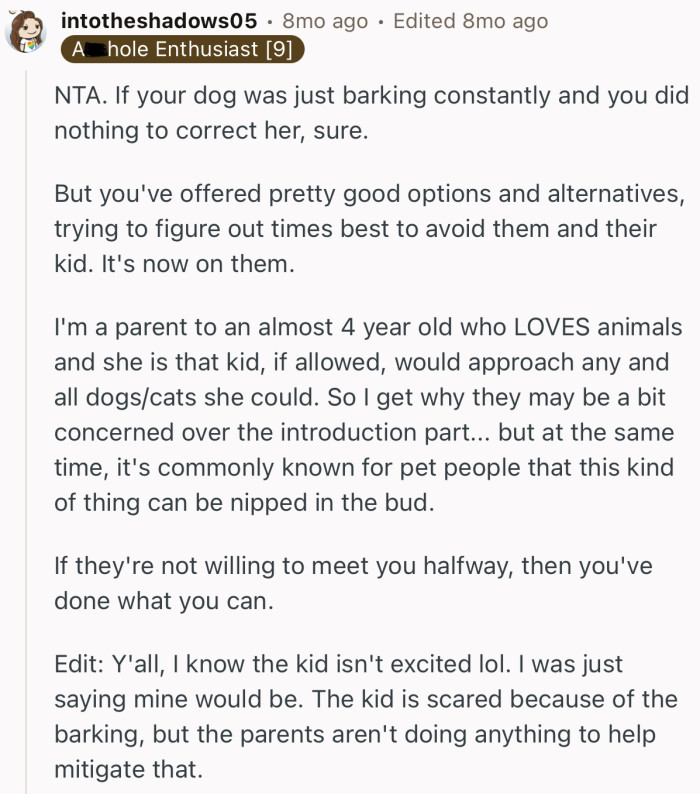
The parents’ warning to rein it in, plus the “choke out” suggestion, makes OP feel like they’re being blamed for something the dog is doing involuntarily.
Therapists specializing in animal behavior suggest that establishing a calm environment for both the dog and child can significantly improve interactions. For instance, introducing the dog to the child while rewarding calm behavior can create positive associations.
Additionally, consistent training using commands like 'quiet' can help reinforce desired behaviors.
This escalates like the father demanding his brother’s growling dog be put down after the niece harassed it.
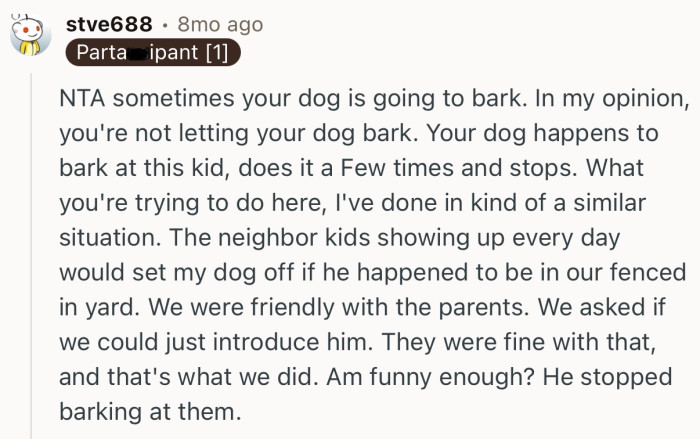
“NTA sometimes your dog is going to bark. In my opinion, you're not letting your dog bark.”
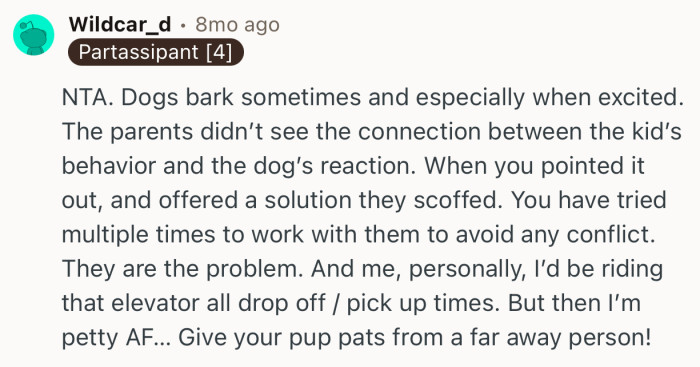
“NTA. Dogs bark sometimes and especially when excited.”
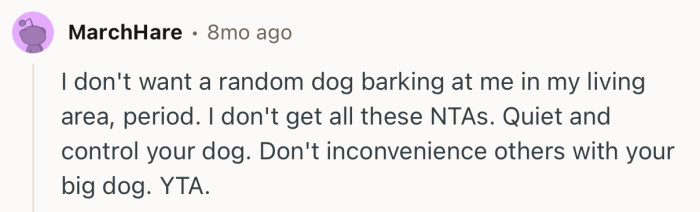
“Quiet and control your dog. Don't inconvenience others with your big dog. YTA.”
OP’s attempt to dodge them by timing elevator rides fails, because elevators have a way of forcing everyone into the same moment.
The recent incident involving a dog owner and a child in an apartment complex highlights the complexities of child-dog interactions. The story reveals that the owner's gentle dog, despite having a friendly disposition, developed a habit of barking at one specific child. This unexpected behavior can understandably provoke fear in children, particularly if they are not accustomed to such encounters. The child's distress is compounded when they cannot comprehend the source of their fear, illustrating how sudden and unfamiliar situations can heighten anxiety.
To address these challenges, it is crucial for parents to educate their children about dogs and their behaviors. By fostering understanding through supervised interactions, children can learn to approach these encounters with confidence rather than trepidation. This approach not only helps mitigate fear but also encourages positive associations with dogs, ultimately benefiting both the children and the pet owners within the community.
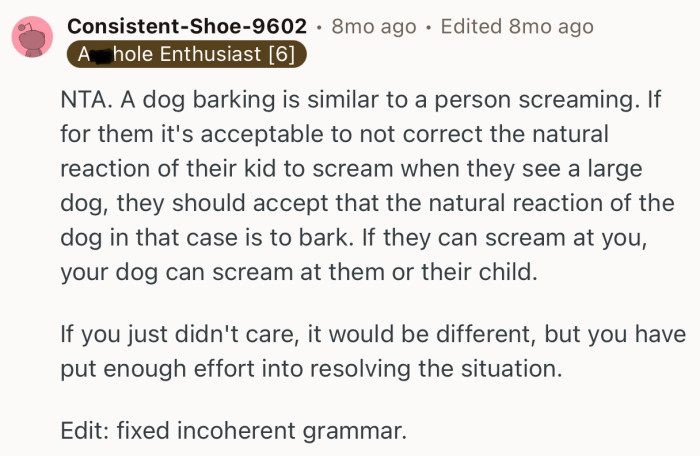
“If you just didn't care, it would be different, but you have put enough effort into resolving the situation.”
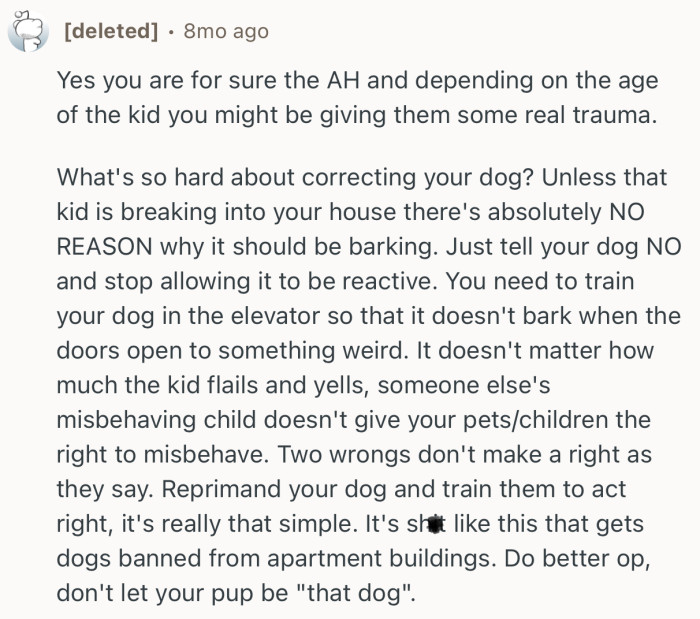
“Yes you are for sure the AH and depending on the age of the kid you might be giving them some real trauma.”
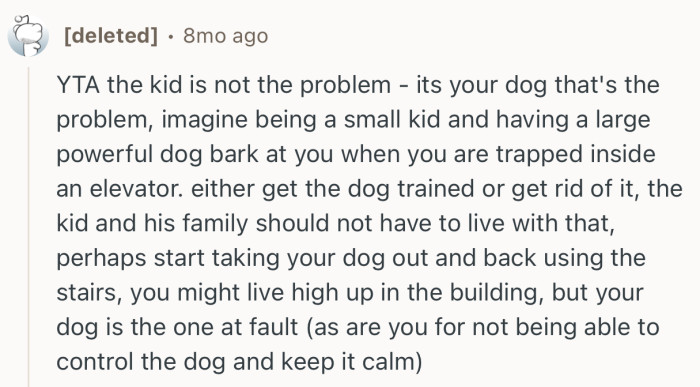
“Imagine being a small kid and having a large powerful dog bark at you when you are trapped inside an elevator.”
After the Reddit crowd weighs in, the whole thing turns into a question of who’s actually responsible for managing shared space, and it’s not the way OP expected.
When dogs are properly socialized, they can feel more comfortable and secure in various situations, reducing unwanted behaviors like excessive barking. Owners are encouraged to engage in regular training sessions that promote calmness and control in their pets.
The Reddit community is split on this one. While the majority have commended their efforts at de-escalating the issue, a good number of people feel that the parents have every right to speak against anything that scares their child.
One particular Reddit insisted that it’s not unusual for a child to be terrified of a large barking dog. Others even pressed further by saying that this could be traumatic for the child.
We can’t say that OP hasn’t made efforts to stop these barks, but it would be great to have the parents consider having another chat to see if they can all find a lasting solution.
We’d love to get your thoughts on this story. Tell us how you would have handled this if you were in OP’s shoes.
This situation underscores the intense emotions that can arise when children and pets intersect, especially in the confined spaces of an apartment complex. The reaction from the parents appears to be rooted in a protective instinct towards their child, who has been visibly unsettled by the dog’s barking. This instinct, while understandable, reveals how quickly fear can escalate into hostility and miscommunication. Rather than fostering a dialogue, the parents' extreme suggestion to "choke out" the dog demonstrates how misunderstandings can spiral out of control. Both the dog owner and the parents seem caught in their respective viewpoints, highlighting the urgent need for open communication to navigate such delicate encounters effectively.
This incident underscores the intricate dynamics of human-animal relationships in communal living environments. The reactions of the dog, which seem to stem from a mix of excitement and anxiety, are not uncommon in such settings. The dog owner’s struggle to manage these interactions reflects a broader challenge faced by many pet owners in apartment complexes.
To mitigate these tensions, gradual desensitization and positive reinforcement techniques could be beneficial. Such strategies not only help the dog adjust to the presence of the child but also educate families on promoting safe and positive encounters. By fostering understanding and patience, residents can work towards a peaceful coexistence that enhances the living experience for both pets and their human neighbors.
Nobody wins when “control your dog” turns into “choke them,” especially in a tiny elevator.
Before you judge the elevator showdown, read how the dog owner refused to give up the lift. Dog Owner Refuses To Give Up The Elevator To Someone Who Has A Dog Phobia.
Share this article:





