Reddit Users Urge A Cat Owner To Write A Complaint About The Rude Vet Technician Who Snapped At Her During Her Cat's Appointment

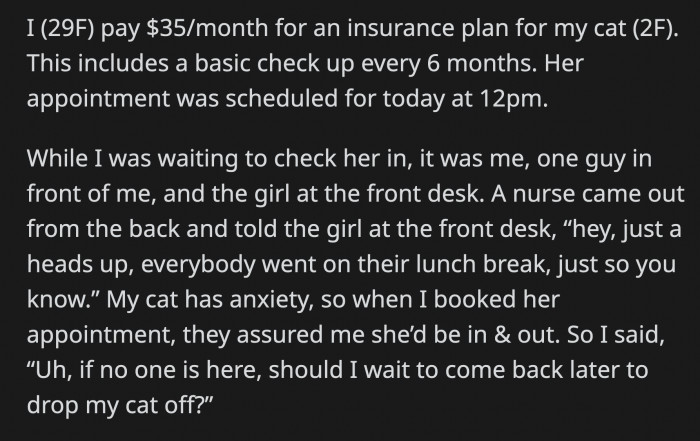
A routine vet visit turned awkward fast when a cat owner asked a simple question and got snapped at instead of helped. She had already been paying for her cat's health insurance and expected the appointment to be quick, but the clinic's lunch break changed the mood in a hurry.
What started as a scheduling issue turned into a rude exchange between OP and a vet technician, and the whole thing left her wondering whether she should complain. Reddit had plenty to say once she shared what happened, especially after the comments turned from the appointment itself to the bigger question of how she treats her cat's care.
By the end, the real debate was not just about the vet tech's attitude, but whether OP should switch clinics altogether.
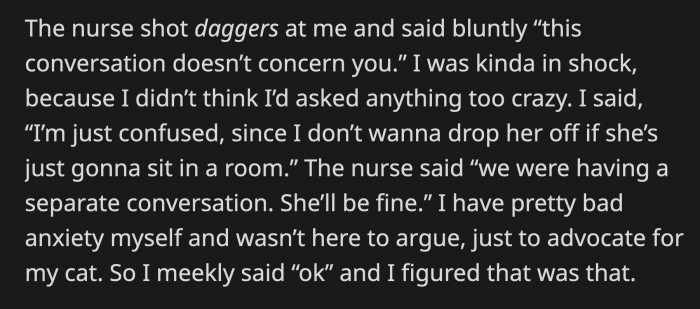
OP is non-confrontational, so she just said okay
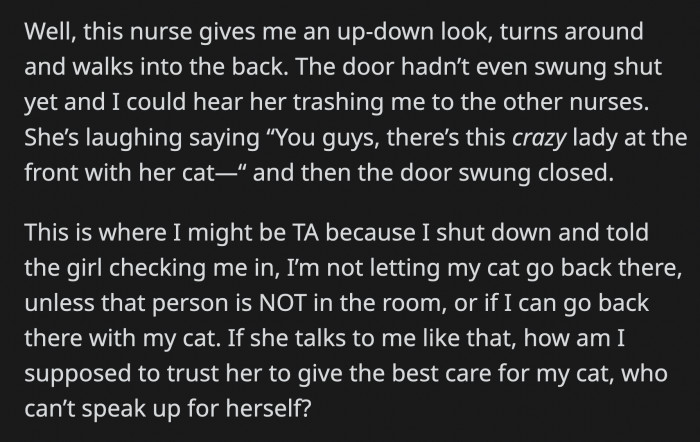
The vet tech gave OP one of those head-to-toe looks before she went into the back room. Before the doors even closed, OP can hear the tech talking about her to the other techs.
She laughed as she said, "You guys, there’s this crazy lady at the front with her cat.." Upon hearing this, all bets were off for OP.
She told the front desk attendant that she would not allow her cat to be checked in if that particular vet tech was in the room. OP asked if she could accompany her cat through the checkup.
OP said she can't trust the vet tech to take care of her cat with that attitude. She also asked for their manager's business card to lodge a formal complaint.
OP promptly called the number but it was the clinic's phone that rang. The attendant put it on hold and sheepishly admitted it was the clinic's number, not the manager.
OP's cat was already howling in her carrier, so OP asked again if she could accompany her. The attendant said that no one will check OP's cat since they were all on break.
The jig was up and OP finally realized she was lied to when they said OP will just be "in and out" for their appointment. OP asked to be rescheduled at a time when she can be in the room with her cat.
After the waste of time, OP called her mom who told her she shouldn't go back for the appointment. She also told OP she was a "Karen" for threatening to file a complaint to the clinic's manager.
OP decided to eventually cancel her cat's health insurance and take her elsewhere. OP didn't think she was being a Karen but she's started to doubt that after the conversation with her mom.

Did OP act like a "crazy cat lady" like the vet tech said? You can read her original post below:
Negative interactions like the one experienced by the cat owner can deeply affect individuals, especially when they are already in vulnerable situations. The article highlights how the rude behavior of the vet technician not only undermined the owner's efforts to advocate for her pet but also added unnecessary stress during an already challenging time. Such experiences can evoke feelings of helplessness and frustration, compounding the emotional strain that pet owners may feel when they are concerned for their furry companions. Recognizing the emotional impact of these interactions is crucial for promoting empathy in service roles, particularly in healthcare settings where compassion is vital to maintaining trust and comfort for both pets and their owners.
When faced with rude behavior from professionals, such as a vet technician, it's essential to recognize the emotional impact this can have on pet owners. The emotional bond between pet owners and their animals can amplify feelings of vulnerability when encountering unprofessionalism.
The concept of emotional validation plays a crucial role here; pet owners need to feel that their concerns are acknowledged and taken seriously. When they are dismissed or belittled, it can trigger feelings of helplessness and frustration.


Research indicates that interpersonal conflicts, especially in environments meant to provide care, can lead to a breakdown in trust.
This highlights the importance of training staff in effective communication and empathy to support emotional well-being.
Moreover, the act of voicing complaints is often fraught with emotional barriers.
Cat tax!
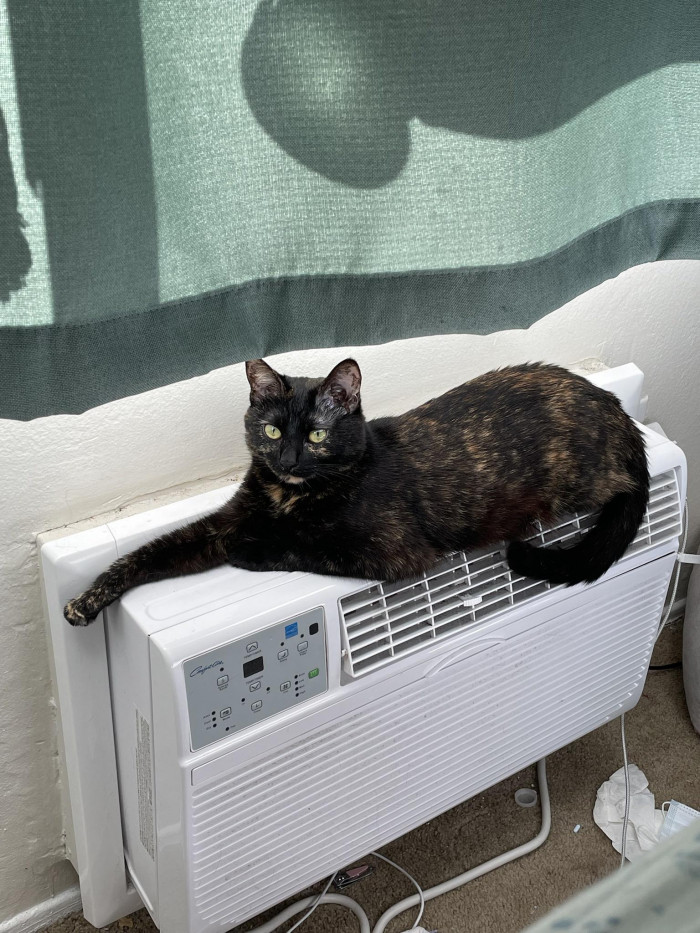
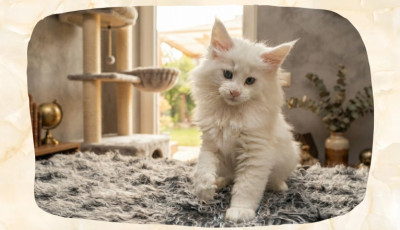
Mandatory lazy cat picture before we dive through the comments:
Complaining is often misunderstood, yet it serves as a crucial mechanism for addressing grievances and improving service quality.
This process can foster a sense of empowerment, allowing individuals to reclaim some control over their experiences.
Assertive communication techniques can be incredibly beneficial for pet owners navigating these challenging interactions.
Booking an appointment after they've already had their lunch sounds like a great idea

A time-consuming lesson learned
Right? If they knew they wouldn't be available at that time, why would they book it for OP?

This fear often stems from societal norms that discourage assertiveness, especially in women, creating a paradox where individuals feel they cannot advocate for themselves.
Fostering an environment where feedback is welcomed can help dismantle these barriers and encourage open communication.
This has the same “vet appointment turned into a money fight” vibe as the Redditor mad at their SO for unnecessary, costly tests.
It's also worth noting that fostering a supportive community can provide pet owners with the reassurance they need to voice their concerns. Online platforms and support groups can serve as valuable resources for sharing experiences and strategies. Connecting with others who have faced similar situations can empower pet owners and normalize the process of complaint-making.
Additionally, these networks can provide guidance on how to approach difficult conversations with professionals, helping individuals feel more prepared and less isolated.
They could have at least informed OP about the wait time instead of lying to her
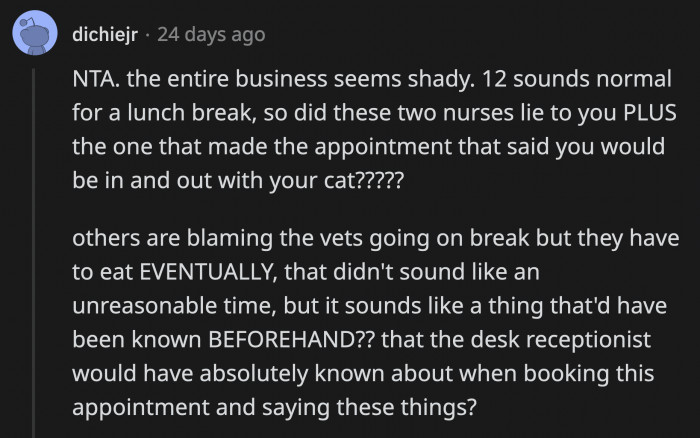
Since they booked it for her, they really should have told her about the waiting time
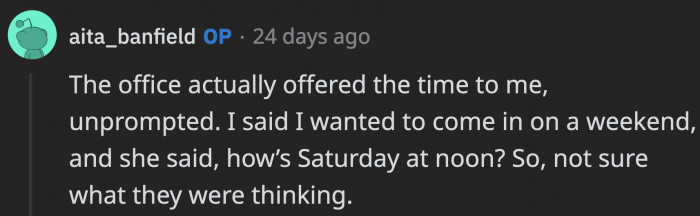
It could have been a difficult day for the staff but OP did nothing wrong for her to be treated that way
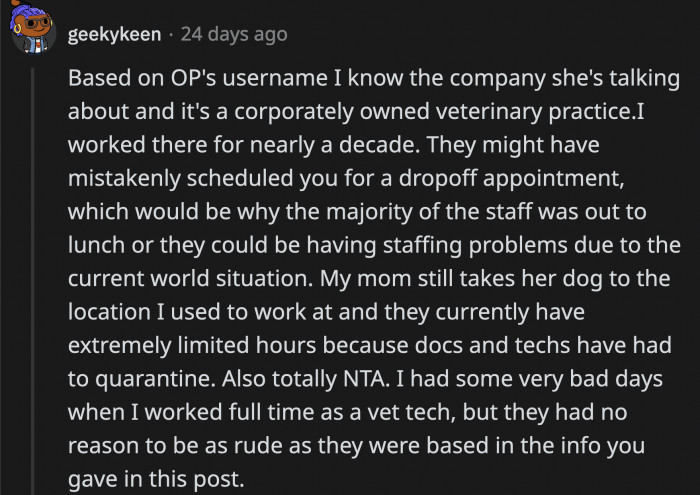
Individuals can prepare to voice their concerns by framing their complaints in a constructive manner.
Using 'I' statements, such as 'I felt dismissed during the appointment,' can help express feelings without placing blame.
Ultimately, it's essential for veterinary clinics to foster a culture of respect and empathy. Training staff in customer service and emotional intelligence can significantly improve interactions with pet owners. By ensuring that there are channels for feedback and mechanisms for resolution, clinics can demonstrate their commitment to quality care and customer satisfaction.
OP could be better off finding a different vet for her cat
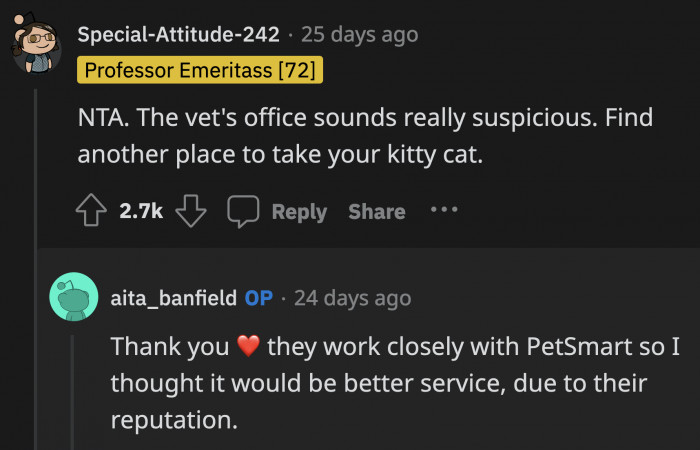
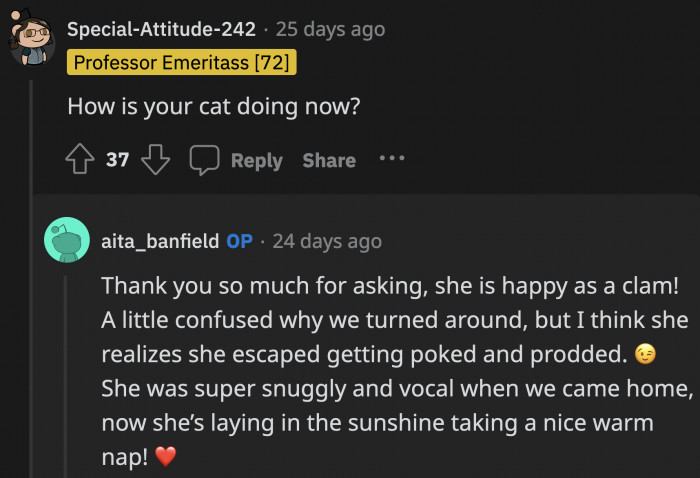
As for OP's adorable kitty, she is fine despite the sudden change in her schedule
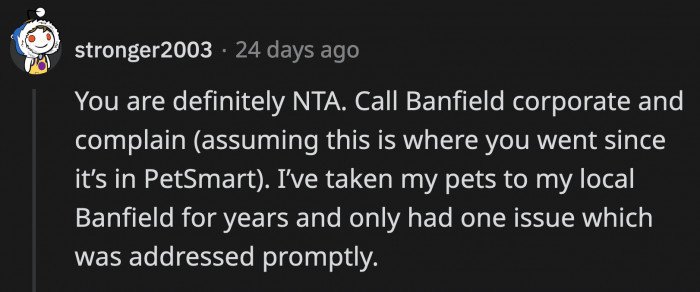
It might be a good idea for OP to write a formal complaint
Moreover, finding appropriate channels to voice complaints, such as customer service platforms or feedback forms, can enhance the likelihood of a constructive outcome.
Encouraging transparent communication can empower individuals and lead to meaningful change.
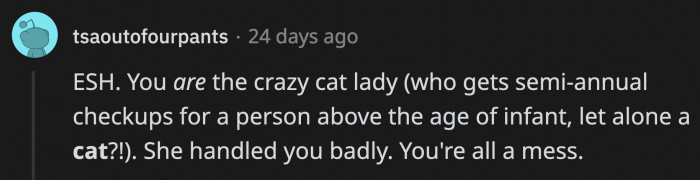
Someone commented that OP behaved like a crazy cat lady for taking her cat to bi-annual checkups she doesn't need
OP realized she was overpaying for unnecessary service after reading through the comments under her post
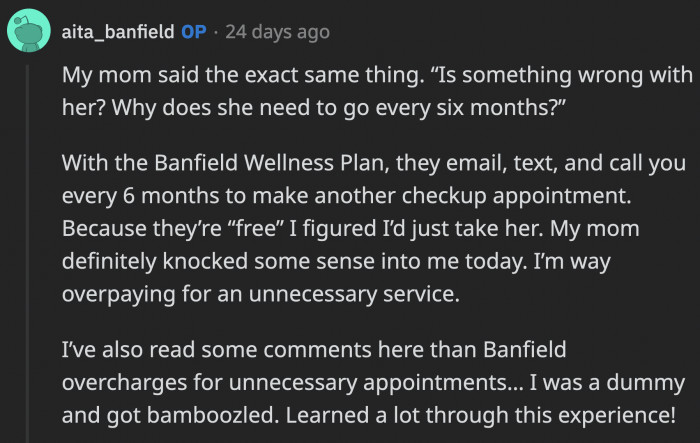
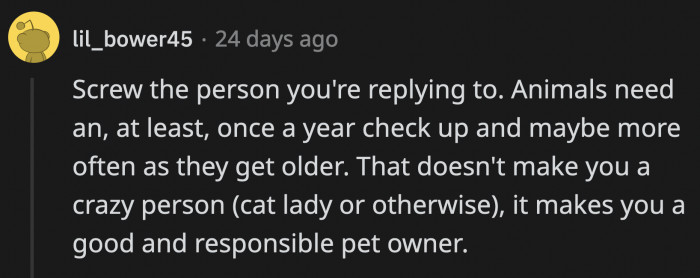
But she isn't "crazy" for taking her cat to bi-annual checkups because pets do actually need that
Implementing empathy training for staff in healthcare settings can significantly improve interactions with clients.
These programs help employees understand the emotional states of clients, leading to more compassionate responses and improved service experiences.
OP should definitely write a well-composed review to detail her experience to inform other pet owners
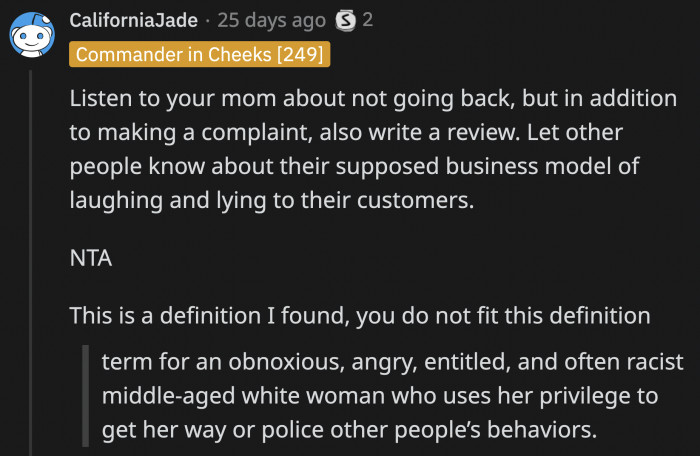
The staff that OP dealt with behaved unprofessionally
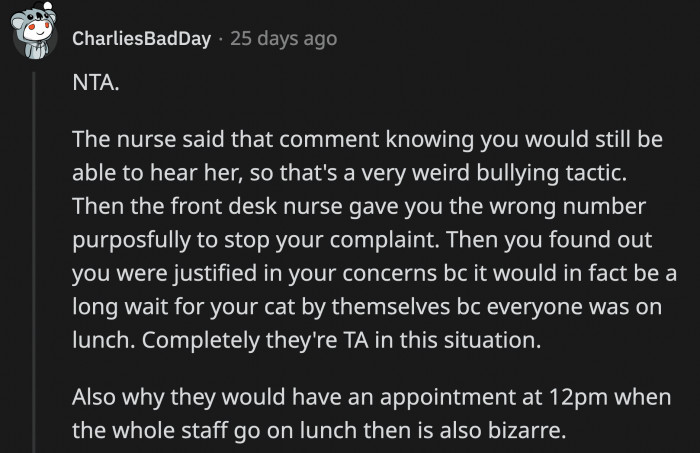
OP didn't do or say anything unreasonable to feel guilty about
Ultimately, addressing negative interactions in service settings requires a commitment to fostering empathy and understanding.
The vet tech didn't progress past her mean girl, high school persona based on the way she talked to and about OP. The concerned cat owner was simply asking when was the better time to bring her cat for her appointment, and their answer was needlessly rude.
Losing a single customer won't make them bankrupt, but it didn't have to happen had they only treated OP with some semblance of respect. OP can certainly find a better vet who will make her cat more comfortable without the unearned hostility.
In this situation, it is crucial for pet owners to stand firm in advocating for their furry companions.
The situation described highlights the critical importance of empathy and effective communication in veterinary care.
Before you decide OP was right, check out how a pet owner told other dog owners to keep their dogs away from her scared cat.
Share this article: