
Dog Owner's Entitled Actions Ended A Years-Long Relationship When She Conspired With The Girlfriend Of The Farm Owner While He Was On A Business Trip

Some people really know how to turn a simple boundary into a full-blown mess. In this Reddit story, a farm owner says his girlfriend and her friend Taylor pushed past his rules, and the fallout ended up costing him a relationship, trust, and a pile of vet bills. That mattered because his two guard dogs protect sheep and goats, and the farm layout leaves very little room for mistakes. Still, while OP was away on a work trip, his girlfriend and Taylor made choices that changed everything.
By the time the truth started coming out, the situation was already ugly. Now OP is left sorting through what really happened, and whether the puppies, the bills, and the breakup all point to something even worse.
OP was about to leave his farm for a 4-week work trip when his live-in girlfriend invited her friend Taylor over to keep her company
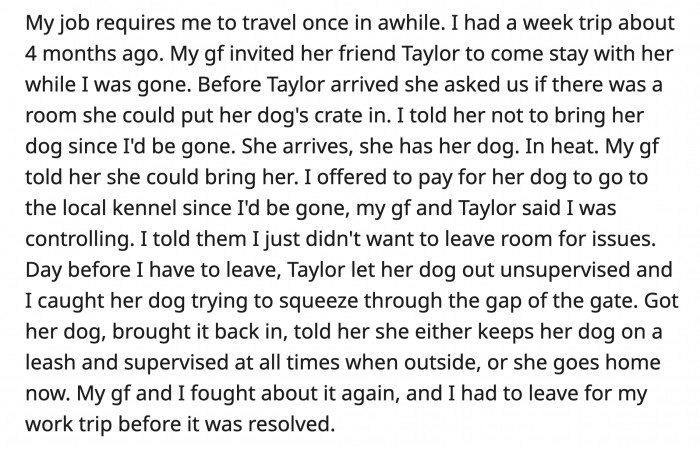
Taylor asked if OP had a spare room to put her dog crate in. OP told her not to bring her dog because he won't be there to supervise.
Taylor went over and brought her dog anyway. Oh, Taylor's dog was in heat and she brought her because OP's girlfriend told her it was okay.
OP was not okay with this and offered to pay for the dog to go to a local kennel. Taylor and OP's girlfriend told OP that he was controlling but OP said he was just trying to prevent any problems from occurring.
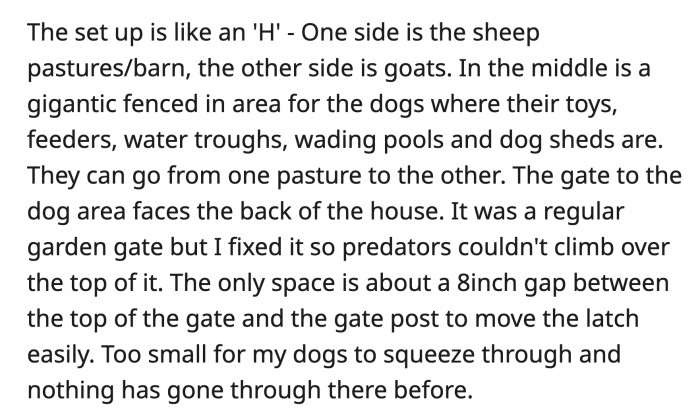
The day before OP left for work, Taylor let her dog outside unsupervised. OP just caught her in time when she was trying to squeeze in through the 8-inch gap of the gate.
OP brought the dog inside and told Taylor to keep her dog leashed and supervised at all times when she goes outside. If not, Taylor can leave.
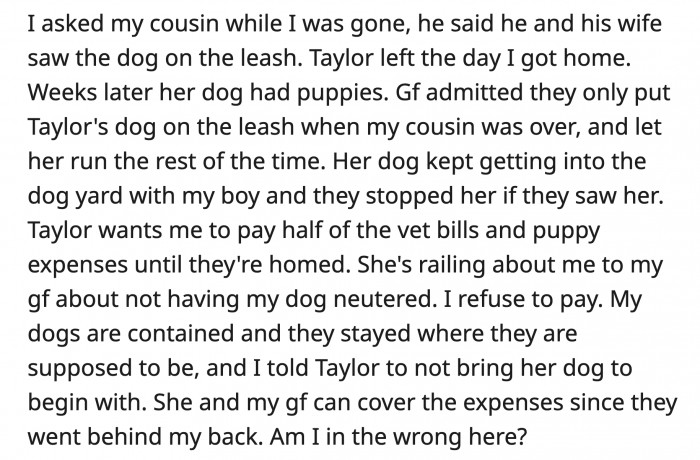
Another fight broke out and OP had to leave for his trip before anything was resolved. OP had his cousin check on the farm while he was away and he said Taylor's dog was leashed and supervised when she was outside.
When OP got home, Taylor left. A few weeks later, Taylor's dog gave birth to a litter of puppies and wanted OP to pay for half of the vet bills until they got rehomed.
Apparently, they only leashed Taylor's dog when OP's cousin was over. At any other time, she was allowed to go into the gated pen and "play" with OP's male dog.
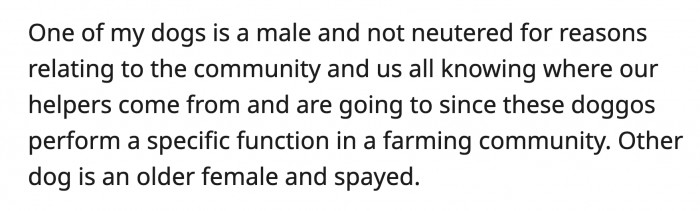
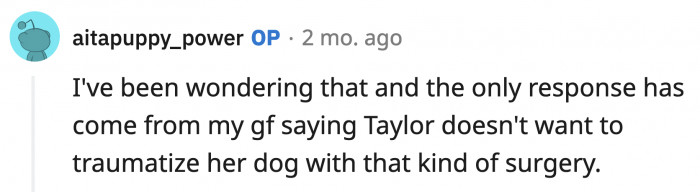
Taylor was complaining to OP's girlfriend about his dog not being neutered. OP said he won't pay because his dogs stayed in place so it isn't his fault.
Taylor brought her dog willingly even when OP told her not to. OP says Taylor and his girlfriend can cover the vet bills since they let this happen behind his back.
You can read the original Reddit post below:

The situation described shows how quickly things can go sideways when boundaries are ignored. Bringing a dog to a farm without consent was never going to end well, and it only made the trust issue worse.
The episode also highlights how entitlement can turn a disagreement into a bigger conflict. Once someone decides their wants matter more than everyone else's rules, things usually get messy fast.
And in this case, they really did.
OP did all he could to prevent this from happening but they didn't listen and now, they're asking OP to pay for the damages they caused
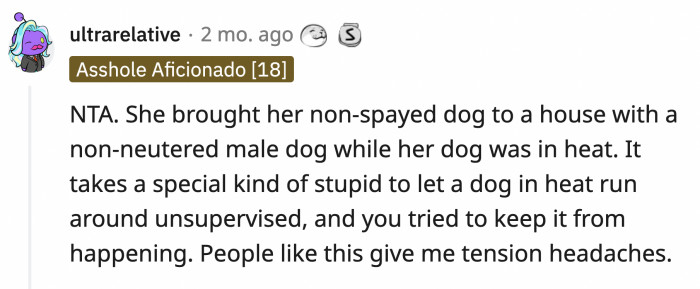
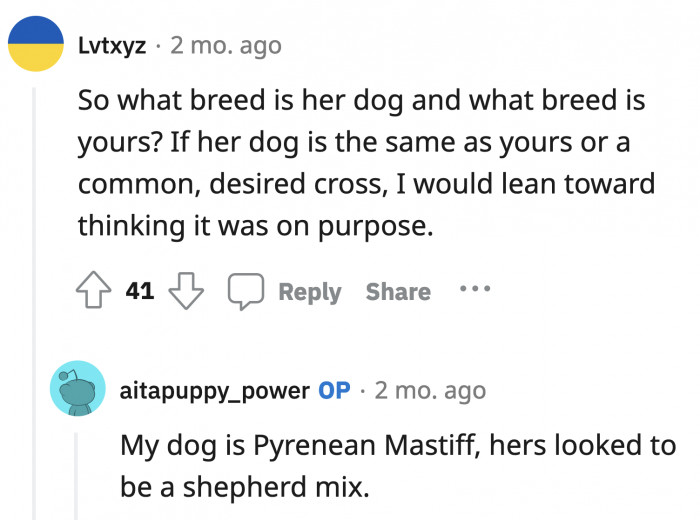
OP has to make sure that the pups are really from his dog

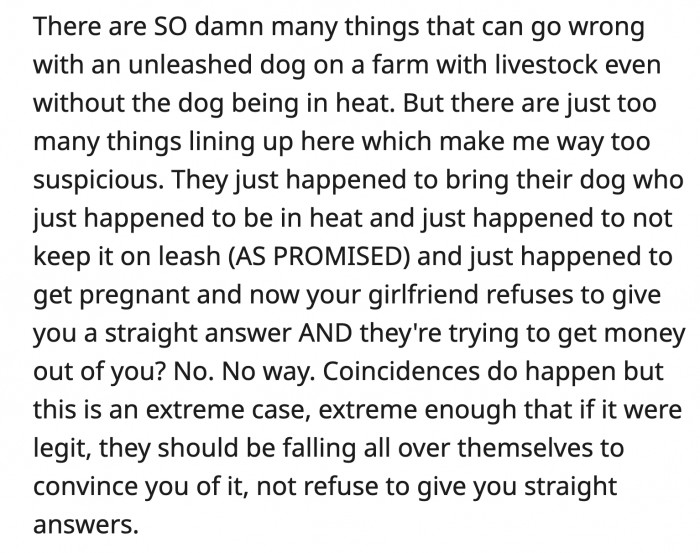
Way too many things had to go right for this to happen and it does reek of an intentional breeding
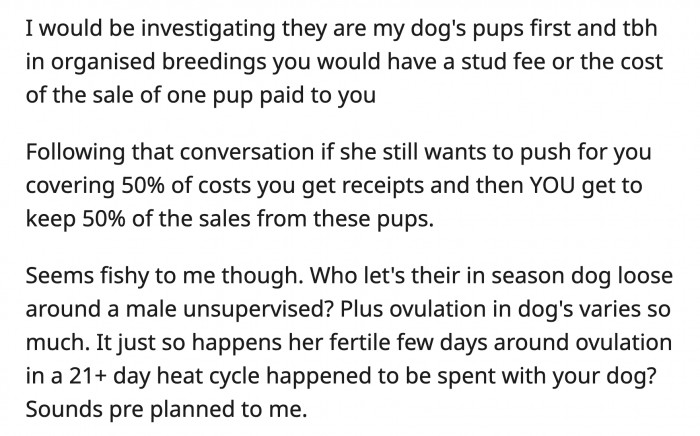
That is where the story starts to look even more suspicious.
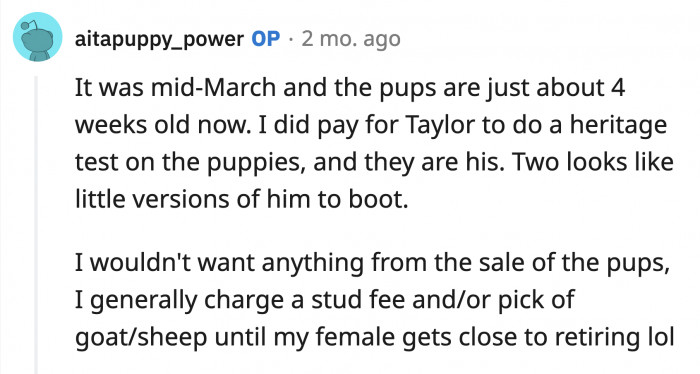
OP paid for a heritage test to make sure the pups are his dog's and they are
OP was planning on confronting his girlfriend about the truth of the matter which could break their relationship
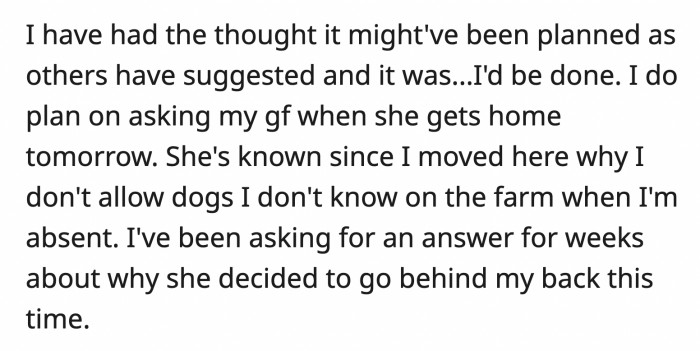
OP's girlfriend broke his trust and barreled through all of OP's boundaries
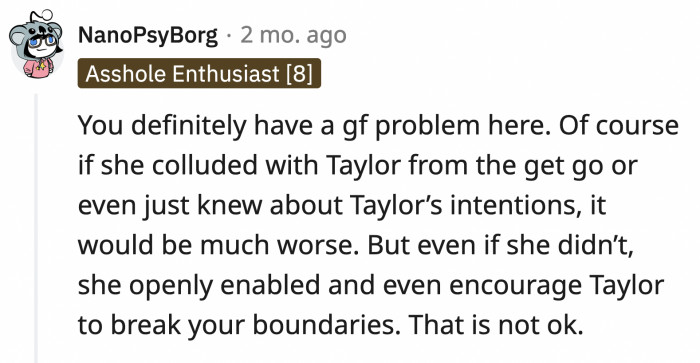
This is where the excuses start sounding a lot thinner.
This also echoes the Redditor skipping weekly BBQs because her three active dogs aren’t welcome.
Their insistence on blaming it all on OP and demanding he for half of the vet bills is suspicious
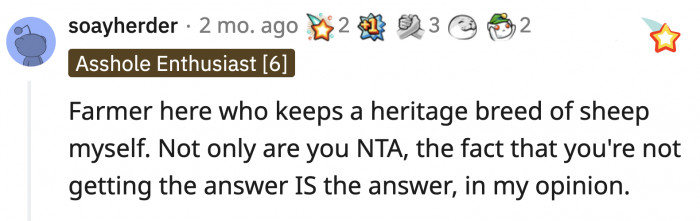
You don't have a reason to hide if you're telling the truth, right?
A quick Google search shows that OP's dog is a beauty
Once trust is broken, every new detail seems to make the whole thing look worse.
The pot has a lot of audacity calling the kettle black
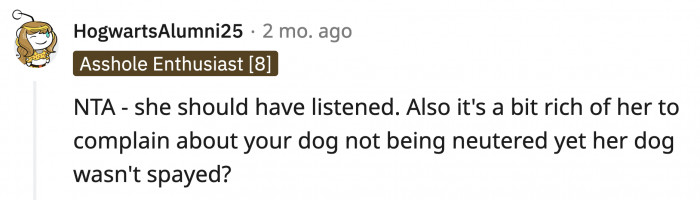
If that's the case, then Taylor shouldn't really be blaming OP for not neutering his dog
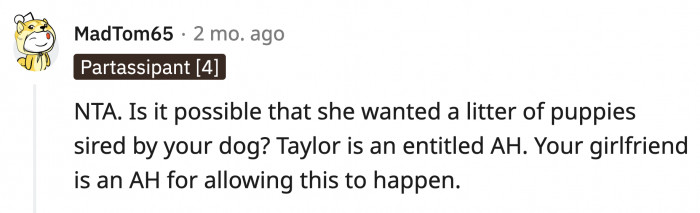
Taylor and OP's girlfriend should split the vet bill if they're this concerned
At this point, nobody in the story looks especially innocent.
That's a pretty blatant breach of trust on the girlfriend's part
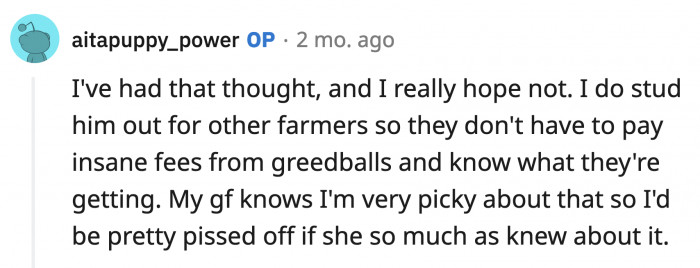
Could Taylor have planned everything to make a profit out of the puppies?
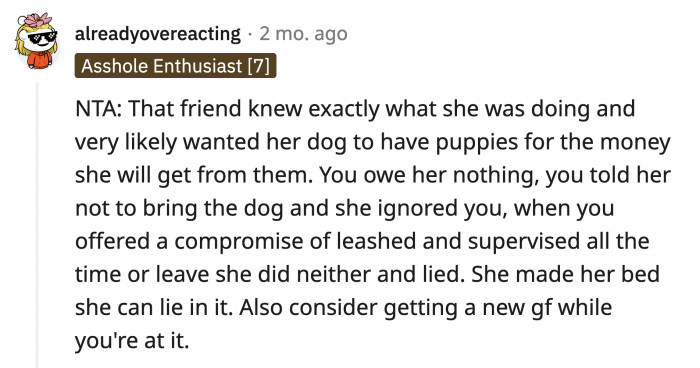
Who feels this entitled when visiting another person's home? Taylor was already at fault when she brought her dog at a working farm like it's a park to visit. OP's girlfriend enabled and supported her friend's actions.
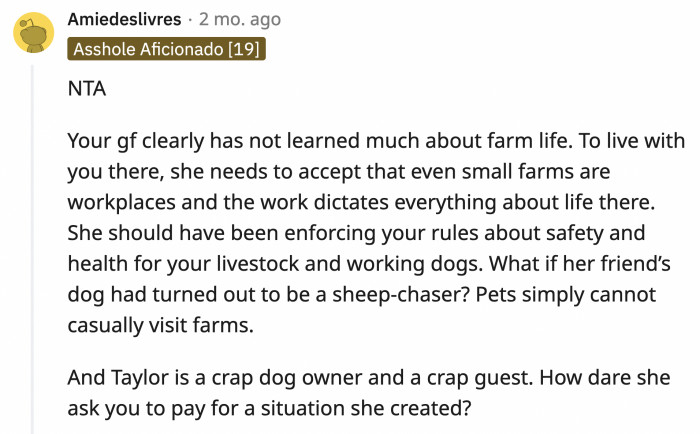
The whole thing snowballed because nobody respected the farm owner's rules.
By the end, the breakup and the vet bills were only part of the damage.
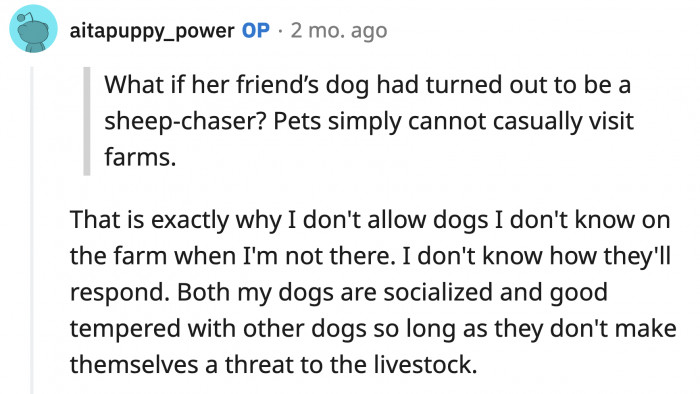
If Taylor's dog proved to be a danger to the sheep and the goats, OP's dog would have defended the herd. This is why OP doesn't allow people to bring their pets to his farm without him to supervise.
OP posted an update after his girlfriend decided to be more honest about what really happened

When OP tried to bring the subject up with his girlfriend, she tried to evade his questions again
OP asked her to talk to Taylor and ask if she has a spare room for OP's girlfriend to move into. This was not received well and OP's girlfriend began yelling, cursing, and crying until she eventually left to stay with another friend.
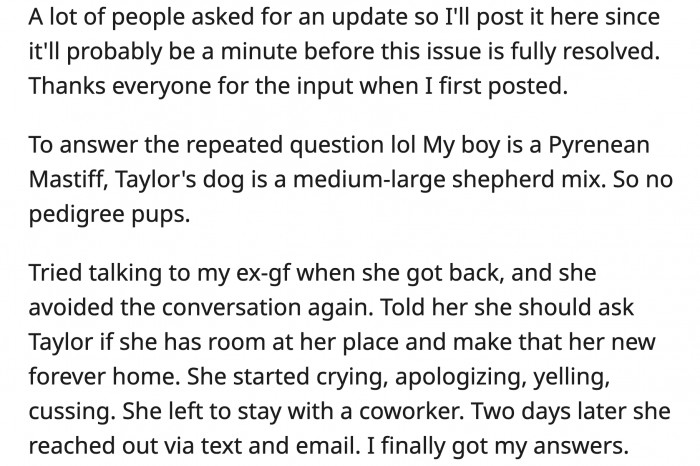
That update only made the situation look more uncomfortable.
The now ex-girlfriend felt OP was trying to be controlling when he said Taylor couldn't bring her dog
She said it was also her house and that's why she told Taylor it was okay to bring her dog. She also admitted to starting the fights and making them last longer until OP had no choice but to leave for his flight.
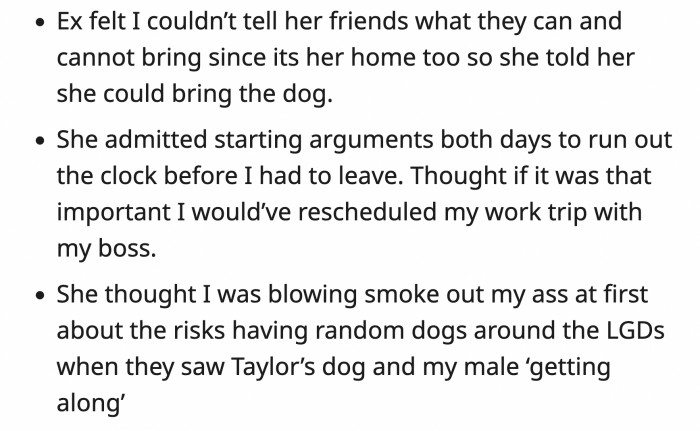
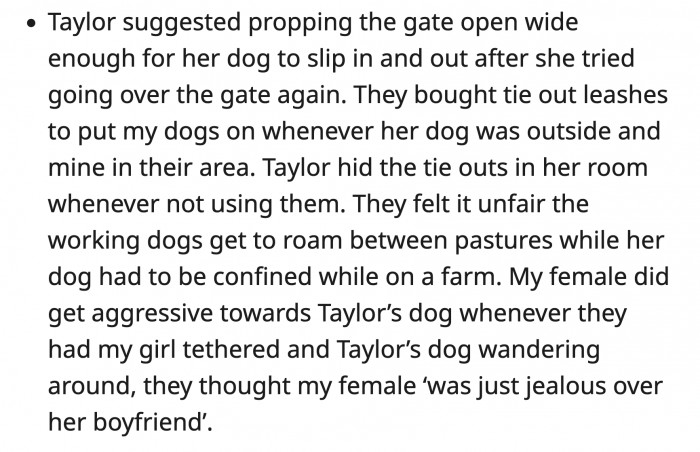
They opened the gate to the dog's pen to allow Taylor's dog to roam freely while they tied OP's two dogs
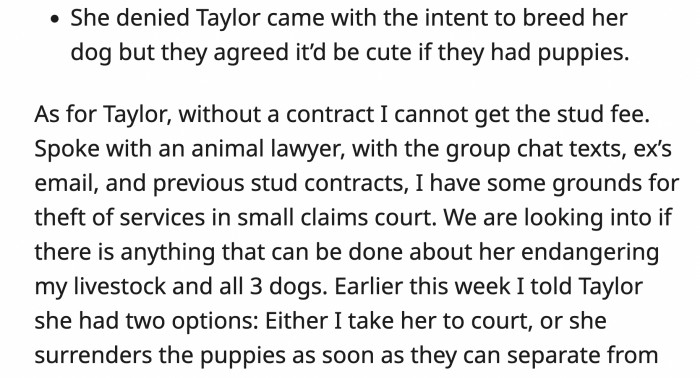
OP's ex said Taylor didn't go there to breed his dog but she did admit to talking about their adorable puppies if it happened
The Cost of Unresolved Conflict
Unresolved conflicts, such as the one described, can lead to significant emotional and financial costs.
OP told Taylor she has two options: surrender the puppies so OP can find them a home or OP will sue her for theft of service
Taylor asked if she will get a percentage from the sales of the puppies but OP said he will rehome them to deserving families for free. As for OP's ex-girlfriend, she is officially in the process of moving out of the farm.
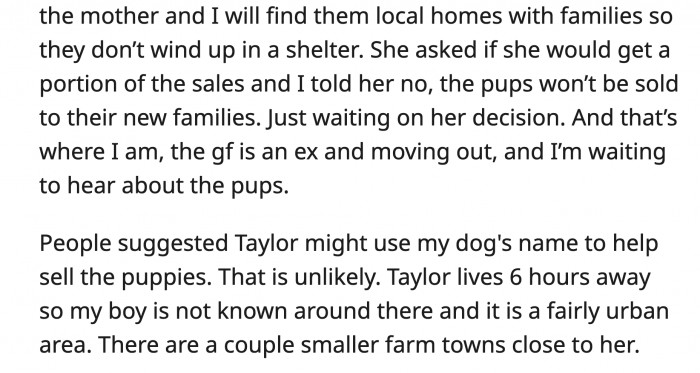
Taylor had some guts demanding compensation from OP for the mess that she created. The fact that she asked for money from the sale of the puppy showed her true intentions for bringing her dog in the first place.
The real problem was OP's girlfriend, who condoned her friend's actions and did everything she could to hide her part in it from OP. He really dodged a bullet when his ex-girlfriend showed her true colors during this whole thing.
The tangled relationship dynamics showcased in this story highlight the critical importance of respecting boundaries and communicating effectively. The actions of the dog owner, who conspired with the girlfriend of the farm owner during his absence, reveal how a lack of consideration can lead to irrevocable damage, resulting in a breakup and costly vet bills. Conflict resolution strategies and a commitment to self-reflection could have significantly altered the outcome. This narrative serves as a cautionary tale about the necessity of mutual respect and accountability in relationships, emphasizing that neglecting these principles can lead to profound personal and financial repercussions.
Want more dog-owner drama, check out the woman who yelled at her neighbor over her dogs.
Share this article:





