
Man Tells His Parents He Wouldn't Be Visiting Them Whenever His Sister's Dog Is Around After Finding A Dog Hair In His Dinner

One dinner table argument turned into a full family standoff after a man found dog hair in his food and decided he had had enough.
He and his siblings still visit their parents every Sunday, but things got awkward once his sister started bringing her dog along. OP says he never grew up around pets, and while the dog was fine with everyone else, he could not stand it wandering through the house.
After the hair-in-the-dinner incident, he told his parents he would not come over when the dog was there, and that is where the real tension started. Read on.
Is OP TA for making sure he wasn’t in the same place as his sister’s dog?

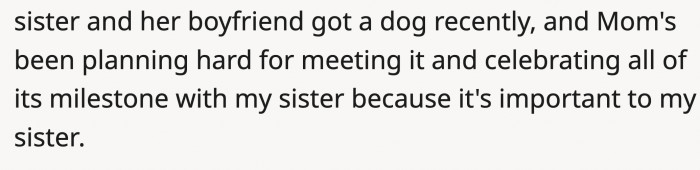
This is how the situation of OP and his siblings is when it comes to going home to their parents’ house and how they grew up
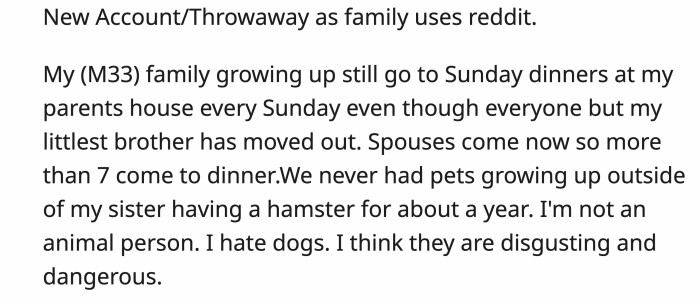
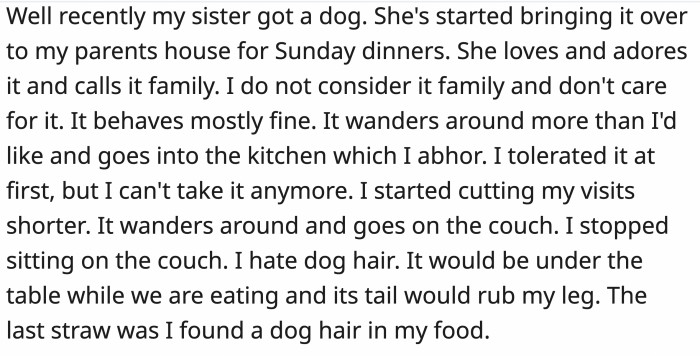
OP’s sister got a dog that she loved, and OP was annoyed by its ‘loitering,’ but what pushed him over the edge was when he found dog hair in his food
The emotional attachment individuals have to pets often parallels that of familial relationships. Research in the field of human-animal interaction has shown that pets can provide significant emotional support, fulfilling psychological needs for companionship and unconditional love. The presence of a pet in a household can also evoke feelings of comfort and safety, which may explain the emotional turmoil experienced when an individual feels their needs are being overlooked.
Understanding the depth of this bond can help family members appreciate the emotional implications of their relationships with pets.
The man's choice to refrain from visiting his parents whenever his sister's dog is present highlights critical issues surrounding family dynamics and the importance of establishing personal boundaries. The incident, sparked by the discovery of a dog hair in his dinner, reveals how seemingly minor discomforts can escalate into larger conflicts within family relationships. This situation illustrates the unspoken expectations that often accompany familial ties and how they can lead to tension when individual comfort is at stake. His response resonates with many who grapple with the challenge of asserting personal needs amid the complexities of family interactions.
This is where a small annoyance turned into a bigger family issue.
This situation highlights the tension that can arise when family expectations clash with personal comfort levels.
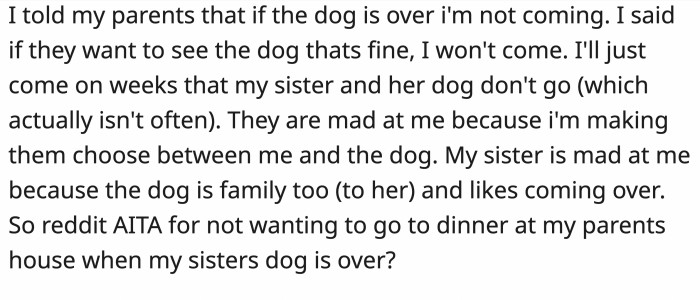
He then informed his family that he wouldn’t visit anymore as long as the dog came with his sister to visit, which presented an ultimatum to his parents
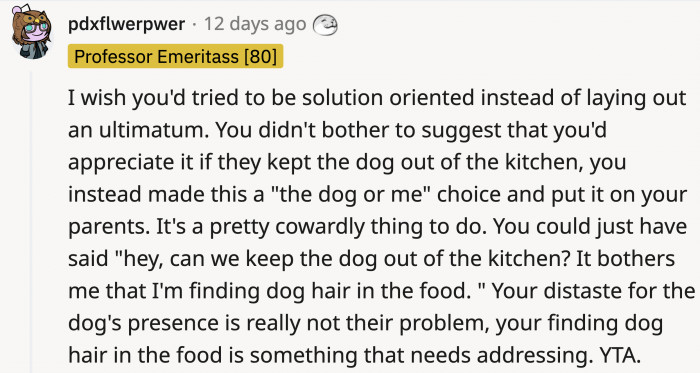
This Redditor suggests that OP could've communicated it better with his family rather than giving them an ultimatum
Dog hair has a weird way of being stealthy, and it gets everywhere
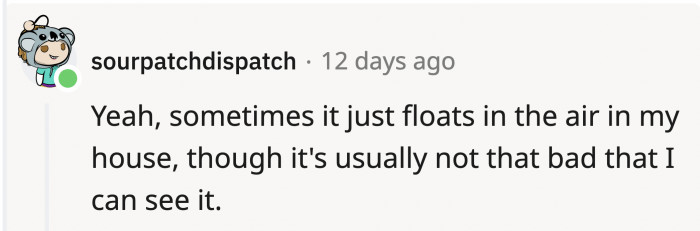
The brother's reaction to finding dog hair in his dinner reflects a broader theme of boundary-setting in family dynamics. When boundaries are violated, it can lead to feelings of resentment and frustration, as seen in this scenario.
Encouraging family members to discuss their boundaries openly can foster respect and understanding within the family unit.
The situation presented highlights the critical role of setting boundaries within family dynamics.
Understanding the psychological concept of personal boundaries is crucial in this context.
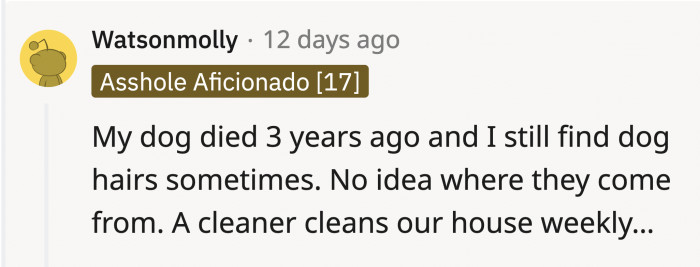
Dog owners can confirm that even with the actual dog gone, the hair still lingers
Being in OP's shoes, it's understandable that he doesn't want to deal with the dog hair...
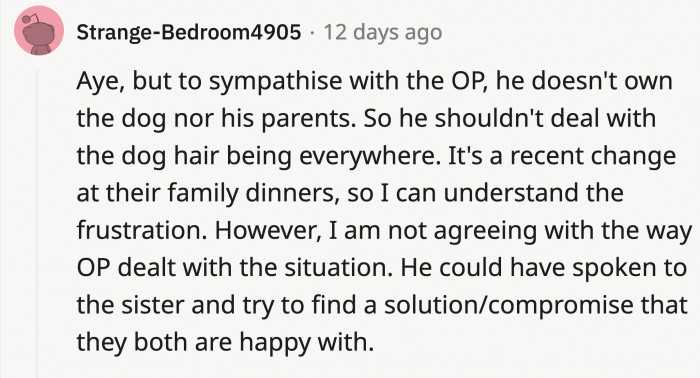
since dealing with it all over the house is quite frustrating...
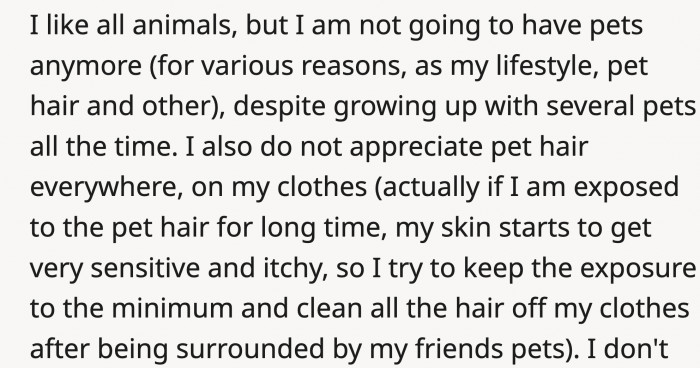
Family conflicts often arise from differing values and priorities, particularly when it comes to pets. When family members express their feelings and perspectives, they are more likely to reach a resolution that honors everyone's needs.
Facilitating discussions about the emotional significance of pets and individual preferences can promote understanding and reduce tension within the family.
This is similar to how a Redditor got called out for not considering their sister’s dog family for photos.
The decision of the man to avoid family gatherings when his sister's dog is present highlights a deeper response to discomfort. The presence of the dog, symbolized by the dog hair found in his dinner, serves as a trigger for his anxiety. This behavior illustrates a protective measure, as he seeks to create boundaries to safeguard his comfort in a situation he finds unsettling. By choosing not to visit his parents when the dog is around, he is not merely expressing a dislike for pets; he is actively managing his emotional wellbeing in an environment that feels threatening to him.
That dinner plate changed the whole tone of the visit.
Conflict within families can lead to emotional distress for all parties involved.
but OP could've made a compromise with his sister
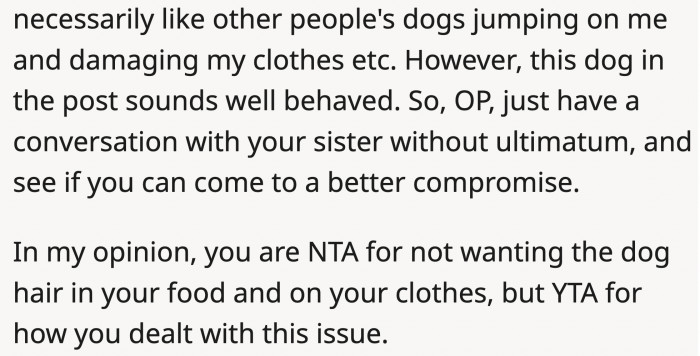
This comment pointed out that what OP did was actually not an ultimatum
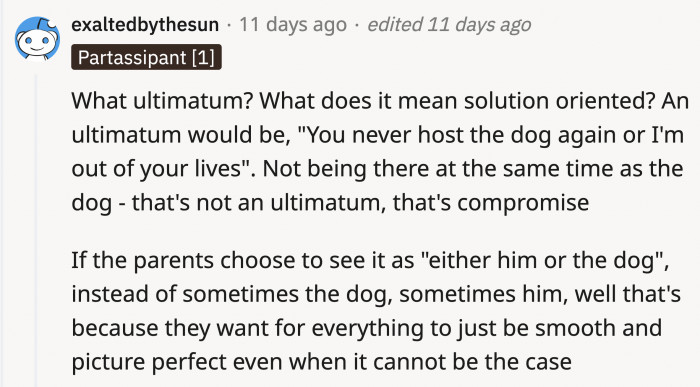
But he still needs to talk about it with them if he has a real...
Understanding the motivations behind family members' actions can alleviate feelings of frustration.
To navigate such family conflicts, individuals can benefit from developing assertive communication skills.
Seeking family therapy could also provide a supportive space for discussing these dynamics and finding common ground among family members.
It's important to recognize the role of family dynamics in shaping individual behavior and reactions.
Understanding these dynamics can help create a more compassionate dialogue among family members.
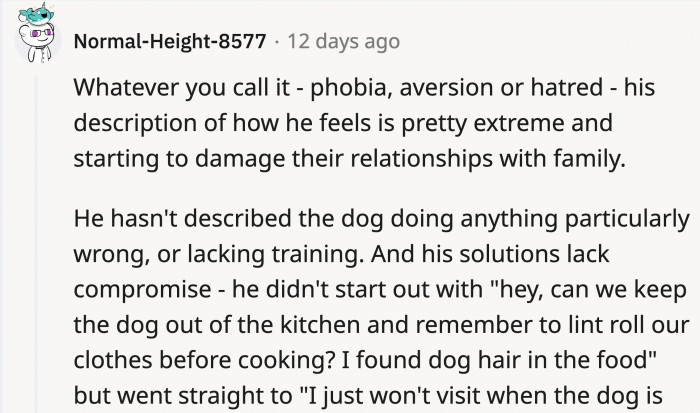
...aversion to the dog, whether it behaves or not.
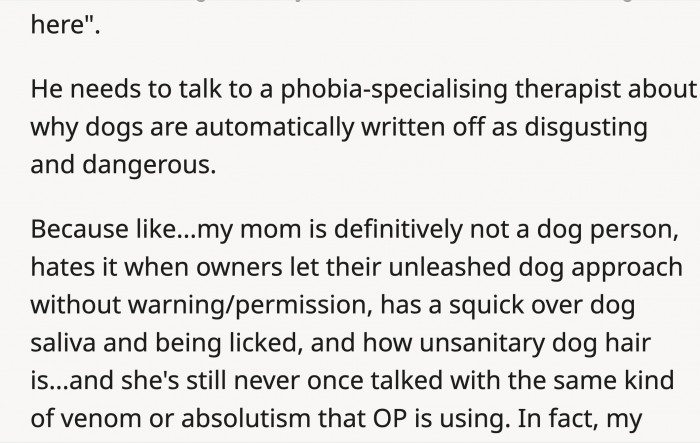
It might also be a phobia he is not aware of
The opinions about OP were mixed, ranging from NTA to TA and even to ‘Everyone Here Sucks.’ In the end, the votes that were favored indicated he was the a**hole.
They pointed out that he could’ve approached the situation better rather than handling it the way he did. He might be forced to iron things out so the visits would still run smoothly.
A few commenters thought he made the whole thing harder than it needed to be.
To address these tensions, family members should engage in open and respectful conversations.
This scenario highlights the critical need for establishing personal boundaries within family dynamics.
The recent situation involving a man who refuses to visit his parents when his sister's dog is present highlights the complexities of family dynamics and personal boundaries. The incident, sparked by an unexpected dog hair in his dinner, raises questions about comfort levels and the role of pets in familial relationships. Establishing boundaries is not merely about asserting dislike; it is about fostering respect and understanding among family members. This case serves as a reminder that open dialogues about our needs can lead to healthier interactions, allowing each member to feel valued and respected in their choices.
That family dinner turned into a bigger debate than anyone expected.
Empathy is a critical component of healthy family relationships. By recognizing the emotional significance of pets for one family member, others can develop a more compassionate approach to navigating conflicts.
Encouraging family members to express their feelings and perspectives can lead to more empathetic interactions, ultimately strengthening family bonds.
Ultimately, fostering open communication about individual preferences and emotional needs can help families navigate conflicts involving pets.
Finding common ground in family disagreements is essential for maintaining harmony.
This situation illustrates the importance of understanding the emotional dynamics at play in family conflicts involving pets.
The man's discomfort, stemming from finding dog hair in his dinner, highlights how pets can inadvertently become points of contention. Open communication about needs and preferences, particularly around pet-related issues, is crucial in families. This situation underscores the importance of empathy and compromise. Without addressing such conflicts directly, family relationships may suffer, leading to estrangement or resentment. By fostering dialogue about family members' comfort levels with pets, families can work towards a more harmonious environment where everyone feels respected.
Want more dog-invitation drama? See how a couple tried to ban their Newfoundland, but family ignored it.
Share this article:





