
Husband Finally Puts His Foot Down When His Serial-Pet-Abandoner Wife Tells Him She Wants To Rehome A Dog She Lost Interest In

Some pet stories start with a cute puppy and end with a full-blown relationship fight. This one starts there and keeps getting messier.
In a Reddit AITA post, a husband says his wife has a pattern of getting attached to dogs, losing interest, and wanting to rehome them once the novelty wears off. He says he warned her before they got their first puppy that he would bond hard and would not be okay with giving the dog away later.
Now she wants to keep the newer, more expensive dog and get rid of the first one, and he is refusing to go along with it. Read on.
Is OP the a**hole in this situation? Here's how it started

OP's wife has a bad history with rehoming dogs when she doesn't find them adorable anymore
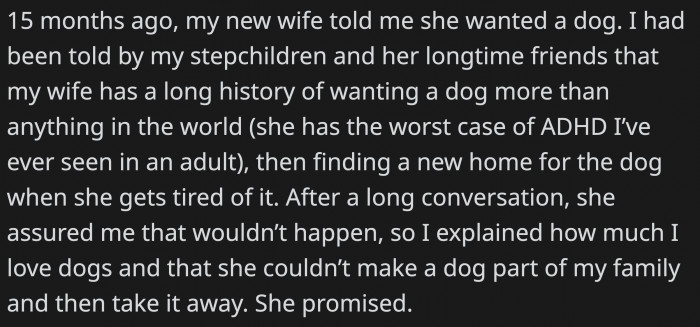
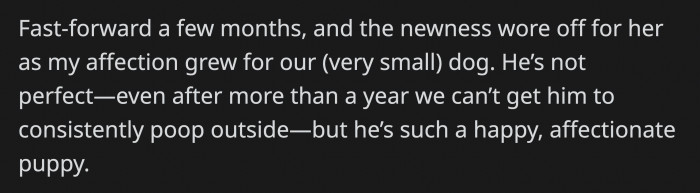
Despite her assurance, she still ended up not loving the dog as much as OP
The concept of attachment theory suggests that our relationships with pets can closely mirror our human relationships, highlighting the emotional bonds we can form with animals. Pets often serve as secure attachments, providing emotional support that can enhance our psychological well-being. This attachment can lead to significant distress when individuals consider rehoming a pet, as it can trigger feelings of abandonment and loss similar to those experienced in human relationships.
As such, understanding the depth of this emotional connection is crucial, especially for individuals who may not recognize the psychological implications of their decisions regarding pets. Through fostering a deeper awareness of these emotional ties, individuals may be better equipped to consider the long-term impacts of their decisions on both their pets and themselves.
The emotional landscape surrounding pet ownership is complex and layered. In the case of the husband confronting his wife's desire to rehome a dog she no longer feels invested in, we see the potential for deep psychological repercussions. Pets symbolize unconditional love and companionship, and when a pet is discarded, it mirrors the feelings of betrayal and loss commonly found in human relationships. This abandonment can create turmoil not only for the pet but also for the owner who is left grappling with feelings of rejection.
In this situation, the husband's stance highlights a significant conflict of values. His decision to put his foot down reflects a commitment not only to the pet but also to the principles of responsibility and emotional attachment that he believes should underpin pet ownership. This conflict underscores the importance of aligning on values within a relationship, particularly when it involves the care of a living being. The emotional distress faced by the husband signals a broader issue of commitment and the weight of responsibilities that come with sharing a life and pets with someone.
The situation presented in the article highlights the emotional ramifications of pet abandonment, which can be profound for both the animal and the owner. The decision to rehome a pet, particularly one that has been a part of the family, is not just a logistical issue but an emotional one as well. Abandoning a pet often leads to guilt and shame, feelings that can linger and affect one's mental health. Moreover, this scenario may reflect deeper psychological issues, such as attachment anxiety, which can be rooted in unresolved personal relationships. The husband’s firm stance against rehoming the dog illustrates an important boundary in relationships that can arise when one partner's actions threaten the emotional fabric of the household. This underscores the need for responsible pet ownership and the importance of considering the long-term commitment that comes with bringing a pet into one’s life.
Spur of the moment she bought an expensive dog and is interested with it more than the first dog

She wants to only keep the second dog but OP said that he loves the first dog like family already and refused
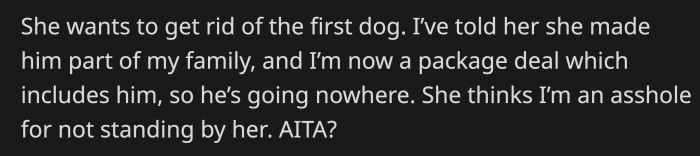
OP realized that the people are right, he's NTA
Understanding Behavioral Patterns
Research in behavioral psychology indicates that patterns of abandonment and rehoming pets can signal deeper psychological issues within relationships. This could point to a lack of accountability or a failure to empathize with the needs of others, both human and animal.
Addressing these patterns requires open communication and an understanding of underlying motivations, allowing partners to explore their emotional responses and potential fears around commitment. Engaging in couples therapy or relationship counseling can be a beneficial way to navigate these complexities and build a healthier dynamic.
The dynamics between partners regarding pets can serve as a microcosm of larger relationship issues. Therefore, the husband's response to his wife's desire to rehome the dog may highlight underlying issues of trust and commitment within their relationship. Addressing these attachment styles through couples therapy may be beneficial in fostering better communication and understanding about shared responsibilities.
Studies show that pet ownership often mirrors familial relationships, where pets are viewed as integral family members.
This emotional projection complicates the decision to rehome a pet, as it involves not just the animal's welfare but also the owner's psychological state.
He gave an insight about how their situation is at home with the dogs

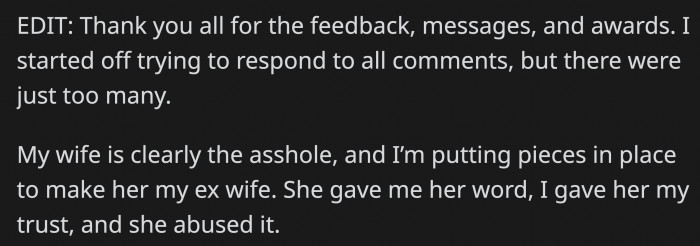
Then gave an update about the newer dog and possible divorce

He regretted not knowing her bad traits before he married her

One significant psychological aspect of pet ownership is the concept of responsibility, which can serve as a developmental milestone for adults. When individuals decide to rehome a pet, especially after a period of initial enthusiasm, it can indicate a struggle with these responsibilities, possibly stemming from anxiety or stress. To address this, individuals can benefit from reflective practices, such as journaling or therapy, to explore their feelings about commitment and responsibility. Developing coping strategies to manage stress and anxiety can also help individuals maintain their commitment to their pets.
Practical Recommendations for Conflict Resolution
Relationship counseling can provide a safe space for both partners to express their feelings and expectations regarding pet ownership.
Moreover, creating a joint agreement about care responsibilities can help mitigate future conflicts. For instance, couples can develop a pet care schedule, ensuring both parties feel involved and valued in the pet's life, fostering a sense of teamwork that can extend into other areas of their relationship.
The same regrets show up in this Redditor story, where the wife demanded rehoming the dog.
Coping Strategies for Pet Loss
When faced with the decision to rehome a pet, it's essential to engage in reflective practices.
They deserve the love and attention, especially when you chose to have them in the first place
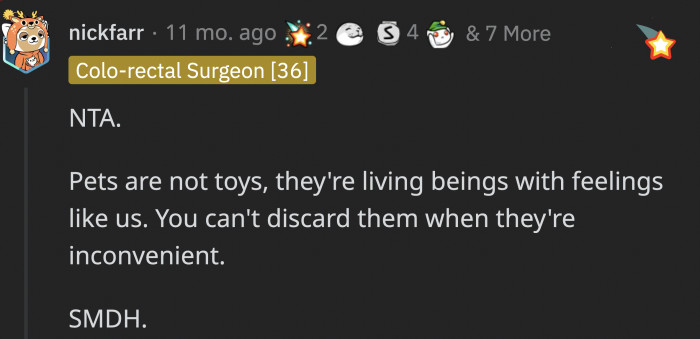
The disregard of OP's wife about their conversation raises red flags for future situations
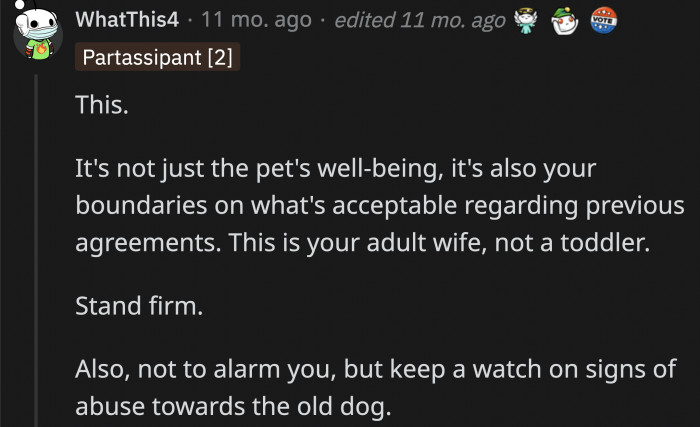
OP had mentioned ADHD but it might not be the reason for all the dog turn overs

The Role of Empathy
Empathy plays a crucial role in how individuals relate to their pets and their partners.
Understanding the psychological implications of pet ownership can also lead to more compassionate discussions. A study by the University of Michigan highlights that pet owners often experience a sense of identity connected to their pets, which can complicate decisions about rehoming. This identity connection can create profound emotional reactions when faced with the idea of separation.
Recognizing this emotional weight can help partners approach discussions about pets with sensitivity, ensuring that both sides feel heard and validated. This understanding can promote a more collaborative approach to finding solutions that respect both partners' feelings.
Understanding the motivations behind wanting to rehome a pet can reveal underlying personal issues.
Recognizing these motivations, such as fatigue, stress, or feelings of inadequacy, can pave the way for healthier coping mechanisms.
Addressing these feelings directly rather than projecting them onto the pet can lead to more constructive outcomes and a deeper understanding of personal limits.
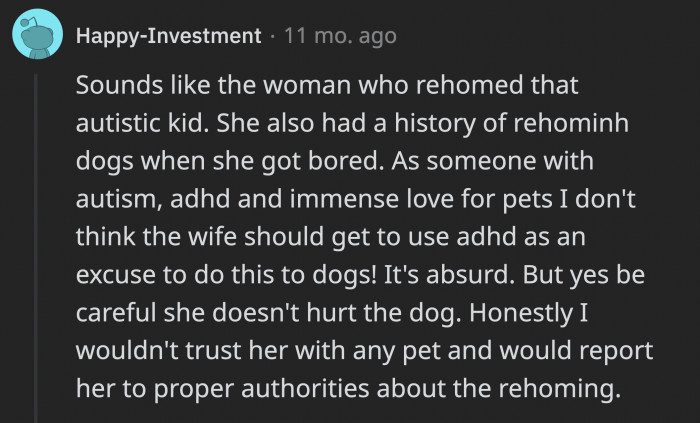
This Redditor pointed out that her ADHD isn't an excuse for the wife's behavior
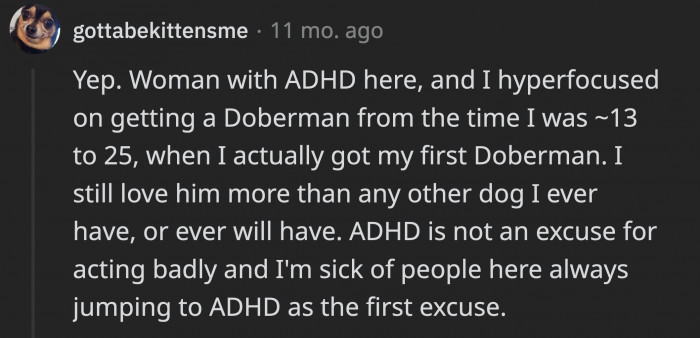
They may be hyper-focused on getting pets but it doesn't mean the it would result in getting rid of them when the 'newness' wears off
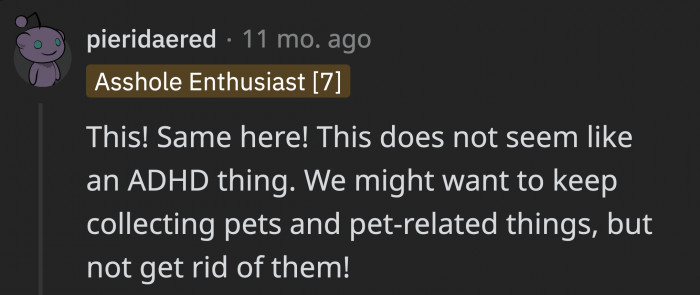
OP was advised to keep an eye out for any possible mistreatment from his wife
In considering the psychological effects of pet rehoming, it's essential to note the phenomenon of cognitive dissonance. This occurs when individuals experience conflicting thoughts or beliefs, such as the love for a pet versus the desire to rehome it. This dissonance can result in anxiety and guilt. To manage cognitive dissonance effectively, individuals can engage in cognitive restructuring.
Exploring the Role of Pets in Relationships
Pets often serve as emotional support systems for their owners, and their presence can significantly affect the dynamics of romantic relationships. Research indicates that couples who share the responsibility of pet care report higher relationship satisfaction, as it fosters teamwork and shared goals. A study from the University of Minnesota suggests that pets can help strengthen emotional bonds, but conflicts regarding pet care can threaten these connections.
This underscores the necessity of aligning values concerning pets early in a relationship. Couples may benefit from discussing their expectations about pet ownership before making commitments that involve pets, thus preventing future conflicts and emotional distress.
Someone shared a story about their DIL and her rehoming a lot of pets, the post and comments shed light that it's not because of a medical situation
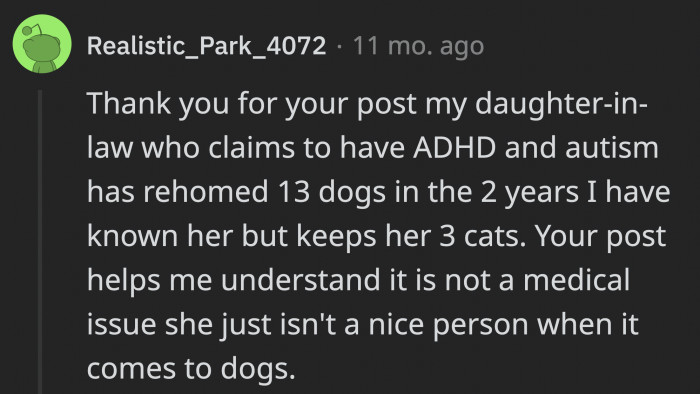
Pets are more than passing projects that you need to see through, they are family

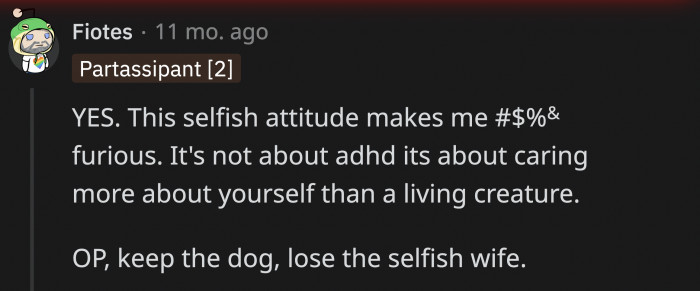
A lot of the comments agree that it's selfish of the wife to keep going through the cycle of getting new pets and then ending up rehoming them
Fostering Long-Term Commitment
Long-term commitment to a pet requires proactive engagement and continuous reassessment of one's capabilities and resources.
Ultimately, the intersection of pet ownership and intimate relationships highlights the complexities of human emotions and connections. The distress caused by the thought of rehoming a pet can be a reflection of deeper relational issues that need addressing. It's important for both partners to explore their feelings and motivations behind their stances on pet ownership, which can lead to greater understanding and intimacy.
Therapeutic interventions focusing on emotional regulation and communication can aid in navigating these difficult discussions, allowing partners to create a more harmonious living situation that honors the needs of both the pet and their relationship.
Someone suggested sarcastically that maybe the pets are not the ones that need rehoming

OP should consider how things might play out and how it would affect his relationship

Pets can offer you a lot of things. Comfort, company, and sometimes entertainment, but before you get them, you should ask yourself what you can provide for them as well.
They aren't subjects that you can simply ignore when you feel like it. They're living creatures that can turn into your best buddy or family if you treat them right.
The decision to rehome a pet is not just a logistical challenge but also a deeply emotional one.
This situation highlights the critical need for mutual respect and shared commitment in pet ownership.
The situation detailed in the article highlights the profound emotional ramifications that accompany pet ownership and the decisions tied to it. The husband's decisive stand against his wife's inclination to rehome a dog she has lost interest in underscores the complexities of commitment and responsibility within relationships. This incident serves as a microcosm of the emotional bonds formed not only with pets but also within human relationships, illustrating how one partner's disregard for a shared commitment can lead to significant friction.
Moreover, the dynamics at play here reflect a deeper need for open dialogue and mutual understanding in relationships. The husband’s intervention can be seen as an attempt to reinforce the values of loyalty and empathy that are essential for nurturing both human and animal bonds. Recognizing the emotional weight of such decisions is crucial in fostering a supportive atmosphere, where the responsibilities of pet ownership are honored and respected by all parties involved.
That dog is not a disposable hobby.
For more “another pet won’t fix it” pushback, see how a man refused his depressed wife.
Share this article:





