Cultured Lady Kicks Out Her Russian Roommate For Naming Her New Dog "A Stereotypically Russian Name"
Living with a roommate will always be challenging. You have to be mindful and considerate of each other despite sharing a space.
OP has a wonderful roommate named Lisa. They have lived harmoniously together for a while without having any major issues.
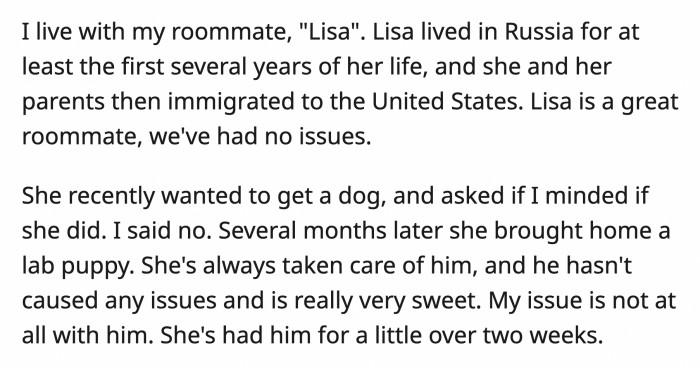
They only started having a problem when Lisa got a dog. Here's what we know about Lisa: she lived in Russia for a while when she was a child, but her family has since moved to the US.
She told OP beforehand that she was thinking of getting a dog and asked if OP minded. OP said that she didn't mind at all.
A few months later, Lisa brought a Labrador Retriever puppy home. Lisa is a very responsible dog owner, and OP hasn't had any problems with the dog so far.
He has been sweet for the last two weeks that they've had him at home. The problem stemmed from Lisa's choice of name.
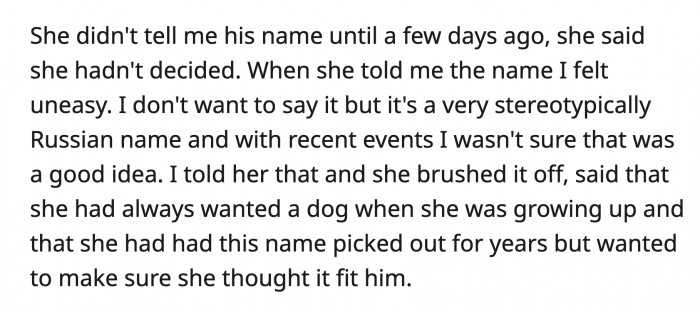
Lisa didn't tell OP what she was thinking of naming the puppy because she had not decided yet. When Lisa finally revealed the puppy's name, OP felt uncomfortable.
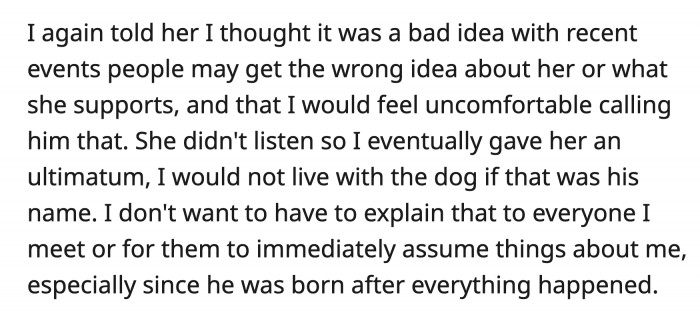
She didn't share what the name of the pup was but said it was a stereotypical Russian name. Given the recent events in Russia, OP felt the name was a bad idea.
OP told Lisa about her concerns, but Lisa brushed them off
Lisa said she had wanted a dog ever since she was a kid; she even had this name picked out, but she wanted to make sure it fit the pup. OP once again shared how she felt about the name.
She told Lisa that some people might jump to conclusions about who Lisa supports when they learn about the dog's name. Lisa didn't share OP's sentiments and ignored her concerns.
OP gave her an ultimatum and said she wouldn't live with the dog if Lisa kept the name. OP said she didn't want to keep explaining why the dog has that name, and she didn't want people to judge her after hearing the name.
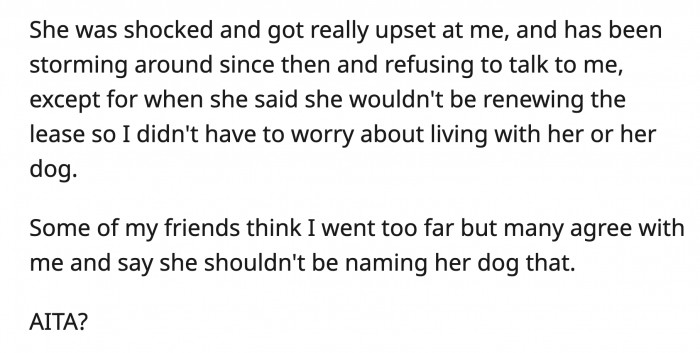
Lisa was shocked by OP's ultimatum and has been giving her the silent treatment. When she finally talked to OP, it was to inform her that she wouldn't be renewing her lease, so OP didn't have to worry about living with her or her dog.
Is OP the a**hole for asking her roommate to rename her dog because of her personal reservations? You can read her full post below:
With "recent events."
Cultural Sensitivity and Roommate Dynamics
This scenario illustrates the delicate balance required in shared living situations, especially when cultural identities come into play. Research by Dr. David Matsumoto, a psychologist known for his work on culture and emotion, highlights how cultural backgrounds significantly shape individual perceptions and reactions. When Lisa chose a name with Russian connotations, it likely evoked a complex interplay of her cultural identity and the current socio-political climate. As highlighted in a study published in the Journal of Cross-Cultural Psychology, individuals often experience heightened emotional responses when their cultural symbols are involved, particularly in sensitive contexts.
This can lead to misunderstandings and discomfort, especially if the cultural significance of a name is not fully appreciated by the other party. Thus, fostering open dialogues about cultural backgrounds and personal feelings is crucial for roommates navigating such situations.

She won't be renewing her lease...

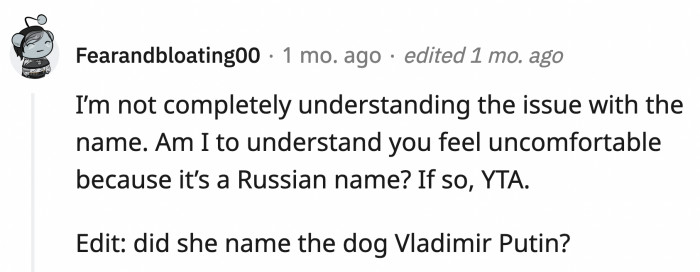
My bet is on the dog being named Vladimir sans last name
Social psychologists have extensively examined the impact of labeling and stereotypes on interpersonal relationships. Dr. Jonathan Haidt, a prominent social psychologist, states, "Labels can create biases that distort our perceptions of others, often leading to misunderstandings and damaged relationships." This aligns with the concept of 'social categorization,' where individuals classify themselves and others into groups, potentially resulting in stereotyping or prejudice, especially when a group is viewed negatively in society. In this scenario, OP's discomfort with the dog's name may reflect broader societal tensions regarding Russian identity, particularly in the context of recent geopolitical events. Recognizing these dynamics is essential for fostering more inclusive interactions, as emphasized by Dr. Michele Gelfand, who notes, "Understanding cultural contexts can help mitigate biases and promote empathy." For further insights, visit Dr. Jonathan Haidt's website and Dr. Michele Gelfand's website.
OP is blowing this way out of proportion
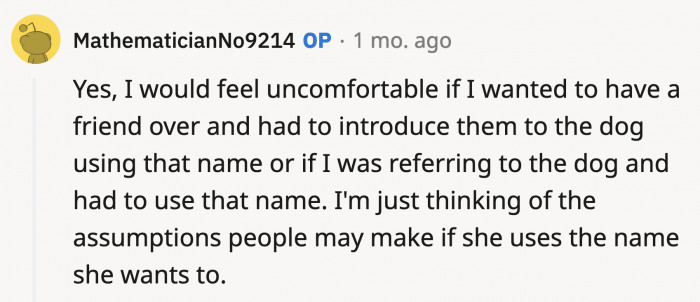
Correct, OP is overthinking the dog's name a lot. Plus, it is a common name. Should everyone named Vladimir change their name?
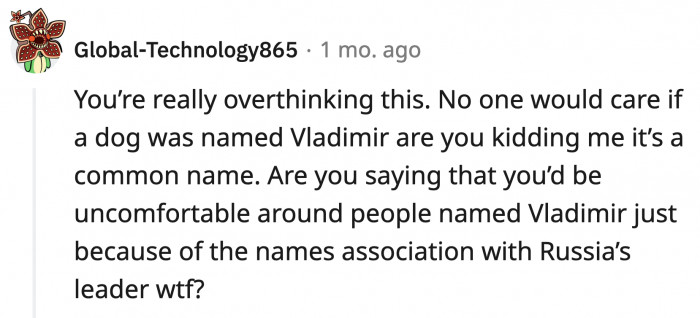
That's a lot of hoops to jump through just to be offended

Communication Strategies for Conflict Resolution
Effective communication is vital in resolving conflicts, especially in shared living situations. According to Dr. John Gottman, a leading marriage researcher, the way people discuss issues can predict the longevity of relationships. His studies reveal that using 'I' statements—expressing personal feelings and needs without blaming—can significantly improve communication. For instance, OP might express her feelings by saying, 'I feel uncomfortable with the name due to current events,' rather than accusing Lisa of insensitivity.
This approach reduces defensiveness and promotes understanding, leading to more productive discussions. Additionally, the research indicates that allowing space for each person's perspective fosters empathy, which is crucial when cultural identities are involved.
Maybe OP's real problem is having a Russian roommate
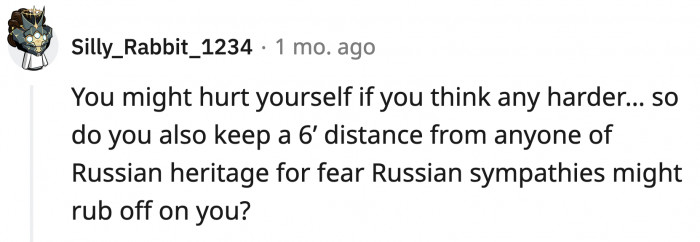
It is a gross oversimplification of a literal war
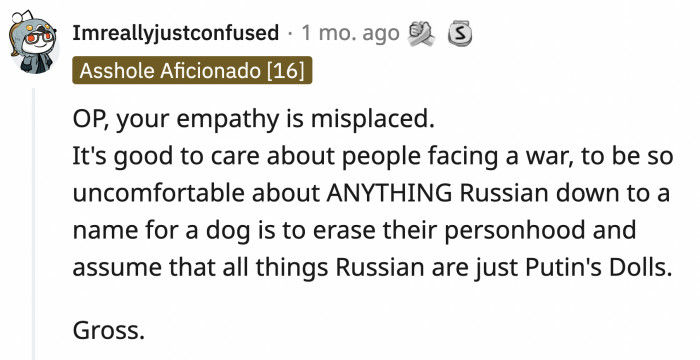
Let's hope read this comment

The discomfort stemming from cultural references, as seen in this situation, can be linked to the psychological concept of 'cognitive dissonance.' This occurs when individuals experience discomfort due to holding conflicting beliefs or values. Dr. Leon Festinger's foundational research on cognitive dissonance suggests that people are motivated to reduce this discomfort, often by altering their beliefs or rationalizing their feelings.
In this case, OP might feel an internal conflict between wanting to accept Lisa's choice of name and feeling uncomfortable about its implications. Understanding this psychological phenomenon can help individuals navigate their feelings and find a path to resolution.
OP was so bothered by the dog's name she had to go to Reddit to look for sympathy
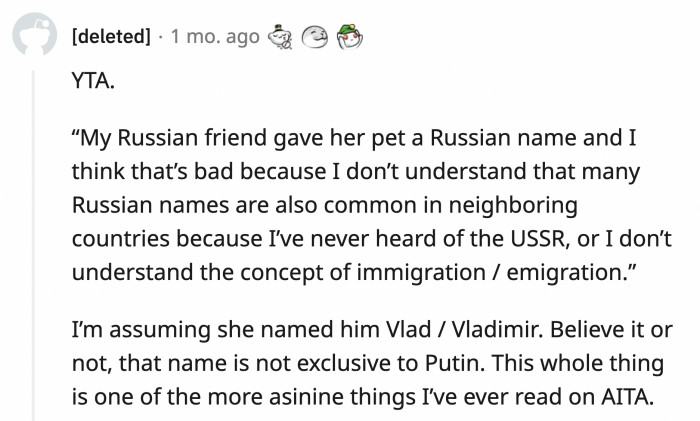
Hey, OP do you know this?
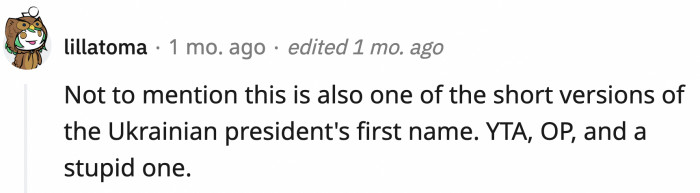
OP heard the name and ran with her feelings

The Role of Empathy in Interpersonal Relationships
Empathy plays a significant role in fostering harmonious relationships, especially in diverse living situations. Dr. Brené Brown, a research professor at the University of Houston, emphasizes that empathy involves understanding another person's perspective and emotions, which can be particularly challenging when cultural identities are involved. Her research demonstrates that empathy can bridge gaps between differing experiences, leading to stronger bonds and reduced conflict.
Encouraging OP to practice empathy by actively listening to Lisa's perspective on the dog's name might help alleviate tensions. When individuals feel understood, they are more likely to reciprocate that understanding, creating a supportive environment.
She was so offended by the name that she couldn't even type it out for her post
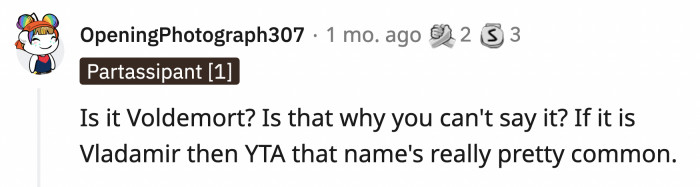
10/10 for the Parks and Rec reference

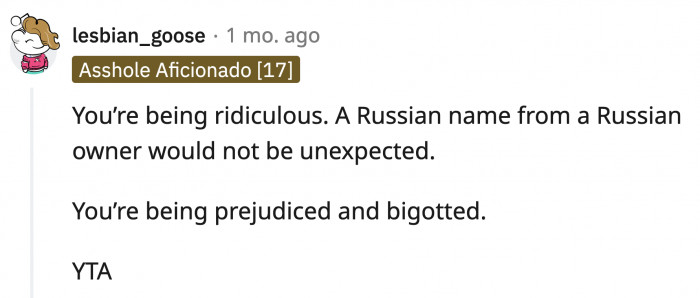
OP tried so hard not to offend imaginary people she was going to introduce the dog to that she became prejudiced herself
Research suggests that our immediate social environment significantly influences our mental health and well-being. A study published in the American Journal of Public Health found that positive and supportive relationships can buffer against stress and anxiety. Conversely, unresolved conflicts can lead to increased feelings of isolation and distress.
In this case, OP and Lisa's relationship could benefit from strategies aimed at conflict resolution, such as regular check-ins or establishing shared values regarding their living situation. By creating a culture of open communication and mutual respect, they can foster an environment that supports both individual identities and their shared living experience.
It was adjacent to the issue and recalls to it; therefore, it must be offensive

OP thought she was woke when she actually sounded ignorant

This. All of this.

Cultural Competence and Its Importance
Cultural competence is an essential skill for navigating relationships, especially in diverse settings. It involves understanding and respecting different cultural backgrounds and the implications they have on individual behaviors and perspectives. According to the American Psychological Association, developing cultural competence can enhance interpersonal relationships and reduce instances of conflict.
For OP, this might involve learning more about Lisa's Russian heritage and the significance of names within that culture. By taking the time to understand the cultural context, OP could foster greater compassion and sensitivity, enhancing their roommate dynamic and potentially reducing future conflicts.
Vladimir is not a slur, OP. Neither is Karen, by the way.

We haven't seen the Am I The A**hole sub that united on a judgment in a while. Like what the commenters said, OP is being ridiculous.
Good for her for caring about world events and the loss of lives, but her concern is misplaced. Her whole problem with the dog's name gives off a lot of "Kim, there are people that are dying" energy.
Psychological Analysis
This scenario really illustrates how cultural backgrounds can profoundly shape our perceptions and reactions. OP's discomfort with the dog's name likely stems from a mix of societal pressures and personal values, creating a kind of cognitive dissonance where she feels torn between her roommate's cultural identity and the current geopolitical climate. Encouraging open dialogue about these feelings could help both parties understand each other's perspectives, reducing tension and fostering a more supportive living environment.
Analysis generated by AI
This situation highlights the intricate dynamics of shared living arrangements, especially when cultural identities are involved. By applying psychological principles such as empathy, effective communication, and cultural competence, roommates can create a more harmonious living environment. Addressing conflicts through understanding and open dialogue not only aids in resolving immediate disputes but also strengthens the overall relationship, fostering a sense of community and support. Ultimately, navigating these complexities requires both parties to remain aware of their feelings and strive for mutual respect and understanding.