
Self-Proclaimed "Not A Dog Person" Divides Reddit When He Declared That People Who Bring Their Dogs To Stores Are Attention Seekers

Reddit has a way of turning a simple opinion into a full-blown pile-on, and this one hit a nerve fast. A self-described "not a dog person" said people who bring non-service dogs into stores are basically looking for attention, and plenty of Redditors had thoughts.
The post centered on dogs in places like Home Depot and other shops, which is one of those topics that always splits people right down the middle. Some see a harmless pet outing, others see a nuisance, and a few commenters brought up hygiene, allergies, and service animals along the way.
The original post pulled in thousands of upvotes and even more comments, so the debate clearly struck a chord. Read on.
OP says:

OP revealed that he wasn't a dog person, but he appreciated how well some owners treated their furry pets.

I wonder how OP feels about an emotional support mini horse.

The debate over dogs in stores got heated fast after one Redditor said bringing pets into retail spaces can come off like attention-seeking behavior.
That set off a familiar split, with some users defending dog-friendly outings and others saying shopping trips are not the place for pets.
Apparently, miniature horses (Li'l Sebastian!) are really good service animals.
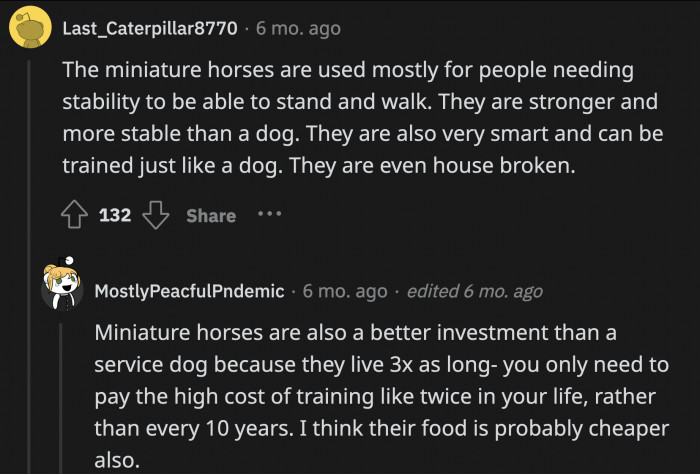
Reddit wasted no time bringing up the service-animal angle.
If the goose is wielding a knife, run away.

People who abuse the system eventually make it more difficult for those who need emotional support animals to acquire one.
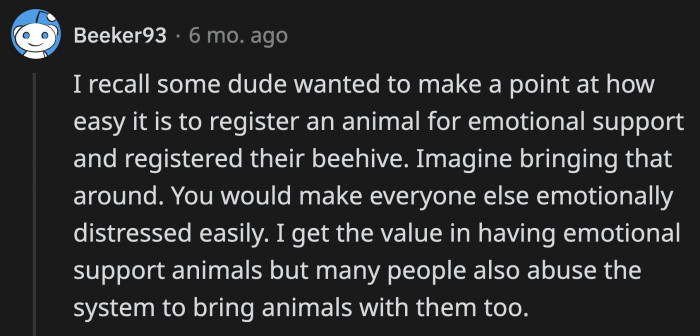
One block in the original post leaned into a broader explanation of why pet owners and non-pet owners often clash in public spaces.
The comments kept circling back to the same basic disagreement, whether dogs make stores better or just more annoying.
Unless they are service animals, of course, because it is actually unhygienic to bring an animal to a grocery store or a small restaurant.

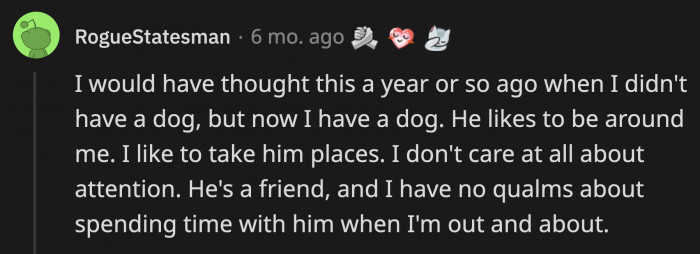
A former dog-free person was converted when they got a dog just a year ago. Now, they take their dog wherever they go because they enjoy having them around.
Another person said it doesn't matter as long as the dog is well-behaved and the owner corrects it if it's rowdy.
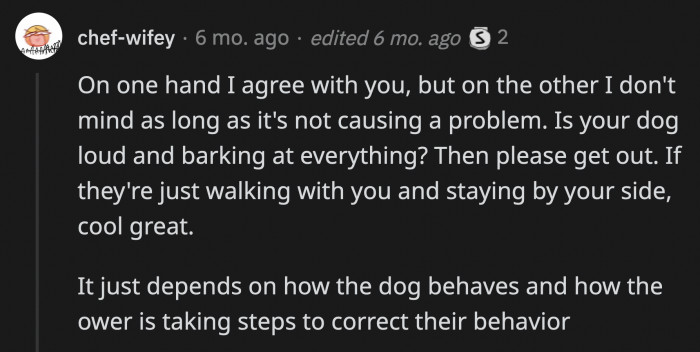
Naturally, the thread also turned into a debate about what counts as responsible pet behavior.
It also echoes the allergic Redditor who confronted an entitled dog owner with a non-service pet.
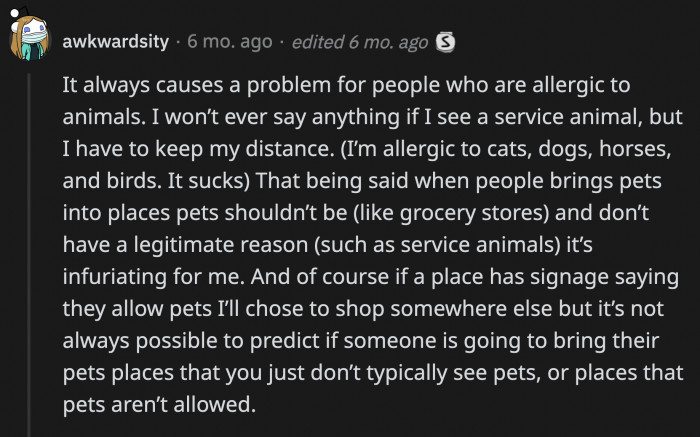
This is a valid point to make; animals pose a health risk to people who are allergic to them.
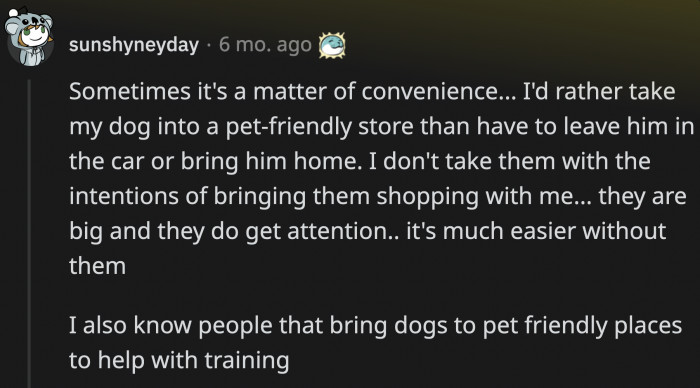
Bringing their dog to pet-friendly places is a matter of convenience and a training tool for some pet owners.
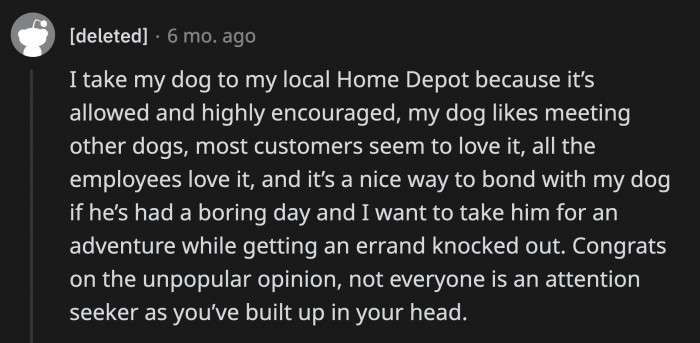
It is indeed unfair to label everyone who takes their dogs to stores as attention seekers. But dogs do have free rein in Home Depot.
Some commenters pushed back hard on the attention-seeker label and said the issue is more about boundaries than motives.
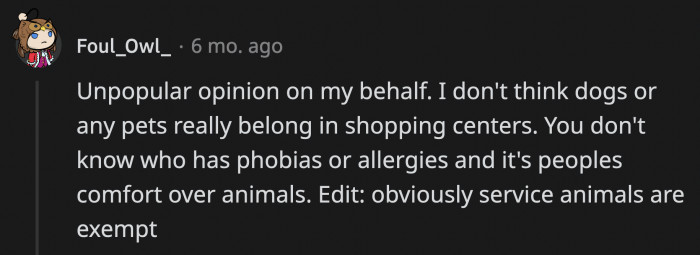
Someone agreed with OP wholeheartedly. They said that, with the exception of service animals, pets shouldn't be brought to shopping centers.
A responsible owner would clean up after their pets, but not everyone belongs in that category.

A person who was previously traumatized by an incident with a large dog shares OP's sentiments.
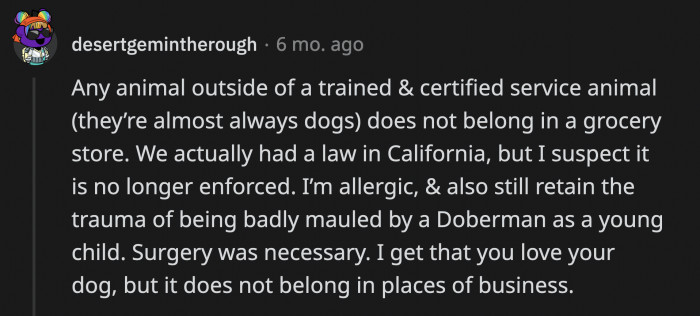
I agree, but all dog owners must understand that there are limitations to the places they can take their dogs.
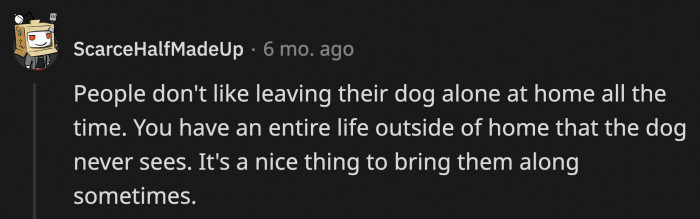
According to this pet owner, it may be attention-seeking to some degree, but it's for the benefit of their gorgeous pet.
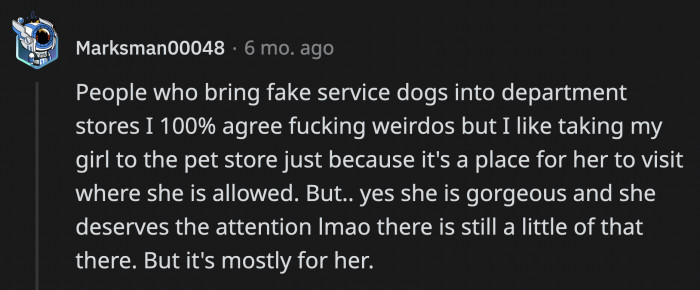
Truly one of the bravest unpopular opinions on the subreddit, given the level of love Reddit has for dogs.

I love my dog; don't get me wrong, but there are some places I just wouldn't take him. Unless it's a service dog, owners shouldn't bring their dogs to the grocery store or a place that serves food; it's just a tad unhygienic.
I think my dog can survive the one to two hours when I go to the grocery store without him. Do you have an unpopular opinion you're brave enough to share?
The whole thread shows just how fast a dog debate can turn into a bigger argument about public manners and personal comfort.
For this Redditor, the unpopular opinion clearly landed, and not everyone was ready to let it slide.
Just like the Twitter fight over how dog-friendly stores should be, see the arguments here: how dog-friendly public places should be.
Share this article:





