
Devoted Mom Questions Her Priorities After Paying For Her Dog's Expensive Surgery When She Can't Afford To Do The Same For Her 26-Year-Old Son

Some family arguments get messy fast, but this one comes with a dog, an ACL tear, and a very expensive bill. A 57-year-old mom says she paid $15,000 for her yellow Labrador retriever’s surgery, then found herself unable to do the same for her 26-year-old son when he needed help after a soccer injury.
Her son is grown, working full-time, and no longer covered by her health insurance, but he apparently never signed up for his own plan. Now he wants her to help cover his ACL surgery, and the timing could not be worse because the family is still recovering from the dog’s operation a year ago.
The relatives are already weighing in, and the blame is flying in every direction. Read on.
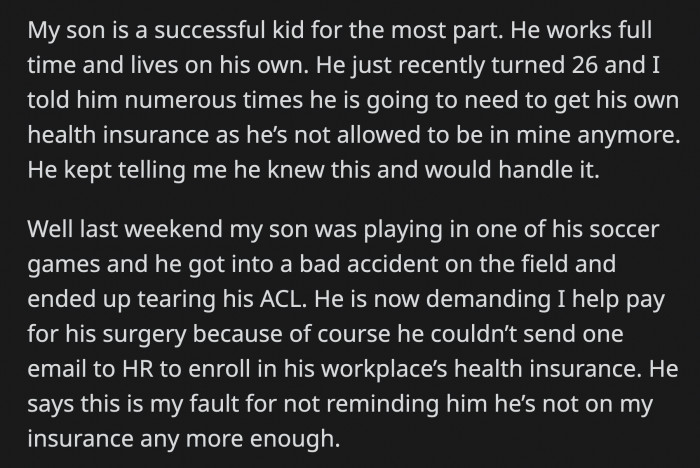
He told OP that his neglect was her fault because she didn't remind him enough about his health insurance

Below is OP's full post from Reddit: OP said she wants to help her son, but she has no idea how much the surgery will cost. Plus, they haven't financially recovered from her dog's surgery from a year ago.

OP and her husband also plan to retire in the next few years, and they are unsure of the possibility if they help their son with the surgery.
The situation presented reveals a profound emotional conflict that many parents may face, particularly when it comes to prioritizing the needs of their children versus their pets. The mother in this scenario, at 57 years old, finds herself grappling with the decision to pay for her dog’s expensive surgery while simultaneously struggling to extend the same financial support to her 26-year-old son. This raises critical questions about the nature of parental responsibilities and the complex emotions tied to them.
In this case, the mother's instinct to care for her pet reflects a deep-seated obligation that can sometimes overshadow the needs of her own child. The implications of such decisions are significant, as they can lead to feelings of guilt and stress, particularly when financial limitations come into play. The article highlights the delicate balance parents must maintain in their affections and responsibilities, emphasizing the potential for emotional turmoil when they feel torn between two beloved dependents.
The situation faced by the mother in the article raises important questions about the values and priorities that shape parental decisions. Her choice to fund her dog's expensive surgery while neglecting her 26-year-old son’s financial needs highlights a profound emotional attachment to her pet that may overshadow her obligations to her child. This conflict is particularly striking in a society that generally expects parents to prioritize their children's well-being above all else. The mother's internal struggle suggests a deep-seated dilemma where love for her pet competes with societal norms regarding parenting responsibilities.
OP's husband agrees with her, but their relatives say she's an a**hole for paying for her dog's ACL surgery but not doing the same for her son.

That is where the family debate really kicks in.
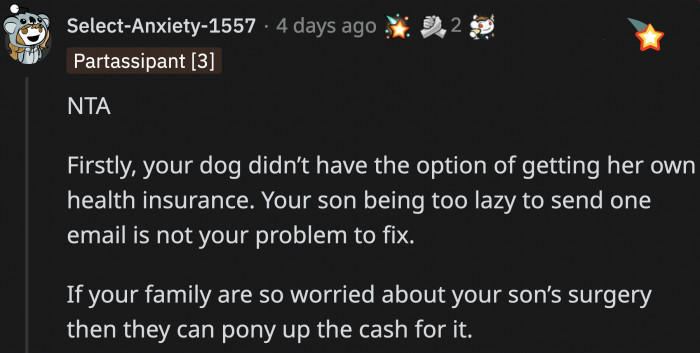
If they're quick to judge OP, they should be just as quick to help pay for the surgery
In case OP's family needs a visual aid to understand, here's a series of emojis

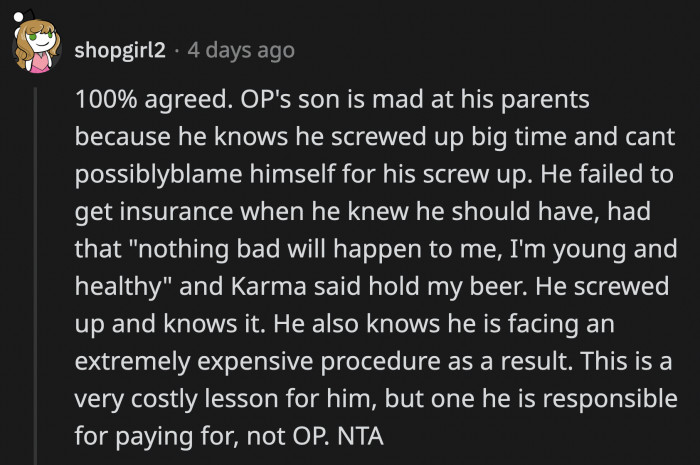
OP's son is deflecting blame to OP because he knows he colossally messed up
The scenario would be totally different if the surgeries were needed at the same time, but that isn't the case

OP's son has another option he can look into if he ever stops blaming OP for his mistake

The Psychological Impact of Guilt and Responsibility
Guilt can be a powerful motivator but can also lead to decision paralysis when faced with difficult choices.
The favoritism fight echoes the couple who bought a puppy for their daughter while their son grieved their family dog.
The Emotional Weight of Decision-Making
When faced with difficult choices, individuals may experience what psychologists describe as cognitive dissonance, the mental discomfort of holding conflicting beliefs or values.
In this mother's case, reconciling her feelings for her dog with her son's health needs may require a deep emotional exploration.
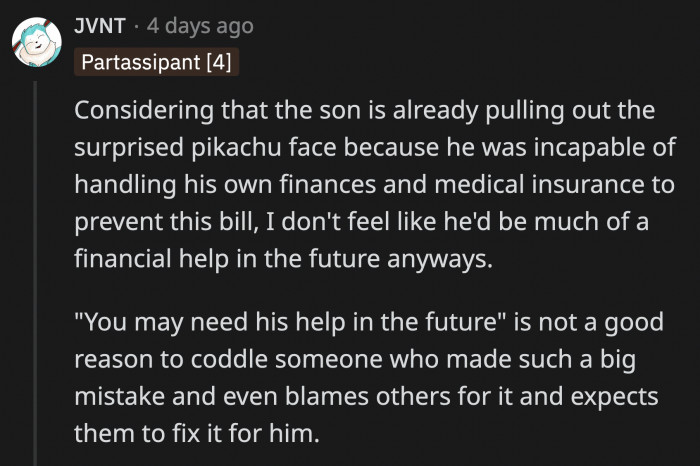
Because of what happened, OP should know that they can't ever depend on their son for financial help in the future

Based on our limited knowledge of him, he will definitely hold this against his parents if they need his help in the future
As an aside, OP might have overpaid for her dog's ACL surgery, but we don't really know where she lives

Building a support network can empower mothers to share their struggles and seek advice from those who understand their circumstances.
Encouraging open discussions about caregiving priorities can foster understanding and reduce feelings of isolation.
To navigate such dilemmas, individuals can benefit from engaging in reflective practices that clarify their values and priorities.
Journaling about emotions and thoughts surrounding the decision can help illuminate underlying motivations and concerns.
But we shouldn't forget that it's not the dog's or OP's fault that her son cannot afford his surgery
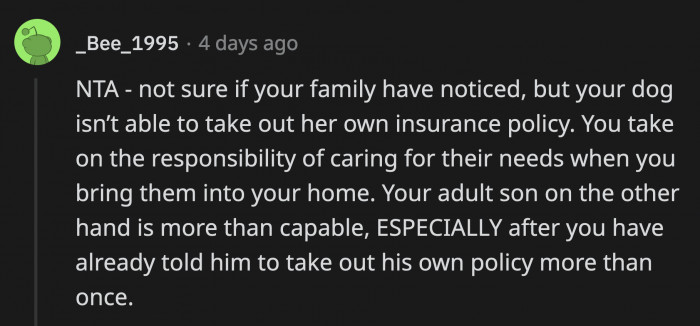
OP's son knows this, but he's too petty to accept he was at fault for this very expensive lesson
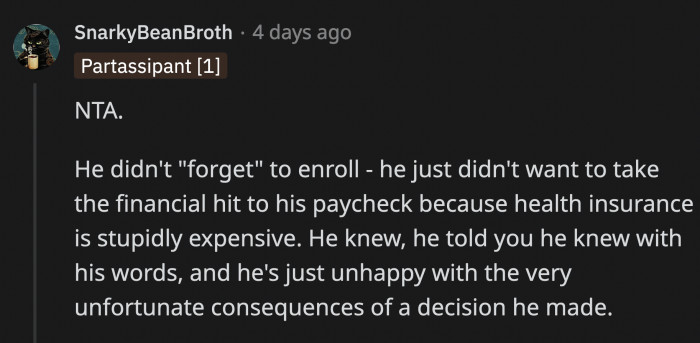
It doesn't take away from the fact that the American healthcare system needs a massive overhaul

Practical Strategies for Managing Guilt
Mothers should consider setting realistic expectations for themselves regarding caregiving responsibilities.
Seeking Support in Difficult Choices
It's important for individuals facing tough decisions to seek support from trusted friends or mental health professionals.
The whole situation is sad. OP is feeling guilty that she can't help her own son with his urgent medical need because it's simply too expensive.
However, she shouldn't ever regret paying for her dog's surgery a year ago; no pet owner would sit and watch their furry pal cry in pain when they were fully capable of doing something. OP is not clairvoyant, as she couldn't have possibly predicted this would happen to her son a year later.
The situation faced by the mother raises profound questions about the balance between emotional attachments and societal expectations. Her decision to invest in her dog's surgery while neglecting her son's needs highlights a complex emotional landscape where love and duty collide.
Reflecting on her priorities seems essential for this mother. By examining her choices, she may find clarity about her values and how they align with her role as a parent. The challenge lies in reconciling her bond with her pet against the backdrop of her son's struggles.
Embracing self-compassion could be key in this scenario. Understanding her motivations may lead her to a more fulfilling resolution that honors both her responsibilities as a mother and her emotional needs.
Engaging in mindfulness practices can also provide a mental break and help mothers reconnect with their emotions.
Ultimately, finding a balance between caregiving for pets and children requires self-awareness and compassion.
The situation presented highlights the profound emotional turmoil that can arise from caregiving decisions.
Now he's stuck with the fallout from a very expensive mistake.
Before you judge, read how a mom refused to wipe out savings to save her dog.
Share this article:





