Overly Attached Dog Owner Doesn't Think There's Anything Wrong With Bringing His Pet Everywhere - Even To Job Interviews

A dog that follows you around is cute for about five minutes. After that, it starts to feel less like “aww” and more like a full-time roommate situation, especially when the owner treats the pet like it has a standing invitation to everything.
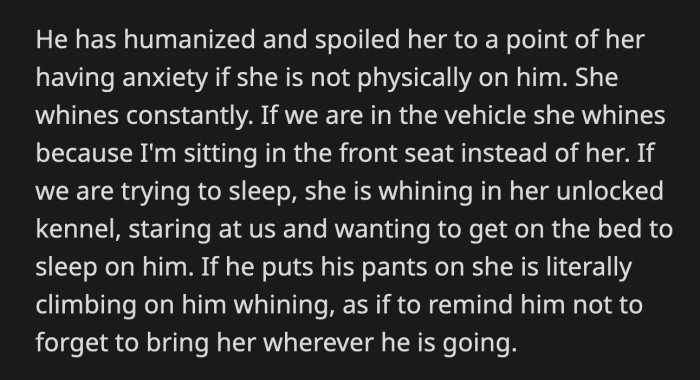
In this Reddit story, OP is living with a husband who is totally convinced there’s nothing wrong with bringing his overly attached dog everywhere. The dog jumps on him the second he’s getting ready to leave the house, as if the door only opens if the pet comes too. Then it gets messy at home, with the husband and his dog already sprawled on the bed when OP finally wakes up, and OP’s bad mood is basically fuel for the fire.
But the real chaos? He’s taking the dog to job interviews, and OP still can’t figure out how he thinks that’s normal.
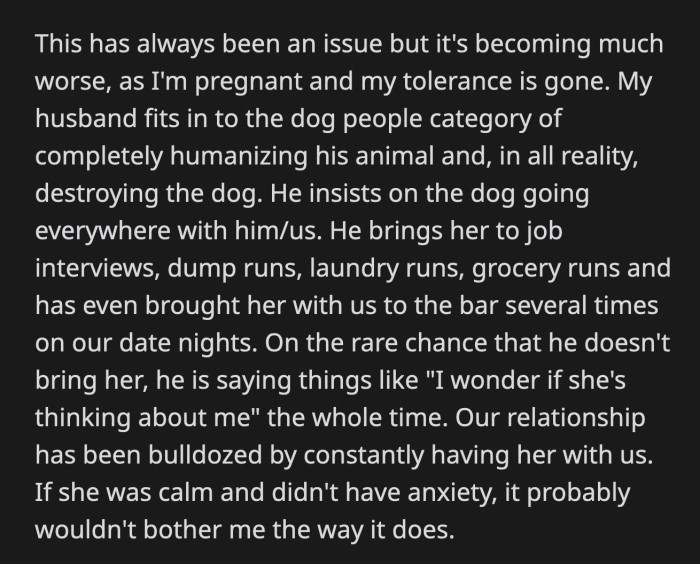
When she sees OP's husband preparing to leave the house, the dog jumps on him as a reminder to take her with him

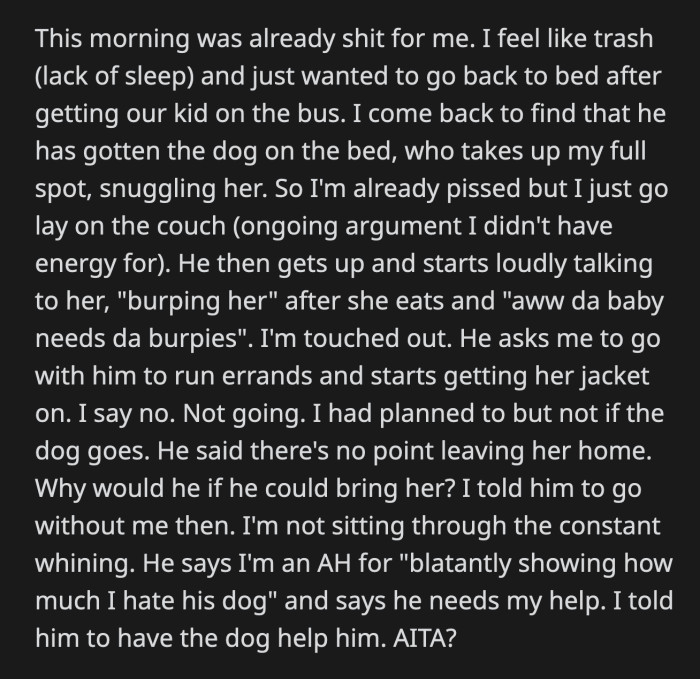
The last straw was when OP woke up one morning in a terrible mood because she didn't sleep enough
She prepared their kid for school and was looking forward to going back to bed when she saw her husband and his dog already laying on it
The situation presented in the article highlights a growing trend among certain pet owners who blur the lines of healthy attachment. The husband’s decision to bring his dog to job interviews illustrates how some individuals may seek emotional comfort from their pets, often to the detriment of social norms and expectations. This behavior may stem from an underlying need for stability and companionship that traditional human relationships fail to provide. However, the excessive reliance on a pet can lead to actions perceived as unusual, such as including a dog in professional settings. This case raises important questions about the balance between affection for pets and the necessity of fostering independent human connections.
The trend of bringing pets into every aspect of daily life, including job interviews, raises important questions about attachment and emotional dependency. The case of the overly attached dog owner illustrates how such behavior can stem from deeper psychological needs. Many individuals may seek the comfort of their pets in social situations that feel intimidating or uncertain. This reliance on pets for emotional support can highlight a fear of vulnerability and abandonment, suggesting that for some, a dog is not just a companion but a crucial source of stability in an unpredictable world.
The moment OP’s husband tries to leave, the dog jumps on him like a reminder slip, and it’s clear this pet is calling the shots.
Exploring Attachment Styles
In this case, the dog serves as a source of comfort and stability, but it can create challenges in social contexts, such as job interviews. Understanding these attachment styles can provide insights into why some individuals struggle to separate from their pets and what needs are being met through this behavior.
OP was pissed but she needed sleep, so she stalked towards the couch when her husband stood up while carrying the dog
He was talking in a baby voice to his dog and asked OP to run errands with him. She was planning to go but changed her mind when she saw her husband preparing the dog as well.
He said he needed OP's help, but he isn't willing to leave the dog at home. He accused OP of hating his dog, but she said he could have the dog help him since he needed it so badly.
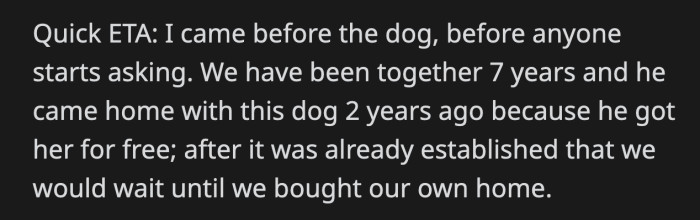
Her husband got the dog just two years ago and broke their agreement that they will only adopt when they have their own home
Treating your dog better than your own wife and children is definitely a sign that you have issues

The narrative surrounding the overly attached dog owner serves as a cautionary tale about the potential pitfalls of extreme pet ownership. While pets undeniably provide companionship and emotional support, the situation described raises concerns about the implications of bringing a dog to job interviews and other professional settings. This behavior not only reflects an unhealthy attachment but also threatens to disrupt critical social and professional interactions. The husband's reluctance to separate from his dog may indicate a deeper issue that could hinder both personal and career development.
Pet ownership can also serve as a form of social support, particularly for individuals who may struggle with social anxiety. However, this reliance can become problematic when it interferes with normal social expectations, such as during job interviews.
When individuals prioritize their pets over professional protocols, it may signal deeper issues related to boundaries and social norms.
This behavior may not only impact the owner's social interactions but also the perceptions of others in professional settings. Recognizing these patterns can help individuals address their emotional needs without relying excessively on their pets.
In order to have a productive conversation with her husband, OP has to avoid calling back to incidents that could make him defensive

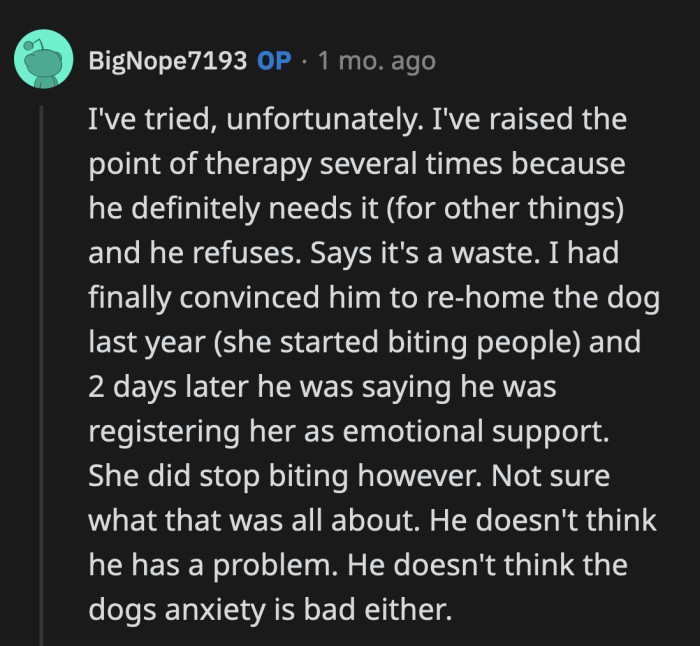
OP tried to approach her husband about going to therapy but he unfortunately thinks it's a waste
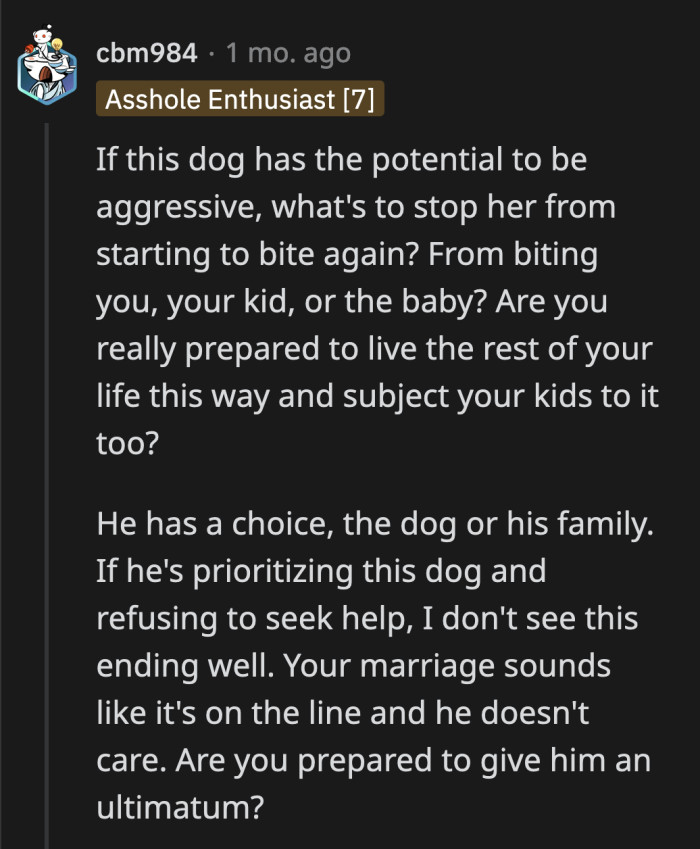
How would they handle the dog once the baby arrives given that it has a history of aggression?
When OP wakes up cranky because she didn’t sleep enough, the husband and his dog are already laid out on the bed, like it’s their routine and OP just lives there.
This also echoes the boyfriend who called his pregnant GF names after she refused to help find his runaway corgi.
Social Norms and Boundary Issues
Social psychologists have found that adhering to social norms is crucial for successful interpersonal interactions.
Bringing a pet to a professional setting can violate these norms, creating discomfort for both the individual and their colleagues.
This could lead to negative perceptions about one's professionalism and ability to handle responsibilities.
Social norms play a significant role in determining appropriate behavior in various contexts.
Social Norms and Professional Boundaries
In professional environments, adhering to social norms is crucial for success. Employers may view bringing a pet to an interview as a breach of professionalism, which can limit opportunities.
It's important for individuals to recognize the context of their interactions and adapt their behavior accordingly. Developing awareness of social cues and expectations can empower individuals to navigate these situations more effectively, reducing reliance on pets in professional settings.
OP already gave her husband an ultimatum — their family or his dog and he apparently chose OP. However, OP doesn't believe he will follow through.
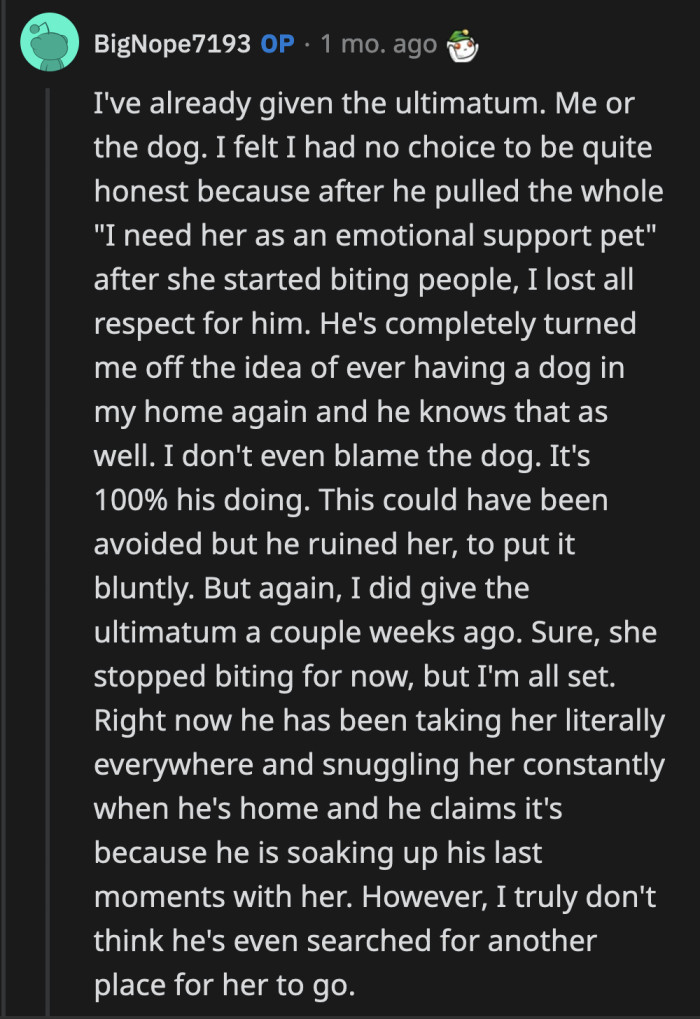
If two people share a home, the choice of whether they can have a pet is a joint decision
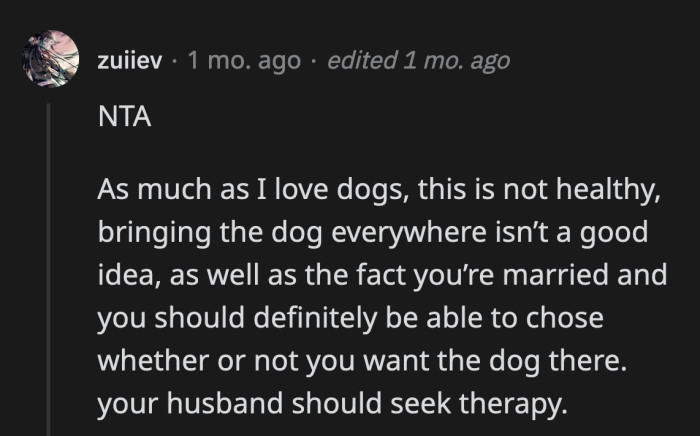
I'm sure he makes a great impression when he takes her to job interviews
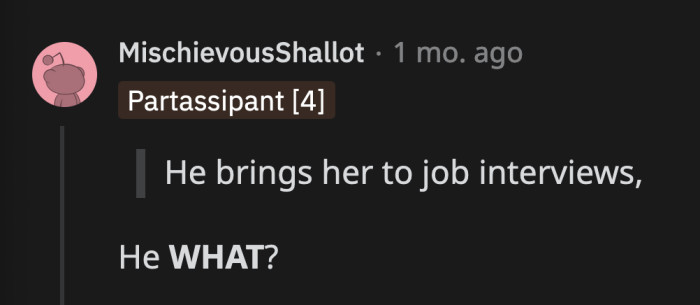
That’s when OP’s patience runs out, because the same dog that won’t let him leave the house is also showing up for job interviews.
Practical solutions suggest that individuals with a strong attachment to their pets should consider setting boundaries for when and where their pets can accompany them.
Establishing a balance between personal affection for pets and professional decorum can be beneficial.
Working with a therapist to explore underlying attachment issues may also help develop healthier coping strategies.
For instance, individuals can benefit from identifying specific situations where bringing a pet is acceptable versus when it's not.
This conscious practice can help mitigate potential conflicts while allowing owners to cultivate healthier relationships with their pets and their professional environments.
Practical solutions for managing attachment to pets include gradually increasing time apart to foster independence. This strategy helps individuals develop confidence in their ability to manage anxiety without relying on their pets as a crutch.
Therapeutic interventions, like cognitive-behavioral therapy (CBT), can also provide valuable tools for addressing anxiety and developing healthier coping mechanisms. Research shows that CBT can effectively reduce anxiety symptoms, improving overall emotional regulation and independence.
He is making very selfish decisions for a person who is about to have a second child
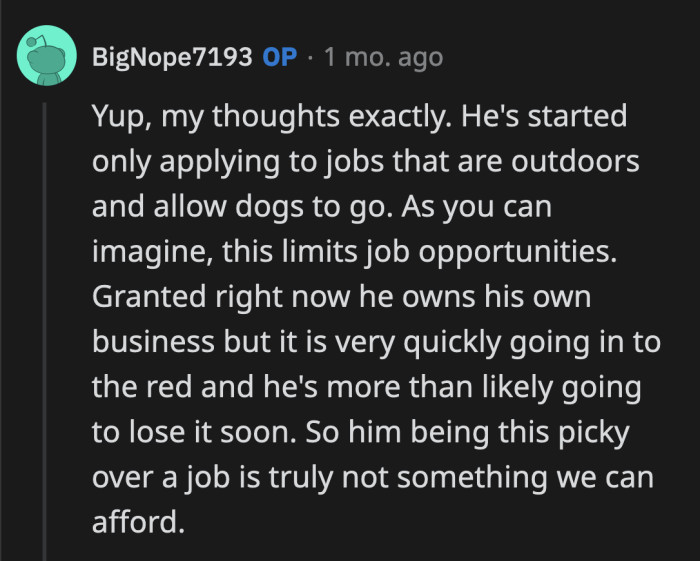
Surely he knows on some level that his relationship with his dog is not healthy for either of them, right?
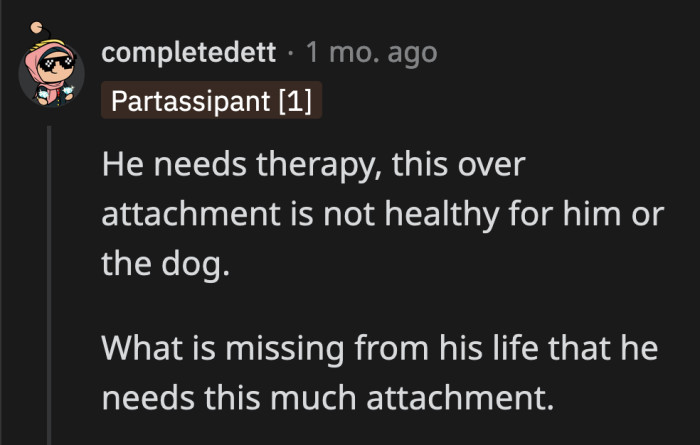
What he thinks is loving attitude is just messing his dog up. Dogs are incredible animals if trained right and there is nothing right about his treatment of his pet.
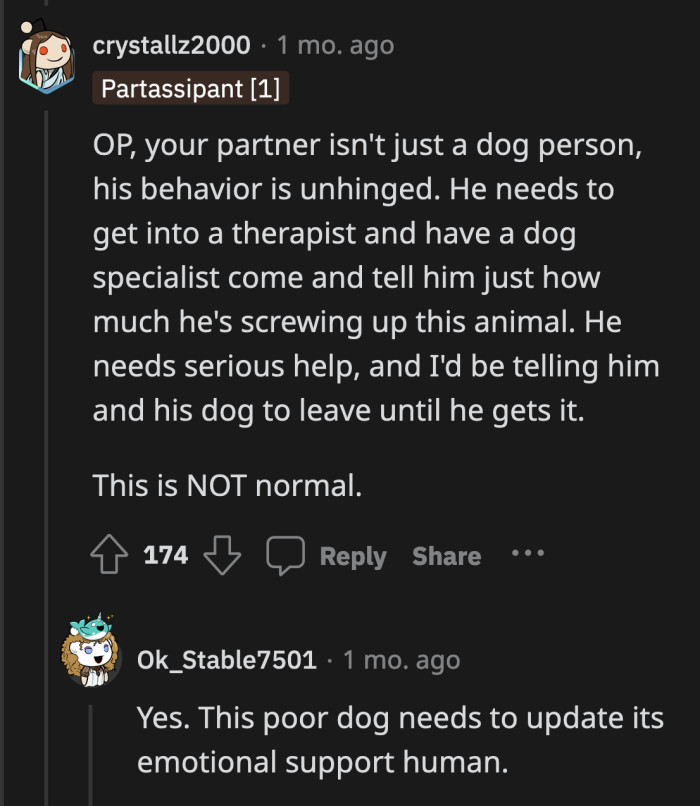
Now OP has to deal with the fact that this isn’t just daily clinginess, it’s showing up in professional settings too, and everyone else is noticing.
Developing Healthy Boundaries
Establishing healthy boundaries is essential for personal and professional growth. Research highlights that individuals who struggle with boundary-setting may experience increased stress and anxiety in their relationships.
By learning to differentiate between personal comfort and social expectations, pet owners can develop more balanced interactions that respect both their needs and those of others.
Ultimately, fostering a balanced relationship with pets requires understanding the emotional needs being met through this bond.
OP, her children, and her husband's dog all deserve better
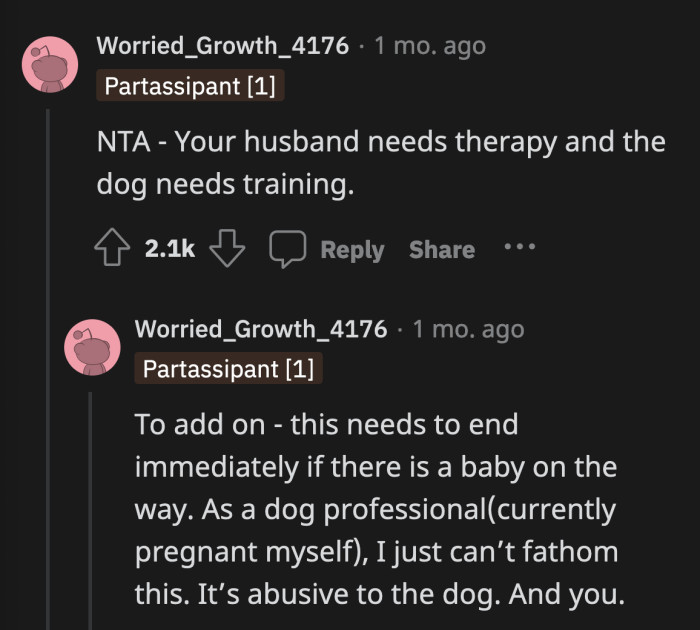
I say this as a loving pet owner myself, but this husband's relationship with his dog is creepy and bothersome. He has to listen to OP and go to therapy if he wants to keep his family.
His unhealthy attachment to his dog is ruining every other relationship he has. We wish OP luck because she definitely needs it.
The case of the overly attached dog owner highlights a significant issue in pet ownership that transcends mere affection. The husband's insistence on bringing his dog to every conceivable situation, including job interviews, raises questions about his attachment style and the anxiety that may accompany it. Such behavior suggests a deeper emotional need that is not being met, potentially impacting not only his relationship with his pet but also with those around him.
Understanding the motivations behind such actions is crucial. It becomes evident that fostering healthier relationships requires recognizing the emotional underpinnings of one’s behavior. In this scenario, the husband's actions may stem from a desire for companionship or a fear of separation, which can hinder personal growth and lead to unhealthy dynamics within the family.
Incorporating self-reflection techniques can also prove beneficial.
The story of the overly attached dog owner reveals a troubling trend in pet ownership that transcends mere companionship. The husband’s insistence on bringing his dog to job interviews illustrates a lack of understanding of social norms and appropriate contexts for pet presence. This behavior not only raises eyebrows but also suggests a deeper emotional dependency that could strain personal relationships and professional opportunities.
In navigating the complexities of modern life, it is crucial to strike a balance between one’s affection for pets and the expectations of different social settings. The tension experienced by the soon-to-be-mom signifies a broader challenge faced by many who may feel overshadowed by their partner's emotional attachments, highlighting the need for awareness and adjustment in personal dynamics.
The situation presented in the article highlights a growing trend where attachment to pets can overshadow personal boundaries and responsibilities. The husband’s insistence on bringing his dog to job interviews raises questions about his emotional dependence on the pet, suggesting that it may stem from deeper psychological needs. This behavior not only affects his professional image but also strains his relationship with his wife, who is seeking to establish a more balanced family dynamic as they prepare for the arrival of their child. Addressing attachment styles through self-reflection may prove essential for him, enabling him to navigate his emotional landscape while respecting the needs of his family and career.
The dog might be the problem, but the husband is the one who keeps bringing it to the interview anyway.
Heartbroken over him choosing a stray dog over you, read how her once-loving BF turned into a stranger after they took in a stray dog.
Share this article: