
An Employee Who Is Allergic To Dogs Has To Navigate Her Now Pet-Friendly Workplace Because Her Boss Refused Her Request For Her Own Office

Some office policies sound harmless until they land on the wrong person. In this case, a pet-friendly workplace turned into a headache for one employee who is allergic to dogs and was told to keep working from home instead of getting her own office.
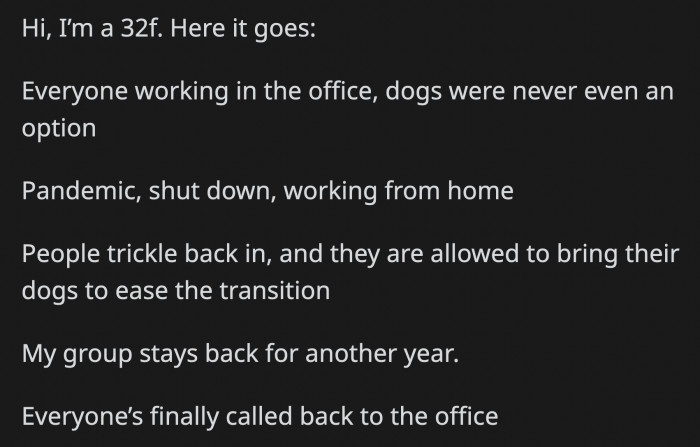
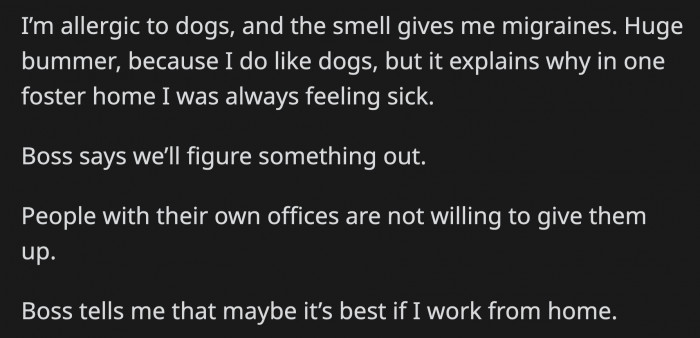
She had already spent the pandemic working from a studio apartment, and now her boss wanted that setup to continue because coworkers with offices were not willing to leave their dogs at home. The problem got even messier when her boss said a raise was not in the budget, leaving her stuck between her health and a workplace that seemed to have made up its mind.
Then the comments started rolling in, and they were not exactly sympathetic.
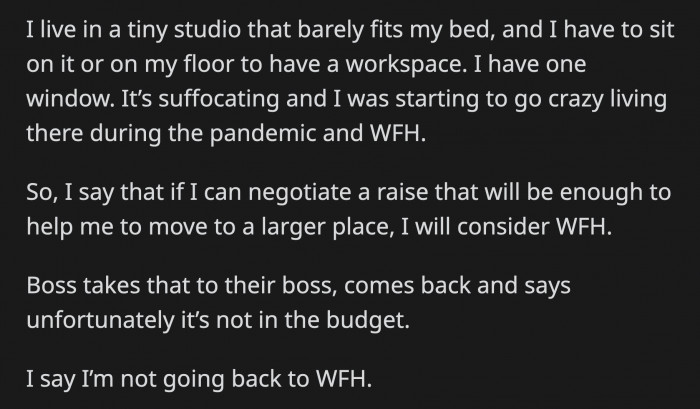
OP said she will consider working from home if they give her a raise in order to afford a larger apartment
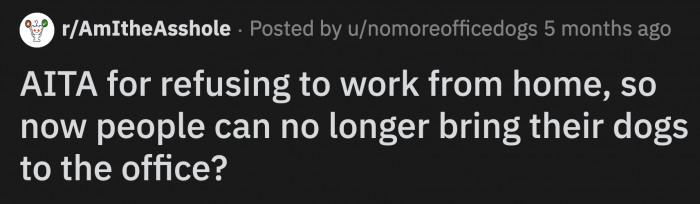
His boss asked the higher ups and got back to OP that giving her a raise wasn't in their budget
Her boss tried to convince her that her apartment isn't as bad as she described but OP stood firm and reminded him that they could have given her an office space but they simply refused
Workplace environments play a significant role in employee well-being, and the introduction of pets into these settings can elicit mixed reactions. While pets can reduce stress and create a more relaxed atmosphere, they can also trigger negative reactions in individuals with allergies or specific phobias. In this case, the employee’s migraines triggered by dogs exemplify how a seemingly friendly workplace policy can inadvertently exclude or harm certain employees, highlighting the need for inclusive workplace strategies.
This situation underscores the psychological principle of environmental fit, which posits that individuals function best in environments that align with their personal needs and limitations. When employees feel that their health and comfort are compromised, it can lead to decreased job satisfaction and increased stress levels.
For individuals with allergies, navigating a pet-friendly workplace can lead to significant stress and anxiety.
The situation faced by the employee allergic to dogs highlights the complexities of adapting workplace policies in a post-pandemic world. As companies move toward more pet-friendly environments, the need to accommodate individuals with allergies becomes increasingly pressing. The article illustrates how the refusal of a simple request for a private office not only disregards the employee's health needs but also raises questions about the overall inclusivity of the workplace.
In an era where mental health and productivity are paramount, it is crucial for employers to thoughtfully balance pet policies with the health concerns of all staff members. Implementing flexible arrangements or creating designated pet-free zones could be effective solutions that promote a harmonious work atmosphere without compromising anyone's well-being. This case serves as a reminder that as we embrace new norms, the unique needs of every employee must be recognized and prioritized.
When she told her colleagues about the situation they adviced her to just move back in with her parents, to stop buying from Starbucks, or just move to a bigger place
They were even wondering why OP couldn't just take allergy medication when she goes to the office
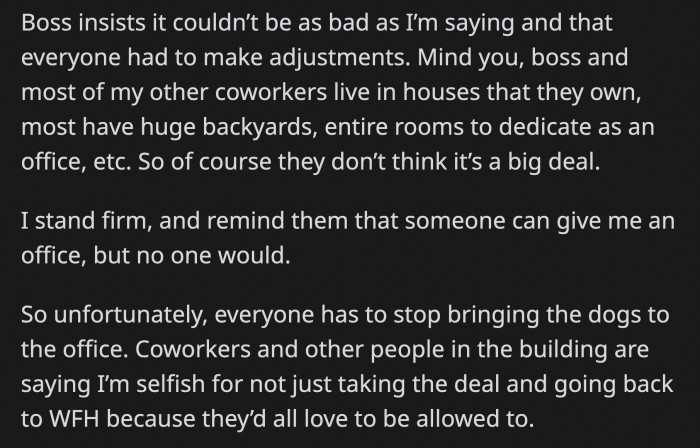
They were unsympathetic to her predicament

When faced with a stressful work situation, such as having to coexist with triggers like dogs, the body activates its stress response system. The psychological principle of the fight-or-flight response explains that when individuals perceive a threat, their bodies prepare to either confront or flee from the danger, leading to an increase in cortisol and other stress hormones.
For the employee with allergies, this could result in heightened tension and discomfort, making it vital for her to develop coping mechanisms. Techniques such as mindfulness and cognitive-behavioral strategies can help mitigate stress responses and promote emotional regulation. By concentrating on her breathing and reframing her thoughts about her workplace environment, she can create a more manageable internal experience.
The refusal of the boss to provide a separate office space reflects a lack of understanding around workplace accommodations and the psychological needs of employees.
When employees feel their health needs are prioritized, it can lead to increased loyalty and commitment to the organization.
Studies indicate that workplace stress can exacerbate health issues, including allergies, leading to decreased job satisfaction and performance.
Thus, addressing allergy concerns is not just a legal requirement but also a vital aspect of maintaining a healthy workplace culture.
They were all basically telling OP to make the sacrifice so they can continue taking their dogs to work

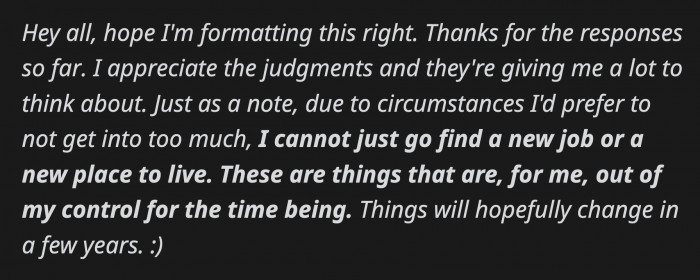
OP got a bit of the similar response to her post but she clarified why she can't just up and leave her job
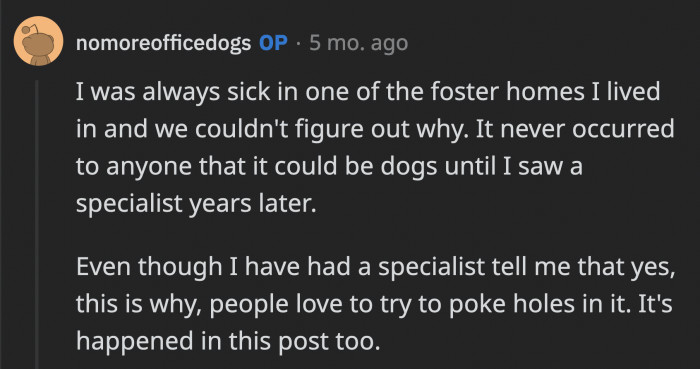
It looks like OP helped another person figure out that their allergies could be triggered just by a dog's scent

The concept of assertiveness is crucial in navigating workplace dilemmas, especially for individuals with specific needs.
Workplace dynamics can often create conflict when personal health needs collide with organizational policies. A supportive culture encourages open communication and problem-solving, while a rigid culture may lead to feelings of resentment and alienation.
The employee’s situation highlights the need for organizations to develop policies that are not only compliant but also compassionate, taking into account the well-being of all employees.
This is similar to the housemate who insisted on a dog in their pet-friendly rental despite severe allergies.
Employees facing allergies in a pet-friendly workplace can adopt proactive strategies to manage their symptoms.
Seeking accommodations such as air purifiers or designating specific areas as pet-free can significantly improve comfort levels.
The Importance of Workplace Accommodations
Workplace accommodations are not just legal requirements; they play a fundamental role in fostering an inclusive and productive environment. The Equal Employment Opportunity Commission (EEOC) mandates that employers provide reasonable accommodations for employees with disabilities, including those with medical conditions aggravated by workplace changes. The refusal of the boss to grant the employee her own office may not only violate these principles but also reflect a lack of awareness around the importance of creating a supportive work environment.
Research has shown that when organizations actively support their employees' needs through reasonable accommodations, they experience higher levels of employee engagement and retention. Thus, it’s essential for employers to recognize the long-term benefits of fostering a supportive culture where all employees can thrive, which ultimately enhances overall productivity.
The situation faced by the employee allergic to dogs highlights the profound psychological effects that workplace allergies can impose. The refusal of her boss to accommodate her request for a private office illustrates a lack of support for her health needs, which can lead to feelings of isolation and helplessness. This scenario exemplifies how chronic health issues can create significant barriers to social interaction and integration within the workplace. By neglecting to implement supportive workplace policies, the company is not only jeopardizing the well-being of this employee but also missing out on the potential benefits of a more engaged and motivated workforce. Creating a culture of support is crucial; it fosters an environment where all employees feel valued and can thrive, ultimately leading to greater productivity and morale.
Open communication about health needs is crucial in building a supportive workplace culture.
Creating a culture of openness reduces stigma around health issues and encourages employees to voice their needs without fear of repercussions.
OP said it also took a while to figure out why she was always sick until she went to a specialist and they figured out what was causing her symptoms
Someone asked OP why she's the only person in their office who can't seem to afford a better living space
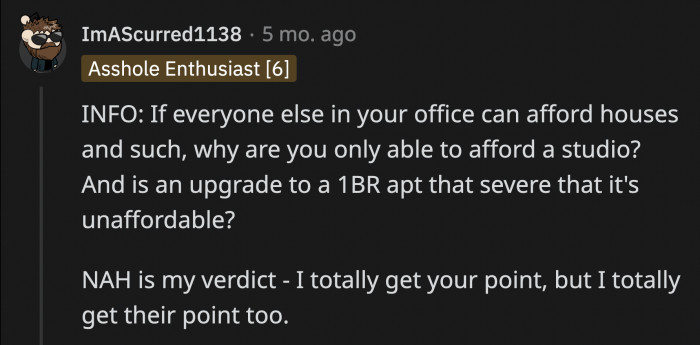
OP didn't get into any specifics but she reiterated that she cannot afford to move into a bigger apartment

The psychological impact of feeling trapped in an unaccommodating work environment can lead to significant mental health challenges.
To address the challenges faced by employees with allergies, organizations can implement several practical solutions.
While OP is not at fault here, she should brace herself for any backlash from her colleagues

OP says she is not really expecting a lot of people to treat her differently in the future aside from the ones who already said their piece

Are there any people in their office who share OP's concerns about the dogs?

Creating a culture of open dialogue in the workplace can significantly enhance employee morale and address concerns proactively.
Ultimately, ensuring that employees with allergies feel supported requires a proactive approach from management.
OP said there were others who actually raised their issues but they were outnumbered by the people who love dogs

A commenter agreed with OP's co-workers that she should be adjusting because she is ruining something that her colleagues are enjoying

OP replied that she would love to work somewhere else but that is just not an option for her at the moment

Understanding the dynamics of workplace relationships is vital, especially when personal health issues intersect with professional environments.
OP's course of action will depend on where she lives but she can consider talking to HR about an unsafe work environment that is detrimental to her health. If the dogs were allowed at the office to ease the transition, shouldn't that transition be done by now, two years after the height of the pandemic?
The shift towards pet-friendly workplaces raises important questions about employee health and well-being.
The situation faced by the employee allergic to dogs highlights the challenges of navigating a pet-friendly workplace.
The situation faced by the employee allergic to dogs highlights the pressing need for workplaces to prioritize inclusivity and understanding. As companies embrace pet-friendly policies, it is vital to recognize that not all employees may share the same comfort level with animals in the office. The refusal of the boss to accommodate the request for a separate office illustrates a disconnect between evolving workplace practices and the individual needs of employees. Open communication and a willingness to make reasonable accommodations could have transformed this scenario into a win-win for both the employer and the employee.
This case serves as a reminder that fostering a supportive work environment goes beyond mere compliance with new policies; it requires a genuine commitment to employee well-being. By addressing unique health concerns like allergies, organizations can cultivate a more engaged and satisfied workforce, reinforcing the importance of empathy and understanding in the modern workplace.
That office policy is doing nobody any favors.
For more dog-allergy fallout, see how she handled her roommate after bringing a dog anyway. Read the asthmatic woman who stayed too passive.
Share this article:





