
Redditor Blasts Roommate For Sabotaging Their Rescue Dog’s Training By Consistently Leaving Food Out

A rescue dog named Horse can’t be trusted around unattended food, and one roommate’s “oops, it’s fine” habits are making that painfully obvious. OP is trying to work on Horse’s training, and the whole house dynamic hinges on whether people can keep snacks, drinks, and anything edible out of reach.
Here’s the messy part, OP shares the apartment with two roommates, including Lilo, who also has a dog. OP says Horse eats any food left within reach, and everyone agreed to store things safely. But Lilo keeps leaving her food and drinks out anyway, so Horse gets rewarded with exactly what the training is trying to stop.
By the time you’re juggling a rescue dog’s food drive and roommates who won’t follow the rules, the tension stops being small and starts getting personal.
The story in detail
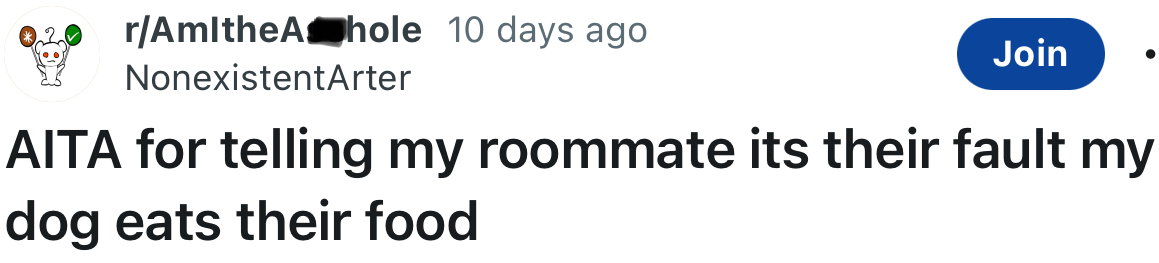
OP has a dog and two roommates, one of whom also owns a dog. OP’s rescue dog (Horse) has behavioral issues; however, it has been undergoing training.
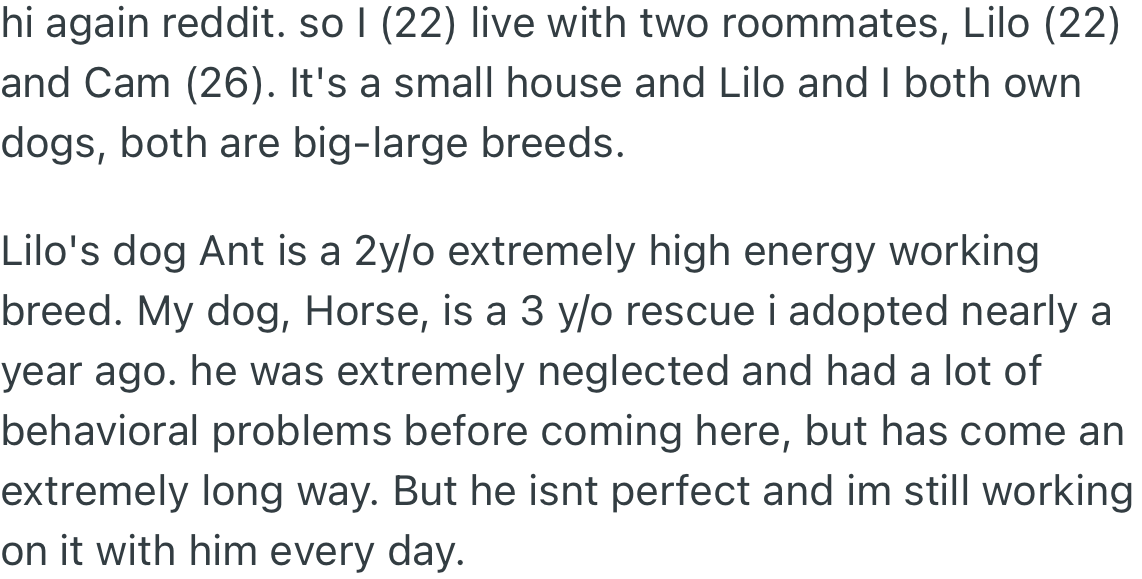
The roommate's actions appear to sabotage the dog's training, which can be understood through the lens of behavioral psychology.
When the roommate leaves food out, they inadvertently reinforce the undesired behavior of the dog, making training efforts less effective. This highlights the importance of consistency in training and the potential impact of external factors on behavioral outcomes.
Horse eats any food left within its reach. OP explained this to the roommates, and they all decided to keep their food in a safe place.
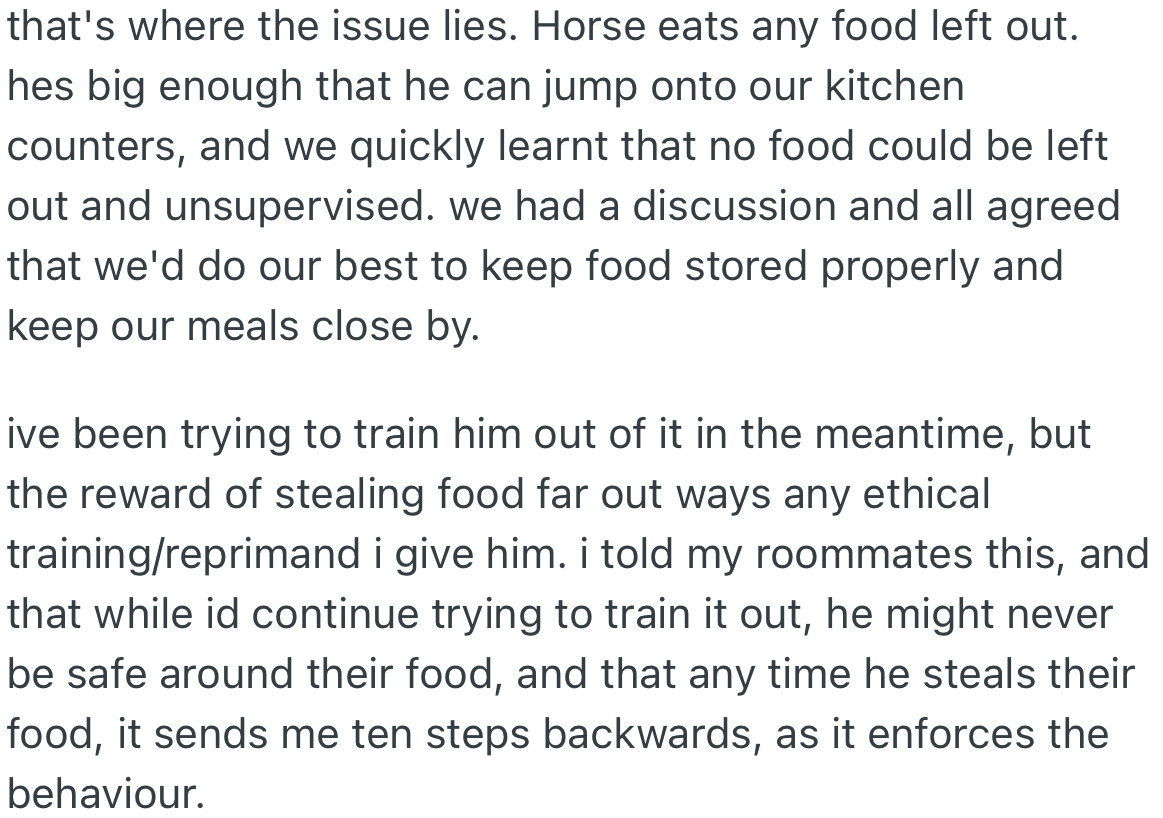
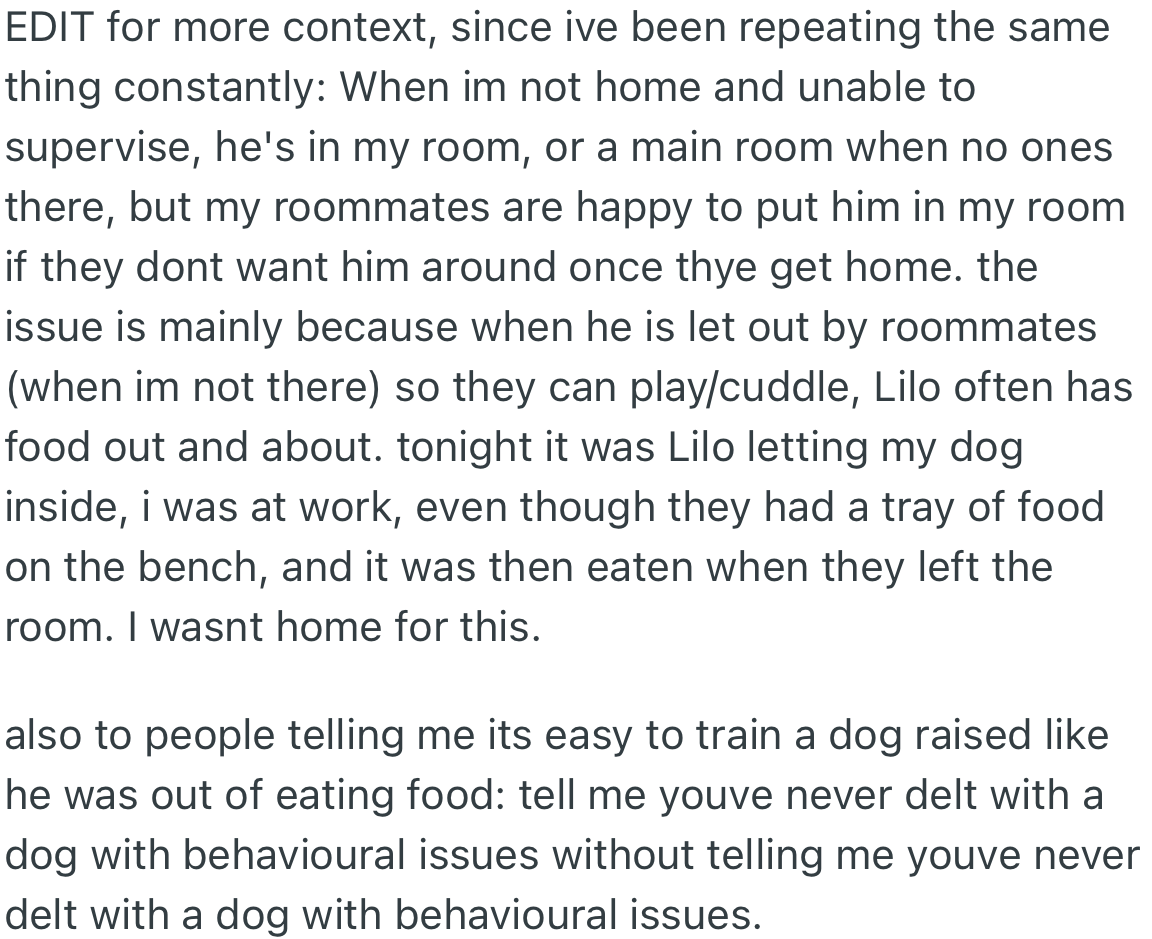
One of OP’s roommates (Lilo) has constantly left her food and drinks unattended, giving Horse the opportunity to eat them.
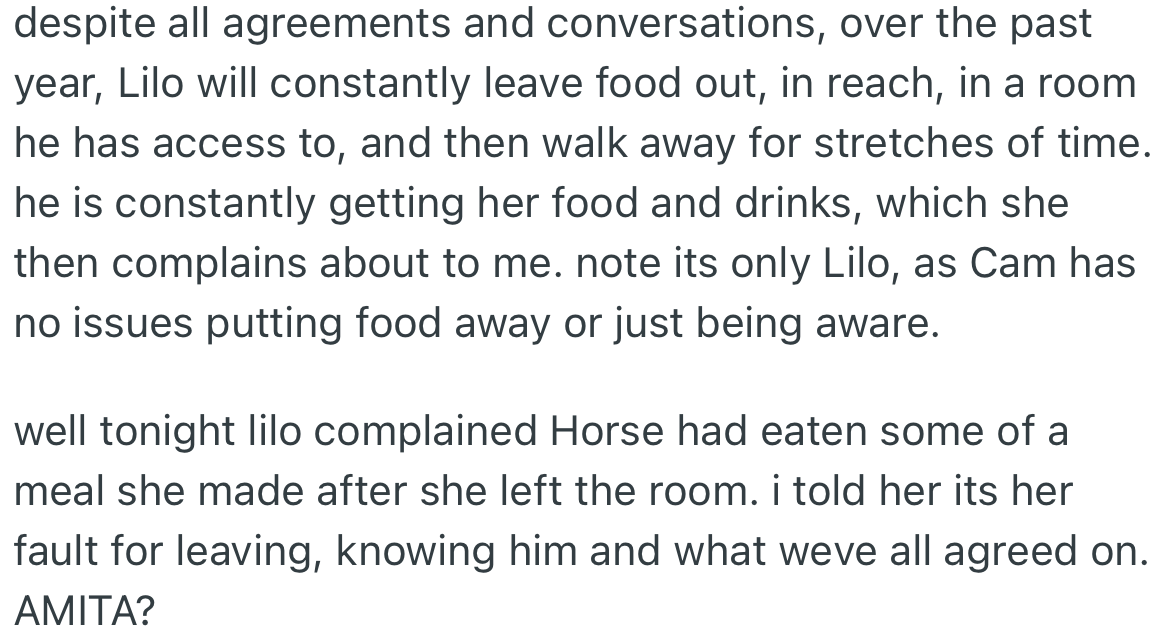
OP is already managing Horse’s behavioral issues, but the situation gets worse the moment Lilo’s unattended snacks turn into “training setbacks” on a daily basis.
This conflict underscores the significance of shared responsibility in pet care.
OP explains that when not home, Horse is kept in their room or a main room; however, the roommates can take him out if they want to.
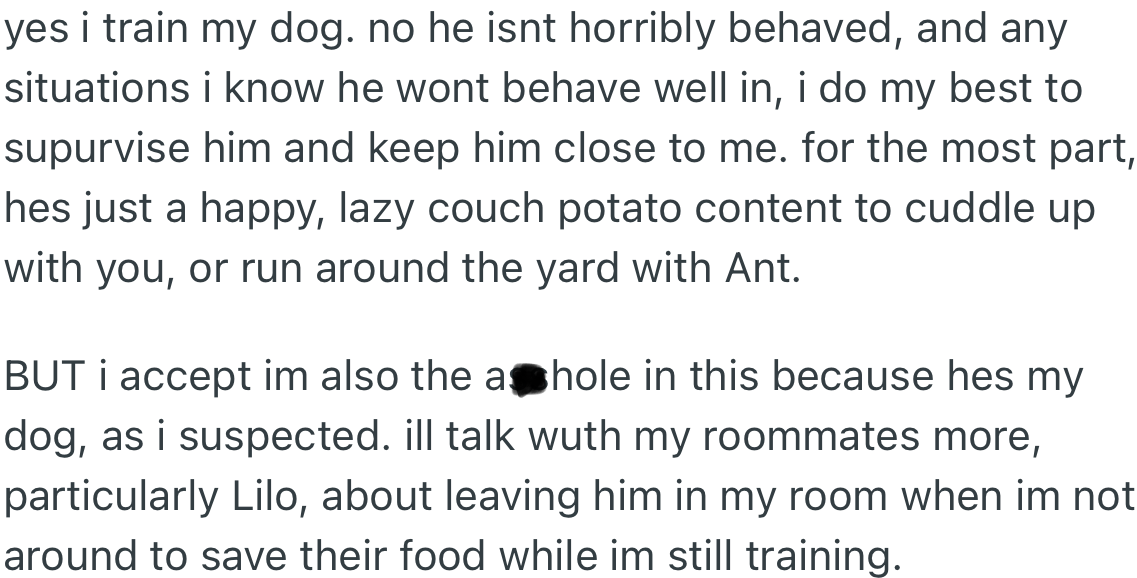
OP further explains they do their best to train Horse and take responsibility for it.
Every time Lilo leaves food and drinks out, Horse gets the chance to grab them, and OP watches the training progress get undercut in real time.
It also echoes the remote-working roommate who got stuck with dumped pet responsibilities.
Effective Communication Techniques
To resolve this situation, it's vital that both parties engage in open communication.
Check out some upvoted comments below:
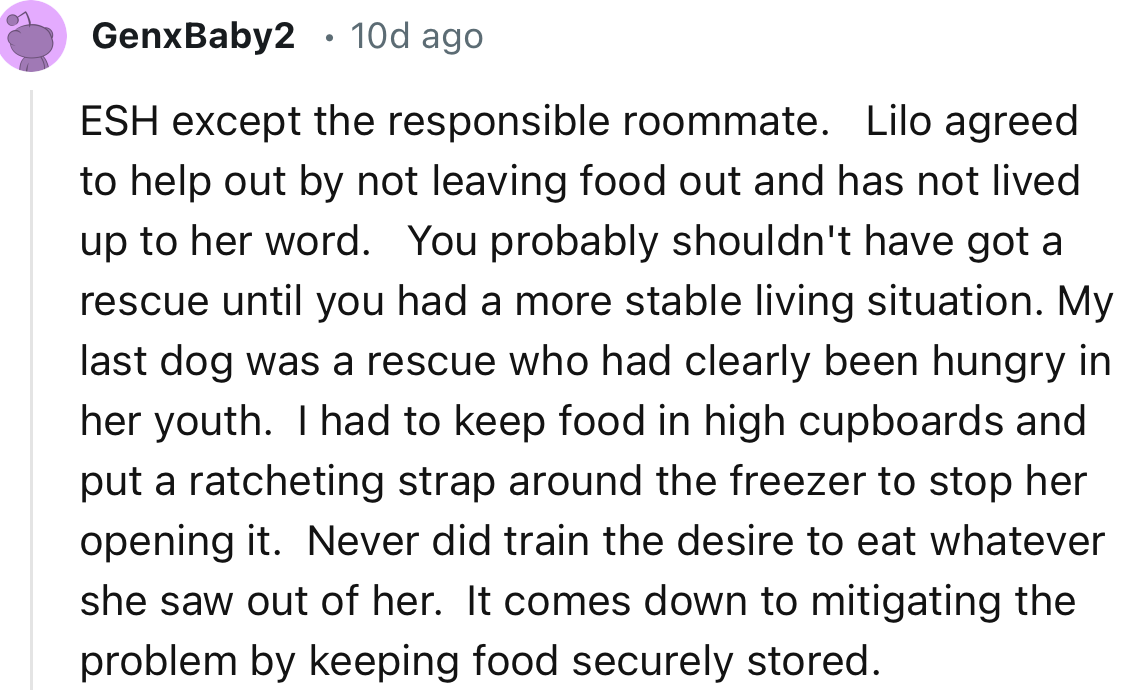
“Lilo agreed to help out by not leaving food out and has not lived up to her word.”
OP says Horse is usually kept in OP’s room or the main room when they’re gone, but the roommates still have the power to take him out, so the risk never fully disappears.
Furthermore, establishing an agreement on pet care routines can help avoid future conflicts.
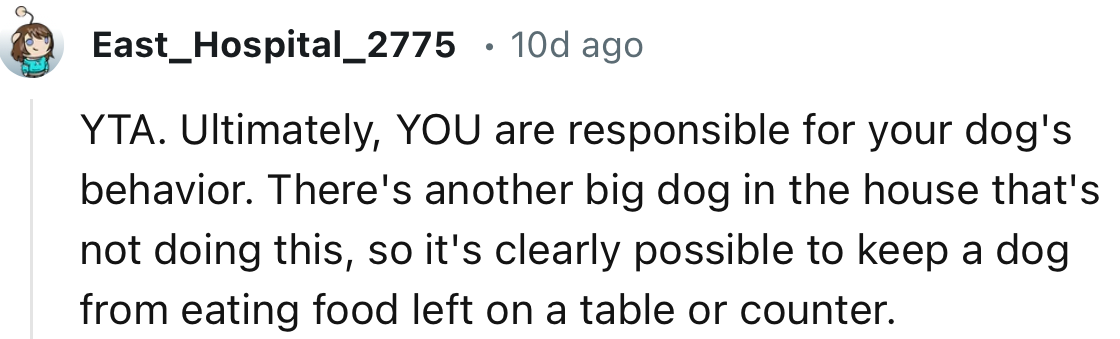
“YOU are responsible for your dog's behavior. There's another big dog in the house that's not doing this.”
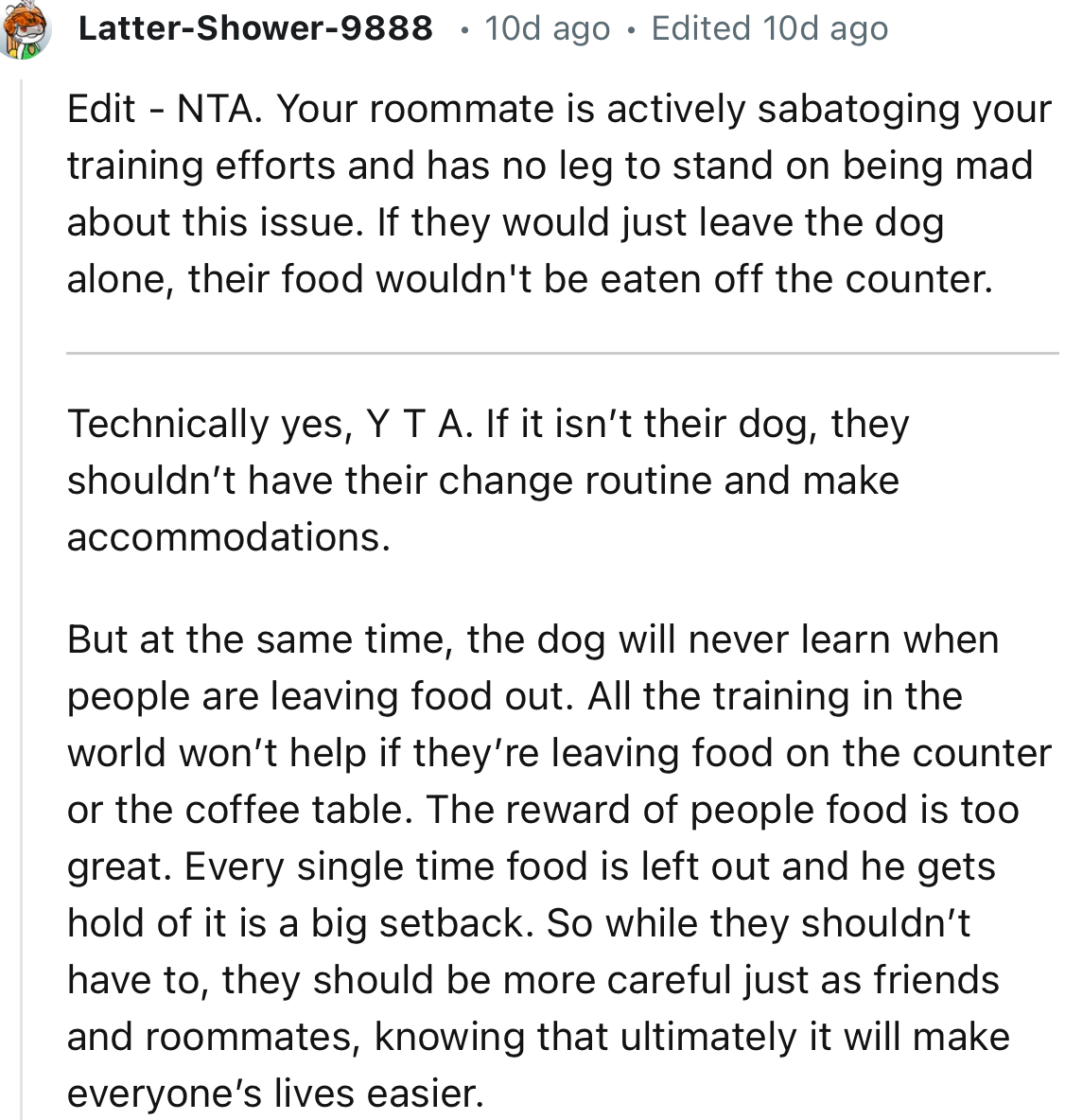
“The dog will never learn when people are leaving food out. All the training in the world won’t help if they’re leaving food on the counter or the coffee table.”
Redditors jump into the comments, and the blame game gets so intense that Cam, the roommate OP says is responsible, becomes the one person everyone seemingly agrees is not the problem.
Redditors had mixed reactions, and blame was hurled at every party except Cam, the one responsible roommate.
While some argued that OP’s living situation wasn’t ideal for a rescue dog with such a strong food drive, others sympathized, noting that proper food storage was crucial once any pets were around.
It was an NTA overall, but the advice suggested everyone stick to the plan—or face the consequences.
Do you agree with this verdict? Let us know in the comments.
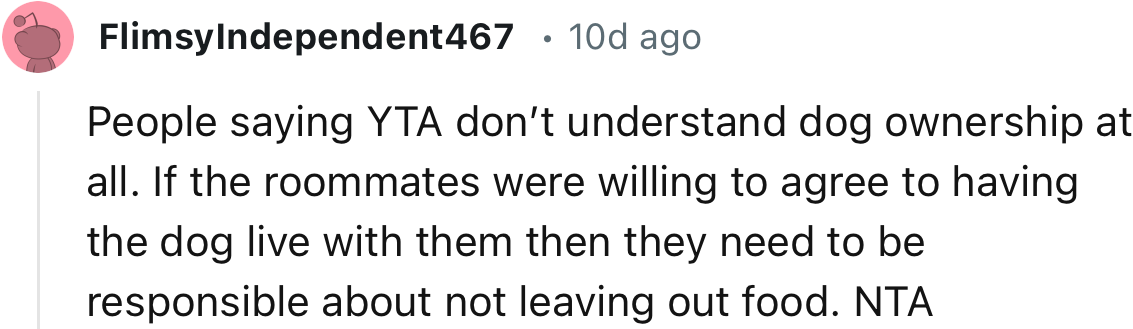
“If the roommates were willing to agree to having the dog live with them, then they need to be responsible about not leaving out food.”
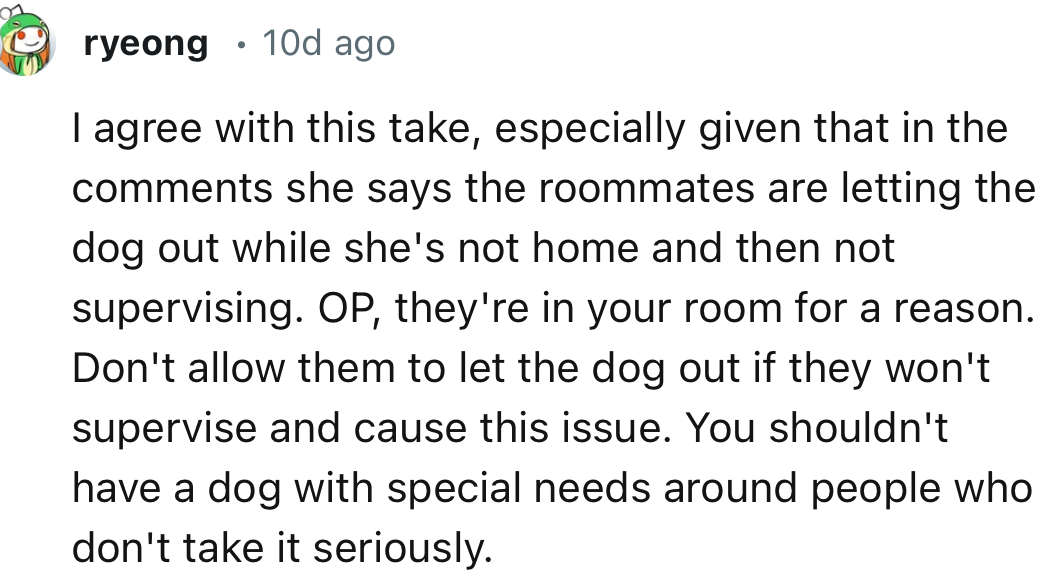
“Don't allow them to let the dog out if they won't supervise and cause this issue. You shouldn't have a dog with special needs around people who don't take it seriously.”
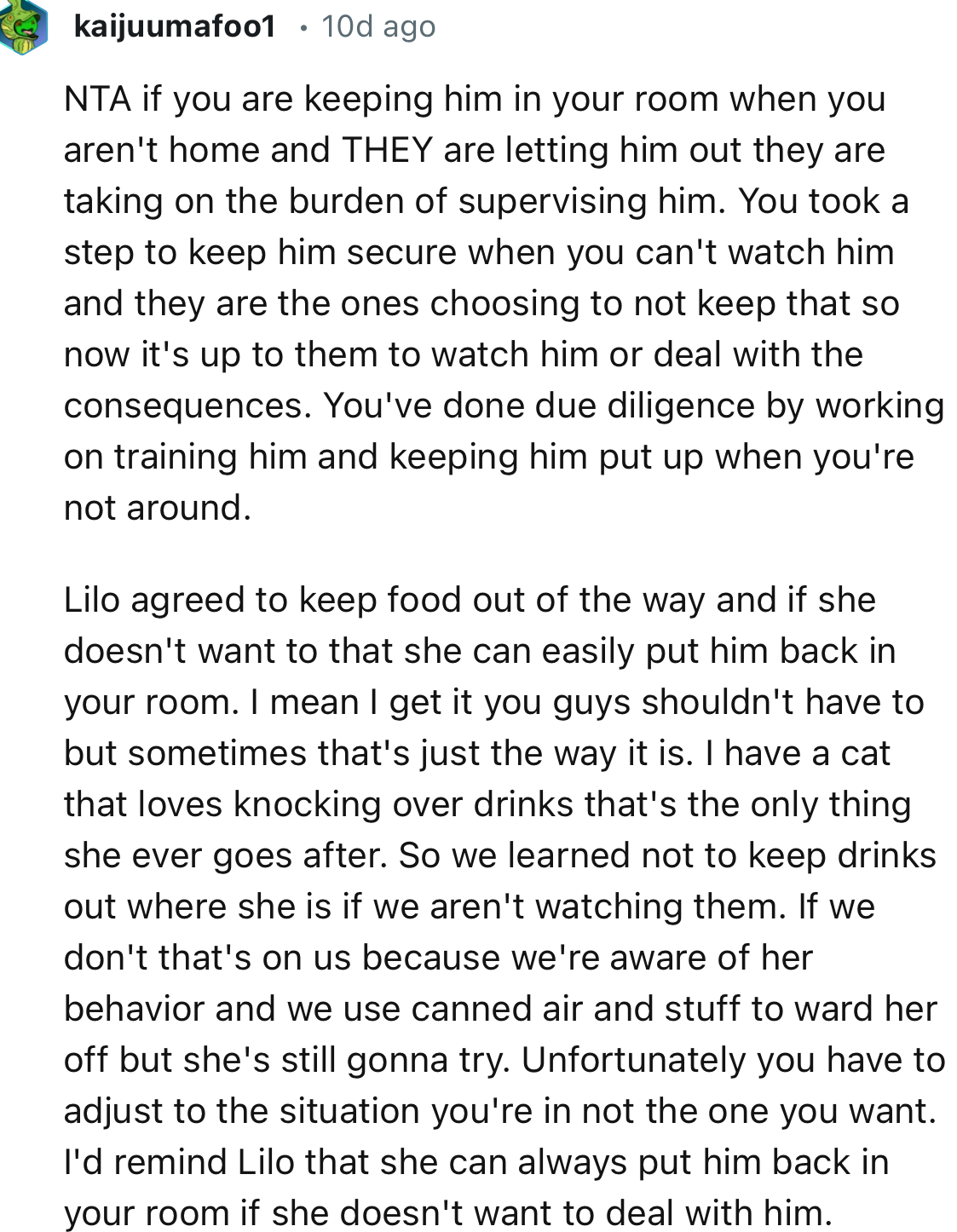
“You took a step to keep him secure when you can't watch him, and they are the ones choosing not to keep that, so now it's up to them to watch him or deal with the consequences.”
The situation described highlights the crucial role individual actions play in shared living environments. The ongoing issue of a roommate consistently leaving food out not only undermines the training of the rescue dog but also illustrates how a lack of communication can lead to frustration. By addressing these shared responsibilities and emphasizing the importance of teamwork, roommates can improve their living situation.
With Horse’s food drive and Lilo’s counter-habits colliding, OP may be stuck asking whether this roommate setup is actually rescuing anyone.
Wild twist, too, in the woman who rewarded her dogs for barring teeth at roommates.
Share this article:





