
Honest Comments Help A Dog Owner Realize Their Girlfriend Has Been Slowly Manipulating Them Into Eventually Giving Up Their Dogs

Some relationship problems start small, then suddenly reveal a much bigger issue underneath. In this case, OP thought they were dealing with a few annoying compromises, until the conversation turned into something much more serious.
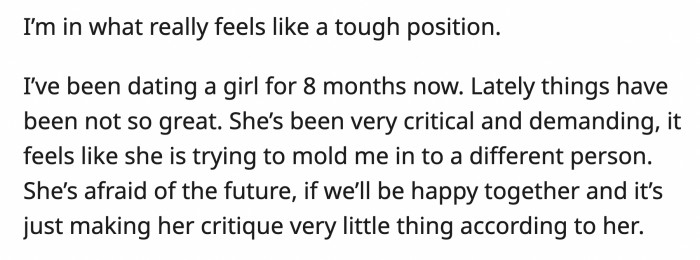
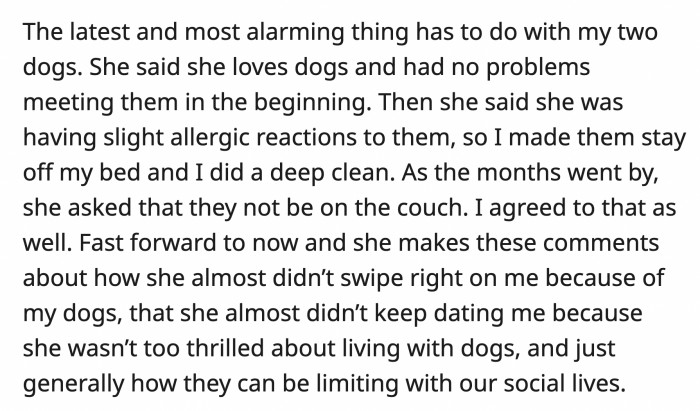
OP has been with their girlfriend for eight months, and lately things have felt rocky. She has grown more critical, questioned their future, and kept pushing back on OP's two dogs, first with allergy concerns, then with rules about the bed and couch, and now with talk that sounds a lot more final.
What she said next made OP realize this might not be about dogs at all. Read on.
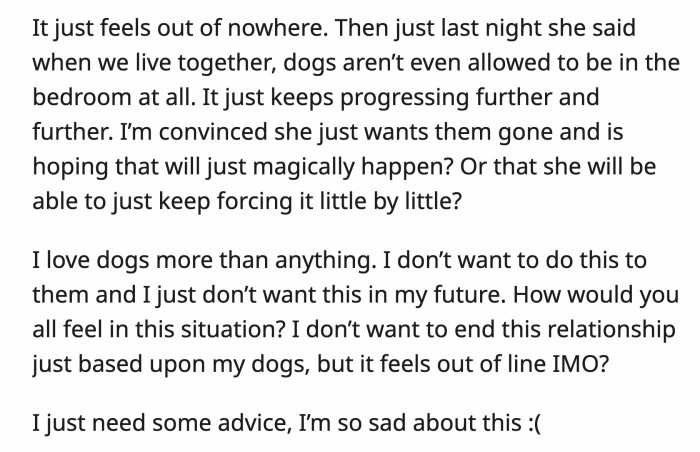
The biggest shocker for OP was when she said the dogs won't be allowed to enter their bedroom once they move in together
OP is worried that she will ask him to get rid of his dogs or that she will slowly escalate her demands until OP gets rid of their dogs themselves to accommodate her. OP says they love dogs more than anything, and they wouldn't give in to their girlfriend's demands.

OP wonders what they can do in this situation and asked other redditors for advice. His full original post is below:
The situation unfolding in this narrative highlights the insidious nature of manipulation within relationships. The protagonist’s girlfriend’s actions illustrate a concerning pattern that can deeply affect both the individual being manipulated and their connection with their beloved pets. The emotional stakes are high, especially when the manipulation involves something as significant as the well-being of dogs, which are often viewed as family members.
This relationship has clearly become a battleground for control, as OP grapples with their partner’s diminishing respect for their non-negotiable love for their dogs. Recognizing such dynamics is essential, as they can lead to long-term emotional distress and a breakdown of trust. The journey of OP serves as a poignant reminder of the importance of standing firm in one’s values, especially when they are being undermined by a partner's ulterior motives.
That’s when the dog issue started looking a lot bigger.
This many red flags early on in the relationship does not bode well for their future
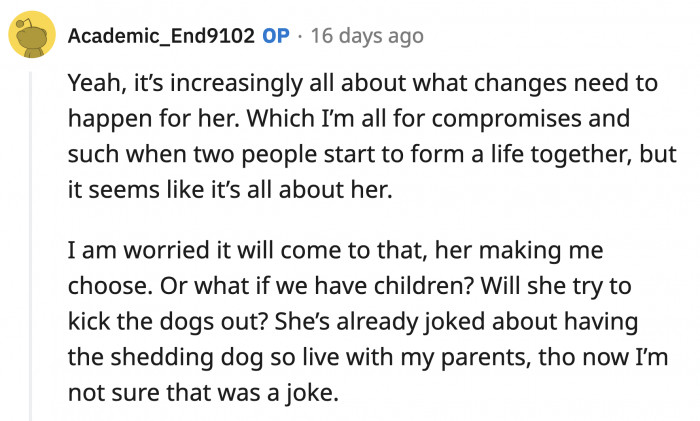
OP feels they've been making all of the compromises to make their relationship work
Research indicates that individuals who experience manipulation may develop anxiety and low self-esteem over time.
Recognizing these patterns is the first step toward breaking free from manipulative dynamics.
Furthermore, emotional manipulation can often lead to significant psychological distress for the person being manipulated.
The problem is the girlfriend establishing that OP's needs come secondary to her wants and comfort

The fog is slowly clearing up and OP is seeing the full picture
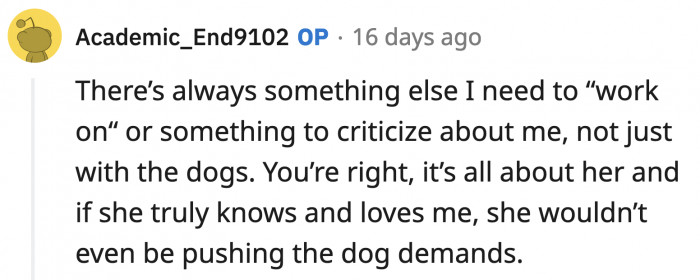
If they move in together, OP will slowly lose his sense of self
Ultimatums can create an environment of fear and resentment within relationships.
Having a supportive network can be a game-changer for individuals facing manipulation in relationships.
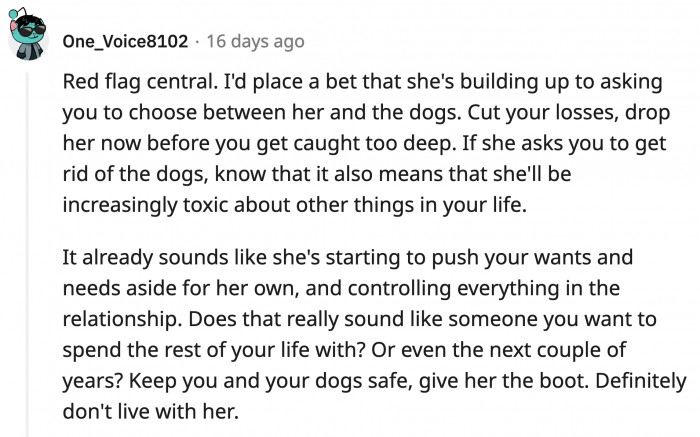
OP shouldn't even entertain any conversations about rehoming their dogs
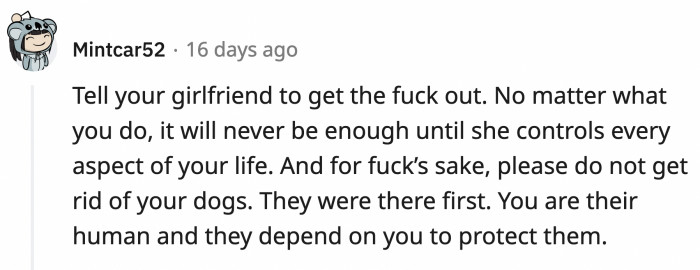
Good on OP for realizing who is really on their side
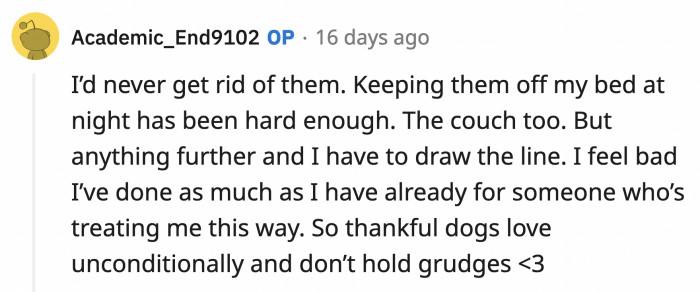
A difficult relationship is better than an expensive divorce down the road
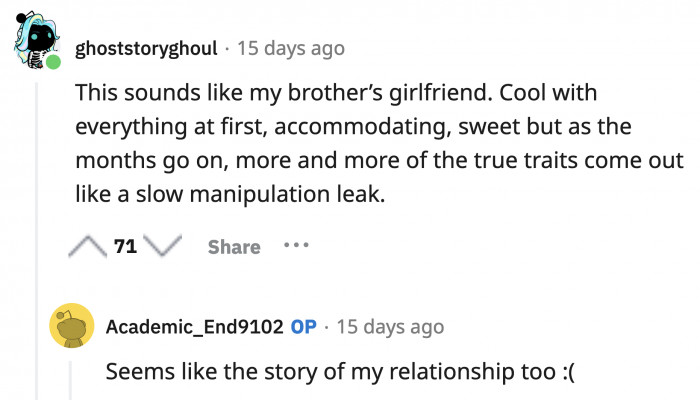
Fostering an environment of respect can help mitigate the negative effects of ultimatums and manipulation.
It also echoes a long-distance girlfriend who forbade her boyfriend from getting a dog.
To further empower individuals in overcoming manipulation, developing assertiveness skills is vital.
She lied about her true feelings about dogs and used them to slowly manipulate OP
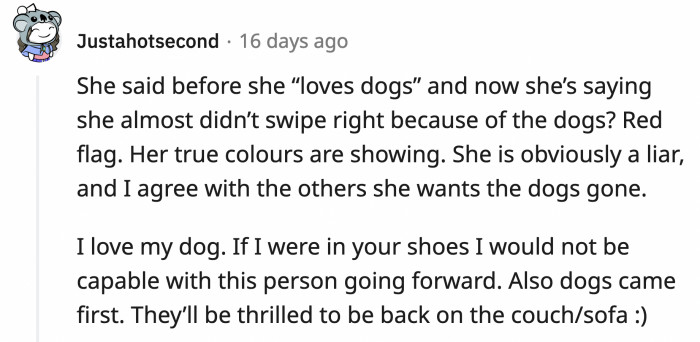
I wonder if OP ever tried to say no to their girlfriend's demands
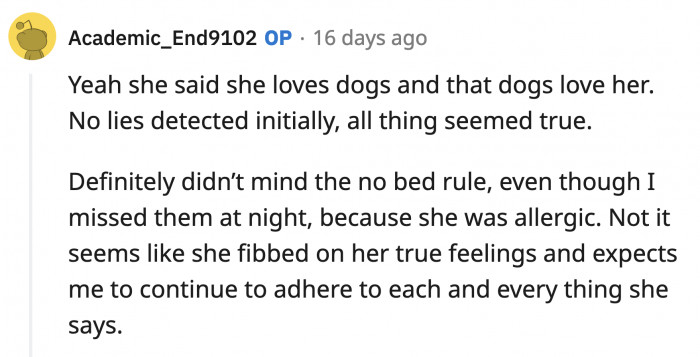
This is what the future looks like for OP should the relationship continue
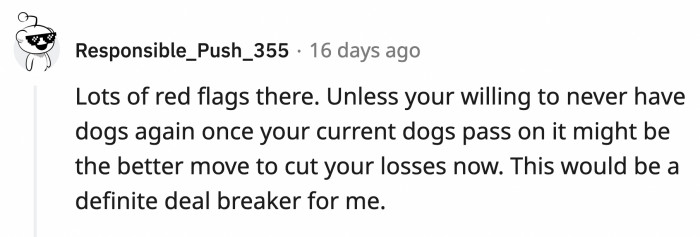
To counteract manipulative dynamics, individuals should practice assertive communication techniques.
Using 'I' statements to express feelings and needs can lead to more productive conversations.
Ultimately, recognizing manipulative ultimatums is crucial for maintaining healthy relationships. Such tactics often indicate an imbalance of power and can lead to significant emotional turmoil.
Addressing these issues head-on through open communication can help restore balance in the relationship. Encouraging honest discussions about feelings and needs can pave the way for more equitable interactions.
It's both, OP; you will never have dogs again and she will get a cat despite the health risk
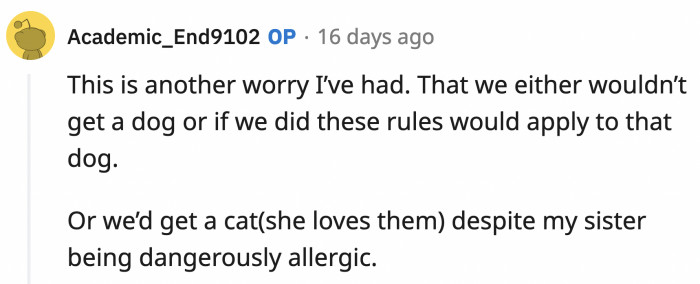
If she wasn't fond of dogs, why date OP in the first place?
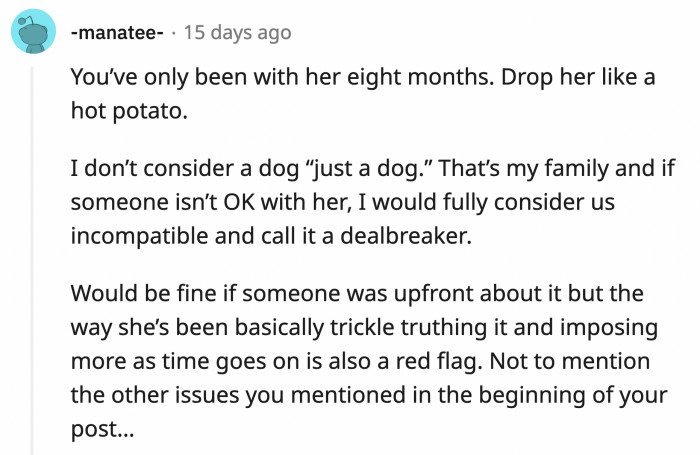
You're not even reading the same book, OP
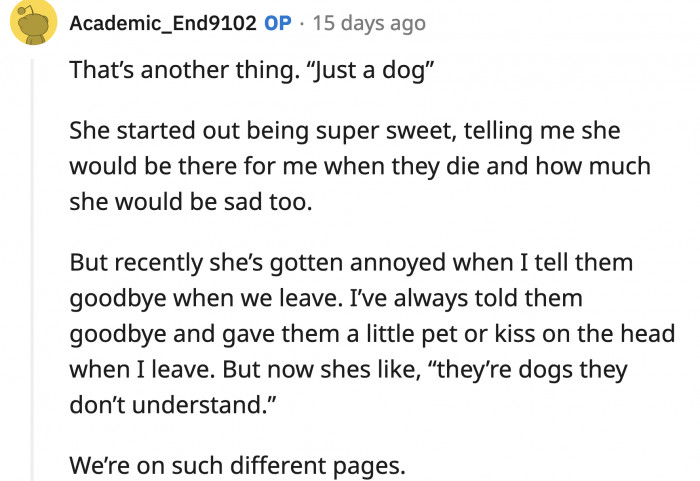
Moreover, seeking therapy or counseling can provide individuals with tools to navigate difficult relationship dynamics.
These interventions can empower individuals to assert their needs while fostering mutual respect.
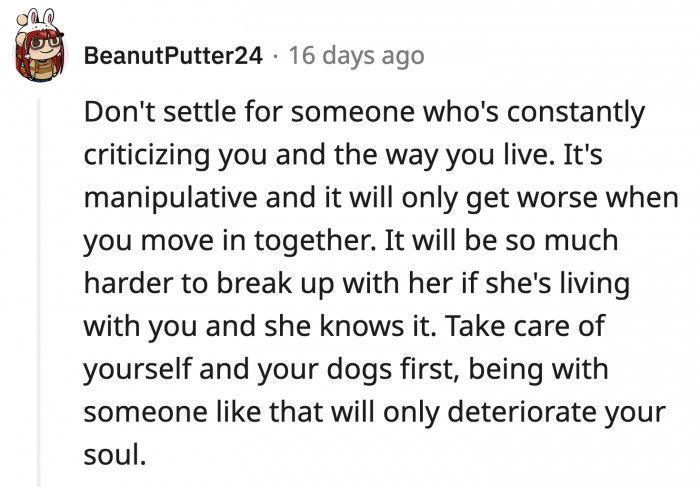
OP shouldn't settle for someone who doesn't appreciate dogs as much as they do
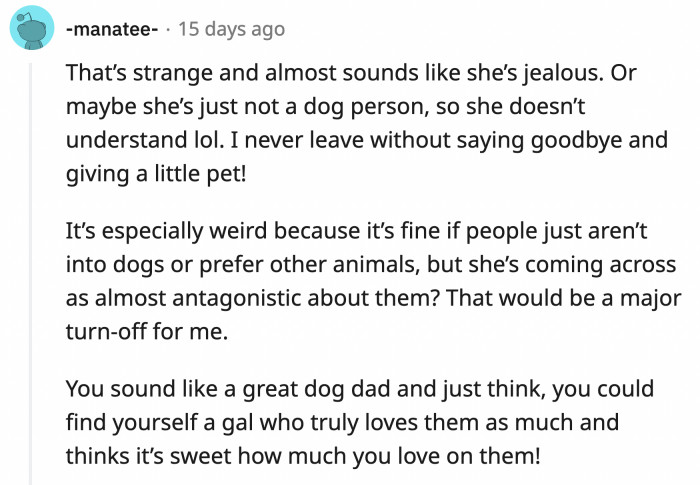
It sounds like she only said those things because she knew it was what OP wanted to hear
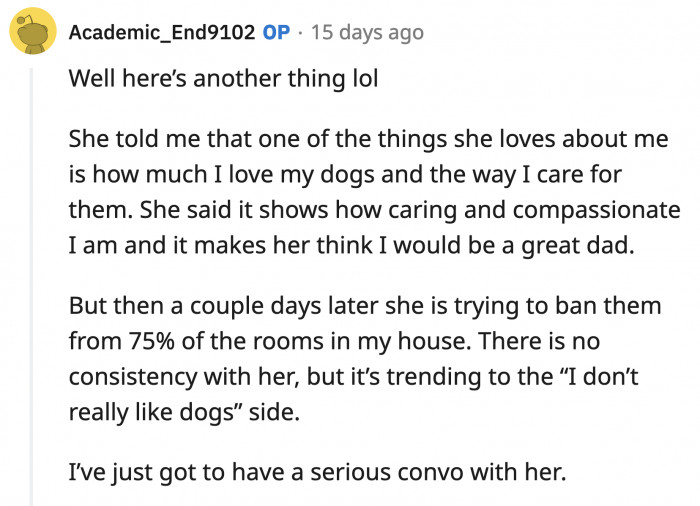
If you don't agree on an important aspect of your life, it's better to call it quits now
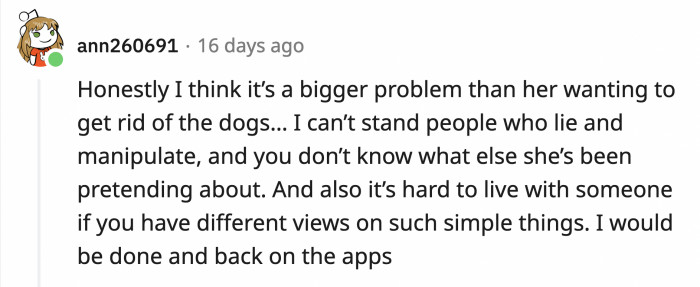
Understanding personal limits can help individuals protect themselves from manipulation and foster healthier dynamics.
She didn't even have the decency to be upfront about her feelings
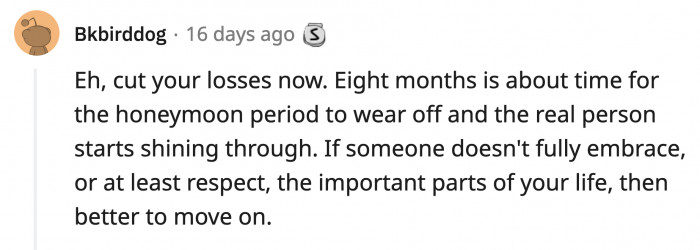
It's time to do the adult thing and cut your losses
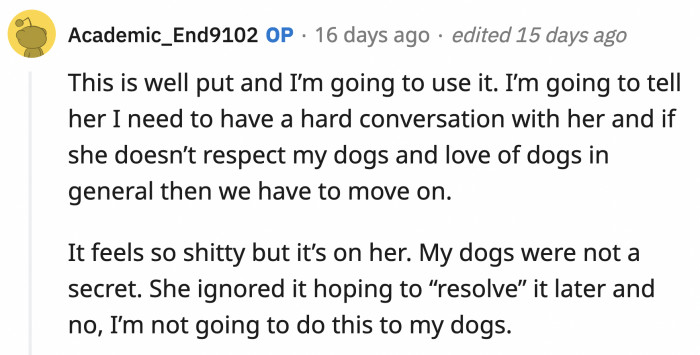
OP's willingness to candidly discuss what has been going on in their relationship may have just saved them from a lot of heartbreak down the line. It may be extreme for some people to end a relationship over pets, but in OP's case, it's the right move.
Down one road, OP will be with their controlling girlfriend, dogless and miserable. The second road leads to a lot of happy memories with furry pals who will love and cherish OP unconditionally. It's not a tough choice.
This narrative highlights the critical importance of recognizing manipulation within relationships, particularly when it comes to fundamental values like the love for animals. The protagonist's struggle illustrates how subtle shifts in behavior can lead to significant emotional turmoil. The gradual change in their girlfriend's attitude toward their dogs serves as a wake-up call, prompting them to reassess what they truly value in a partner. This situation exemplifies the need for self-awareness and open dialogue in addressing underlying issues. For anyone facing similar challenges, this story emphasizes that acknowledging manipulative behaviors is the first step toward reclaiming one's autonomy and fostering more fulfilling relationships.
In conclusion, recognizing manipulation and ultimatums is crucial for emotional health and relationship satisfaction.
By adopting assertive communication and establishing boundaries, individuals can create healthier interactions that promote mutual respect and understanding.
The unfolding situation reveals a troubling dynamic where manipulation and emotional pressure are at play.
Wait until you read how a jealous girlfriend forced her boyfriend to choose between her and his “doggos”.
Share this article:





