Man Frustrated With Girlfriend's Adoption Of Badly Behaved, High-Needs Cat, Thinks About Returning It Against Her Wishes

A 28-year-old woman showed up at an adoption event and brought home a cat, and her boyfriend is now at his breaking point. The cat, Sammy, is not your cute, low-maintenance roommate. He’s high-needs, extremely problematic, and somehow turned “we both wanted a cat” into daily stress.
The complication is that the girlfriend didn’t consult the OP before making the choice. He says he would’ve handled it differently, especially since the cat came with behavior problems that demand constant patience and attention. So now the OP is stuck carrying the emotional weight of a situation he didn’t agree to, while his girlfriend expects him to just deal with it.
And the bigger question lurking underneath? Whether returning Sammy against her wishes makes him the villain or just someone finally hitting their limit.
The OP wants to return their cat to the shelter because its challenging behavior problems.
Although they both want a cat, the OP's girlfriend never consulted him about the cat she got from an adoption event.
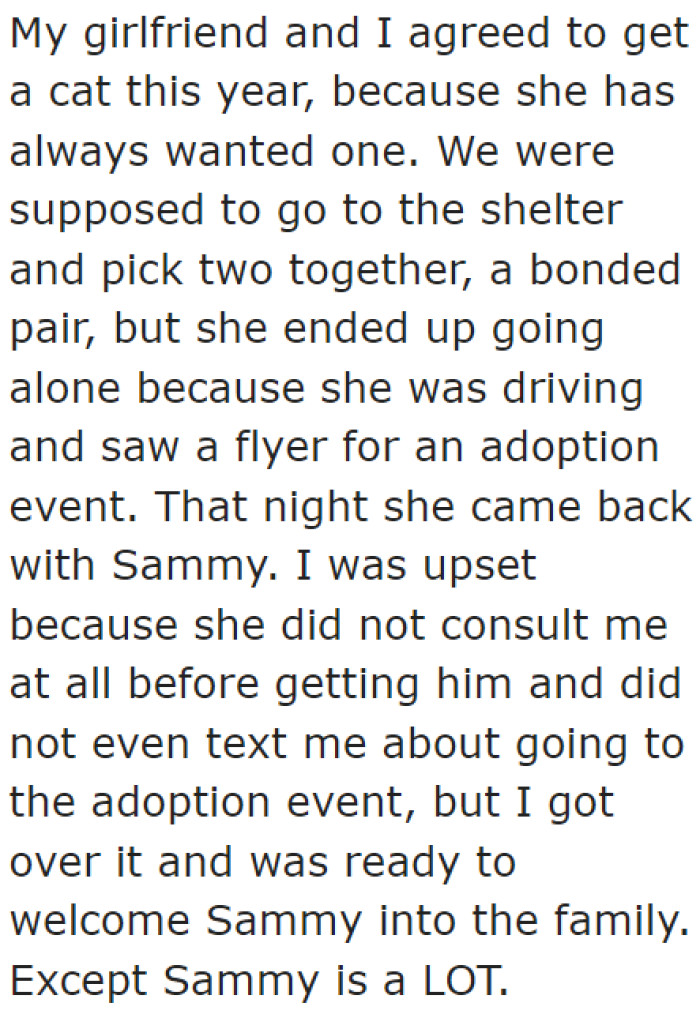
The girlfriend asked for a cat that will unlikely get adopted.
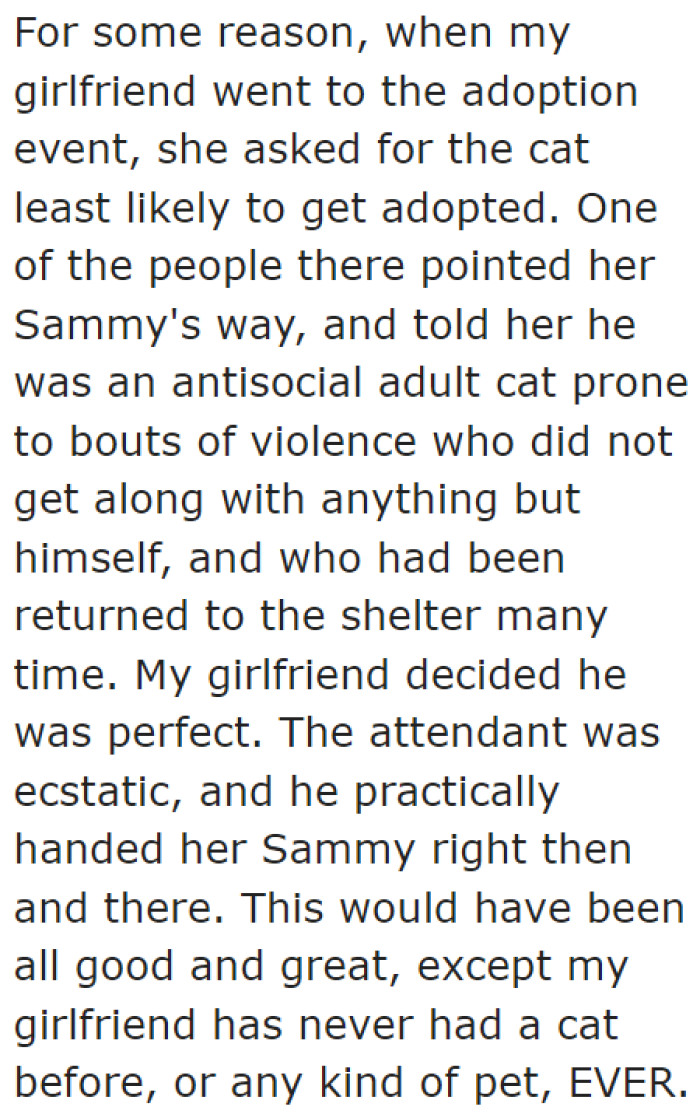
Adopting a pet, particularly one with behavioral issues, can be a significant challenge for individuals without prior experience.
The adoption of a high-needs pet can introduce significant stress into a relationship, particularly when one partner lacks experience with animal care.
Research shows that differing expectations about pet care can lead to conflict and dissatisfaction, as seen in this scenario.
The girlfriend’s surprise adoption of Sammy is what sets the whole conflict in motion, because the OP wasn’t even part of the decision.
Adopting a pet is a significant commitment that requires careful consideration, particularly for first-time cat owners.
Their cat, Sammy, is a high-needs pet. He is an extremely problematic cat.
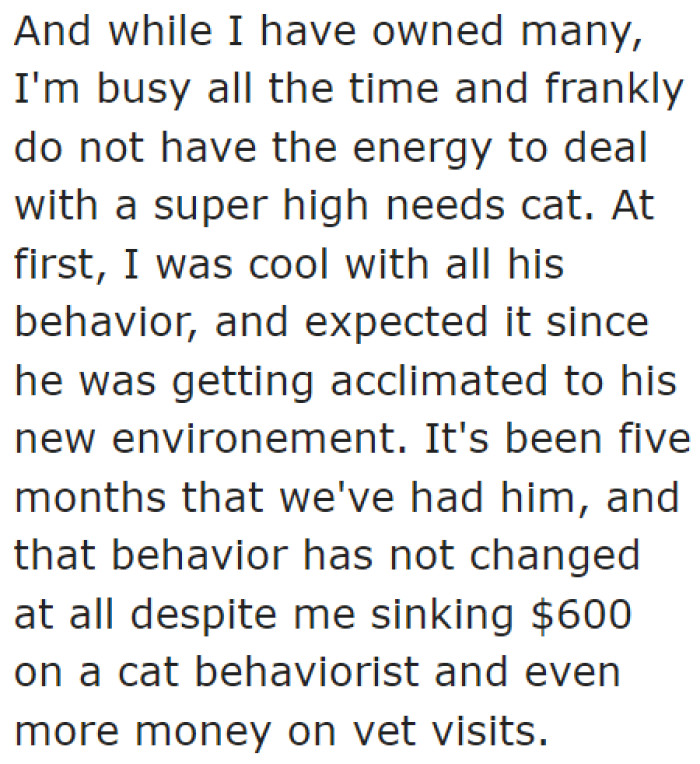
The OP describes Sammy's behavior.

The OP has had it with the stress that the cat brought them. He decided that it needs to go.
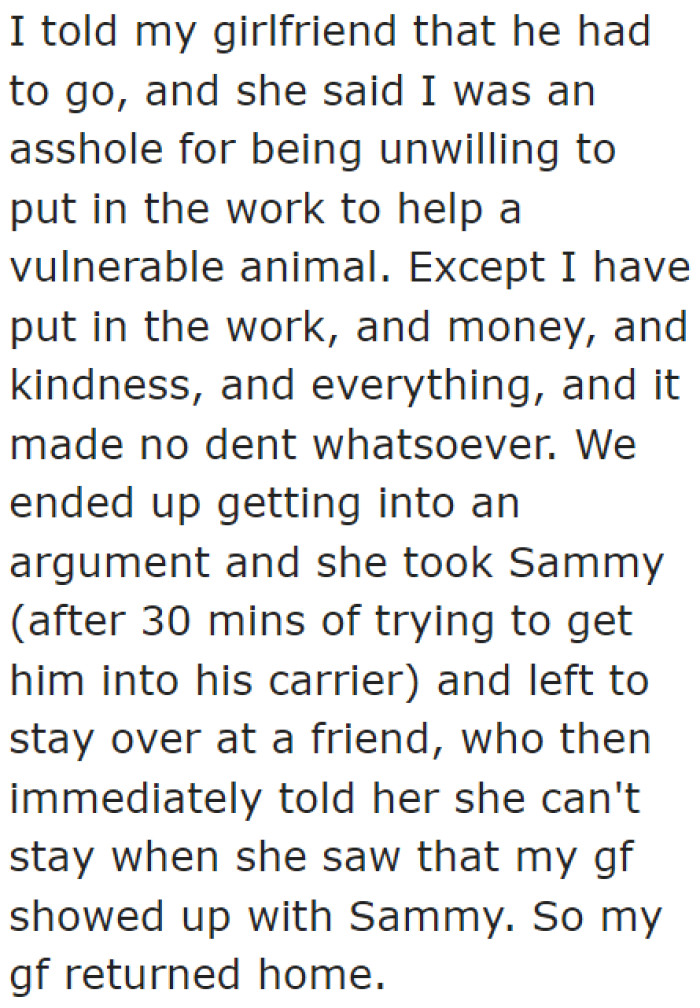
From a psychological standpoint, the man's frustration may reflect underlying fears about relationship stability and shared responsibilities.
This situation highlights the importance of aligning values and responsibilities when it comes to pet ownership.
Research in the Journal of Veterinary Behavior indicates that many behavioral issues in pets can be addressed with proper training and socialization.
In this case, the girlfriend's lack of experience may have contributed to the cat's high needs, underscoring the necessity for owners to seek guidance and support in managing their pets’ behaviors.
Understanding the psychological aspects of pet behavior can pave the way for more effective care and stronger bonds between pets and owners.
People think he's the a-hole for not having the resolve to care for the problematic cat permanently..
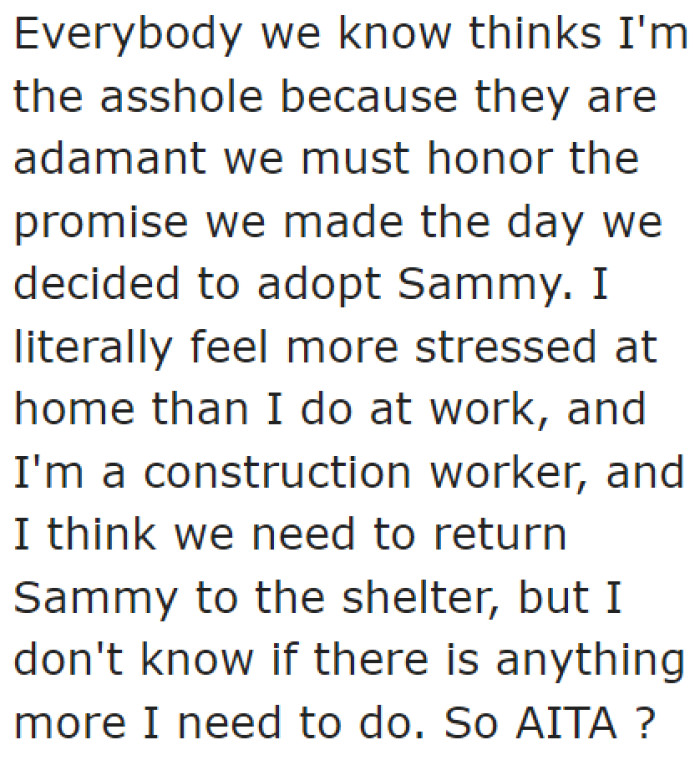
This cat isn't compatible with the current owners. So it's okay taking it back to the shelter to be adopted, one day, by an owner who will accept its problematic behavior..
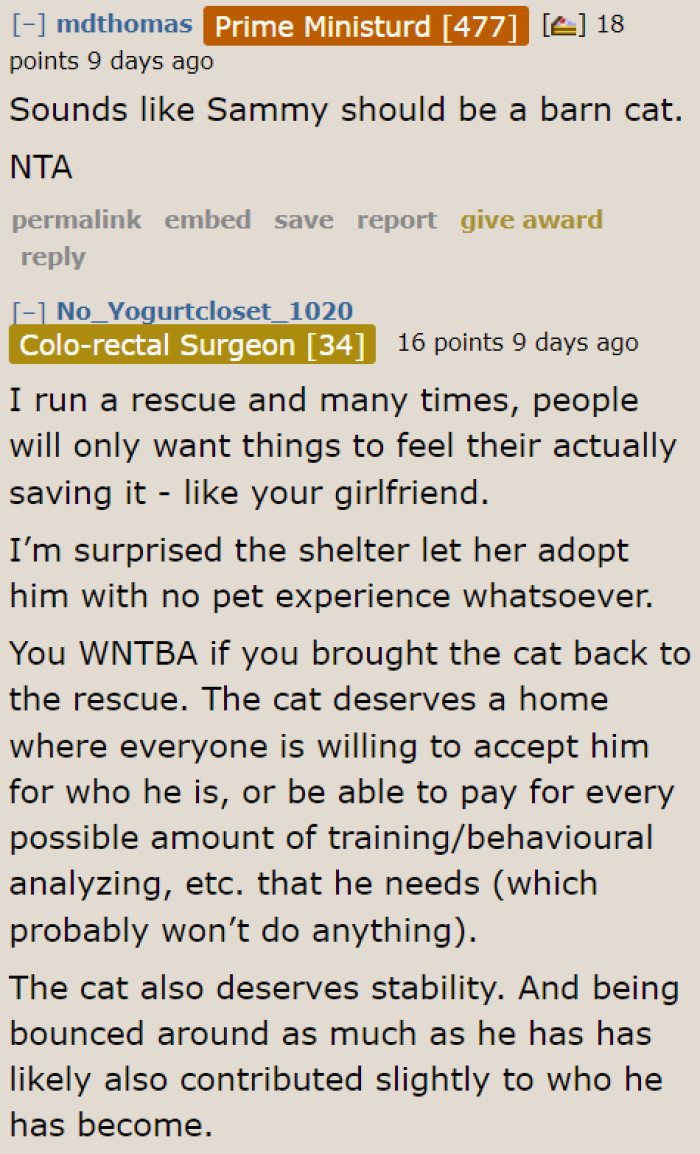
The rescue shouldn't have handed this cat to a beginner. It was a wrong move on their part.
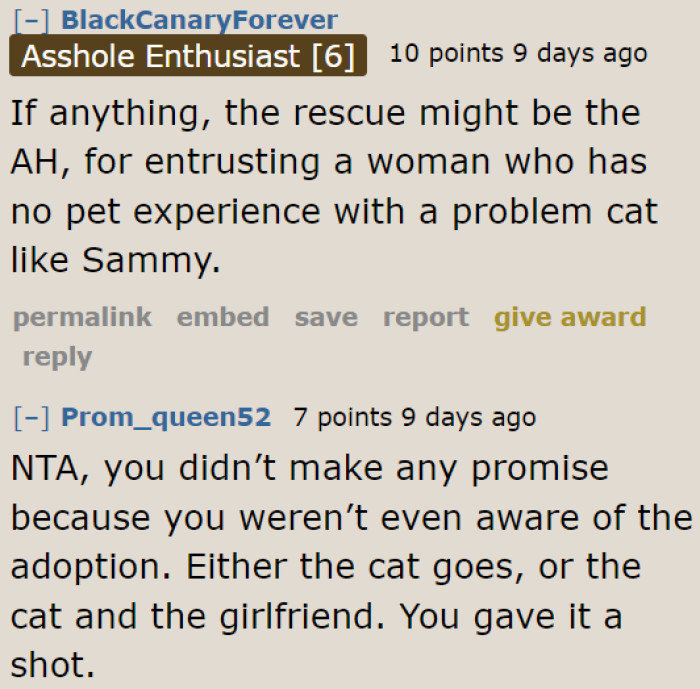
Once Sammy’s “extremely problematic” behavior starts taking over their home, the OP’s frustration turns into full-on resentment fast.
This is the same kind of breaking point as the man who moved out after dealing with two badly behaved cats.
Effective communication is crucial in navigating conflicts related to pet care.
Effective communication is critical when navigating the challenges of pet ownership.
Effective communication between partners about pet care expectations is crucial in preventing conflicts.
Utilizing 'I' statements can help frame these discussions constructively, fostering a more supportive dialogue.
It's time to take back Sammy and adopt two kittens. Things will be easier for the both of them, provided they train the cats properly.
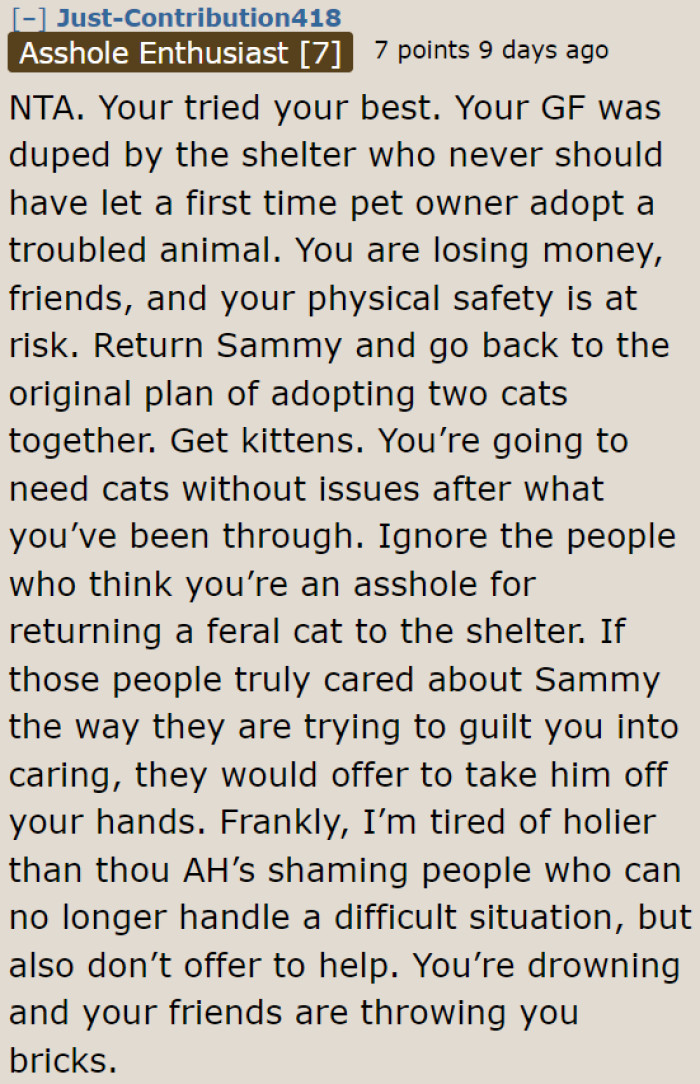
It's all on the girlfriend and the adoption staff. It isn't the OP's fault to come to this decision.
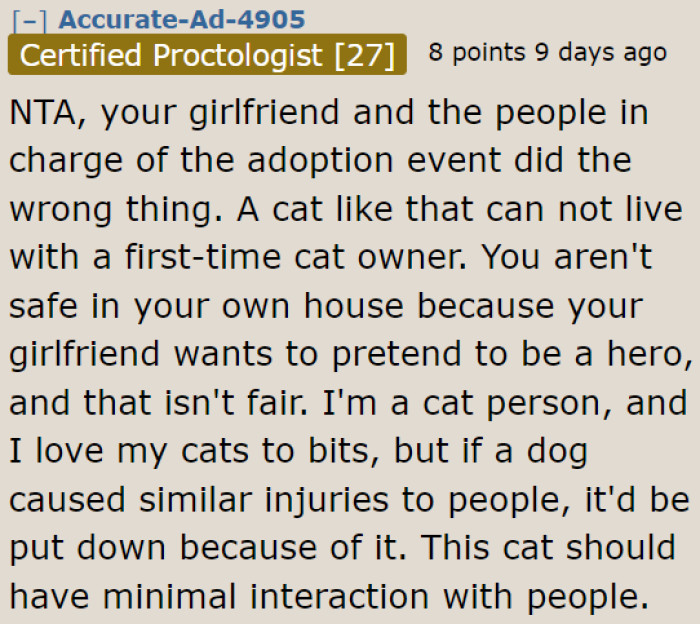
The OP already has enough reason to return this cat. Even the friend refused to give temporary shelter to this cat.
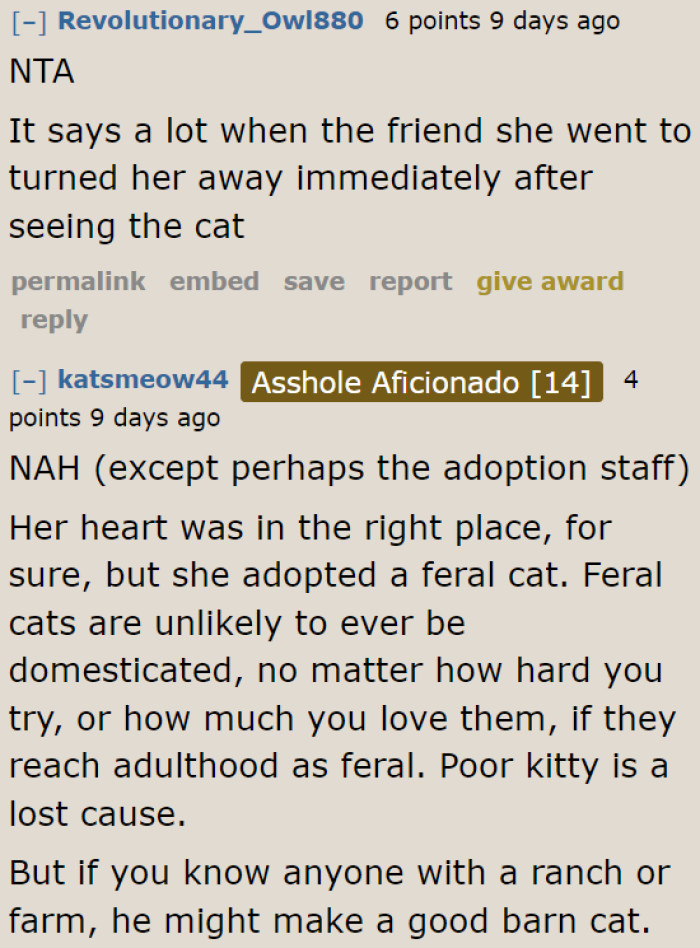
The moment he decides Sammy needs to go, the relationship tension goes from cat drama to a real fight about responsibility.
Moreover, understanding the behavioral needs of the cat is essential for successful integration into the household.
Implementing a structured training plan can foster a more harmonious living environment.
Additionally, exploring options for shared care responsibilities can promote teamwork within the relationship. Establishing a routine where both partners contribute to the pet's care can help alleviate pressure on one individual and foster a sense of partnership.
Couples are encouraged to regularly check in with each other about their feelings regarding pet care to ensure both partners feel supported.
Additionally, engaging in active listening can enhance mutual understanding and empathy.
While the girlfriend may feel attached to the cat, it may be time to let it go. She obviously bit off more than she could chew when she adopted this cat.
If she still wants to have a cat after everything, she can always adopt kittens. And the next time she decides to get a cat, it is important for the OP to be involved in making decisions.
Developing a Collaborative Approach to Pet Care
To manage the challenges of pet ownership, couples should work together to establish a shared plan for pet care.
Dividing responsibilities and creating a routine can encourage collaboration and reduce feelings of overwhelm.
That’s why Reddit is split, with some people saying the shelter is the right exit and others calling him an a-hole for not sticking it out.
Furthermore, exploring the emotional significance of the pet can lead to deeper insights for both partners.
Understanding why the pet is important to each individual can foster empathy and compassion, allowing for more collaborative decision-making.
Seeking Professional Guidance When Needed
If conflicts persist, seeking the assistance of a relationship counselor can provide valuable support.
Therapists can facilitate discussions and help couples navigate their emotional responses to create more productive conversations.
Additionally, engaging in educational resources about pet ownership and relationship dynamics can empower couples with knowledge and strategies.
Workshops, books, and online courses can provide practical insights that support healthy relationships and responsible pet ownership.
Investing time in learning can transform challenges into opportunities for growth and connection.
In this situation, the tension surrounding the adoption of a high-needs cat highlights the critical importance of communication and emotional understanding in relationships. The frustrations expressed by the man regarding the cat's behavior reveal underlying issues that could escalate if not addressed properly. Establishing a mutual understanding can lead to a compromise that respects both the man's concerns and the girlfriend's attachment to the cat. Without this dialogue, the risk of resentment looms, potentially straining their relationship further.
Exploring Conflict Resolution Strategies
When conflicts arise around pet ownership, utilizing conflict resolution strategies can be beneficial.
This approach can help partners work together to find solutions that satisfy both individuals’ needs.
Engaging in compromise and understanding each other's perspectives can foster a more harmonious relationship.
The situation surrounding the adoption of a high-needs cat reveals the critical importance of communication and shared responsibility in pet ownership. The frustrations expressed by the man in this scenario highlight the necessity for couples to engage in open discussions about their expectations and responsibilities when bringing a new pet into their lives. This is particularly vital when one partner feels overwhelmed by the challenges associated with a pet that has behavioral issues.
Aligning values and responsibilities is not just essential for the well-being of the pet but also for the relationship itself. A successful partnership involves acknowledging each other's concerns and finding common ground, which can ultimately lead to a more harmonious living environment despite the complexities that come with caring for a demanding animal.
Practical Solutions for Coping
To navigate this situation effectively, the couple should consider seeking professional help, such as a pet trainer or behaviorist.
Engaging an expert can provide tailored strategies for managing the cat's behavior while also empowering the girlfriend to feel more competent in her role as a pet owner.
Additionally, establishing a routine for pet care can help both partners feel more supported and responsible.
The situation surrounding the adoption of a high-needs cat illuminates the complexities that can arise in a relationship when one partner feels overwhelmed by the responsibilities of pet ownership. The frustration expressed by the man in the article highlights the importance of open dialogue between partners, especially when one is adjusting to a new pet's demands. Navigating these challenges requires not just communication but also an understanding of each other's limits and expectations. Seeking professional advice could be beneficial, as it may help couples strengthen their bond while addressing the needs of both the pet and their relationship.
He’s not just frustrated with Sammy, he’s wondering if this cat situation is the final straw for his relationship.
Want the girlfriend fallout after he returned her newly adopted cat to the shelter? Read what happened when he tried to fix the cat problem.
Share this article: