Homeowner Sics Their Large Dogs On Their Neighbor's Misbehaving Kids After Repeatedly Warning The Mom That Her Children Were Trying To Break Into Their Home

A homeowner sicced their two dogs on their neighbor's sons to stop them from trespassing on their property. OP tried to resolve the issue by talking to their neighbor but was promptly dismissed by the mom.
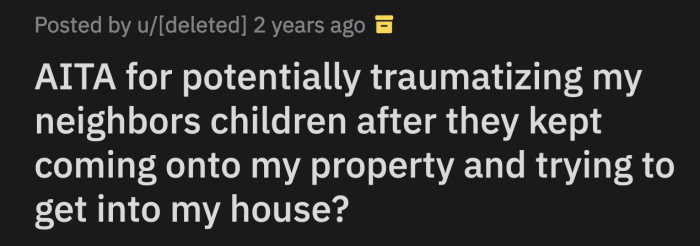
OP, their fiancé, and one-year-old are new to their neighborhood. One of their neighbors has three children aged 9, 12, and 14.
The kids weren't a lot of trouble initially. They were typical children running around in their scooters and throwing sticks at each other.
Their idea of fun seemed to be getting nearer and nearer to OP's house. The oldest sibling started by slinging trash at OP's yard, which their fiancé had to continuously clean up.
Then all three siblings combined their power to create a replica of an archeological excavation and dug holes in OP's yard. They knocked on their doors and tried to pick the lock on OP's front door.
OP approached the siblings' mom to talk about her sons' trespassing in their yard. She ignored OP's complaint which was on par with what OP heard about her parenting style.
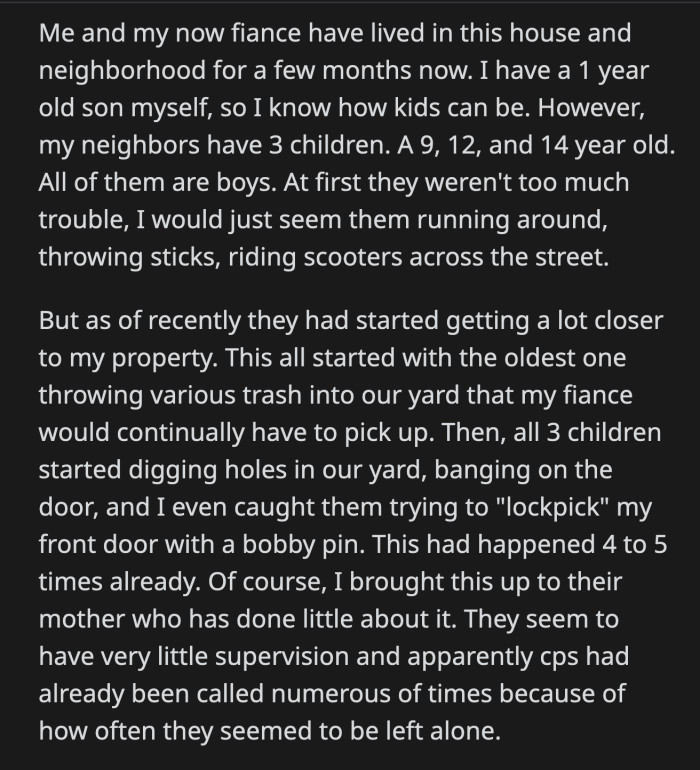
OP found out that other neighbors alerted CPS about how much this mom left her children unsupervised. OP warned the neighbor that they had two large dogs who were trained to protect their home.
The mom said if her boys were harmed, she would have OP arrested and their dogs put down
OP planned something to teach their neighbor's kids a lesson
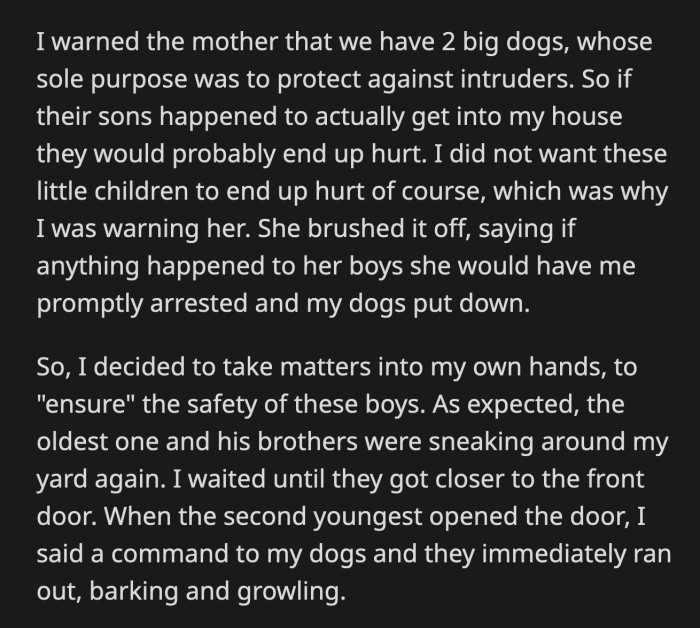
The children trespassed on their yard again, sucessfully unlocked the front door, and came face to face with OP's large dogs
The recent incident where a homeowner unleashed their large dogs on their neighbor's children highlights a troubling escalation in community tensions. This aggressive response reflects a deep-seated perception of threat to personal space and safety, particularly for newcomers in the neighborhood trying to establish their place.
The homeowner attempted to address the issue through dialogue, only to be dismissed by the children's mother. This dismissal likely intensified feelings of vulnerability and frustration, prompting a defensive reaction. Such behavior illustrates how people can feel driven to protect their homes when they perceive their boundaries being violated.
Moreover, this incident underscores the broader implications of social identity within communities. New residents may feel an urgent need to assert their rights and defend their territory, especially when they believe their safety is at risk. This protective instinct can lead to confrontations that disrupt neighborhood harmony, demonstrating the delicate balance between community interaction and personal boundaries.
The behaviors of children are often influenced by their parenting styles, which can shape their interactions with others.
OP tried talking to the mom about her boys trespassing again and again, and she dismissed it like it was no big deal.
The recent incident involving a homeowner unleashing their dogs on their neighbor's children highlights a troubling cycle of communication breakdown and perceived threat. The homeowner, having already attempted to address the issue verbally with the children's mother, found themselves feeling increasingly vulnerable as their warnings were ignored. This sense of helplessness can often prompt individuals to take drastic measures to protect their property and family.
Such reactions are not uncommon when people perceive their safety is at risk. In this case, the homeowner's decision to sic their dogs on the children can be seen as an instinctive response to a situation where they felt their concerns were dismissed. This incident sheds light on how unresolved conflicts, especially regarding boundaries and safety, can escalate into aggressive actions when individuals believe they have no other recourse.
The dogs chased after the children barking and growling until the end of OP's yard
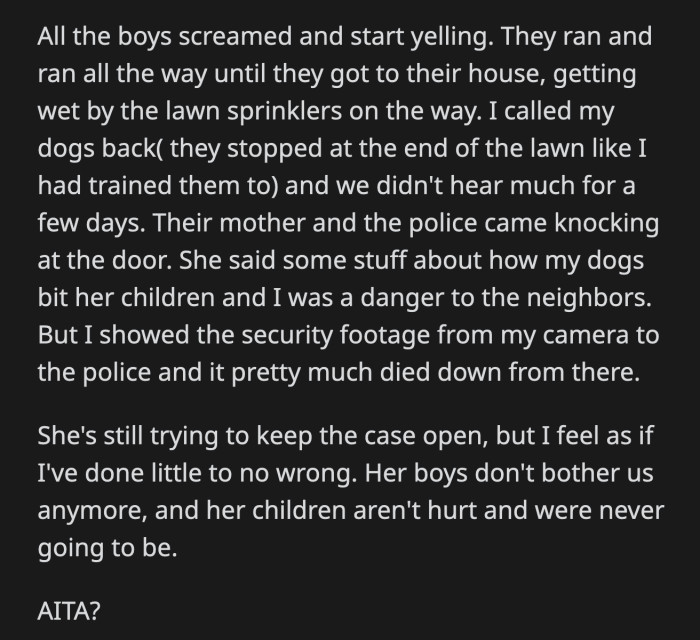
The children ran home, screaming. OP commanded their dogs back to them as they were trained to do.
A few hours later, the mom and a police officer talked to OP. The mom complained that OP's dog bit her children.
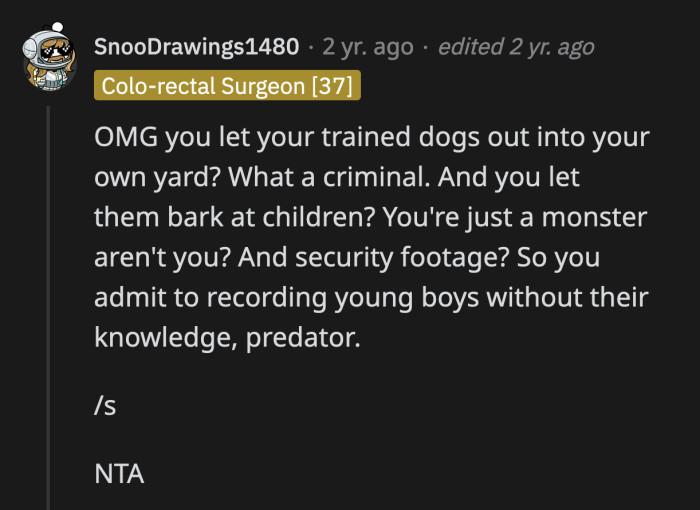
OP showed the security camera footage of the siblings trying to break into OP's home. It also showed that none of the kids were bitten by the dogs.
OP didn't press charges against the kids for trespassing because it wasn't really their fault that they had a neglectful parent
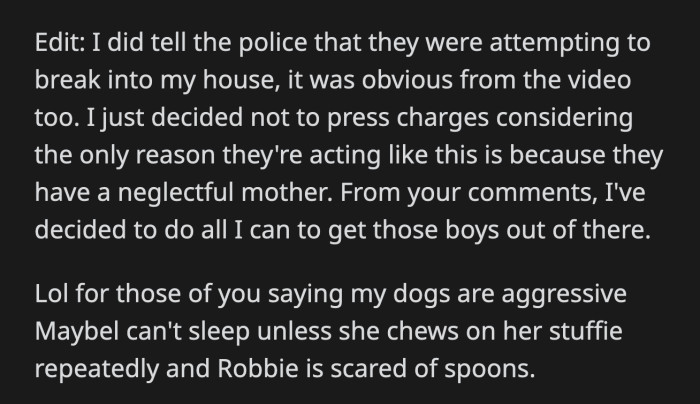
OP did warn the mom to be more mindful of her children
Behavioral studies show that when parents perceive their children are at risk, they may resort to extreme measures to protect them, even if those measures involve escalating conflict.
This reaction is often influenced by prior experiences of victimization or trauma, which can create a hyper-vigilant mentality.
Moreover, research from the Journal of Family Psychology indicates that unresolved conflicts within neighborhoods can lead to cycles of retaliation, where one aggressive act begets another.
When children misbehave, as seen in this scenario, it often reflects not only their behavior but also the dynamics within the family unit.
Psychologists emphasize the importance of consistent boundaries and consequences in promoting appropriate behavior among children.
That’s when OP’s warning about what would happen if anyone got harmed turned into the start of a real plan, not just angry words.
In this case, the homeowner's response to the children may have been influenced by their own experiences of feeling threatened or unsafe, suggesting a cycle of learned behavior.
Understanding this can help in recognizing the need for empathy and communication rather than escalation.
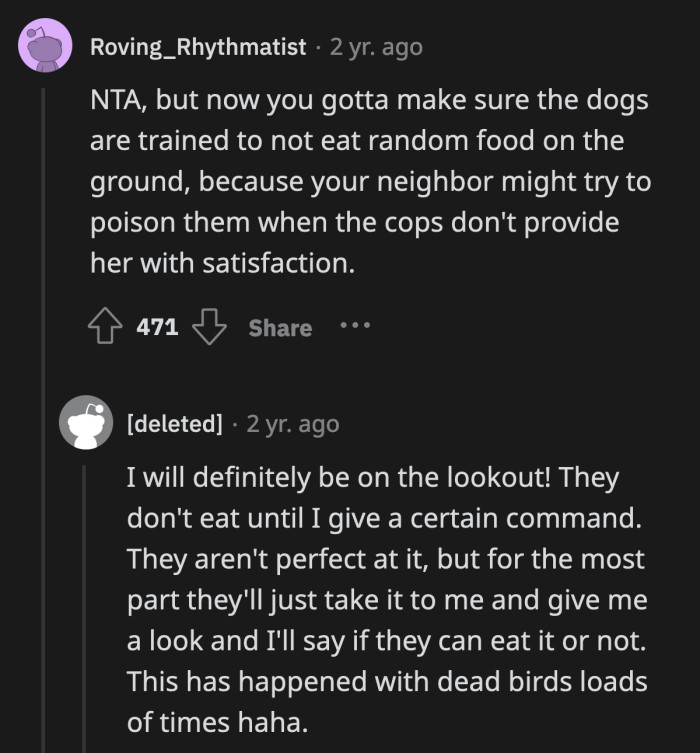
OP should stay on guard in case the neighbor retaliates and targets the dogs

Mom even tried to get OP in trouble when she lied about her children getting bit by the dogs. Too bad OP had factual evidence on their side.
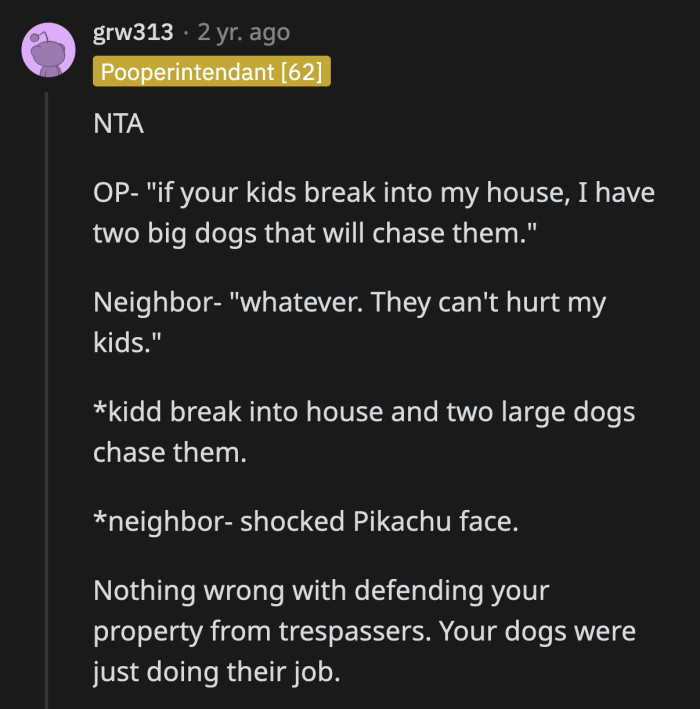
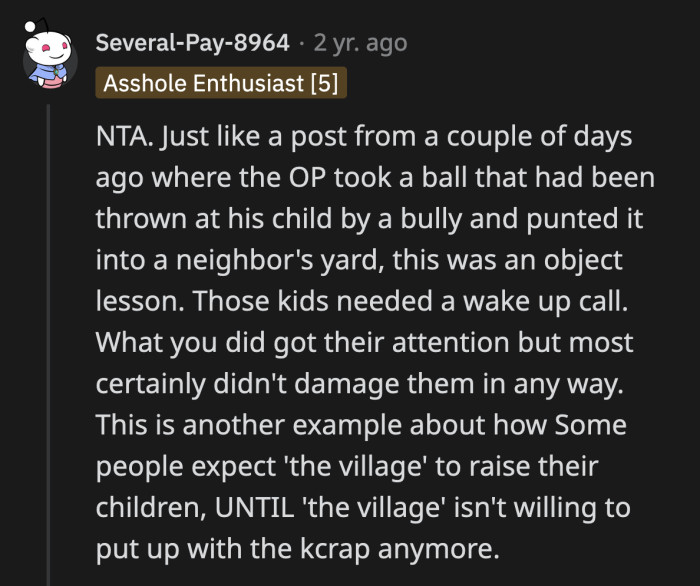
OP definitely taught those kids a lesson they won't forget
Practically, it is essential for parties involved in such disputes to engage in open communication to de-escalate tensions.
This is similar to the woman who told her in-laws her backyard is not a dog park, yet they kept bringing untrained dogs.
Misbehavior in children can often stem from unmet needs or a lack of understanding regarding appropriate boundaries.
Addressing the root causes of misbehavior is crucial in promoting positive behavior change.
Communication breakdowns often lead to increased conflict. Research has shown that when individuals feel unheard, they are more likely to resort to extreme measures.
In this instance, the homeowner's actions could be interpreted as a final resort to protect their property, stemming from frustration and perceived negligence from the children's mother.
Effective communication strategies, such as assertive expression and active listening, could have significantly altered the resolution of this conflict.
How neglectful has the mom been for CPS to know them by name?

Those kids are misbehaving because they don't have an active parent who actually cares about what happens to them. Heck, OP cares more about them more than their own mother.
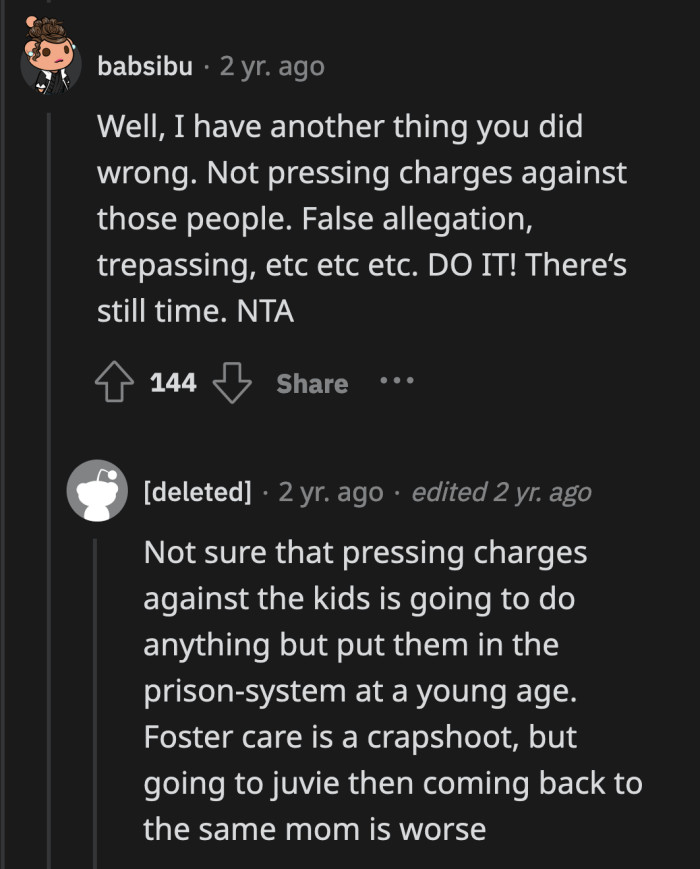
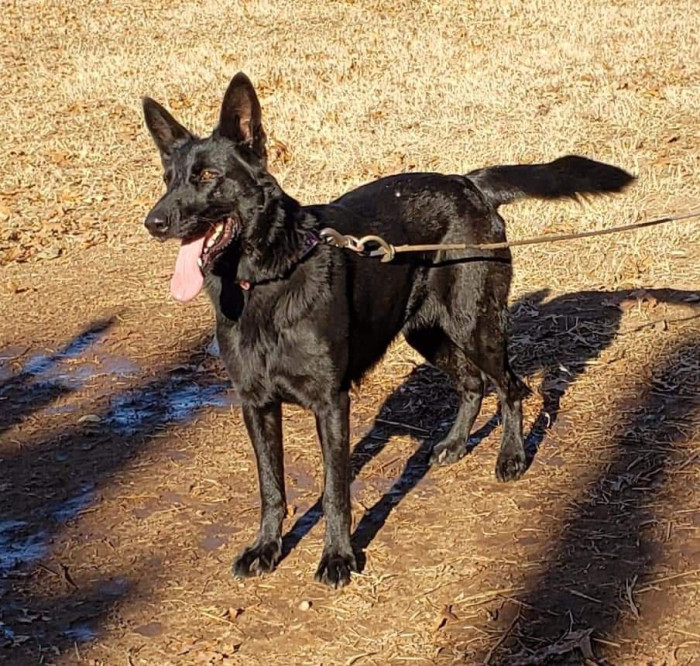
Someone asked OP for dog tax. Here are their pups. This is Robbie who is scared of spoons.

The kids came back, successfully unlocked the front door, and walked straight into OP’s large dogs waiting on the other side.
This reinforces the idea that understanding the underlying emotional triggers is crucial for effective conflict management.
To manage misbehavior effectively, parents can benefit from implementing consistent discipline strategies that focus on teaching rather than punishment.
For instance, if a child is disrespectful to neighbors, having them apologize reinforces accountability and empathy.
The escalating situation between the homeowner and the neighbor's children brings to light a crucial aspect of child development. Children are highly impressionable and tend to reflect the behaviors exhibited by adults around them. In this case, the aggressive response of the homeowner, utilizing their dogs to confront the perceived threat posed by the children, could set a troubling precedent. Instead of fostering understanding and communication, this incident risks teaching the children that aggression is an acceptable means of problem-solving. It underscores the urgent need for adults in the community to model constructive conflict resolution strategies. By doing so, they can create a safer environment that discourages the cycle of aggression and promotes positive interaction among neighbors.
... and Maybel who can't sleep without chewing on her stuffed toy
Looks like OP trained their dogs well. They know not to eat random food left on the ground without OP's command.
Those kids will have nightmares about Robbie and Maybel chasing them
Now the mom is stuck facing the fallout from OP’s “lesson,” especially after she said she’d have OP arrested and the dogs put down if anything went wrong.
This unfortunate incident underscores the critical importance of fostering a supportive neighborhood environment. The homeowner's drastic action of releasing their dogs after multiple warnings reflects a breakdown in communication and trust between the families. Such confrontations often arise when residents feel isolated or dismissed, as seen in this case where the mother of the misbehaving children reportedly dismissed the homeowner's concerns.
Engagement activities, like neighborhood watch programs or community potlucks, are essential for building rapport among residents. Had the families engaged in such initiatives, they might have cultivated a sense of community that could have prevented this escalation. The absence of connection often leads to misunderstandings and, as illustrated here, can provoke desperate measures to protect one's home and family.
I wouldn't attempt what OP did unless my dogs are well-trained. OP warned their neighbor about their children's trespassing hobby but she didn't listen.
OP deleted their account and hasn't posted any update if the neighbor's kids continued misbehaving. Would you have done what OP did to deter the kids from escalating their misguided actions?
This incident highlights a troubling cycle of aggression and misunderstanding within community dynamics. The homeowner's decision to unleash their dogs on the neighbor's children reflects a desperation born from repeated failed attempts at communication. Instead of fostering a dialogue, the dismissive response from the children's mother only exacerbated the situation. The article suggests that environments where dialogue is prioritized can significantly reduce aggressive behaviors. If the neighbor had engaged more openly with the homeowner, perhaps the children would have been steered away from their trespassing antics and toward more constructive interactions. Community relationships thrive on mutual respect and understanding, and this unfortunate event serves as a reminder of the consequences that arise when those elements are neglected.
The situation between the homeowner and their neighbor's children underscores the complexities of child behavior and the critical role of parenting styles. However, the dismissive response from the neighbor highlights a disconnect in parental engagement that can exacerbate such conflicts. The homeowner's desperate measure of using their dogs to protect their property illustrates the breakdown in dialogue and the frustration that can arise when concerns are not addressed. A more supportive environment that focuses on teaching appropriate behavior rather than resorting to punitive measures may have prevented this escalation.
The conflict between the homeowner and the neighbor highlights the complexities of community relationships and the underlying tensions that can arise. The homeowner's attempts to address the issue verbally with the neighbor's mother were met with dismissal, indicating a breakdown in communication that can often escalate disputes. By resorting to using their dogs as a form of defense, the homeowner reflects a sense of desperation and frustration in protecting their family and property. This incident serves as a reminder that unresolved tensions can lead to actions that further divide a community, rather than fostering a spirit of cooperation and understanding.
The mom wanted accountability, but she got it in the form of a front-door surprise with OP’s dogs involved.
Want the neighbor conflict fallout? See how a couple built a privacy fence after kids taunted their large dogs.
Share this article: