Woman Sees How Her Husband Cleans The Dog Bowl And It Sends Her OCD Into Overdrive

A simple dog bowl turned into a full-blown argument when one woman saw how her husband was cleaning it. For her, the issue was not just about chores, it hit straight at the kind of contamination fear that can make everyday routines feel impossible.
She has OCD, takes medication, and is in therapy, but this moment still sent her spiraling. Her husband and kids were trying to help around the house, yet the way he handled the bowl set off a fight that left her questioning whether she overreacted.
Reddit had plenty to say about that one small brush and the bigger problem behind it. Read on.
OP already feels like the AH, and she wants an outside opinion:
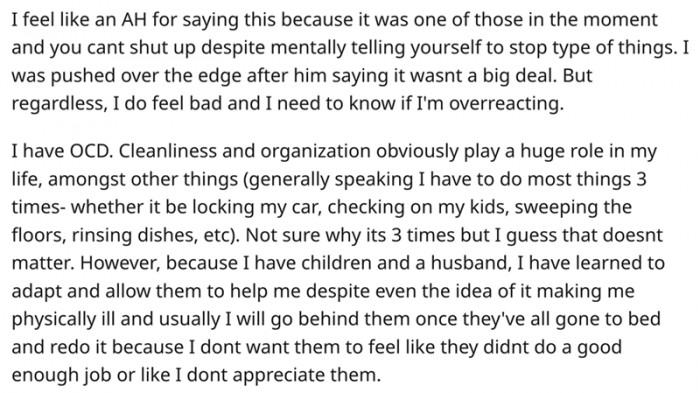
Her husband and kids wanted to help her with the chores and encouraged her to relax. She came to the kitchen and saw how her husband was cleaning the dog bowl. Needless to say, her OCD went into overdrive.
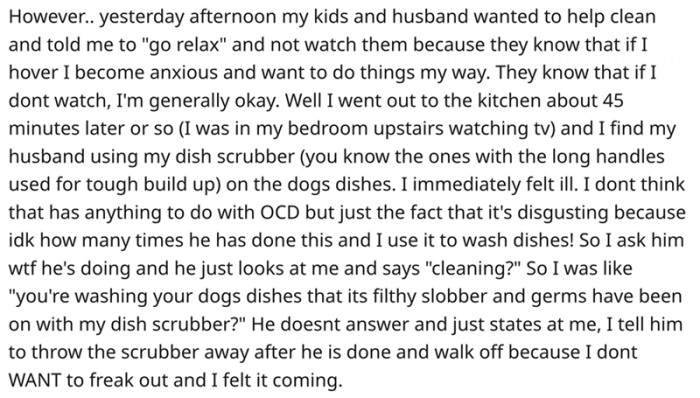
She went to her room, trying to avoid conflict, but her husband followed her.

Obsessive-Compulsive Disorder (OCD) often manifests in compulsive behaviors aimed at reducing anxiety triggered by intrusive thoughts. The act of cleaning, while seemingly mundane, can become a focal point for obsessive thoughts about cleanliness and contamination, especially if the individual has a pre-existing concern about hygiene.
These compulsions can temporarily alleviate anxiety but ultimately reinforce the cycle of OCD. This maladaptive coping mechanism highlights the importance of understanding the underlying triggers, such as the perception of dirtiness or potential harm, to address the condition effectively.
That tiny detail was enough to turn a routine chore into a major flashpoint.
In addition to professional treatment, individuals with OCD can employ practical coping strategies to manage their symptoms daily. Studies have shown that practicing mindfulness can reduce the intensity of obsessive thoughts and the urgency to engage in compulsive behaviors.
Additionally, keeping a journal to document triggers and responses can aid in recognizing patterns over time. This self-monitoring can empower individuals to confront their fears gradually, reinforcing a sense of control. Ultimately, combining these strategies with therapeutic interventions can create a robust framework for managing OCD more effectively.
Redditors who don't have OCD were backing up OP on this one

But some of them were a bit judgmental

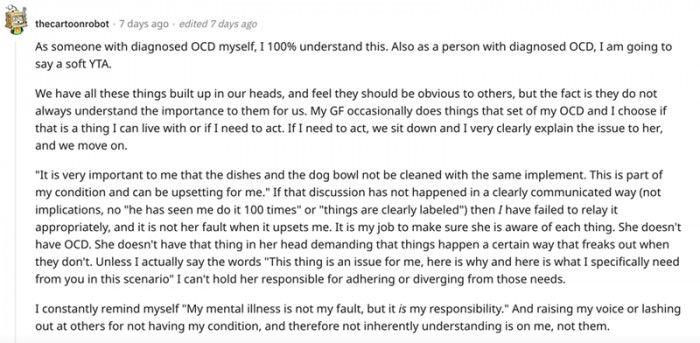
People with OCD contributed to this discussion:
Cognitive Behavioral Therapy (CBT) is recognized as one of the most effective treatments for OCD, emphasizing the alteration of thought patterns that drive compulsive behaviors. This technique involves exposing the individual to the source of their anxiety, such as a dirty dog bowl, while preventing the compulsive urge to clean excessively.
Research indicates that patients who engage in this therapeutic approach often experience significant reductions in OCD symptoms, with many noting lower anxiety levels and improved overall quality of life. Therefore, those grappling with OCD should consider seeking professional therapy that integrates these evidence-based strategies.
Kind of like the sensory-issues woman who refused to touch her husband’s dog, then got accused of being mean.
Reddit did not hold back once the comments started rolling in.
Yes, it is interesting

OP already stated that she is on meds and goes to therapy

Some Redditors shared the husband's views about cleaning methods

Social and cultural factors can significantly influence how OCD manifests and is perceived.
Some Redditors even shared advice about pet care.

We've included a few of the many different comments that covered a wide range of viewpoints. The fact that the OP is forcing her husband and children to foot the bill for her mental illness seems to be the theme of most replies.
She is who she is, and feeling unhappy about his behavior is perfectly acceptable. She is not happy with the situation, and she is trying to get help.
She is also aware that she overreacted, and all those things are commendable.
After all, acknowledging the problem is the first step to solving it. We hope they will find a way to work it out because it affects the whole family.
When it comes to cleaning the dog bowl, we also believe that there should be a separate brush for that. Her husband's actions are difficult to understand.
He knew that using that brush would upset OP. It sounds a bit like weaponized incompetence.
What do you think?
The scenario of a woman witnessing her husband's method of cleaning the dog bowl serves as a poignant reminder of how everyday activities can trigger the complexities of OCD. This moment reflects the intricate relationship between mental health and routine tasks, revealing the often unseen struggles faced by those with the disorder. The article highlights that effective interventions are essential; they should not only focus on cognitive challenges but also on behavioral responses. Techniques such as cognitive behavioral therapy and mindfulness practices emerge as valuable tools in managing symptoms and enhancing emotional control. Ultimately, this narrative emphasizes the necessity for a comprehensive approach that blends professional support with practical coping mechanisms, fostering resilience in individuals navigating the challenges of OCD.
One brush was all it took to set off a household-sized debate.
Want more “dog hygiene hypocrisy” drama, read how the germaphobe GF made him wash hands.
Share this article: