Wife Accused Her Husband Of Treating Their Son Like A Pet After He Bought Him A Dog Bed To Help Him Cope With His Fear Of Losing Their Pet

One dad thought he was solving a simple comfort problem, but his wife saw it very differently. A dog bed, a 10-year-old son, and a family pet named Margo turned into the kind of household debate that can get surprisingly heated.
After Margo was stolen and later brought home, their son got especially attached and even slept on her bed for a while. He still likes using it because it is comfortable, but his mother thinks that is too dirty, so his father bought him a larger dog bed to use instead.
That is where the disagreement really starts, and it only gets more awkward from there. Read on.
OP bought a large dog bed for his son to use
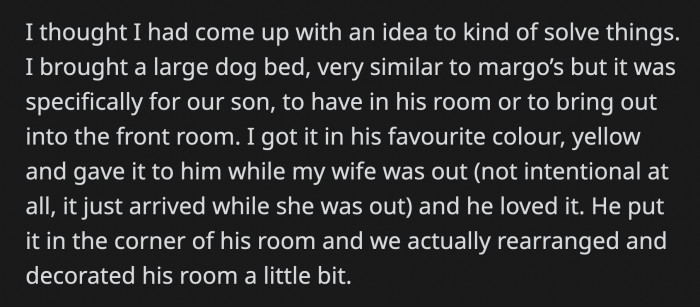
The dog bed arrived when OP's wife was not home. OP even bought a dog bed similar to what Margo has but in his son's favorite color, yellow.
OP's thoughtful gift overjoyed his son. He placed it in the corner of his room and the duo did a bit of redecorating and rearranging to complete the relaxing ambiance.
When OP's wife was home, their son dragged his new seat to the living room while he watched a show. OP's wife asked their son about his new seat and he excitedly told her about OP's gift.
OP saw how unhappy his wife was about the dog bed but she bit her tongue until their son was back in his room. When their son was out of the living room, an argument ensued.
She asked OP why the hell he bought their son a dog bed. OP thought this was a good compromise since their son found the dog bed comforting and his wife didn't like him sleeping on Margo's dog bed.
She accused OP of treating their son like a pet and refused to listen to any of OP's explanations. She wants OP to take the dog bed himself because she doesn't want to be the bad guy.
OP refused his wife's request because he knows how upset their son would be. Since then his wife has been making comments implying she will get rid of the dog bed soon.

Is OP a thoughtful dad or a awful one? You can read the full original post below and make the judgement.


The gesture of purchasing a dog bed for a son can reflect underlying parenting styles and attachment theories.
The decision to buy a dog bed for a son grappling with the anxiety of potentially losing a pet opens up a discussion about the complexities of modern parenting. While the husband likely intended to provide comfort and support in a difficult time, the choice to do so without consulting his wife may suggest a disconnect in their parenting styles. This situation illustrates how well-meaning gestures can sometimes be interpreted in unexpected ways, especially when they involve significant emotional stakes.
Moreover, the act of addressing a child's fears through tangible items like a dog bed can be seen as a form of emotional coaching. However, it is crucial for both parents to be aligned in their approaches to ensure a united front in guiding their child's emotional development. In this case, the husband's unilateral decision might have inadvertently undermined the joint effort typically required in parenting, leading to feelings of resentment rather than support.
The family is already dealing with enough without a furniture debate on top of it.
Pets often serve as emotional anchors for families, providing comfort during stressful times.


From a psychological perspective, the father's action can be viewed as an expression of empathy and support.
The recent decision by a husband to buy a dog bed for his son has sparked significant debate regarding parenting choices and emotional support. While the intent behind this purchase appears to be rooted in compassion, it raises questions about the appropriateness of treating a child's emotional struggles with material solutions. The article highlights the case of a family grappling with the impending loss of their pet dog, Margo, who has been a beloved member of the household for nine years. This context underscores the importance of creating a supportive environment for the child to process his feelings.
In this scenario, the father's gesture, though well-meaning, may inadvertently trivialize the child's emotional experience. It suggests a simplistic approach to a complex situation, as buying a dog bed could be interpreted as equating the child's feelings with those of a pet. The criticism from the wife indicates a deeper concern about how such actions might impact their son's understanding of grief and loss. Instead of fostering resilience through open discussions and emotional validation, the father’s choice risks reinforcing a narrative where feelings are managed rather than felt.
This situation also highlights the concept of grief, particularly in the context of losing a pet.

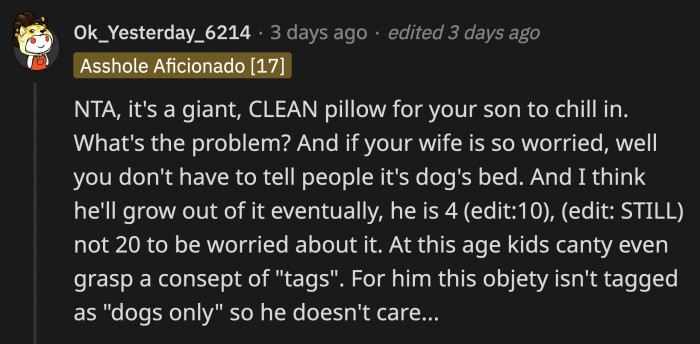
One could argue that the dog bed is basically a comfortable, giant pillow

It really sounds cozy to be honest

The Role of Empathy in Parenting
Empathy plays a vital role in effective parenting, particularly in situations involving fear and anxiety. The father's gesture can be seen as an attempt to foster empathy in his son, helping him understand and process his feelings regarding the family pet.
Understanding Grief in ChildrenGrief is a complex process, especially for children who may not fully understand their emotions.
This also echoes the wife and father-in-law who surrendered his dog to a shelter while he worked.
Understanding Parenting Styles
Different parenting styles can lead to misunderstandings about how to manage emotional responses within a family.
In this case, the father's intention appears to stem from a desire to provide emotional support, reflecting an authoritative approach.
Kids shouldn't be made to feel bad about needing comfort especially after a scarring event like losing a pet

OP's son is just 10, he will get a lot of use out of that new floor pillow of his

There's not a lot of difference anyway, just the labels

The mother's reaction to viewing the dog bed as treating their son like a pet may reflect her own beliefs about childhood development and autonomy. Theories in cognitive development suggest that parents may project their values onto their children, leading to misunderstandings. It’s essential for parents to communicate their intentions and reasoning behind their actions to avoid such conflicts.
Encouraging open discussions about parenting choices can lead to a deeper understanding of each other's perspectives.
To support children through grief, parents can engage in open conversations about death and loss, using age-appropriate language. Creating rituals or memorials for the pet can also provide a tangible way for children to express their feelings and honor their memories.
Encouraging children to share their thoughts and feelings can help normalize their experience and build emotional resilience.
It's important to recognize that gestures like providing a dog bed can be misinterpreted without open communication.
Encouraging discussions about feelings can bridge gaps in understanding and strengthen familial bonds.
It's not as unusual as OP's wife thinks it is

OP showed great empathy for his son's grief and this way, he can slowly let go of the fear that Margo will get stolen again

OP's wife is hung up on the idea that their son is napping, sitting, and relaxing on a dog bed

Navigating Fear and LossHelping children navigate fears, particularly those related to loss, is a critical aspect of parenting.
Fostering Healthy Emotional Expression
To help children cope with grief, parents should encourage open discussions about their feelings regarding loss.
Utilizing age-appropriate language can facilitate these conversations, helping children process their emotions more effectively.
Additionally, creating rituals to honor lost pets can provide closure and promote healing within the family.
They should really have a talk why the wife is so upset about this

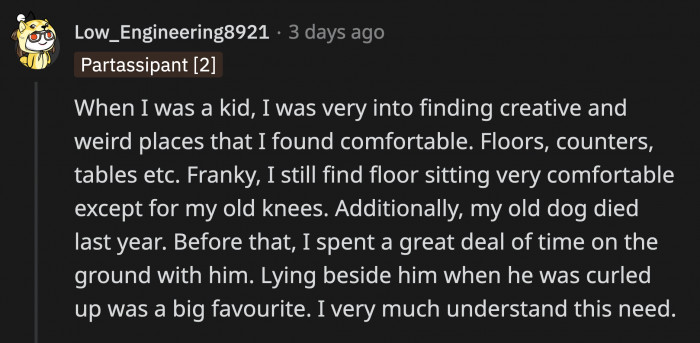
We can't stress enough how comfortable they are

Mom needs to think a bit outside of the box-shaped dog bed
In situations where parental actions are misinterpreted, effective communication becomes paramount.
This is not about OP or his wife, it's about their son and his fear of losing Margo again

It brings comfort and a lot of reassurance for their son...
... OP and his wife should sit down and have a talk about focusing on the son's needs

Supportive parenting is essential for fostering emotional well-being in children. The father's gesture, while possibly misunderstood, demonstrates an effort to provide emotional support during a challenging time. Encouraging parents to recognize the significance of their actions can enhance their understanding of how to nurture their child's emotional needs.
Having your pet stolen from you at any age is traumatic, let alone having it happen at such a young age. Kids deal with things differently, and they are not yet burdened by social conventions the same way adults are.
We understand that it may be weird for OP's wife to see their son relaxing on a dog bed, but this isn't about her. They should really talk about it as parents and prioritize what their son needs, even if it's a comfortable and oversized dog bed.
This situation highlights the crucial role of emotional support in family relationships, particularly during challenging times.
In the context of a family's emotional landscape, responding to a child's fear of losing a beloved pet requires sensitivity and thoughtful communication. The husband's decision to buy a dog bed for their son, intending to provide comfort, may have inadvertently crossed a line into trivialization. This act, while rooted in good intentions, illustrates the potential pitfalls of unilateral decision-making in parenting.
By creating a space where emotions can be openly discussed, parents can guide their children through the difficult process of grief. The wife's reaction suggests that the husband's approach may not have aligned with the emotional support their son truly needs. It highlights the importance of collaboration and understanding in addressing complex feelings surrounding loss within the family unit.
Ultimately, this situation highlights the complexities of parenting and the importance of mutual understanding between parents.
The recent incident involving a husband who purchased a dog bed for their son highlights a critical lapse in communication and empathy within parenting. By making this decision without consulting his wife, he not only disregarded her feelings but also risked undermining the emotional dynamics of their family. The intention behind the purchase was rooted in support, as their son grapples with the fear of losing their family dog, Margo. However, the execution was flawed. The situation illustrates that fostering a supportive environment is not just about addressing a child's fears but also about ensuring both parents are aligned in their approach. Without open dialogue and collaboration, even well-meaning gestures can lead to confusion and conflict, ultimately impacting the child's emotional resilience during challenging times.
For another brutal family choice, see what a man did when his sick dog beat a holiday plan.
Share this article: