
Dog Owner Feels Guilty For Making Kids "Commit Sin" By Letting Them Pet Her Dog

A 28-year-old woman brought her daughter and her dog to a playground for a normal, wholesome afternoon, and somehow it turned into a guilt spiral. Her plan was simple, let the kid get some fresh air, let the dog do dog things, and keep everything calm.
Then a group of Islamic kids approached, curious and polite, asking if they could pet her dog. OP said yes, but only if they got their parents’ permission, because she did not want to cross any lines. But one of the kids got pulled away by an older kid, and suddenly OP realized they never asked their parents at all.
That’s when the “I messed up” feeling hit hard, even though she already set the rules.
The OP felt she made a big mistake by letting Muslim kids pet her dog.
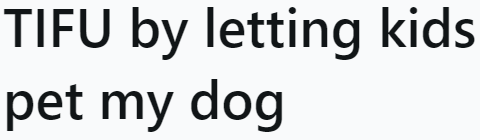
It all happened when the OP brought her daughter and dog to the playground to hang out.

Guilt is a common emotional response for parents, especially when they feel their decisions may impact their children's moral development. Research from the University of Michigan suggests that parental guilt can stem from the desire to fulfill societal expectations and the innate need to protect children from perceived harm.
This feeling can be amplified in situations where a parent believes they might have acted against societal norms, as in the case of allowing children to interact with pets without parental permission.
She noticed a group of Islamic people nearby.

The curious group of kids approached her, asking if they could pet her dog.
The OP allowed it on one condition: that they get their parents' permission.

The playground went from casual petting to instant tension the moment OP noticed the kids never asked their parents after she gave them that one condition.
From a developmental psychology perspective, children's moral understanding evolves through social interactions and experiences.
After one of the kids was dragged away by an older kid, the OP realized something.
The kids didn't bother asking permission from their parents. She felt guilty.

Redditors believe that the OP already did her part by giving them the condition.
The ones who messed up are the kids.
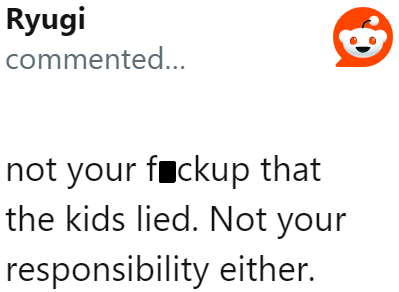
OP’s daughter and dog stayed innocent in the background, but the kids’ decision to just go ahead without permission made OP feel like she caused something morally “wrong.”
It reminds me of the Redditor who learned the hard way you cannot bring dogs to the cemetery.
Effective communication between parents and children can mitigate feelings of guilt in parenting.
A user explains Islamic customs about dogs.
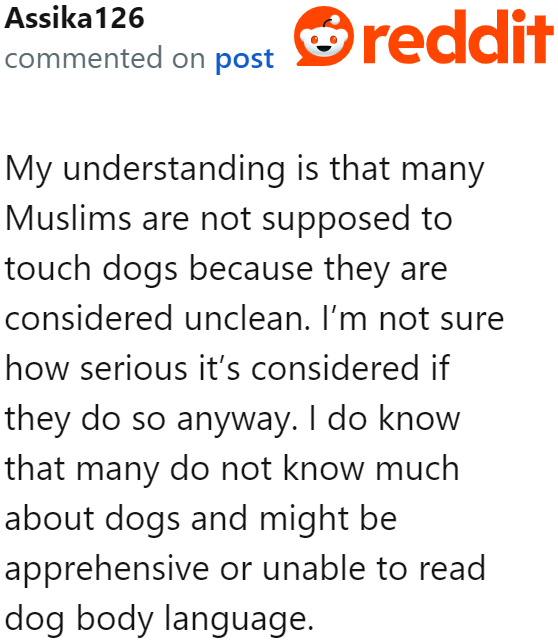
Muslims can own a dog, given that it has a purpose. Otherwise, it's forbidden.
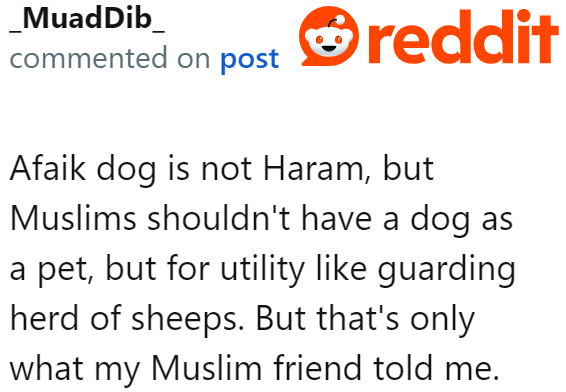
After the older kid dragged one of them away, OP started replaying the whole scene in her head, especially the part where she clearly said “ask your parents.”
Although the OP believes she messed up, it's not her fault. If the kids didn't have permission to pet the dog and they lied to the OP, they're the ones who messed up twice.
The OP had clearly set her condition and was considerate, especially given the nearby Muslim activity. She shouldn't feel guilty about what happened anymore.
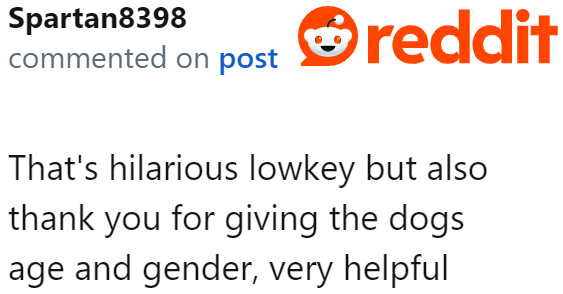
A user noticed something else: The OP being detailed with the description about her dog.
Dogs are part of the family, after all! Just by looking at the post, you can see that the OP treats her dog with great importance.
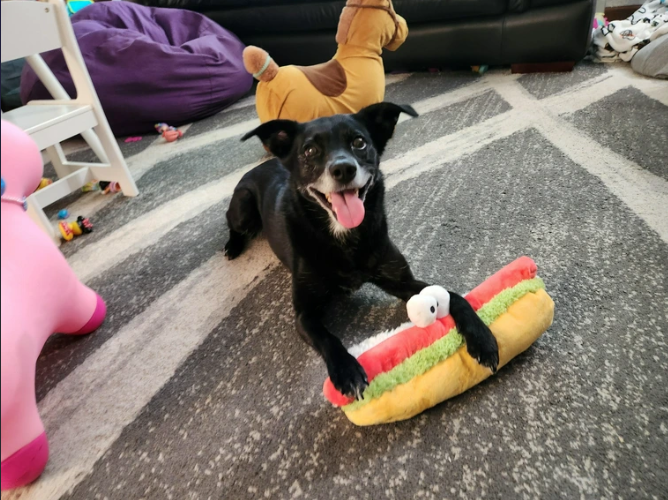
The OP then decided to pay dog tax.
After the OP posted the photo, it made people's day.
Redditors jumped in with the finer details about Islamic customs around dogs, which made OP’s guilt start to look less justified and more like a misunderstanding.
One practical recommendation for parents feeling guilt is to engage in discussions with their children about the importance of asking for permission. This not only alleviates the parent's guilt but also empowers children to navigate social situations more effectively.
Encouraging children to express their feelings about interactions with pets can also strengthen their emotional intelligence and help them understand the implications of their actions.
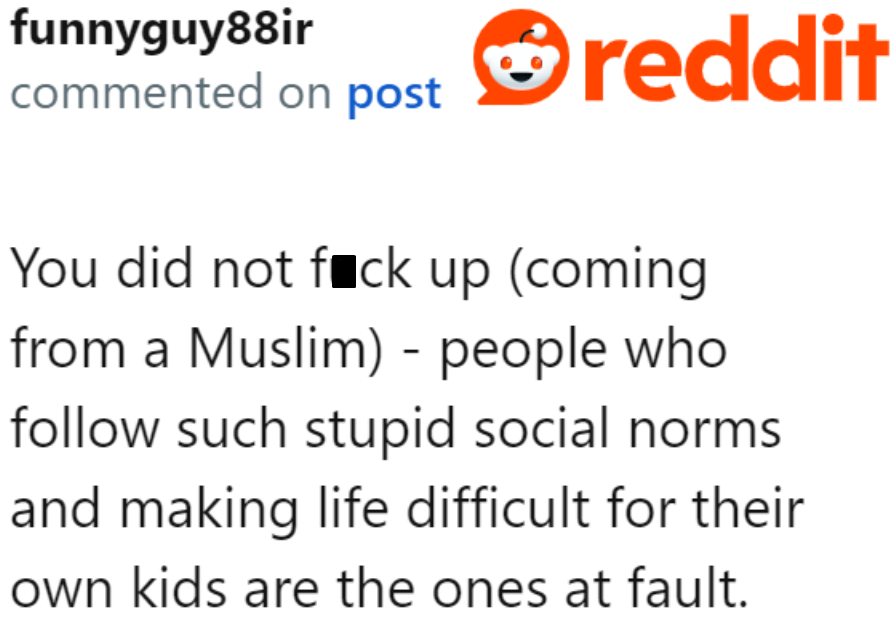
A Muslim guy points out that it's not the OP who messed up.
He also believes that it's because of "stupid social norms."
The emotional turmoil expressed by the dog owner highlights the complexities of parenting in a diverse world.
OP’s guilt was loud, but the real mess came from kids ignoring the permission rule she set.
Want the same “no means no” energy, see what happened after a stranger gave an evil eye for refusing a niece’s dog request at pupperish. Man Gets An Evil Eye From Stranger For Telling His Niece That Life Sucks After Her Request To Pet A Dog Was Declined.
Share this article:





