
This Labrador “Failed” Service Dog School, But He’s Winning Hearts By Bringing His Owner Random Stuff (And Endless Joy)

Samantha thought she was signing up for a calm, steady service dog, instead she got Leo, a Labrador with the emotional range of a golden retriever on parade day.
He was originally trained to assist people living with PTSD, he could sense emotional changes and stay composed when things got heavy. But the second he met Samantha, his “reassurance” came with full-body joy, the kind that turns every greeting into a happy collision and every quiet moment into a comedy routine.
And the worst part, or best part depending on your sense of humor, is that Leo’s biggest talent now is bringing Samantha random household stuff like it’s his job.
Leo had originally been trained to assist people living with post-traumatic stress disorder (PTSD).

He knew how to sense emotional changes, stay calm during stressful moments, and provide comfort when needed.

He had all the makings of a superhero in a fur coat—except for one tiny detail. He was way, way too enthusiastic about literally everything.

The Healing Power of Pets
She states, “The bond between humans and dogs is unique; they sense our emotions and respond with empathy.” This connection can be incredibly healing, especially for those who have recently lost a beloved pet. Dogs like Leo can fill emotional voids and offer companionship, making the grieving process more manageable.
In conclusion, the bond between pets and their owners can significantly impact emotional health.
His trainers soon realized that while he had the heart of a service dog, he had the energy of a toddler on espresso.

His greetings weren’t exactly “calm reassurance”—they were more like a full-body tackle powered by love and chaos.

So, Leo flunked out of service school for being a little too happy to see everyone. And honestly? That “failure” turned out to be the best thing that ever happened to both him and Samantha.

When Leo’s trainers realized his greetings looked more like a tackle than calm reassurance, they had no choice but to call it a fail.
Research indicates that interacting with dogs can increase levels of oxytocin, the hormone associated with bonding and love. This increase can enhance feelings of joy and reduce anxiety, which is particularly beneficial for individuals dealing with loss.
A study from the University of Missouri found that therapy dogs significantly improved mood and emotional well-being among grieving individuals. It's evident that the presence of pets can contribute positively to mental health, serving as both companions and emotional support systems.
From the day he moved in, Leo decided he was going to help Samantha in his own way—no certificates required.

His version of “assisting” quickly became a daily comedy show.

Leo has this habit of bringing Samantha random household items.

Then Samantha took him in, and from day one his “helping” turned into a daily show of love, chaos, and surprise deliveries around the house.
Choosing the Right Dog for Emotional Support
A dog cognition researcher encourages prospective pet owners to consider a dog's temperament when searching for emotional support. Some breeds, like Labradors, are known for their friendly and affectionate nature, making them ideal companions for those in need of emotional healing.
She suggests meeting multiple dogs before making a decision, as individual personalities can vary greatly even within the same breed. Understanding a dog's behavior and energy levels can lead to a better match for emotional support.
Sometimes it’s something useful, like a sock or the TV remote.

Other times, it’s something so bizarre she can’t help but laugh.

One day, he proudly marched up with a bottle of foot powder clenched in his teeth, dropped it in front of her, and flopped onto his back—clearly waiting for her to “use” it.

To further enhance the bond with pets like Leo, implementing structured routines can be beneficial.
This reminds us of the Redditor screenshot of someone asking for a free emotional support dog, vacuum cleaner, and coffee maker.
Another time, he unpacked her entire suitcase before a trip, then sat beside the open bag like a furry TSA agent waiting for approval.

Samantha says he’s delivered everything from makeup bags to ribbons to completely random receipts she didn’t even remember having.

“He just grabs what he thinks I need,” she said, laughing. “Sometimes he’s right. Sometimes… not even close.”

That’s when the whole “service dog” label started to feel less important than the way Leo keeps Samantha’s mood lifted, even on the tough days.
Pets can play a crucial role in improving mental health outcomes. Dogs provide a unique form of companionship that promotes feelings of happiness and reduces feelings of isolation.
Having a dog encourages more physical activity, which is linked to better mental health. Regular walks and playtime contribute to both the owner and the dog’s well-being, creating a mutually beneficial relationship.
But even when Leo’s “help” creates a mess, Samantha can’t stay mad at him.

His heart is so pure it’s impossible to feel anything but joy in his presence.
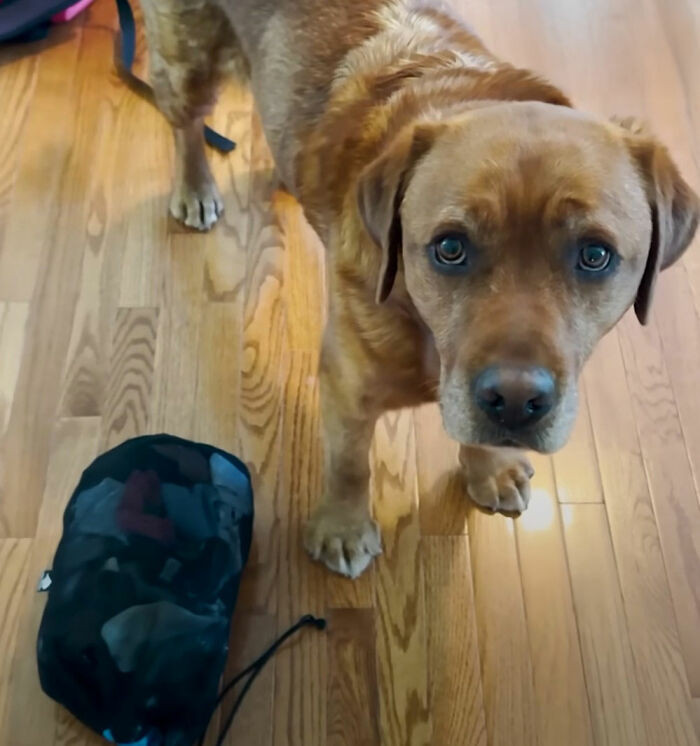
If Samantha doesn’t immediately acknowledge his “gift,” Leo will gently nudge her arm—over and over—until she gives him a smile or a pat.

Veterinary professionals also emphasize the importance of regular health check-ups for pets. Keeping dogs healthy ensures they can provide the emotional support their owners need without the concern of underlying health issues.
Regular vet visits can prevent potential health problems, ensuring that pets like Leo remain energetic and engaged. This proactive approach can enhance the overall quality of life for both the dog and its owner, reinforcing the bond between them.
That nudge, as it turns out, is one of the few habits from his service training that stuck.

He learned to use it to signal that someone might need attention or reassurance.

Now, he uses it to say, “Hey, notice me!” or “You look sad, let me fix it with a shoe I found!”

Now every time Leo trots over with another random item for Samantha, it’s basically proof that his enthusiasm is doing the work his certificate never could.
Training for Emotional Support
She emphasizes using positive reinforcement techniques to encourage desired behaviors.
Leo seems to understand emotions better than most humans.

“He knows when I’m upset,” she explained. “He’ll bring me something, or just rest his head on my knee until I feel better.”

While he might not be guiding anyone through PTSD therapy sessions, Leo is absolutely guiding Samantha through everyday life with laughter, affection, and an unshakable bond. “He’s the most loyal, loving companion I’ve ever had,” she said. “And he still tries so hard to be helpful.”
These days, Samantha doesn’t see Leo’s failed certification as a loss. She sees it as fate giving her the perfect dog for her heart, not her resume.
Because when life knocks you down, sometimes what you really need isn’t a perfectly trained helper—it’s a clumsy, happy Labrador who brings you ribbons, foot powder, and unconditional love.
And if that’s what failure looks like, Leo is absolutely nailing it!
The heartwarming journey of Samantha and Leo exemplifies the profound impact that companionship can have on healing from loss. Leo, despite not meeting the traditional standards of a service dog, has become a source of joy and comfort for Samantha as she navigates her grief. This relationship illustrates how the emotional and psychological benefits of having a pet can be transformative, particularly during challenging times.
By embracing Leo's quirky personality and engaging with him regularly, Samantha has found a fulfilling partnership that nurtures her emotional well-being. This bond emphasizes the importance of understanding the needs of both the pet and the owner, showcasing that love and companionship often flourish in unexpected ways.
Leo might have flunked service school, but he’s absolutely passed life.
Want more heart-melting “no, really” behavior, see how this Brazilian mailman turns every route into a dog-love tour.
Share this article:





