First-Time Mom Devastated When Mother-In-Law Rehomes Her Dog While She Was In Labor

A first-time mom is trying to survive labor and newborn chaos, and her mother-in-law decides the family dog needs to go. Like, right then. OP went from counting contractions to getting hit with the cold news that she was no longer allowed to keep her dog in the house.
Here’s what makes it extra brutal: OP says the MIL wanted OP’s sister-in-law to take over caring for the dog, and OP didn’t trust her around pets. So while she was in labor, her MIL stayed firm, then later confirmed the plan was already in motion. Six days postpartum, the fallout landed, and the timing made it feel less like a house decision and more like a personal rejection.
And when your dog is the comfort you’ve leaned on for nine years, getting rehomed during the most vulnerable moment of your life hits different.
Six Days Postpartum, OP's MIL Informed Her She Was No Longer Allowed to Keep Her Dog in Their Home

She Wanted Her Daughter to Take Care of OP's Dog. OP Knows Her Sister-in-Law Couldn't Be Trusted Around Pets.
She Begged Her MIL to Reconsider Her Decision to No Avail. Kicking the Dog Out of the House Was Her Plan All Along.
The emotional turmoil faced by the new mother in this story is a poignant reminder of how significant life changes can amplify distress. The timing of her mother-in-law's decision to rehome the dog while she was in labor adds a layer of complexity to an already overwhelming experience. This sudden loss, particularly of a beloved pet, can evoke feelings of abandonment that are often magnified during such a vulnerable period.
As the article highlights, the impact of traumatic events like this one cannot be understated. The new mother’s grief extends beyond the loss of her dog; it intertwines with the anxiety and joy of welcoming a new baby into the world. Understanding these intense emotional responses is essential, as they play a critical role in navigating the challenges of grief and adjusting to motherhood.
OP’s labor was already happening, but the MIL’s “you can’t keep the dog here anymore” message turned the hospital glow into pure dread.
For new parents, the arrival of a baby is a moment filled with joy and transformation, but it can also be a time of unexpected challenges. In this case, the decision of the mother-in-law to rehome the family dog while the mother was in labor adds a layer of emotional complexity to an already stressful situation. The bond between new parents and their pets is often profound, akin to familial ties. When that bond is severed, especially during such a vulnerable time, it can lead to feelings of loss and grief. This incident highlights how the emotional turmoil of losing a pet can compound the stress associated with new parenthood. It serves as a reminder that the well-being of both parents and pets must be carefully considered during this significant life transition.
Her Dog Has Been Her Source of Comfort for the Past Nine Years. OP Was Devastated That She Could No Longer Live with Her Dog for the Sake of Keeping the Peace with Her In-Laws.
Her Mom Agreed to Take the Dog In Temporarily, but OP's Heart Remained Broken. She Couldn't Believe Her MIL Was So Sneaky That She Used Her Labor to Ship Her Dog Off to People She Was Unfamiliar With.
OP Has No Other Choice but to Stay Silent While She and Her Family Are Still Living with Her In-Laws.

From a developmental perspective, the transition to motherhood is often accompanied by heightened sensitivity to stressors, as new mothers navigate various challenges.
Studies show that new parents can experience increased anxiety and mood fluctuations, making them more vulnerable to distressing events.
Recognizing these patterns can help individuals process their emotions more effectively during significant life changes.
The Sooner They Can Move Out, the Better It Will Be for Them
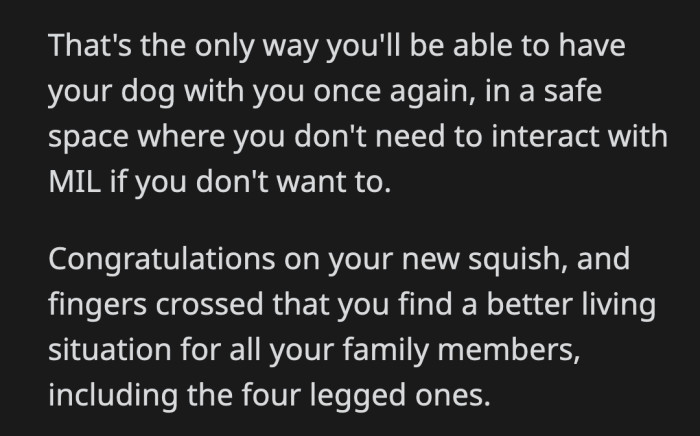
Her MIL Might Not Be as Okay with Their New Living Arrangement as She Initially Let On
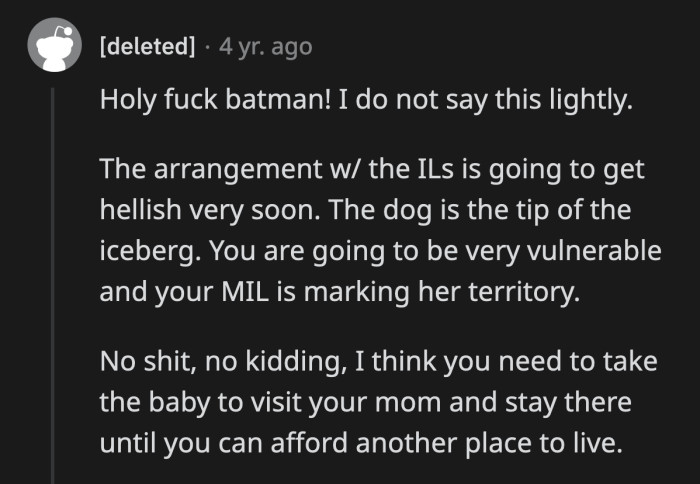
She Could Make Up More Rules to Force OP and Her Family to Move Out Sooner Than Agreed Upon

Once the MIL pushed the idea that OP’s sister-in-law would take the dog, OP’s trust issues stopped being theoretical and became a real, immediate problem.
It also echoes the mom who refused to bring her newborn to her in-laws because of their three big dogs.
Coping Strategies for New Parents
Research indicates that social support is a critical factor in promoting mental health and resilience during the transition to parenthood.
Connecting with other new parents can provide validation and understanding, alleviating feelings of isolation.
The emotional turmoil faced by a first-time mother when her mother-in-law rehomed her dog during labor is a poignant reminder of how deeply we can bond with our pets. The article highlights that losing a pet can evoke feelings akin to losing a family member, underscoring the profound grief that can arise in such situations. The importance of emotional support from loved ones is also emphasized, as navigating this kind of loss can be incredibly challenging. In a moment that should have been filled with joy and anticipation, the OP's experience illustrates how critical it is for families to communicate and respect boundaries, especially during significant life changes like welcoming a new child. Finding a balance between the needs of a growing family and the emotional attachments to pets is essential, and this story serves as a reminder of the complexities intertwined in such decisions.
It Might Be Best for OP, the Baby, and Their Dog to Move in with OP's Mom Instead of Her In-Laws

OP Was Advised to File a Police Report Against Her MIL for What Happened
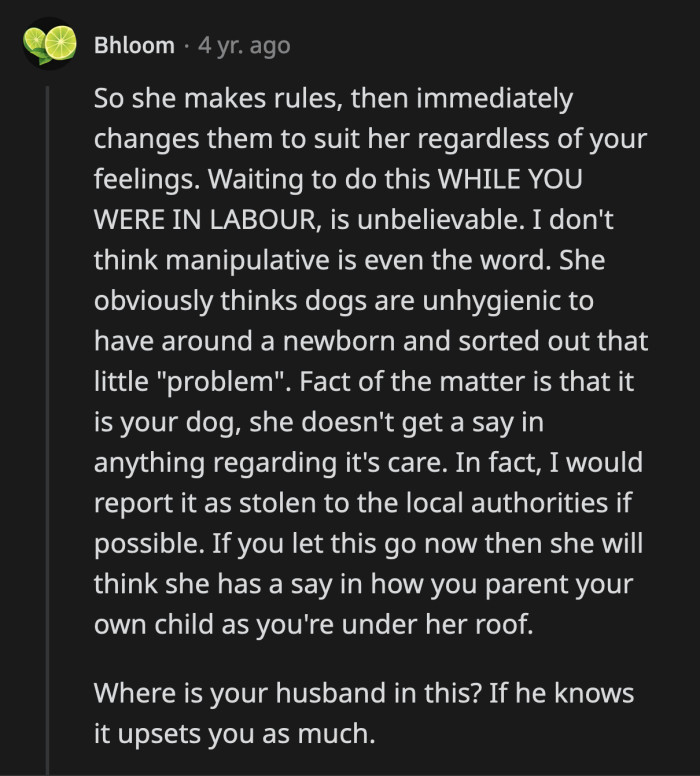
That Would Mean the End of the Surface-Level Decent Relationship They Managed to Maintain

OP begged her MIL to reconsider, but the whole situation reads like the dog was already on the way out before anyone ever started talking.
Additionally, practicing self-compassion is vital for new mothers managing emotional distress.
By acknowledging their feelings without judgment, new parents can cultivate a healthier mindset and better cope with challenges.
One practical approach for coping with grief is to create rituals that honor the pet's memory, such as holding a small memorial service. Engaging in discussions with supportive friends or family members can also provide a safe space to express emotions and validate feelings.
Moreover, seeking professional support can be beneficial for individuals struggling to cope with their grief.
MIL Is Experiencing Buyer's Remorse. OP's Husband Should Really Talk to His Mom Instead of Letting OP Deal with Everything.

Moving to a Cheaper Apartment Might Be the Better Option for Their Little Family

It's at Least Better Than Living with People Who Think Giving Away Someone Else's Dog Isn't a Big Deal

Now six days postpartum, OP is stuck grieving her nine-year comfort buddy while also trying to figure out how to parent a brand-new baby.
Finally, engaging in open communication with partners about feelings and needs can enhance emotional support during turbulent times.
Building Stronger Family Connections
Strengthening family bonds during times of stress is essential for overall well-being.
OP's dog has been with her for nine years. She must be so scared to be taken away from the only family she has known.
OP and her dog deserve better than how they have been treated by her MIL. OP and her husband shouldn't allow this blatant disrespect to extend to matters concerning their newborn.
For the first-time mother, the loss of her pet during such a crucial moment as childbirth compounds her grief, highlighting the need for empathy and support from family members. This situation underscores the importance of acknowledging the profound impact that pets have on our lives and the need for open communication within families to process these feelings.
As the couple embarks on the journey of parenthood, fostering an environment where emotions can be freely expressed will be essential. This openness can ultimately strengthen family bonds during these tumultuous times, ensuring that no one feels isolated in their grief or struggles.
The story of a first-time mom devastated by her mother-in-law's decision to rehome her dog while she was in labor highlights the complexities of family dynamics during major life transitions. Living with in-laws can often amplify both support and strain, as illustrated by the OP's experience. This situation underscores the critical need for open communication and mutual respect among family members, particularly when navigating such significant changes as welcoming a new child. The unexpected actions of the mother-in-law serve as a poignant reminder of how vital understanding and empathy are in maintaining healthy relationships during challenging times.
Nobody should have to lose their dog on the same timeline as bringing home a baby.
That’s wild too, especially the man who promised to break their dog’s neck if it harmed his baby.
Share this article: