
Woman Reports A Neighbor With An Unleashed Dog That Attacked Her Pet, Feels Bad After This Neighbor Reimbursed Her Vet Bills

Some apartment drama starts with a passive-aggressive note, but this one started with a dog attack and a very real vet bill. A woman, just trying to keep her pet safe, ended up reporting her neighbor after an unleashed dog went after her dog like it was personal.
Here’s the messy part: her dog got hurt badly enough to need a medical procedure, so the situation wasn’t just “who’s being annoying.” OP and her boyfriend brought it to the leasing office, then the boyfriend tracked down the neighbor who owned the dog. The neighbor eventually agreed to reimburse the vet bills, which sounds good on paper, but it also left OP feeling guilty for making the report in the first place.
That guilt, plus the neighbor’s lack of responsibility, is where this story gets really complicated.
A woman who owns a dog with her boyfriend asked about a problem with a neighbor.
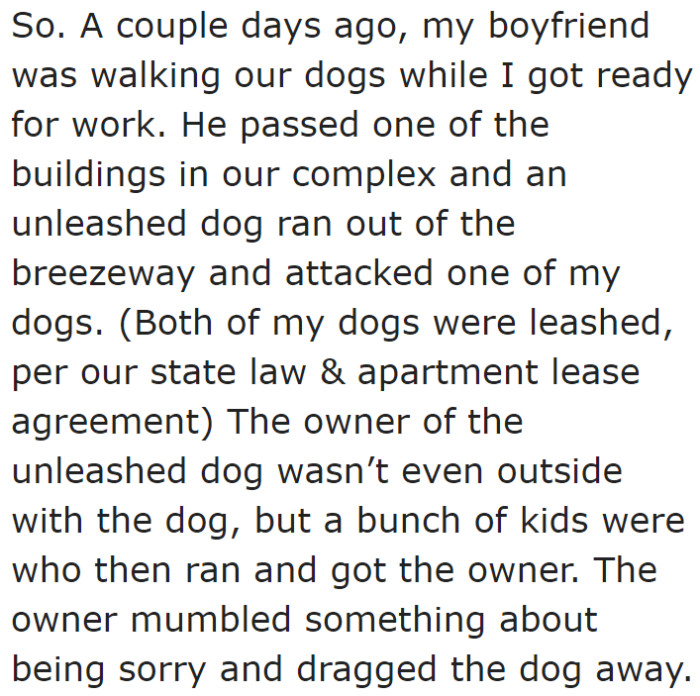
The OP mentioned that their dog was attacked by someone else's dog.
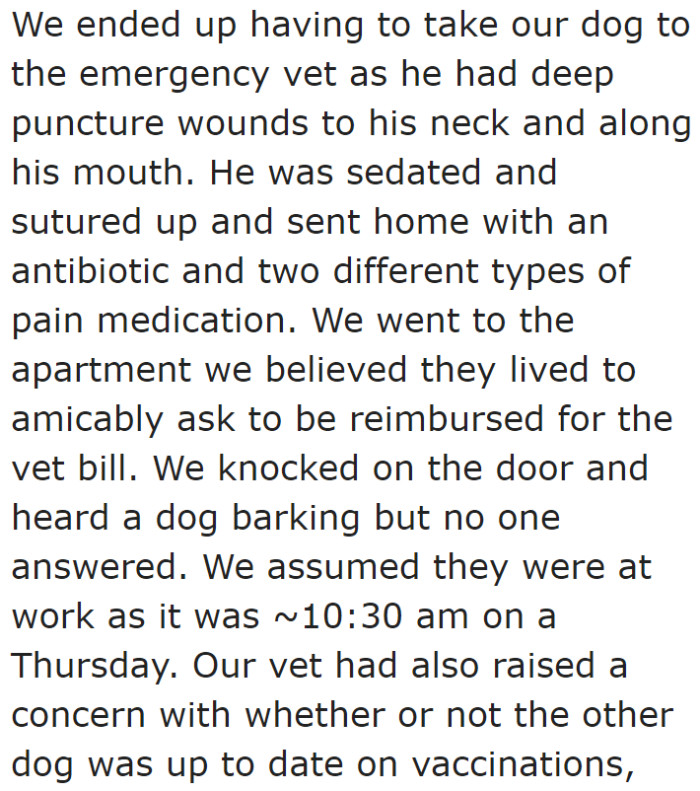
The poor doggo had to undergo a medical procedure because of its injuries.
This incident highlights the complex ethical landscape surrounding pet ownership and the responsibilities that come with it.
They reported the situation to the leasing office of their apartment complex.
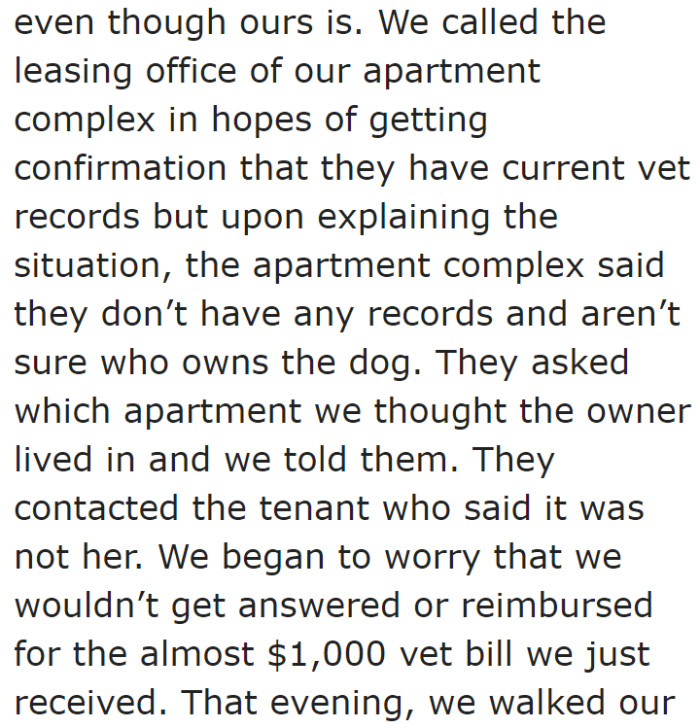
The boyfriend found the person who owns the dog.
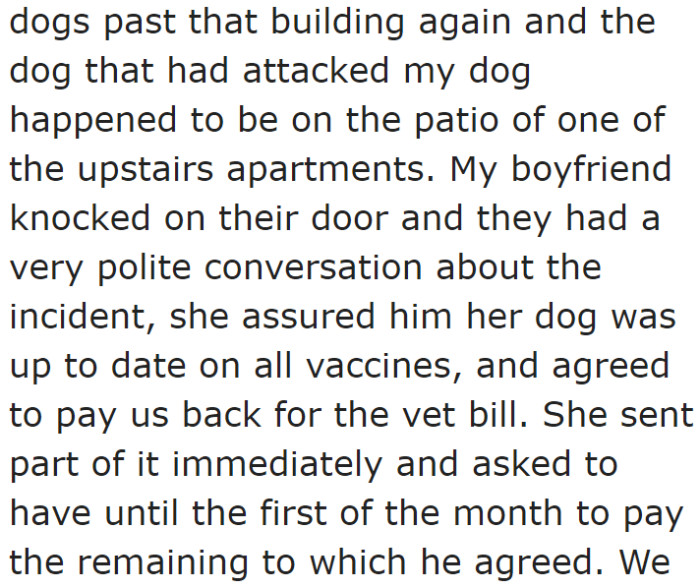
The neighbor agreed to cover the vet bills. Their problem did not stop there, though.
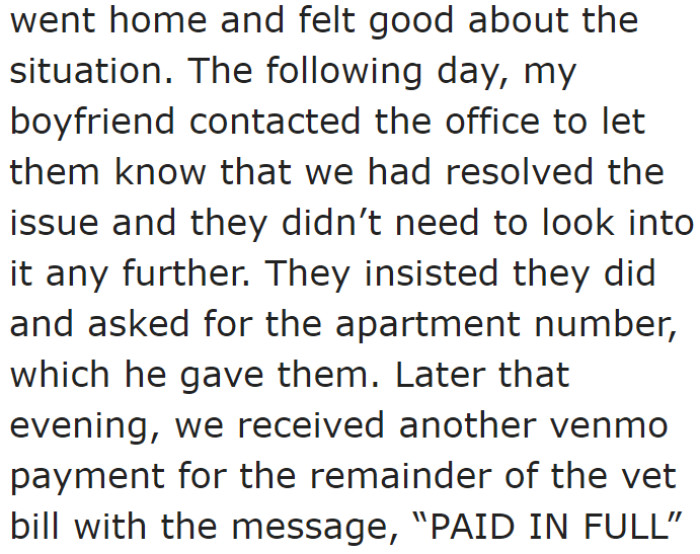
The minute OP’s dog got attacked, the leasing office call stopped being “small apartment issue” and turned into a full-on incident report.
The emotional aftermath of reporting a neighbor can lead to feelings of guilt, particularly if the neighbor responds positively by offering to reimburse vet bills. Research shows that feelings of guilt can compel individuals to reconsider their actions and may even lead to efforts to repair relationships.
This emotional complexity highlights the importance of empathy in navigating community relationships.
The OP felt guilty over reporting the neighbor.

The neighbor is not just breaking the lease agreement; she's also breaking the law.
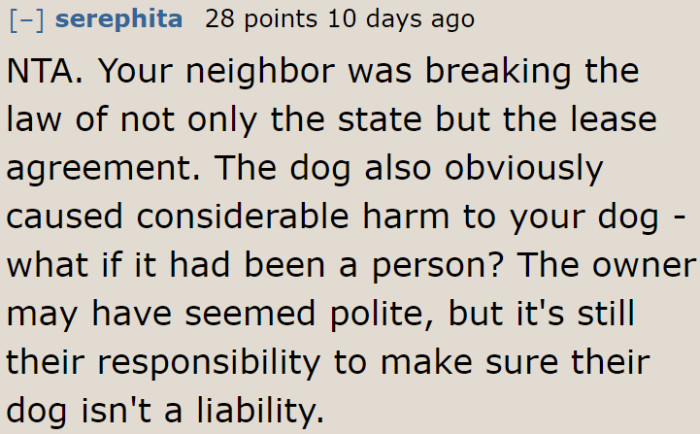
The neighbor needs to face the consequences of her irresponsibility.
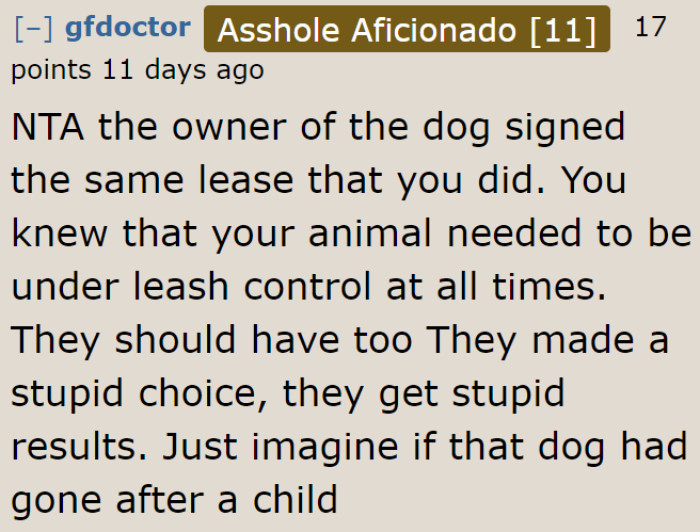
After OP’s boyfriend found the neighbor and the neighbor agreed to pay the vet bills, OP’s relief quickly got tangled up with guilt.
Pet ownership carries significant responsibilities, and when these responsibilities are neglected, it can lead to conflict within a community. Studies in animal behavior and psychology indicate that pet owners often feel a strong attachment to their animals, and any perceived threat to their pets can evoke defensive responses.
In this case, the neighbor's actions may reflect a lack of awareness regarding her responsibilities, leading to conflict with the pet owner.
This is similar to the Redditor who got heat for reporting a neighbor for violating the no-dogs rule at the community pool.
The unleashed dog's owner didn't take responsibility at first.
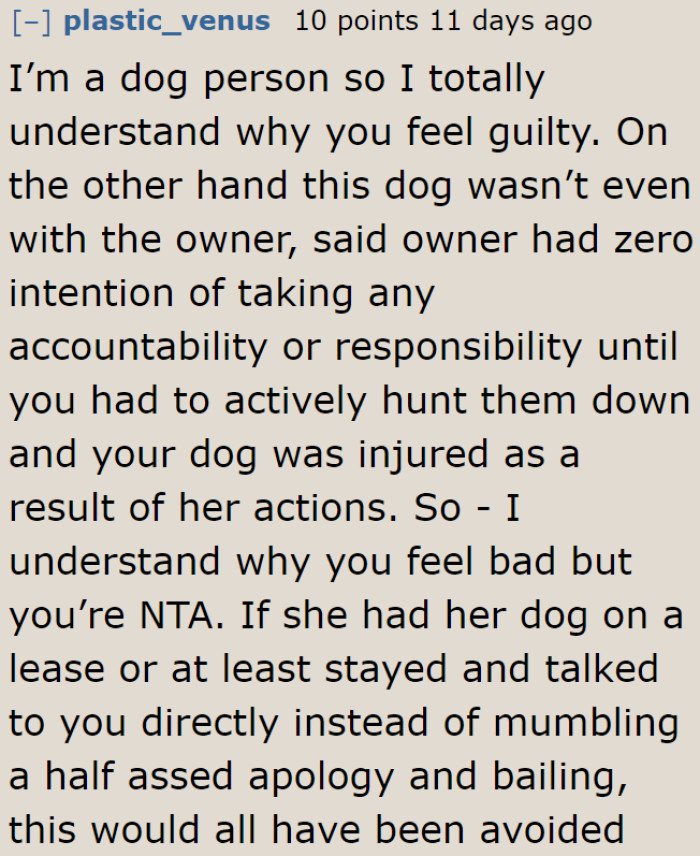
Things could've been worse. Irresponsible dog owners like the neighbor need to be reported.
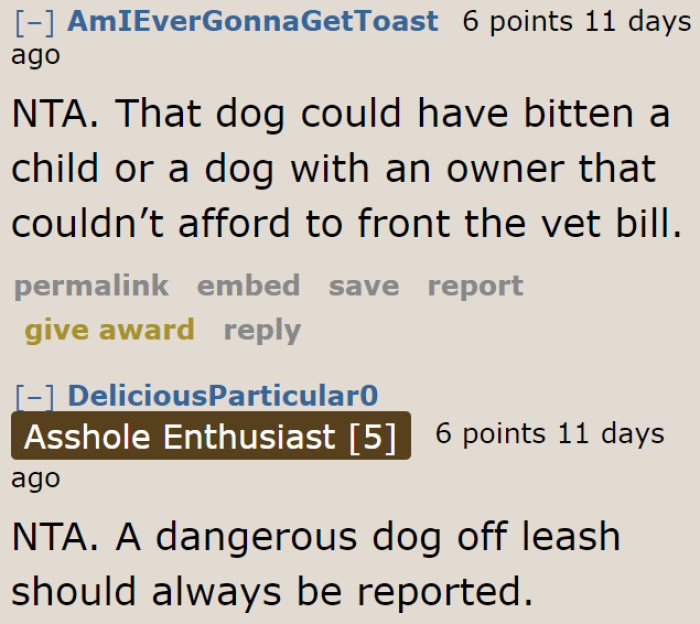
Leash laws should always be followed.
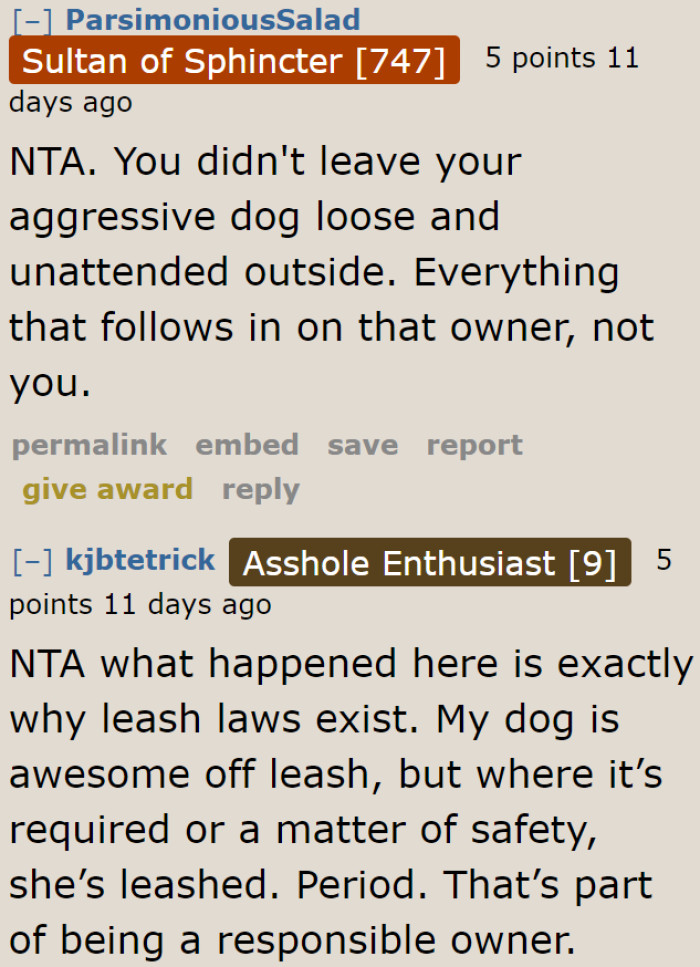
Even with reimbursement, the fact that the dog was unleashed in the first place kept the whole thing from feeling like a clean resolution.
To foster better community relationships, individuals can engage in proactive communication with neighbors about pet ownership expectations and responsibilities. Research suggests that open dialogues can significantly reduce misunderstandings and promote cooperation among community members.
Community workshops or gatherings can also provide opportunities for residents to discuss shared values and expectations regarding pet ownership.
This Redditor believes that the email blast was only a warning. The neighbor might be able to do something about the situation.
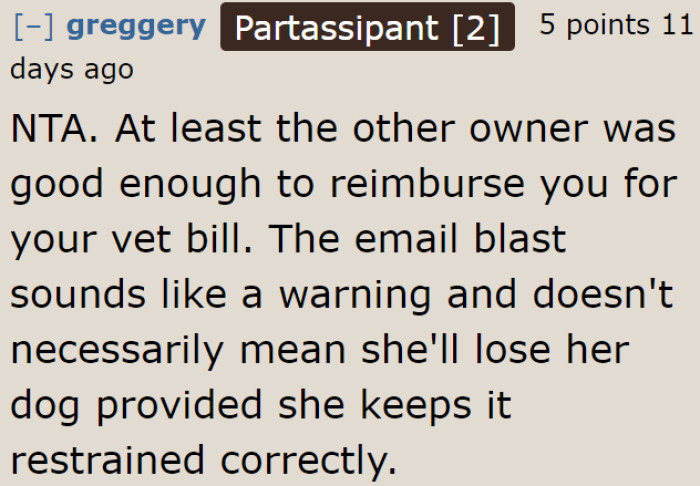
There's no need to worry about a person who puts people and pets at risk.
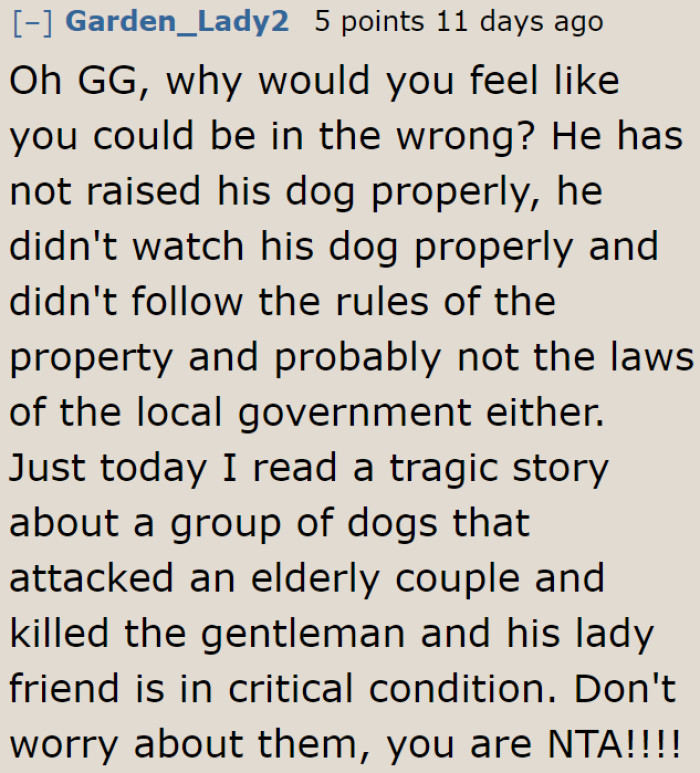
The OP and her boyfriend only did what's right.
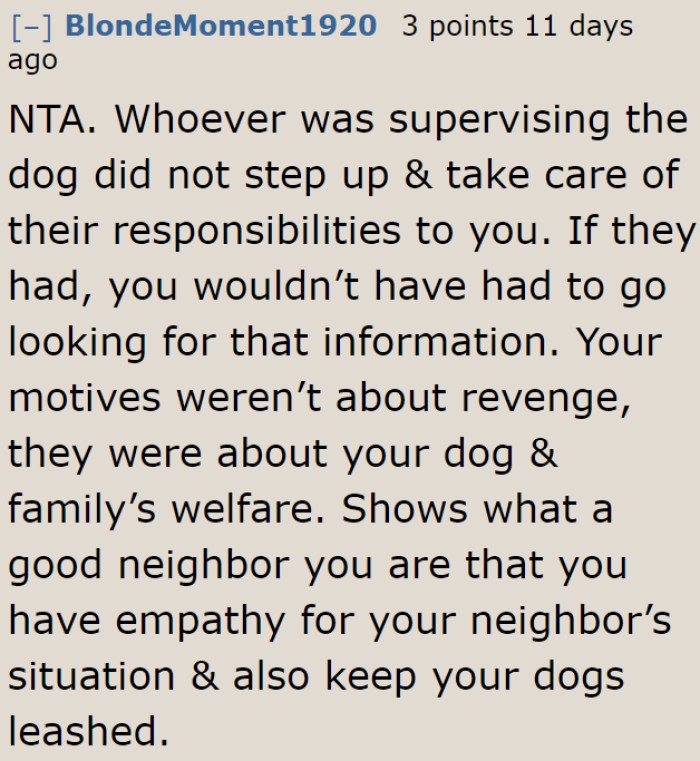
Building a Culture of Responsibility
Creating a culture of responsibility surrounding pet ownership can enhance community cohesion.
What could possibly happen if the OP didn't report the neighbor?
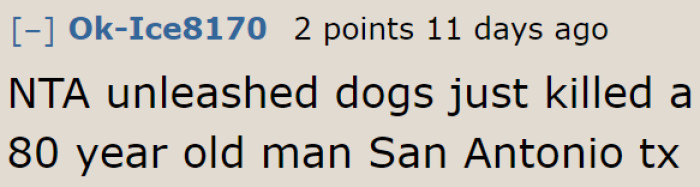
The dog could attack a child next time.
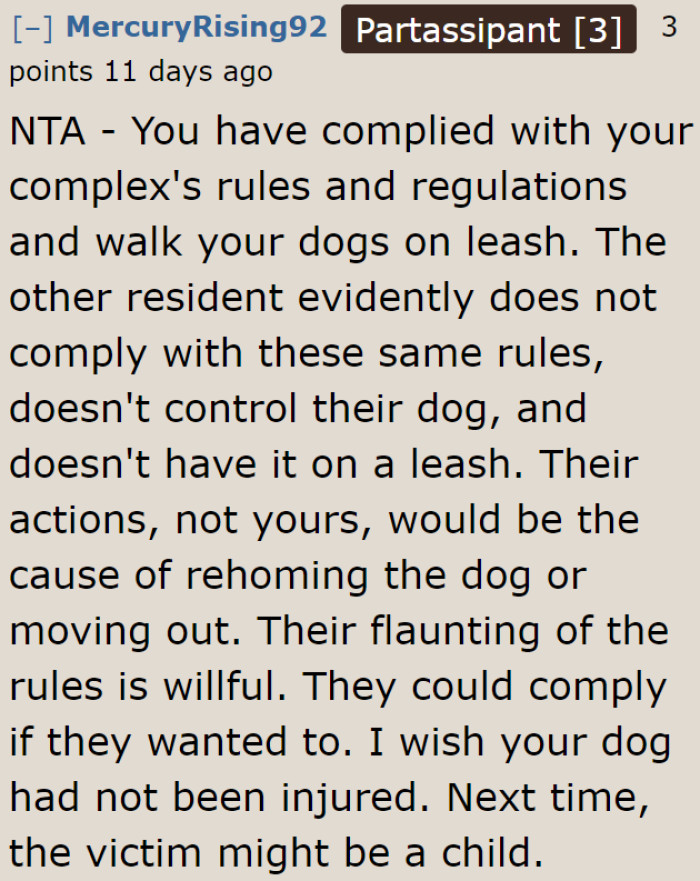
Even if the OP feels bad about what she did, the vet bills are still this neighbor's responsibility.
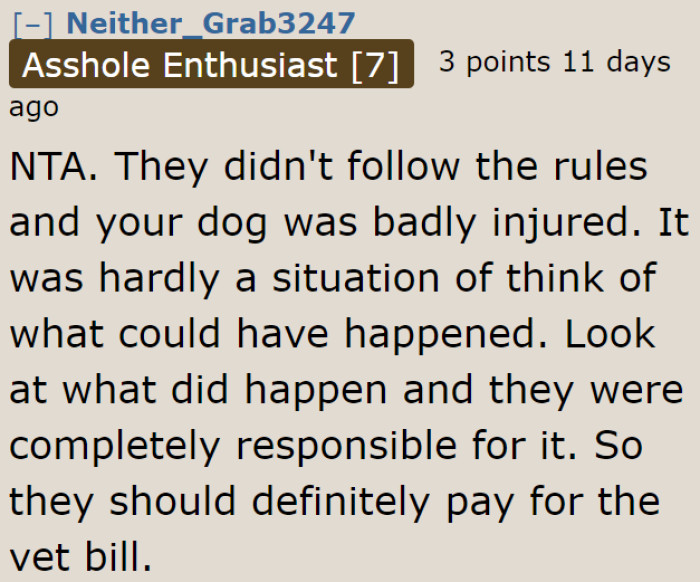
The OP feels bad because it could hugely impact the living situation of her neighbor.
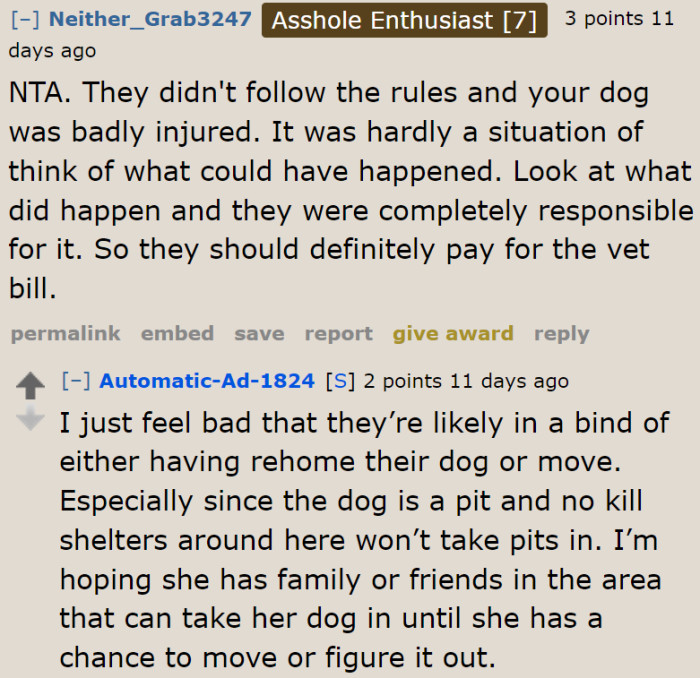
The OP needs to remember that this dog could potentially kill someone next time.
Ignoring leash laws can cost lives.
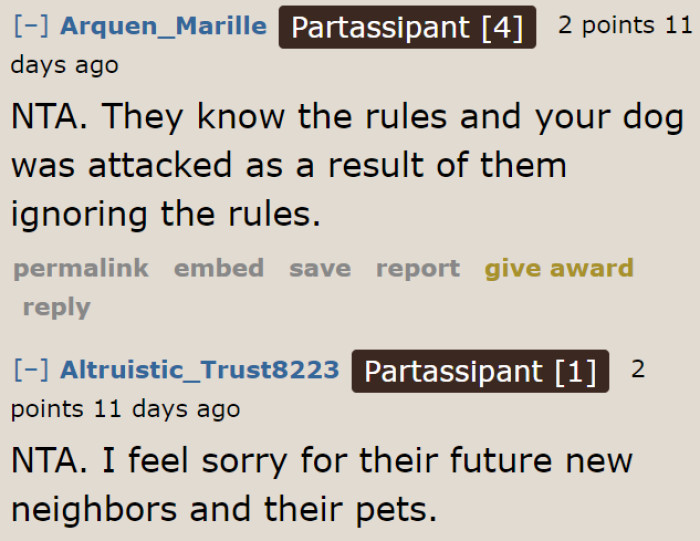
By the end, OP wasn’t just dealing with injuries to her pet, she was dealing with the fallout of calling out a neighbor who broke leash rules.
Well, this was an interesting story. The OP may feel bad about her neighbor, but in the end, what she did was the right thing to do.
This dog needs to be rehomed. It needs to be in the hands of a responsible dog owner. If the neighbor does lose her dog, we hope she won't try to get another one.
This incident underscores the intricate balance between individual accountability and community expectations, particularly in neighborhoods where pets are involved. The situation escalated when an unleashed dog attacked a resident's pet, leading to a tense interaction. However, the neighbor's decision to reimburse the veterinary expenses highlights a crucial element of empathy and accountability in resolving conflicts.
Such gestures can serve as a catalyst for better communication among residents, promoting a culture of mutual respect and understanding. By encouraging open dialogue about pet ownership responsibilities, communities can strengthen their bonds and work toward preventing similar incidents in the future.
OP might have felt bad for reporting her neighbor, but the unleashed-dog problem still needed consequences.
Feeling guilty about reporting someone else’s unregistered pet, even with days left on the lease? See what this Redditor did after reporting their roommate’s unregistered pet and facing a $250+ fine.
Share this article:





