Allergic Redditor Confronts Entitled Dog Owner for Bringing Their Non-Service Pet to Store That Only Allows Service Dogs

A Redditor with dog allergies walked into a store and immediately got hit with the kind of situation that turns a normal errand into a full-blown argument.
In this case, the store only allows service dogs, not emotional support animals or regular pets. But an entitled dog owner brought their non-service pet inside anyway, claiming it was just too hot outside. OP, already dealing with allergies, decided to confront the person directly instead of letting the staff handle it, and that choice made everything escalate.
Now he’s stuck wondering if he crossed the line, or if the owner really should have followed the store rules.
The OP confronts a customer who brought his dog into a store because it's hot outside.
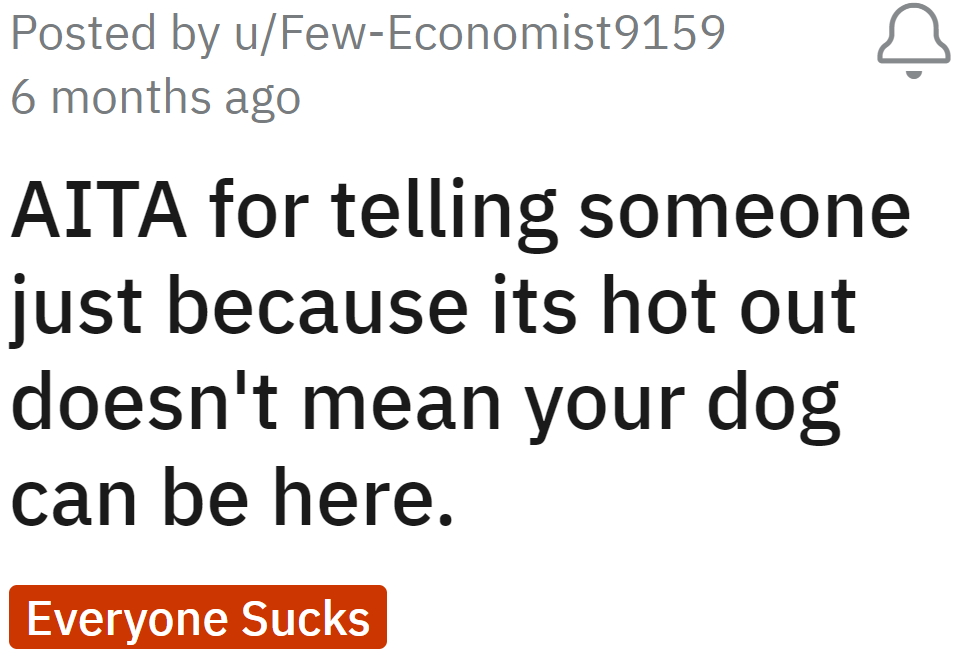
The OP tells the community how he encountered an entitled dog owner

The store doesn't allow ESAs; it only allows service dogs.
Yet the owner brought his dog into the store anyway. The OP, having allergies, decided to confront the dog owner.

That hot-weather excuse is what made OP snap, because the dog was inside the one place that clearly posted rules for service animals only.
Service animal policies are established to protect individuals with disabilities, and violating these regulations can lead to significant emotional distress for those affected.
In this case, the emotional response of the Redditor reflects the anxiety and fear associated with allergens, underscoring the need for adherence to service animal policies in public spaces.
The dog owner became defensive due to the hot weather, but the OP confronted him with a sarcastic remark.
Now, he's wondering if he's the a-hole for calling out the dog owner in this manner.

Both are in the wrong, according to the community.
Most people have been telling the OP that he should have involved the staff instead of directly confronting a fellow customer.
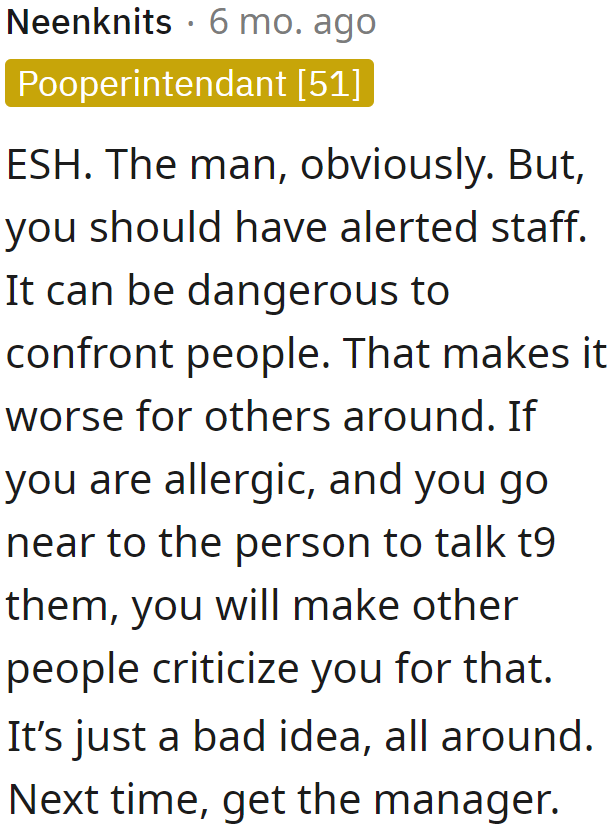
One user from the retail industry mentioned that they would just leave the dog owner alone.
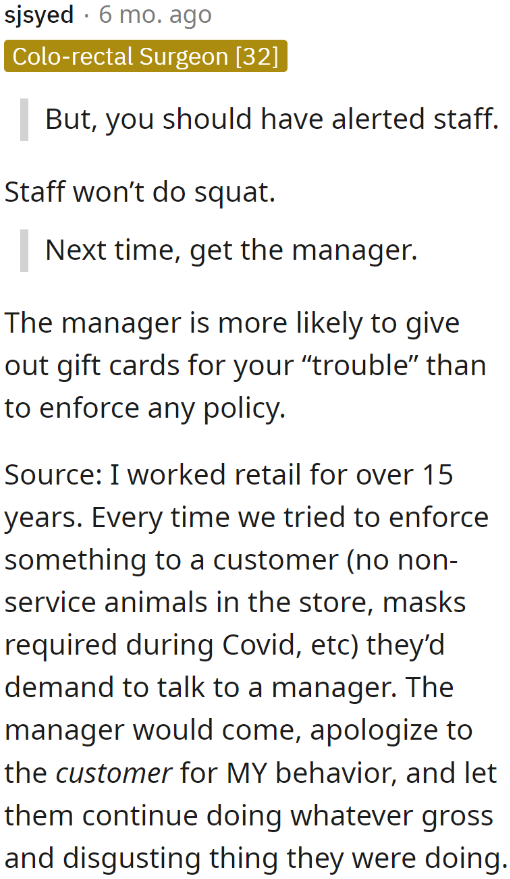
OP confronted the customer with a sarcastic remark, and the dog owner didn’t take it well, turning what could have been a quick fix into a showdown.
This also echoes the Redditor who asked if they could request a service dog owner move the dog farther away.
Moreover, the emotional impact of encountering a non-service dog in a restricted area can exacerbate feelings of vulnerability. This highlights the importance of creating safe environments for all individuals.
The OP is allergic to dogs; it wasn't the best idea to get near something he's allergic to.
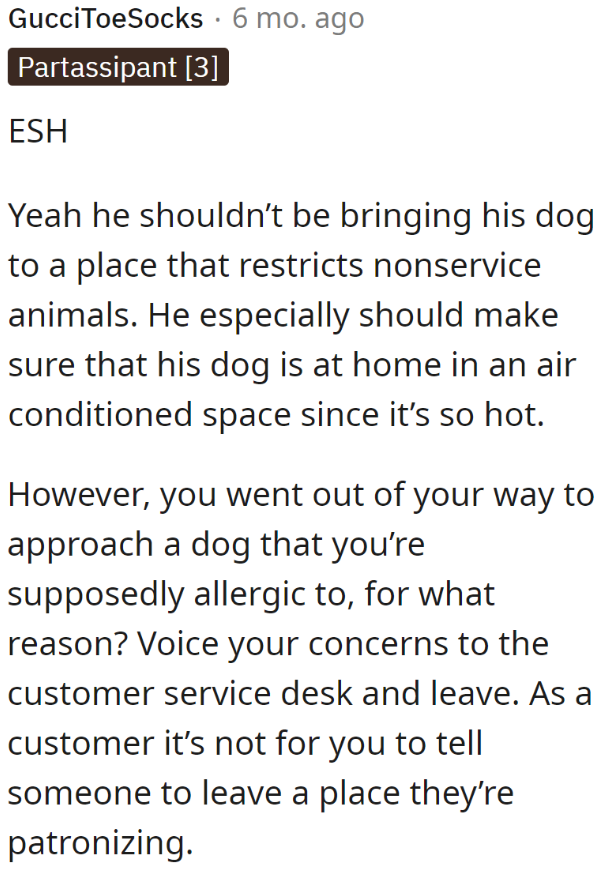
The OP didn't have to cause a scene in the store; he should have just avoided the dog and its owner.
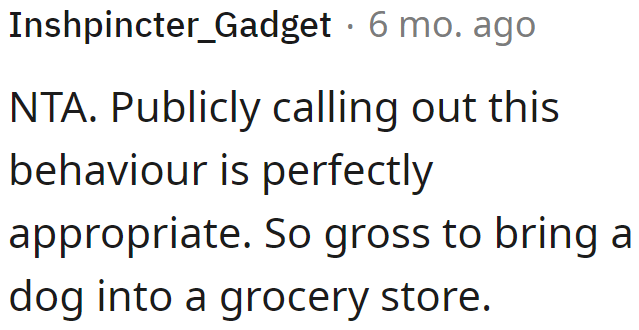
A few people were on the OP's side, telling him that calling out the behavior was the right call.
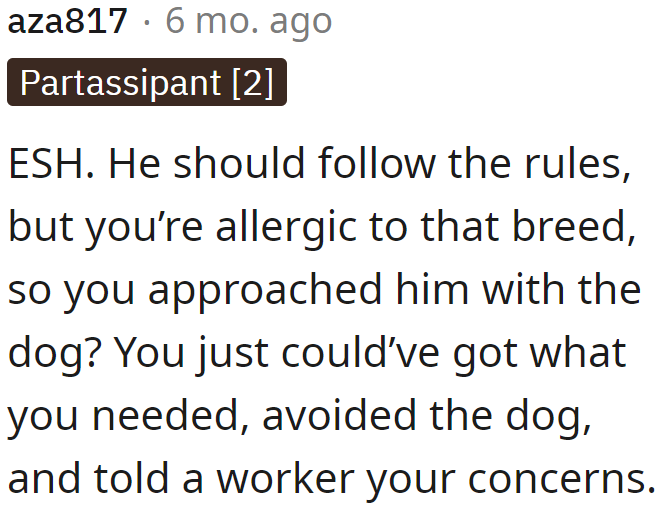
The community started weighing in, with commenters saying OP should have avoided the dog and involved staff instead of going face-to-face in the aisle.
When addressing violations of service animal policies, approaching the situation with empathy is crucial. Techniques such as expressing personal feelings and concerns can help de-escalate potential conflict. Using non-confrontational language can lead to more productive outcomes and foster understanding between parties.
In this scenario, the Redditor could have expressed his concerns about the emotional distress caused by the presence of a non-service dog, potentially eliciting a more empathetic response from the dog owner.
Staff wouldn't want to be cleaning up after a dog just because someone wants to display their pet.
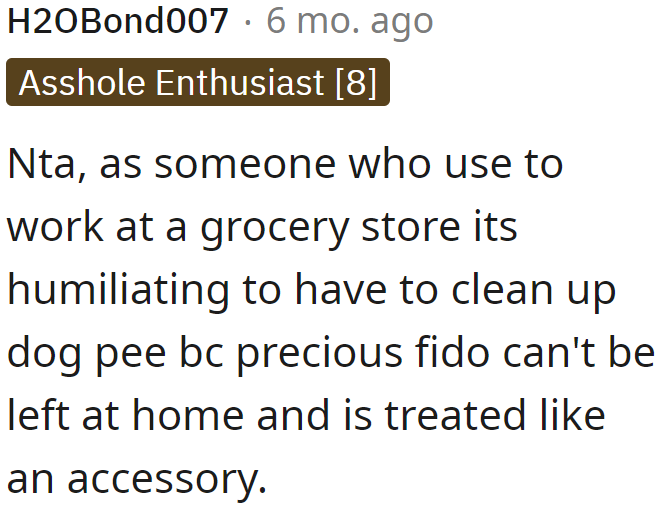
While some people sided with OP for calling out the blatant policy violation, others said the store was the right battlefield, not the customer’s personal space.
If a sign that says "service dogs only" is posted, customers can easily assume that store staff are enforcing the policy. The users are right — the OP didn't have to confront the dog owner.
If he wasn't pleased about the situation, alerting the staff would have been the better call. Alternatively, he could have shopped as usual while avoiding the dog and leaving.
Additionally, it may be beneficial to seek assistance from store management when addressing policy violations. This approach helps maintain safety and respect for everyone's needs.
The incident involving an allergic Redditor confronting a dog owner highlights the critical importance of adhering to service animal policies. Establishments that restrict entry to only service dogs do so to ensure the safety and comfort of all patrons, particularly those with allergies or disabilities. The article underscores that not all spaces are designed to accommodate pets, and this distinction is essential for fostering a harmonious environment. By encouraging understanding and respect for these regulations, we can work towards a more inclusive atmosphere where everyone's needs are acknowledged and met.
Now he’s wondering if he was protecting his allergies, or just creating the drama he didn’t need.
Wait until you see the employee who got furious at her manager for letting a service dog in.
Share this article: