
Exceptionally Rare Yellow Cardinal Sighted in Alabama

A 28-year-old woman in Alabama thought she was just doing a normal morning routine, until a bird showed up that absolutely did not belong in her backyard. Not a typical red cardinal, not a random yellow blip on a branch, but a full-on yellow cardinal, bright enough to make you do a double take and then stare like it might move into your house.
Here’s what makes it complicated, this isn’t just a pretty color swap. The yellow look is tied to a genetic mutation, and that kind of rarity usually means these birds are talked about more than they’re seen. So when it landed near her, the whole scene turned into a mini mystery, part nature documentary, part “wait, is this real?”
And once you’ve seen a yellow cardinal in Alabama, the rest of the story feels like it’s been waiting for you.
Looks like a rare bird decided to drop by and visit a woman in Alabama.

Right when the woman spotted the yellow cardinal outside her window, it instantly raised the stakes because everyone expects red, not this neon yellow surprise.
The yellow cardinal is a rare and striking bird known for its vibrant plumage. Unlike the more common red cardinal, which is widely recognized across North America, the yellow cardinal stands out with its bright yellow feathers.
This unique coloration is caused by a genetic mutation that affects the production of pigments in its feathers, resulting in a stunning yellow hue. Yellow cardinals are predominantly found in South America, particularly in countries like Brazil, Argentina, and Paraguay.
They inhabit forests, woodlands, and other dense vegetation where they can find ample food and shelter. Despite their rarity, they are not considered a separate species from the more widespread red cardinal; rather, they are a color variant of the same species.
Like their red counterparts, yellow cardinals are known for their melodious songs, which they use to communicate with each other and establish territory. They feed primarily on seeds, fruits, and insects, foraging among the foliage of trees and shrubs.
Due to their striking appearance and scarcity, sightings of yellow cardinals are highly sought after by birdwatchers and nature enthusiasts.
Rare Bird Sightings and Genetic Factors
The sighting of a rare yellow cardinal can be attributed to genetic mutations, which sometimes produce vibrant colors not typical of the species.
Such anomalies are fascinating not only for bird enthusiasts but also for biologists studying genetic diversity within populations.
Conservationists suggest that protecting natural habitats is crucial to ensure these rare species continue to thrive.
Its unusual color comes from a genetic condition.
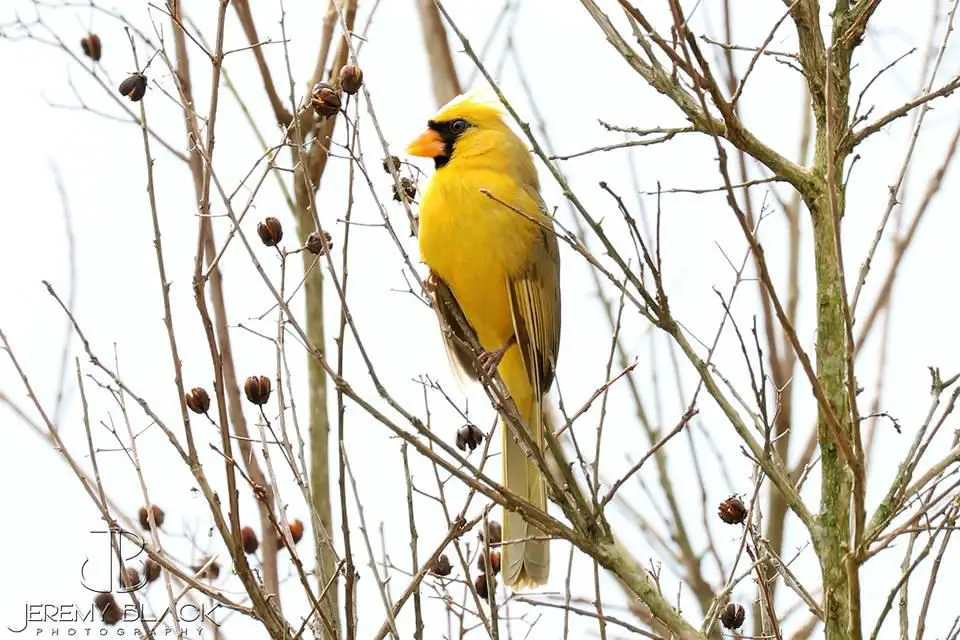
"Rare yellow cardinal spotted in Alabama."
Then the bird’s striking plumage made the genetic mutation piece impossible to ignore, especially when it looked like it was feeding and singing like it owned the place.
This yellow cardinal sighting is wild, just like the woman who found an albino porcupine.
The moment she realized yellow cardinals are usually linked to places like Brazil and Argentina, the sighting stopped feeling casual and started feeling oddly personal.
In a world where routines often blind us to the beauty around us, the appearance of the rare yellow cardinal is a gentle nudge to stay curious and observant. Even in the most ordinary of places, nature can surprise us with its wonders.
So let's keep our eyes open and our hearts receptive, for you never know what extraordinary marvels might be waiting just around the corner.
By the time birdwatchers and nature lovers heard about the Alabama visit, the whole backyard had turned into a rare-bird headline.
Bird watchers and enthusiasts are encouraged to document their sightings responsibly, as this can significantly contribute to local biodiversity records, helping researchers track species health.
For instance, organizations like the Cornell Lab of Ornithology recommend using apps like eBird to record observations, which aids in understanding population dynamics and migration patterns.
Moreover, experts advise creating bird-friendly environments at home, such as native plant gardens, which not only attract diverse species but also support local ecosystems.
The recent sighting of a yellow cardinal in Alabama is a thrilling event that extends beyond the excitement of bird watchers. This rare appearance underscores the critical importance of biodiversity in our ecosystems. The enthusiasm surrounding the yellow cardinal highlights a broader need for awareness and appreciation of wildlife conservation efforts.
Bird enthusiasts and casual observers alike are encouraged to engage in responsible bird watching and to take part in citizen science initiatives. These actions play a vital role in protecting these remarkable creatures and their habitats, ensuring that such extraordinary sightings continue to enrich our natural world for generations to come.
That yellow cardinal did not just visit Alabama, it made the whole neighborhood look twice.
For another Alabama rarity, see the Eastern indigo snake after 60 years.
Share this article:





