
Newly Minted Roommates Fight Over Everything That Involves Their Cats and Point Fingers as to Who Should Compromise

Three months into a new apartment, one woman is already dealing with a roommate situation that feels more like a standoff than a fresh start. The problem is not just shared rent or shared space, it is two cat owners who cannot seem to agree on anything, from roaming schedules to what counts as acceptable food.
What started as a seemingly workable setup has turned into a string of arguments, messages, and broken agreements. Her roommate keeps pushing for changes, then backing out when the bills come due, while OP is left trying to keep her cat and her lease intact.
Now the whole mess is down to one question, who actually needs to compromise here?
OP and Her Cat Moved into Their New Apartment 3 Months Ago

She and Her New Roommate, Who Also Has Cats, Were Fine Before OP Signed the Contract, but Her Roommate Began Bombarding Her and Their Landlord with a Ton of Messages Afterward

Still, OP Moved In, and They Have Had Several Disagreements Since. Their Biggest Contention Comes from Her Roommate's Concern Regarding Her Cats and OP's Cat Getting Along.

The escalating tensions between the newly minted roommates over their cats serve as a vivid illustration of the complexities of shared living arrangements.
Their disagreements highlight the challenges that arise when individuals with varied values and priorities come together.
The conflicts between the newly minted roommates highlight the complexities of shared living arrangements, particularly when it comes to their beloved cats. Disagreements over pet care reveal not only differing values but also an underlying struggle with responsibility and compromise. These tensions serve as a microcosm of the broader challenges faced by young adults embarking on independent living. As roommates navigate their expectations and communication styles, the friction that arises is indicative of the growing pains associated with adulthood. This experience underscores that the transition to living independently is not merely about finding a roof over one's head; it requires negotiation, understanding, and a willingness to adapt to one another's priorities.
That is where the cat drama really starts to snowball.
They Finally Reached an Agreement Where They Will Allow Each Other's Pets to Roam Around the Shared Area of the Apartment on Separate Days, but Even That Wasn't Good Enough for OP's Roommate

Her Latest Crusade Has Been to Convince OP to Shift Her Cat to a Much Better Diet. Apparently, Cat Food Isn't Good Enough Because This Lady Actually Deprives Herself in Order to Afford Fresh Venison for Her Cats.

She Offered to Help OP Out with the More Expensive and Better Cat Food. She Eventually Reneged on Their Deal When It Was Time to Settle Their Monthly Bills.

Moreover, the concept of 'role theory' suggests that individuals in shared spaces often negotiate their roles and responsibilities, which can lead to tension when expectations are not aligned.
By understanding the psychological factors at play, individuals can foster a more harmonious living environment.
When roommates struggle to compromise, it can lead to feelings of resentment and frustration.
Studies suggest that addressing underlying issues through open dialogue can enhance cooperation and improve the overall living situation.
And the bill-splitting part made things even messier.
She Said If OP Insists on Feeding Her Pet a 'McDonald's for Cats' Diet, the Least She Could Do Is Buy Him a Collar Sensor Bowl, but OP Refused.

It Doesn't Look Like This Living Situation Will Last, but OP Is Still Wondering If She's an A**hole for Not Relenting to Her Roommate's Demands.

OP Replied to a Now Deleted Comment and Explained the 'McDonald's for Cats' Food She Feeds Her Pet

The Importance of Compromise in Relationships
Compromise is a critical skill in any shared living situation, particularly when it comes to pet care. Successful compromise requires open communication and a willingness to understand each other’s perspectives.
Research shows that individuals who practice effective compromise are often able to maintain healthier relationships and reduce conflict. Developing these skills can be particularly beneficial in shared living arrangements.
It’s the same kind of pressure as a roommate ultimatum demanding her cats be gotten rid of or else.
The Role of Emotional Attachment in Pet Ownership
Research shows that emotional attachments to pets can significantly influence behavior and decision-making.
They Live in One Apartment, and If They Split Their Bills Evenly and Aren't Deliberately Terrible to Each Other, Neither Should Really Dictate What the Other Does.

OP Says Her Roommate Does Pay More for Rent Since She Is Renting the Bigger Room, but Everything Apart from That Is Split Evenly.

Is There Any Way for OP to Get Out of Her Lease Right Now?

To facilitate compromise, roommates can engage in regular discussions about their expectations and concerns regarding pet care.
When individuals feel understood and valued, they are more likely to engage in constructive discussions about shared responsibilities.
This landlord is staying out of it completely.
Their Landlord Believes This Issue Is Between OP and Her Roommate and Refuses to Get Involved.

Someone Pointed Out That Both OP and Her Roommate Should Have Considered Their Cats Before Living Together.

OP Explained What Happened Way Before She Signed the Lease, and It's Very Obvious They Didn't Take the Comfort of Their Cats for Granted.

Strategies for Effective Communication Among Roommates
Taking the time to sit down and openly discuss each person's roles can help clarify misunderstandings and prevent future conflicts.
Studies in social psychology suggest that proactive communication can enhance relationship satisfaction and reduce tension in shared living spaces.
Can OP and Her Roommate Come to an Agreed Feeding Schedule for Their Cats to Avoid Any Food Sharing?

OP Suggested That to Her Roommate, but She Shut It Down Since She Prefers to Let Her Cats Graze; So Does OP.

A Cat Owner Who Is Also a Stickler for the Food Their Cat Eats Did What OP's Roommate Refused to Do—Admit That It Was Their Problem and Not Their Roommate's.

Additionally, practicing active listening can significantly improve understanding between roommates.
OP Did What She Could, but Her Roommate Is Stubborn. Unfortunately, OP Has to Wait for Her Lease to Be Up Next Spring.

This Means That OP Has to Be More Vigilant with How Her Roommate Treats Her Cat Because She Might Do Something Unthinkable to Force OP to Leave.
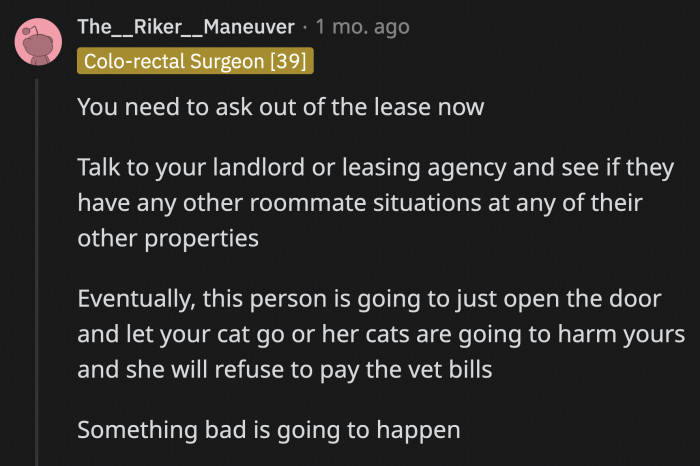
Moving in with a roommate is difficult, and moving in with an animal in tow comes with its own unique challenges. We've seen that and more in OP's story. It is sad that OP and her cat have to wait it out before they can move out of their stifling living conditions.
Building Resilience in Roommate Relationships
The concept of resilience is essential when navigating conflicts in shared living arrangements. Individuals who develop resilience can manage stress and maintain healthy relationships even during challenging situations.
Research indicates that engaging in reflective practices can enhance resilience and improve communication skills, ultimately benefiting the roommate dynamic.
Encouraging roommates to reflect on their experiences can lead to valuable insights and foster personal growth. This self-awareness can help prevent future conflicts and promote healthier interactions.
Incorporating resilience-building activities into daily routines can create a more balanced approach to shared living.
The ongoing conflicts between the newly minted roommates over their cats reveal deeper psychological dynamics at play in shared living situations. The struggle for compromise over pet responsibilities is not just about the cats themselves but reflects a broader challenge in communication and emotional awareness. If these roommates can shift their focus from blame to understanding, they may find that proactive communication can help them navigate their challenges more effectively. Ultimately, embracing these strategies could lead to healthier relationships and a more harmonious living environment, which is essential as they embark on this journey toward adulthood.
The ongoing conflict between the newly minted roommates over their cats underscores a critical aspect of shared living: the necessity of effective communication and compromise. As the article illustrates, both parties are pointing fingers rather than collaborating, which not only complicates their day-to-day interactions but also disrupts the potential for a harmonious home environment. The struggle for dominance in deciding who takes responsibility for pet care reveals deeper psychological dynamics at play. By failing to foster cooperation and address their differing expectations, these roommates risk allowing their disputes to overshadow the joys of their shared living experience. Recognizing and actively managing these challenges is essential for cultivating a more peaceful coexistence.
Wait, it gets worse, see the girl who threatened to take her roommate’s cats to a shelter after abandoning them at her boyfriend’s place.
Share this article:





