
Fiery War Erupts After Lady Secretly Re-Homes Sister’s Aggressive "ESA" Cat

A 28-year-old woman tried to keep things peaceful after her boyfriend moved out and she needed a roommate fast. Her mom suggested renting to her sister, because the sister “works and can pay rent” until she moves out. Sounds simple, right?
Then the sister rolls in with an aggressive “emotional support animal” cat that hates OP’s cat and somehow manages to destroy the couch. OP gives her time to fix it, only for her sister to re-home the cat quietly and then claim it as an ESA, acting like the compromise is her idea.
What happens next is the kind of family blowup where everyone swears they’re being reasonable, right up until the cops get threatened.
The story in detail

After OP’s boyfriend moved out, she needed a roommate to help pay rent. OP’s mom suggested she rent the space to her sister, who works and can pay the rent until she moves out.
Conflicts within families can often be traced back to differing values and expectations, as seen in the case of the narrator and her sister. The sister's choice to rehome her aggressive emotional support animal reveals underlying issues of responsibility and autonomy. This situation illustrates how family dynamics shape individual decisions, and when these decisions clash, it can lead to substantial emotional repercussions for everyone involved.
OP’s sister brought a cat into the apartment that was hostile to OP’s cat and destroyed her couch.
OP gave her sister time to take the cat away. Instead, she registered it as an ESA and told OP they both could come to a compromise.
That’s when OP’s sister came back with an ESA plan, even though her cat had already turned OP’s place into a battleground with the couch damage.</p>
In this context, the sister likely felt her autonomy was undermined, resulting in a strong emotional reaction.
OP was angry and told her sister to find another place away from the apartment for her cat.
While OP’s sister was away in class, OP took her cat to a friend's house to care for it until her sister moved out.
After OP took her sister’s cat to a friend’s house while she was in class, the “temporary measure” suddenly became a full-on emergency for the sister.</p>
Strategies for Effective Communication
To resolve such conflicts, psychologists recommend utilizing 'I' statements—expressing one’s feelings without placing blame.
This is similar to the older sister who finally fought back after entitled younger sisters bullied her into housing an aggressive ESA cat.
OP’s sister was furious when she returned and could not find her cat and threatened to get the cops involved. OP tried to explain that it was a temporary measure and that she was free to see the cat at any time, but she would not have it.
OP’s mom was disappointed in her for taking such action, while her dad understood her plight and sided with her.
Practicing active listening—where each party reflects back what they hear—can also aid in clarifying misunderstandings and reducing emotional tension.
This approach helps build empathy and can lead to more collaborative problem-solving.
OP’s sister has neither texted nor returned home since she stormed out. OP wants to know if her action was right or wrong.
We gathered some interesting comments from the Netizens below:
The furious return, the missing cat, and the threat to involve the cops is what flipped the whole conflict from roommate drama into family warfare.</p>
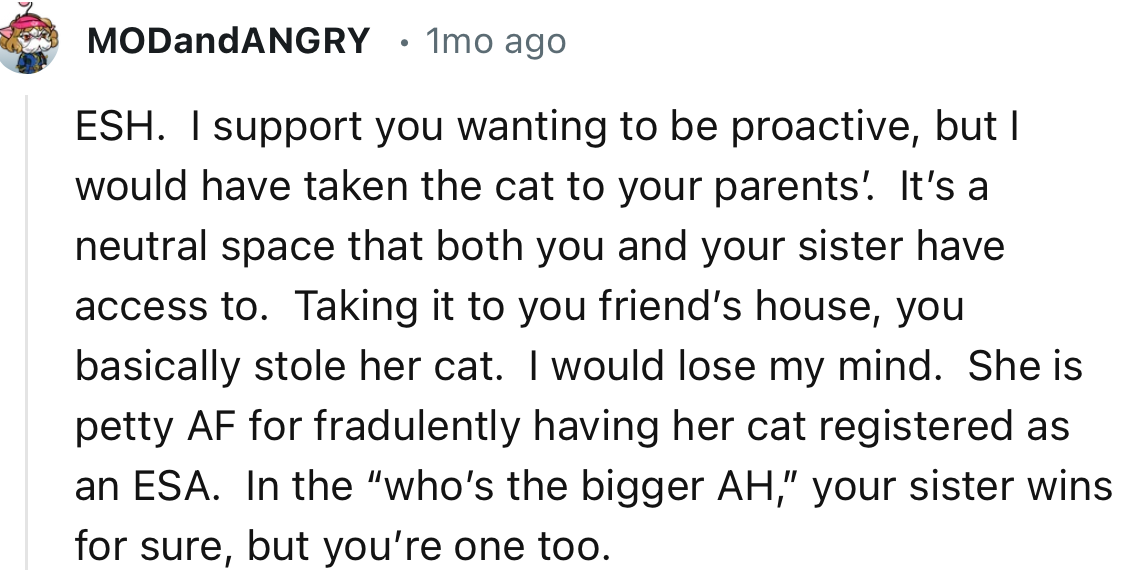
After weighing in, Redditors declared a unanimous ESH verdict. Many agreed that OP's actions doubled as theft; she should have opted for a more neutral space—like their parents' place—to house her sister’s cat.
The sister's move to fraudulently register her cat as an ESA was petty, so they acknowledged that in the grand scheme of things, the sister took the AH crown. However, both had their flaws in this furry feud.
Do you agree with this verdict? Let’s get your thoughts in the comments.
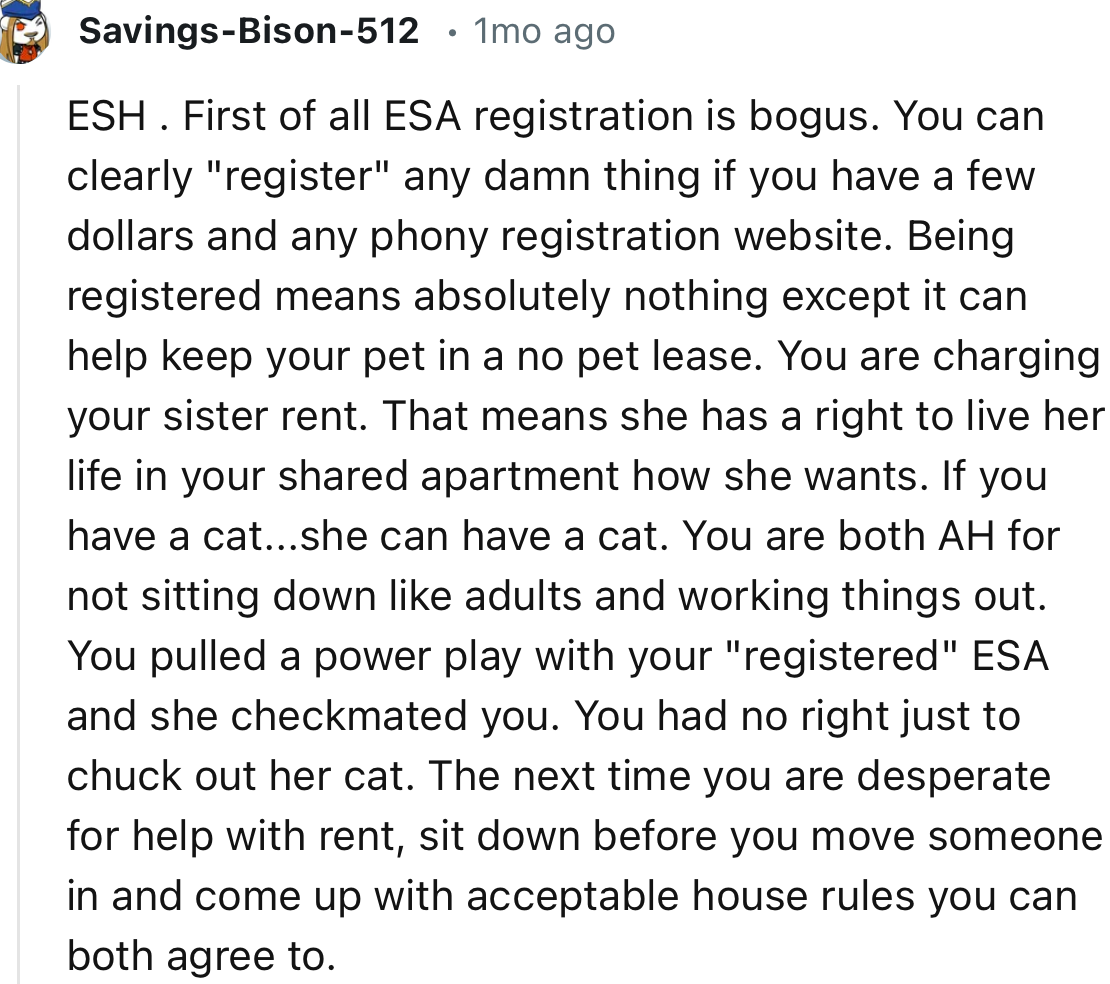
“You pulled a power play with your registered ESA, and she checkmated you. You had no right just to chuck out her cat.”
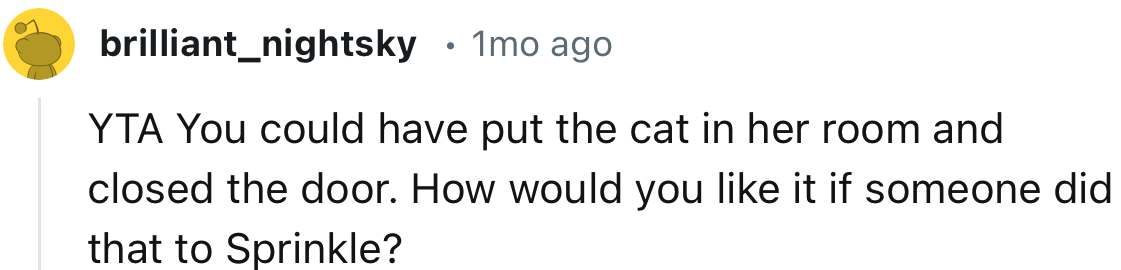
“You could have put the cat in her room and closed the door. How would you like it if someone did that to Sprinkle?
While OP’s mom was disappointed in her for taking matters into her own hands, OP’s dad sided with her, and the apartment stopped feeling like a compromise.</p>
In the emotionally charged situation surrounding the re-homing of the aggressive "ESA" cat, empathy emerges as a crucial factor in addressing the underlying family tensions. The narrator’s decision to take her sister in was rooted in a desire to help, yet the fallout reveals a deeper need for understanding and validation within their relationship. By recognizing and validating each other's feelings regarding the cat's behavior and the implications of re-homing it, both sisters could potentially diffuse the escalating conflict. The article highlights that when family members feel heard and understood, they are more inclined to participate in constructive discussions rather than resorting to further hostility. This situation serves as a reminder that empathy can be a powerful tool in navigating familial challenges, particularly when emotions run high.
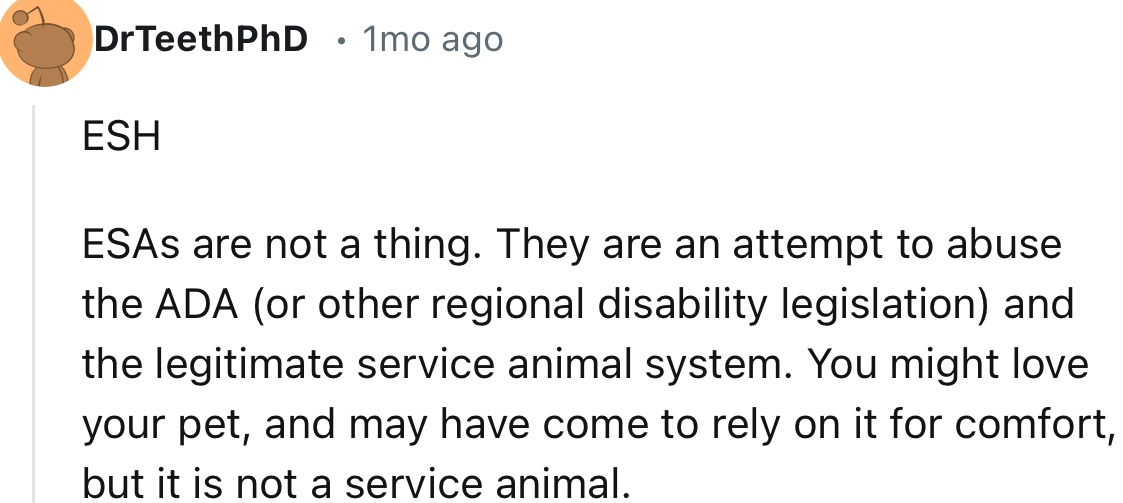
“You might love your pet and may have come to rely on it for comfort, but it is not a service animal.”
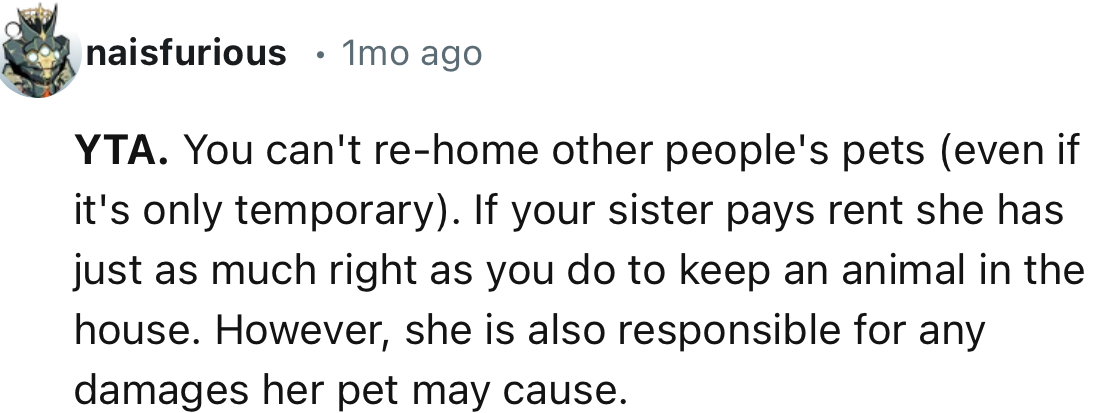
“You can't rehome other people's pets (even if it's only temporary). If your sister pays rent, she has just as much right as you do to keep an animal in the house.”
The situation unfolding in this story highlights the complexities of family dynamics, particularly when it comes to shared living arrangements. The narrator’s decision to take her sister in was born from a place of support, yet it quickly spiraled into chaos over the care of an aggressive emotional support animal. This incident underscores the necessity for open dialogue and understanding when navigating the challenges of familial relationships. The emotional fallout from re-homing the cat reflects deeper issues that often surface in family disputes. If the sisters had engaged in a more empathetic conversation about their expectations and concerns, they might have avoided this fiery confrontation.
The family dinner did not end well, because the ESA cat was never the real issue.
Wait until you see how a brother kicked back after his freeloading sister adopted a dog she couldn’t care for.
Share this article:





