
Mother Calls a Service Dog Owner Rude After She Yelled at Kids to Stop Petting Her Dog and to Leave Them Alone

Some service dog encounters go smoothly, but this one turned tense fast. A Reddit user said she was already having a rough day when a trip to the bookstore turned into a confrontation over her working dog, Atom. Things escalated when the children followed her, she became overwhelmed, and the situation ended with yelling, staff intervention, and strangers weighing in on whether she had overreacted.
By the time it was over, even the people around her seemed split on who was actually being rude. Here’s how it played out.
Was OP TA for yelling at the kids? This is how the situation unfolded

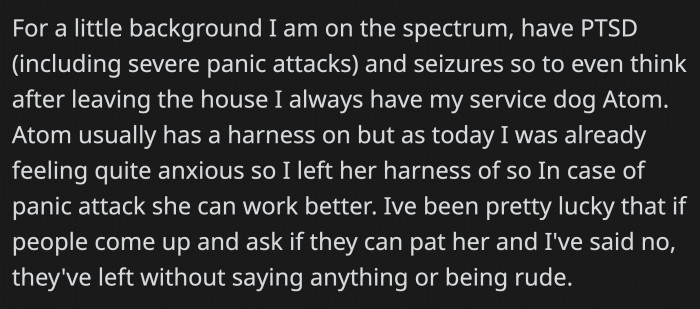
OP explained why she needed a service dog, and until now, she hasn't had trouble with others disrupting her dog's work
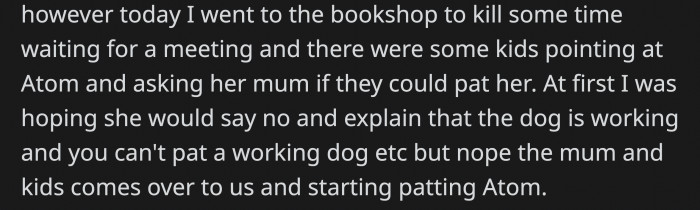
However, in the bookshop, it was a completely different story
The situation involving the service dog highlights the critical importance of understanding and respecting the role of service animals.
This distinction is vital for fostering respect and understanding in public spaces.
She kindly explained to the kids why they couldn't pet Atom, but because the mom was contradicting her, they didn't stop
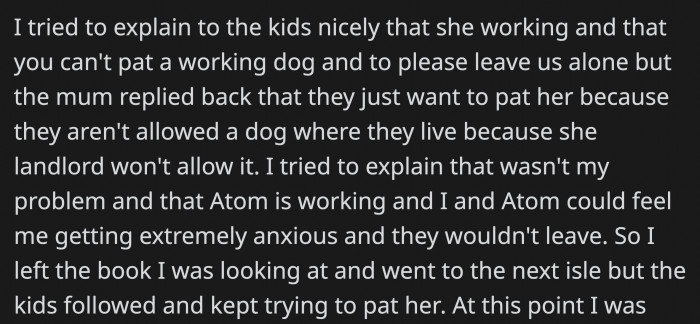
That’s when the bookstore trip stopped being simple.
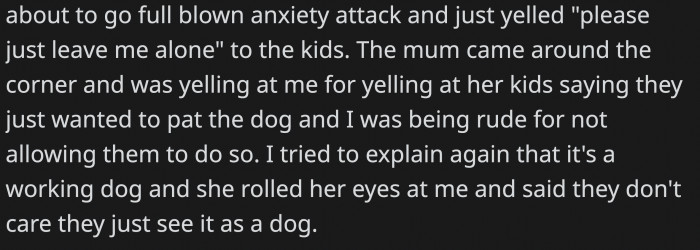
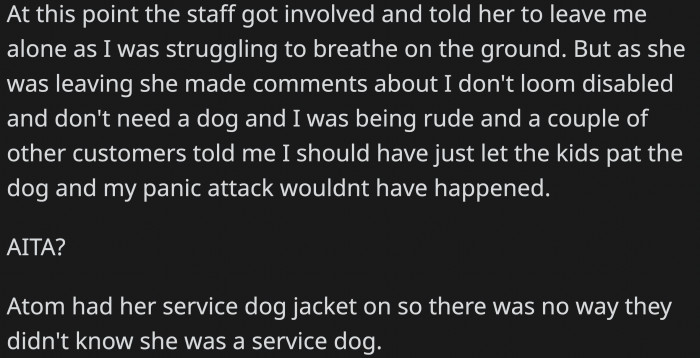
OP couldn't help but yell at them when she felt overwhelmed, and the mom yelled back at her for not allowing her kids to do as they pleased
The staff tried to control the situation and had the mom walk away from OP, but other customers painted OP as being in the wrong
Moreover, the mother's reaction in this scenario may reflect a lack of awareness about the challenges faced by individuals with disabilities.
Research indicates that many people do not fully understand the significance of service dogs, which can lead to misunderstandings and conflict.
Educational initiatives aimed at increasing public awareness about service dog etiquette can foster greater empathy and respect.
Kids should be taught that regardless of the type of dog, they should always ask for permission and understand when the owner says no
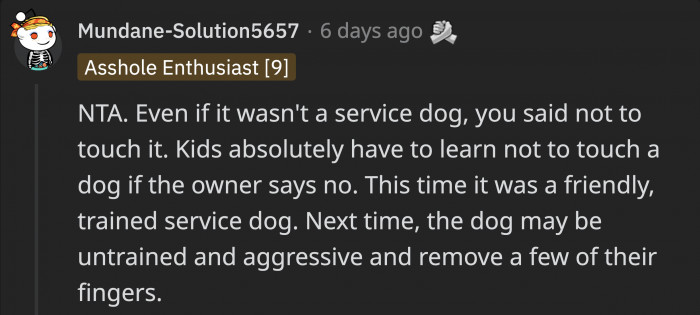
It is very much possible, even if they’re really young, and they could...

resort to other ways to express their excitement

Some readers were clearly on her side.
It also echoes the woman who got called out for insisting her “ESA” was a support dog while her dog growled at OP’s.
To foster a more inclusive environment for individuals with service dogs, community education programs should be prioritized.
Studies show that increased awareness can lead to reduced conflict and improved interactions between service dog owners and the public.
By providing resources and training for the public, we can promote understanding and decrease the stigma surrounding service animals.
It is within OP’s rights to say no
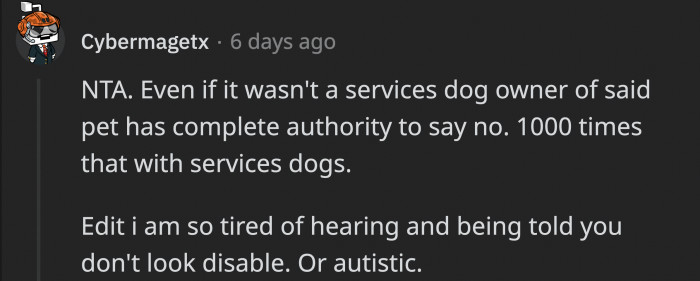
OP asking them to respect Atom’s boundaries helps her immensely to concentrate on her work
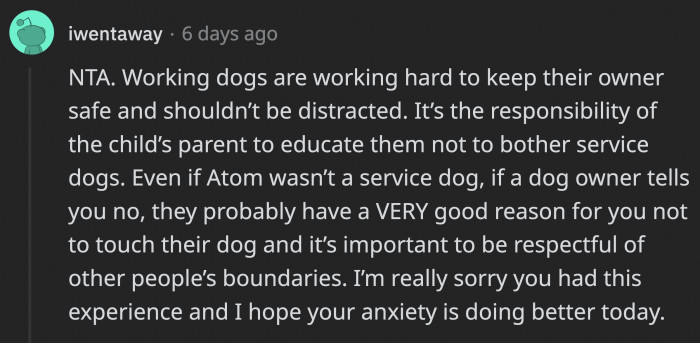
This issue doesn’t only occur with dogs but with other animals too, where random people think they know others’ pets better than the owners or caregivers
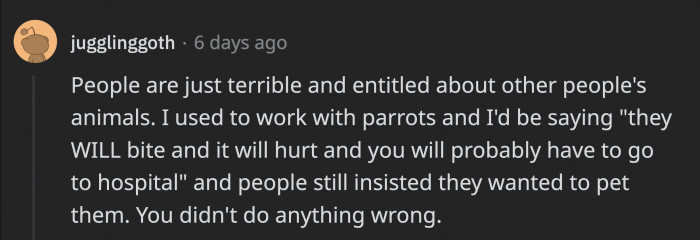
The customers who sided with the mom didn’t help at all...
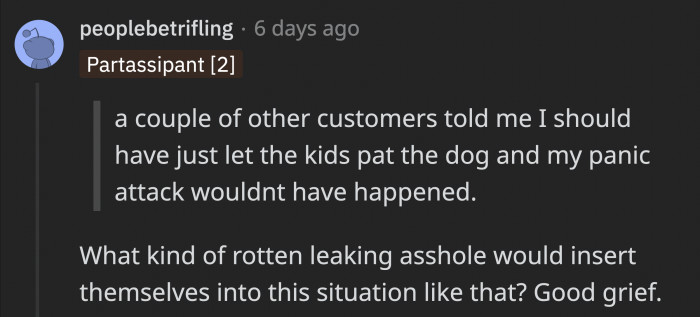
with the situation and left OP feeling worse

Maybe in hindsight, it was for the better that the kids didn’t have a pet until they learned boundaries
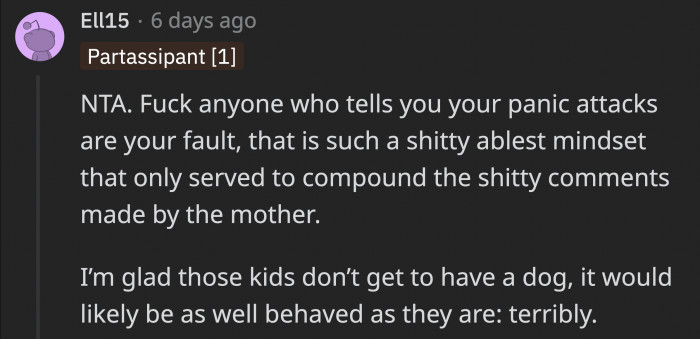
OP could have turned the tables, and maybe the mom would have understood her better, even if it was in an unconventional way

A summary of the reasons why Redditors think OP is...
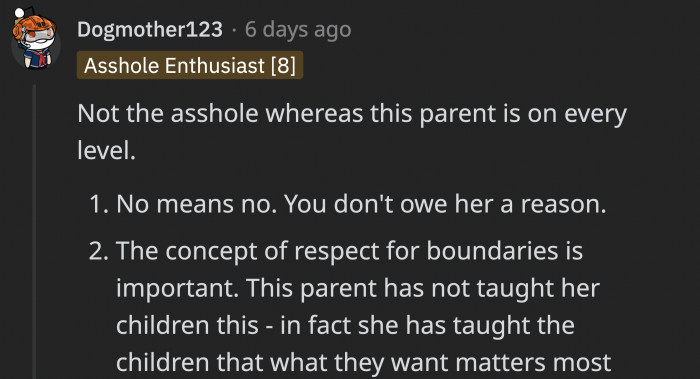
NTA and why the parent is in the wrong
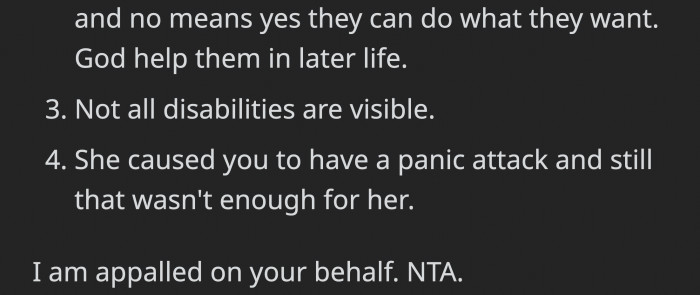
The commenters pointed out that the parent was disregarding OP’s disability simply because, to her, OP seemed like she didn’t have one. They also expressed discontent toward those customers who led OP to believe that if she complied with the mom’s wishes, she wouldn’t have an anxiety attack.
OP was voted as NTA by the majority of comments. They also emphasized the importance of parents teaching their kids to respect the boundaries of animals and their owners.
This incident highlights a pressing need for increased public education about the role and importance of service animals.
Wait until you see the entitled mother who told her golden child, “Mommy! I want to pet the puppy!”
Share this article:





