Elderly Woman Cries And Tells The Police She Was Only Fertilizing Her Neighbor's Pine Trees When She Buried Dog Poop In His Backyard That Winter
Our homes are our sanctuaries and safe spaces away from the rest of the world. It's our own little corner on Earth.
People and families spend a lot of money to own a home. We spend months looking for the best place in a hopefully safe neighborhood.
We may not always get along with our neighbors, but a civil relationship is to be expected. It's not too much to ask neighbors to respect your property, right?
Apparently, it is, at least in OP's case. OP is 43 years old, and they have lived in their house for almost two decades now.
OP and his wife used to own a dog since they live in a dog-friendly neighborhood. There's no shortage of pet owners walking their dogs at all times of the day in their area.
OP has no issues with the dogs, but he does have a problem with dog owners not picking up after their furry companions. The worst thing is that these owners allow their dogs to poop in OP's yard.
It's as if OP's lawn is the designated dog-pooping yard for all dogs. This has been a problem ever since they moved into the house, but it has increasingly gotten worse over the years.
OP's house is in a corner, and the dogs usually poop in his front yard or the patch of grass near the sidewalk. Lately, OP has found poop close to their front door and even in their backyard!
For safety reasons and to catch the owners, OP installed security cameras to monitor the front of his house and the backyard
He finally saw who was pooping in his yard, and it was almost all of the dogs in his neighborhood. OP talked to the owners to clean up after their pups, and they said they would.
The security footage proved that virtually none of the neighbors were considerate enough to pick up their dog's poop. The worst offender was their elderly neighbor.
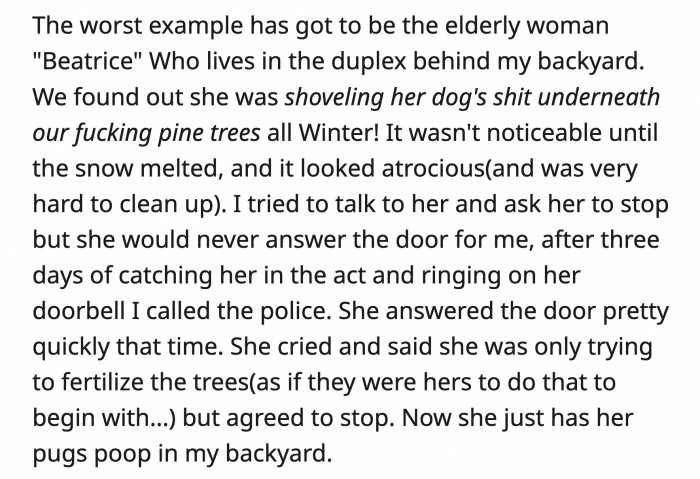
Beatrice lives in a duplex behind OP's backyard. They found that Beatrice was actually shoveling her dogs' poop underneath OP's pine trees that entire winter.
The mess wasn't initially noticeable, and they only noticed it once all the snow melted. It looked (and probably smelled) awful, and it took a long time for OP to clean it all up.
OP tried to talk to Beatrice, but she never answered her door when OP came over to have a conversation. For three days, OP watched Beatrice leave her dogs' poop in their backyard, and for those three days, OP tried talking to her to no avail.
Obviously, Beatrice didn't want to have an adult conversation about their problem, so OP called the police instead. When the police came knocking on her door, Beatrice miraculously answered her door quickly.
She cried when the officers questioned her. She said she was only trying to fertilize the pine trees, but she did agree to stop leaving dog poop in OP's backyard.
To show that she has truly changed, Beatrice only leaves her pugs' poop in OP's yard. OP is done cleaning up after his nasty neighbors.
He put up signs in his front lawn and backyard with a message for all of his dog-owning neighbors. The signs say: "No pooping! Pick it up or get reported!"
Beatrice was fuming when she saw OP's signs and tried to talk to him, but OP was unable to answer his door. As for his other neighbors, they have been giving OP the stink eye, but for the first time in years, there is no poop to be found anywhere on his property.
OP's wife wants him to remove the signs to keep the peace, but OP thinks he shouldn't. What do you think? Read the full story below:
The incident involving the elderly woman reflects profound themes of community dynamics and individual behavior in social contexts. Social psychologists emphasize that neighborhood relationships often reflect a microcosm of broader societal interactions. This is illustrated in research conducted by Dr. Robert Putnam from Harvard University, which highlights how social capital—the networks of relationships among people—can significantly impact community well-being and individual mental health. Putnam's findings suggest that when individuals engage positively with their neighbors, it fosters trust and cooperation, leading to healthier communities. Conversely, conflicts such as the one described can erode this trust, resulting in a more isolated and less supportive environment.
Finally, fostering a culture of kindness and open communication can significantly mitigate misunderstandings in community settings. A study published by the American Psychological Association emphasizes the value of kindness in enhancing interpersonal relationships and overall community health. Encouraging simple acts of kindness—like offering help or engaging in friendly conversations—can cultivate a positive atmosphere that reduces the likelihood of disputes. Implementing community initiatives that celebrate and reward neighborly kindness could strengthen social bonds and create a more vibrant, supportive neighborhood.

OP's neighbors have no shame

It's part of being a responsible dog owner
In situations like these, where misunderstandings arise, the psychological principle of attribution theory comes into play. Developed by social psychologists such as Fritz Heider, this theory illustrates how individuals interpret the causes of behavior—both their own and that of others. For example, if the neighbors perceive the elderly woman’s actions as disrespectful, they might attribute her behavior to a flaw in character rather than considering external situational factors, such as her intentions of gardening. Understanding these biases in interpretation can help mitigate conflict, as recognizing the situational influences can lead to more empathetic responses.
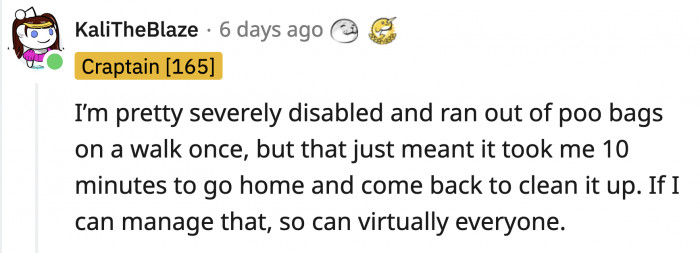
OP can try this, but it might bring about new sets of problems when the poo bags run out
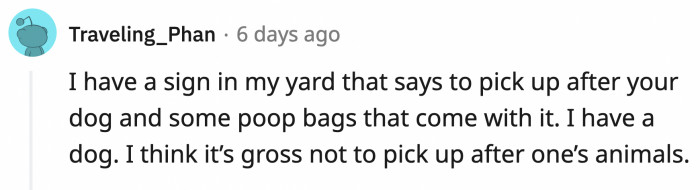
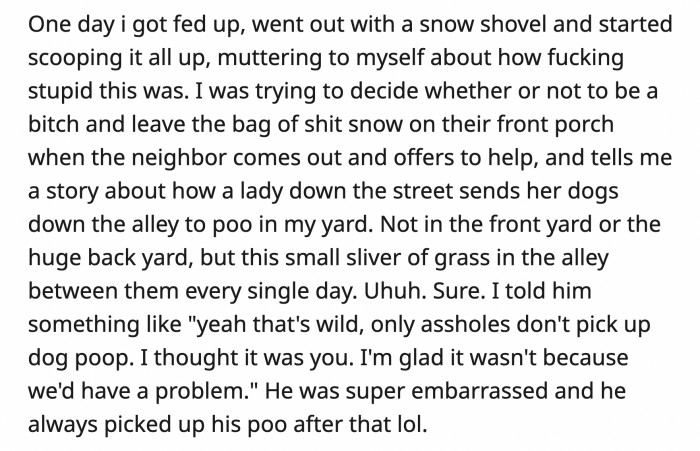
A redditor dealt with a similar winter problem...
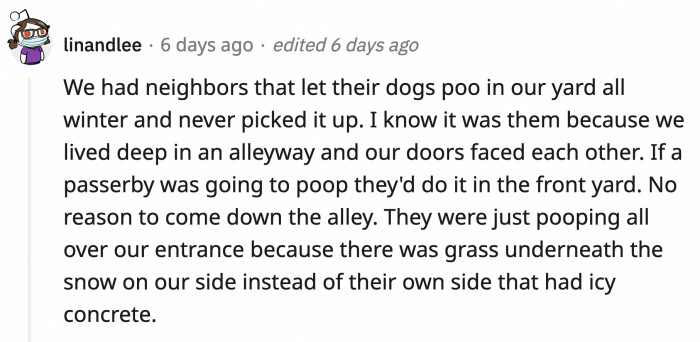
... she managed to shame her neighbor into picking up after his dogs.
Moreover, the emotional response of the elderly woman—crying and feeling compelled to explain her actions—highlights the psychological concept of emotional contagion, where one person's emotions can influence others. Research from the University of California, Berkeley, indicates that emotional expressions can significantly impact social interactions and perceptions. In this case, her emotional display may evoke sympathy in some observers while eliciting frustration in others, creating a complex web of social reactions that can further exacerbate or alleviate the situation. Understanding this can help neighbors approach conflicts with greater emotional awareness and empathy.
For over two decades, OP kept his mouth shut about this problem, and somehow his neighbors are still annoyed at him for finally putting an end to it
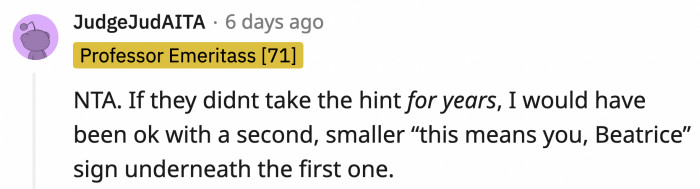
This is the animosity his wife was talking about, but if it works...
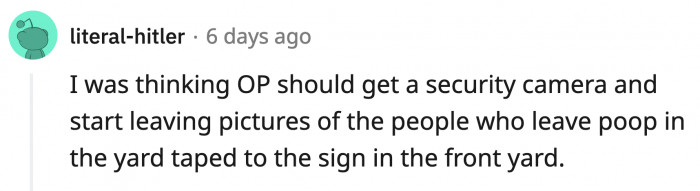
Had they been responsible, OP wouldn't have a problem with it
To address and prevent such conflicts, practical measures rooted in community psychology can be beneficial. Neighborhood mediation programs, which have been shown to effectively resolve disputes, encourage open dialogue between parties (as demonstrated in a study by the University of Michigan). These programs foster understanding and collaborative problem-solving, allowing individuals to express their concerns in a safe environment. By implementing regular community meetings or social events, neighbors can build rapport and trust, reducing the likelihood of misunderstandings over time.
OP's neighbors are in a league of their own; his front yard wasn't enough, so they also let their dogs do their business in OP's backyard
That was a lot of poop if she did it all winter long
Right, because their neighbors were so respectful before
The elderly woman's explanation also serves as an example of how personal narratives shape our understanding of social interactions. Psychologists emphasize the importance of storytelling in human connections, as narratives allow individuals to make sense of their experiences and share their perspectives. Research published in the journal 'Narrative Inquiry' suggests that sharing personal stories fosters empathy and can bridge gaps in understanding between conflicting parties. Thus, encouraging residents to share their stories can cultivate a more cohesive community, where individuals feel heard and valued.
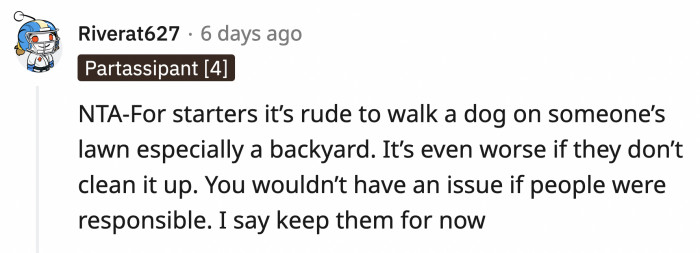
OP could try fencing in his yard to prevent dogs from going into his property altogether
Scratch that; we like this idea better
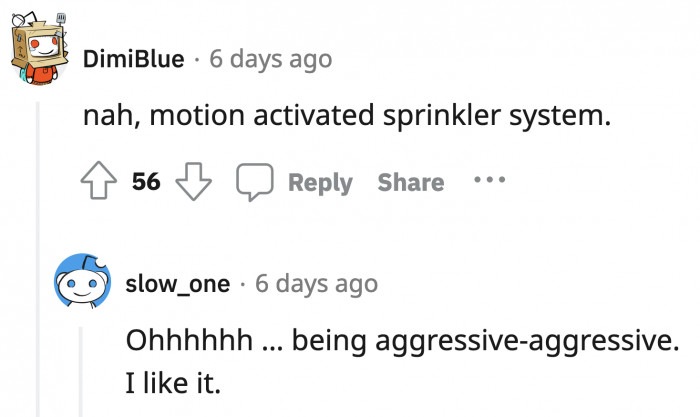
Why would you waste time worrying about rude people's feelings?
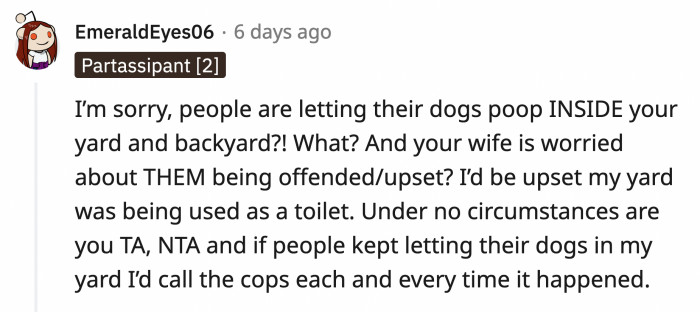
Understanding the emotional undercurrents in neighborly disputes is crucial. According to Dr. John Gottman, a renowned relationship researcher, the way individuals respond to emotional bids—small attempts to connect—can significantly influence relationship dynamics. Analyzing the interactions in this case, neighbors might have misinterpreted the elderly woman's actions as a lack of respect rather than viewing them as an innocent attempt at gardening. Encouraging residents to respond positively to emotional bids, such as a smile or friendly greeting, can foster a supportive atmosphere that diminishes the likelihood of conflicts.
They were being nasty neighbors and bad pet owners
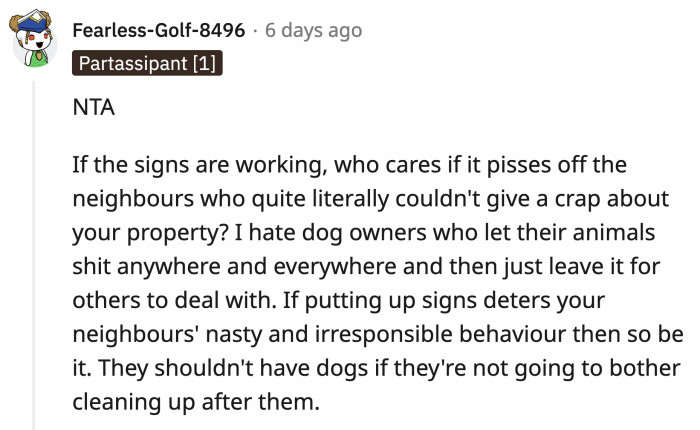
Would OP's wife approve of this method? Their sign might stop being effective one day; it's good to have this as a backup plan.
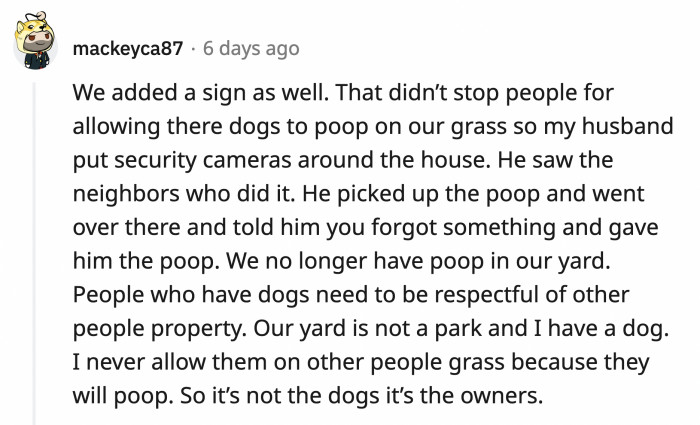
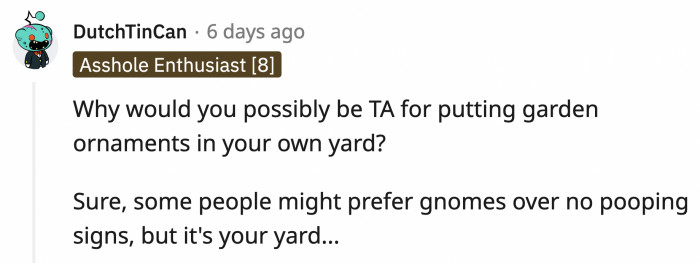
The gnomes can hold the signs up if they prefer that
Additionally, it’s crucial to recognize how age-related factors might influence the woman’s behavior and perception. Research indicates that older adults often experience a decline in social cognition, making it more challenging to interpret social cues accurately (as noted in studies by the Gerontological Society of America). This suggests that the neighbors might consider her age and potential cognitive limitations when approaching her actions. Building awareness around age-related social dynamics can promote greater patience and understanding within community interactions, ultimately leading to more harmonious relationships.
OP actually handled the problem politely after so many years of letting his inconsiderate neighbors get away with it. He could have reported all of them to the police or dealt with the problem in a petty and creative way, but he didn't.
The signs were the most civil and polite way to address the problem. If OP's neighbors still can't get the message, the police are just a call away, and Beatrice knows this well.
Psychological Insights & Implications
Understanding the psychological dynamics at play in community interactions is critical for fostering healthier relationships among neighbors. According to the American Psychological Association, 'Building supportive social networks is essential for individual well-being and community resilience.' By applying principles of social psychology, such as empathy, active listening, and community engagement, residents can navigate conflicts more effectively and create a harmonious living environment. As individuals learn to appreciate diverse perspectives and foster open communication, they pave the way for stronger, more resilient communities that thrive on cooperation and understanding.