Guy Wants To Know If He's Wrong For Telling His Friends They Can't Bring Their Dog To His Party
Reddit is a great place on the internet where we find many different threads where people ask questions, post stories, get advice, and comment on other people's posts. Reddit's AITA thread is one of the most visited ones, and we can definitely see why.
People come on there to get advice on whether they're in the wrong in a certain situation that they explain, while most commenters have a lot of opinions on these stories. It makes for really great conversation and understanding of different perspectives.
So today we're bringing you an AITA thread where a guy asks if he's in the wrong for not allowing his friends to bring their dog over to his house during a party. The Reddit users on this post had a lot to say, so we compiled some of the best, funniest, and most upvoted comments to show how people responded to this situation.
If you love reading these types of stories from people and being able to see different perspectives, then this thread is for you. Let's take a look at exactly what happened and the background of the story, plus all of the best comments that people wrote in response to this guy's Reddit post.
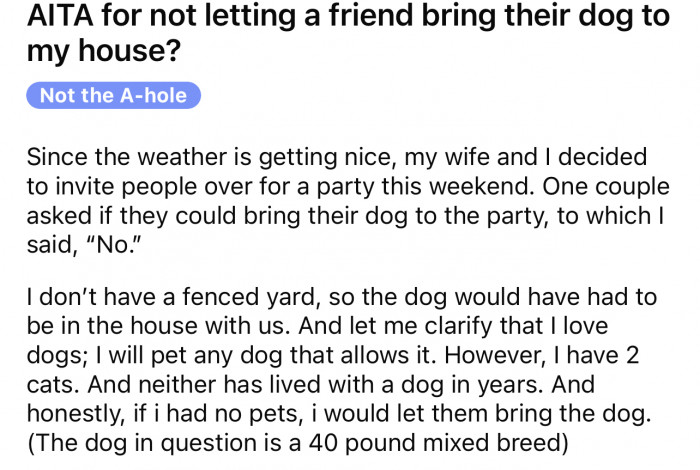
Here’s the story

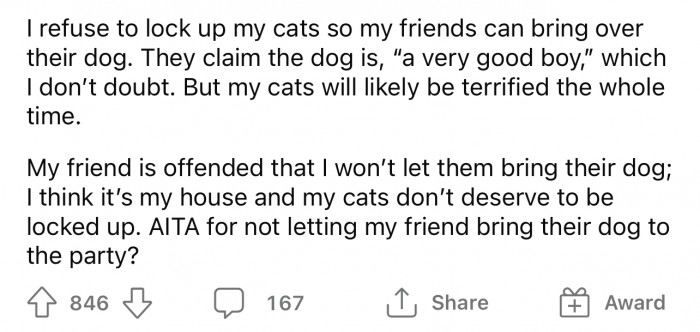
The story continued as he explains his reasoning.
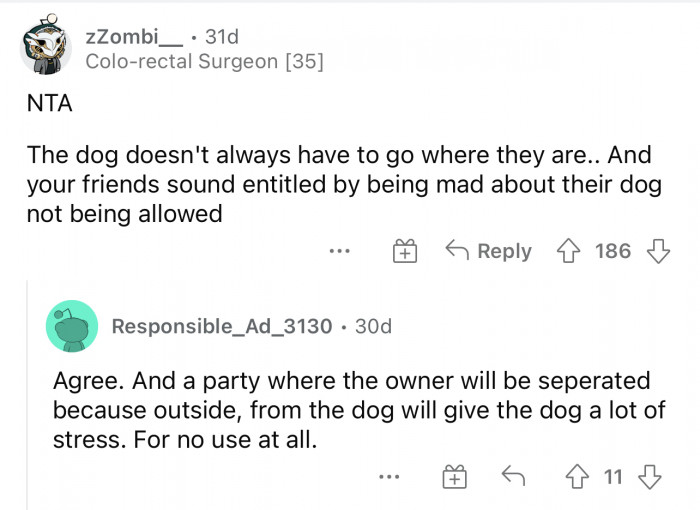
Starting it off with one person saying that he's NTA.

The discussion around whether to allow dogs at social gatherings touches on deeper psychological principles, particularly those involving boundaries and personal space. According to Dr. Julie Schwartz Gottman, a clinical psychologist and co-founder of the Gottman Institute, setting healthy boundaries is crucial for maintaining emotional safety in relationships. She notes that acknowledging one's comfort levels is not just a personal preference but a vital aspect of self-care that can lead to healthier interactions.
When individuals feel their boundaries are respected, it can enhance feelings of safety and trust within relationships. This dynamic can facilitate open conversations about differing preferences, which is essential for maintaining friendships.
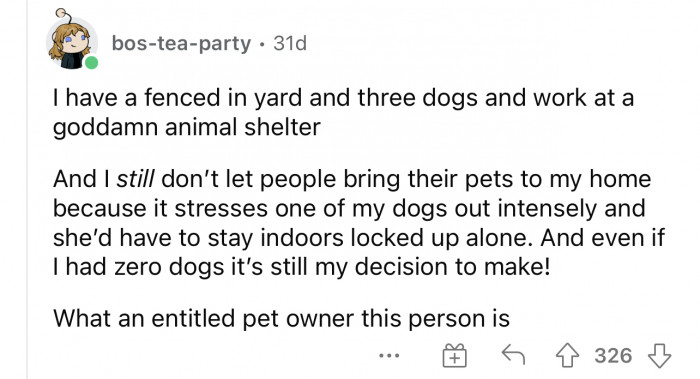
Many reasons why the dog could've just stayed home.
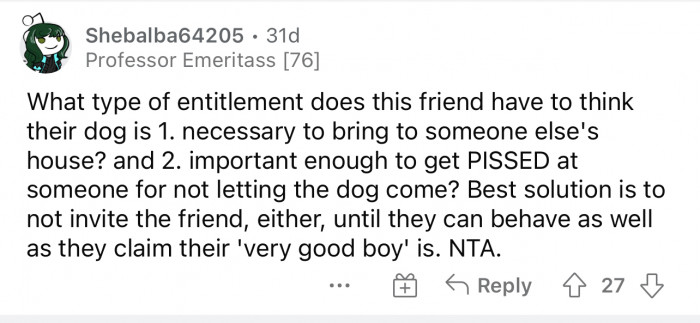
People feel very strongly about how entitled this pet owner is.
Some dogs do really go overboard, though.

Social Dynamics and Conflict Resolution
Research indicates that social dynamics often play a significant role in conflict resolution. A study published in the Journal of Conflict Resolution highlights how perceived violations of social norms can lead to increased tension among friends. In this context, the host's decision to prohibit dogs may be interpreted by some friends as an infringement on their personal freedom, leading to potential conflicts.
Understanding these dynamics can foster empathy, prompting the host to communicate the rationale behind their decision effectively. By framing it as a matter of personal comfort rather than a blanket rejection of pets, the host can mitigate feelings of offense and promote a more constructive dialogue.
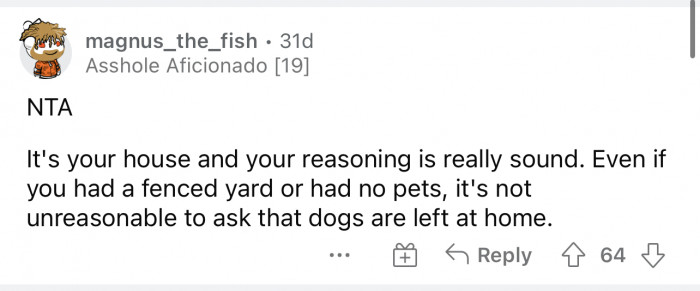
If you say no, then that means no. I mean, it's his house after all.
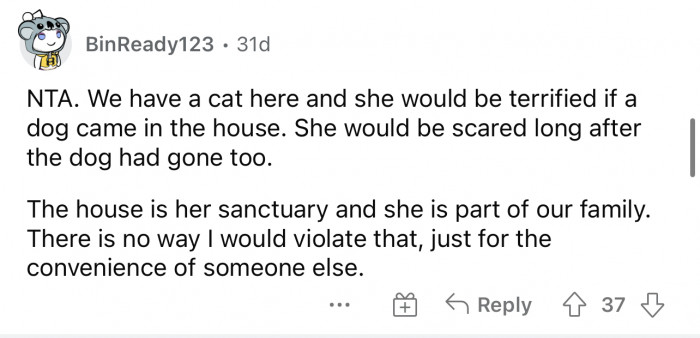
Exactly, the cat is part of his family and his home, so ultimately the cat is above the dog.
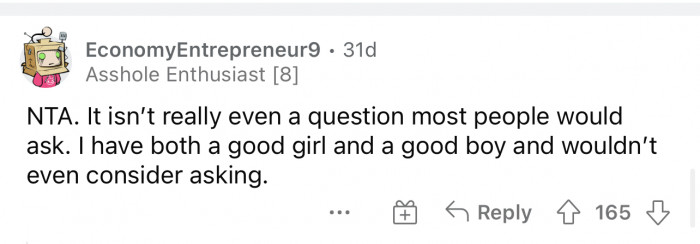
Do you think that people should ask?
The involvement of pets in social settings can trigger various emotional responses based on individual attachment styles. According to Dr. Sue Johnson, an expert in attachment theory, individuals with secure attachment styles often feel comfortable navigating differing perspectives. However, those with anxious or avoidant attachment styles may react more defensively to perceived rejection of their pets, which they might view as a rejection of a significant part of their identity.
This highlights the importance of considering the emotional context when making decisions about social gatherings. Hosts should aim to create a welcoming environment that respects all attendees' feelings, including those of pet owners.
Exactly, no means no.

It's very silly how out of line they are, and clearly, people are noticing.
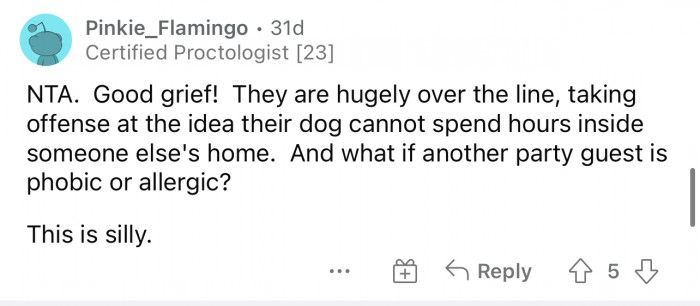
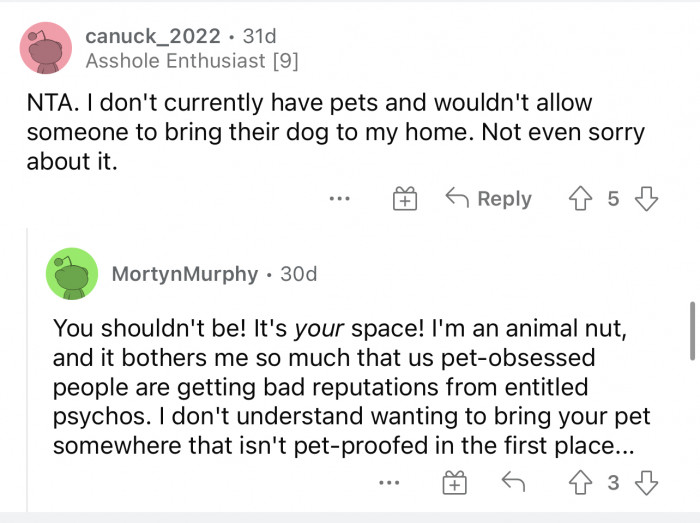
Heavy on the 'It's your space' because that's exactly right.
The Role of Empathy in Social Situations
Empathy is a critical component in understanding others' viewpoints, particularly in scenarios involving conflicting preferences. Studies show that engaging in perspective-taking can significantly enhance interpersonal relationships and reduce conflict (Eisenberg & Miller, 1987). By actively considering the feelings of friends who wish to bring their dog, the host can foster a more inclusive atmosphere.
Practicing empathy doesn’t require compromising one’s own boundaries. Instead, it can involve finding a middle ground, such as suggesting a dog-friendly gathering at a different time. This way, the host maintains their comfort while acknowledging the needs of their friends.
I have never had someone ask me if they could bring their dog to an event.

Your friends are the guests.

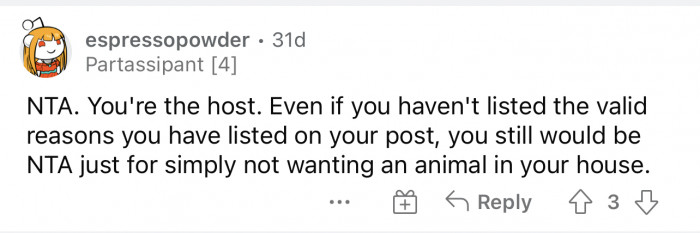
Since it's their home, then they get the final say, so there should be no argument.
It's essential to recognize the social pressures at play when navigating friendships and gatherings. Research in social psychology highlights that group dynamics can greatly influence individual decisions and feelings of obligation (Cialdini, 2007). When faced with pressure from friends who may strongly advocate for dog inclusion, individuals may experience cognitive dissonance—a psychological discomfort arising from holding contradictory beliefs.
To combat this, individuals can benefit from clarifying their own values and the reasons behind their decisions. Engaging in self-reflection can empower hosts to stand firm in their choices while articulating them with confidence and respect.
People seem to be in agreement that he's NTA.
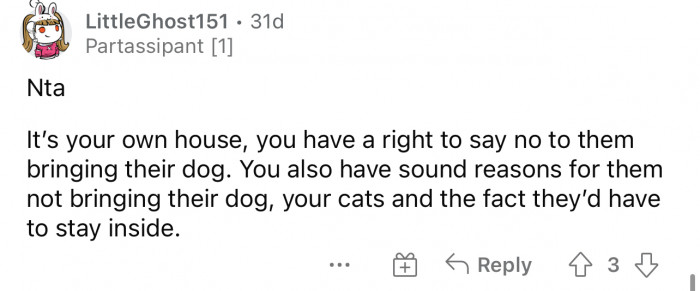
This is also true and a great perspective to consider.
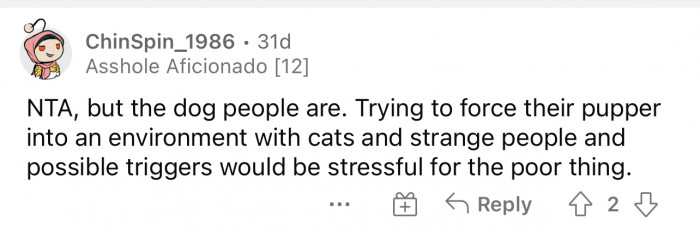
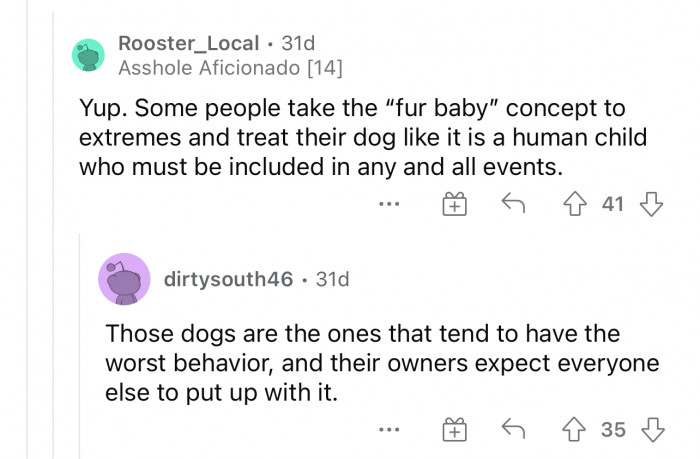
Yes, some pet owners take 'fur baby' to a whole new level.
Communication Techniques for Resolving Disagreements
Effective communication is paramount in resolving disagreements amicably. According to Dr. John Gottman, a leading researcher in relationship dynamics, using 'I' statements rather than 'you' statements can significantly reduce defensiveness during conversations. For instance, saying, 'I feel uncomfortable with dogs in my home' is more constructive than saying, 'You can't bring your dog.' This subtle change in language can foster a more open dialogue.
Moreover, employing active listening techniques can enhance understanding. Reflecting back what friends express about their attachment to their pets can validate their feelings while maintaining the host's boundaries.
A loaded comment with all great points.
The cat might not like the dog there and can get defensive quickly.
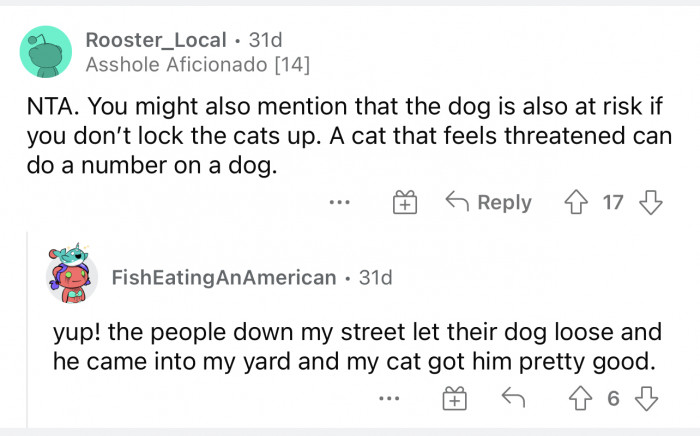
Someone shared that they are having a similar experience.

Ultimately, navigating social situations involving personal preferences requires a balance of assertiveness and empathy. Research suggests that individuals who practice assertiveness—expressing their needs and boundaries clearly—tend to experience healthier relationships (Niemann, 2009). The act of stating one's preference regarding dogs at a party can be framed as an opportunity for growth in the friendship.
By addressing these preferences respectfully and thoughtfully, both sides can engage in a dialogue that strengthens their bond, rather than allowing differing opinions to create division.
Simply put: NTA.

We love reading these Reddit threads, especially the AITA thread. What do you think about this story, and do you agree with the comments people left?
I think it's fun to see other people's perspectives and what they would do in a particular situation. Share this with a friend to get their opinion.
Psychological Analysis
The situation in the article highlights the importance of personal boundaries and emotional comfort in social settings. The host's decision to not allow dogs can be seen as a reflection of their need for a safe and controlled environment, while friends' feelings about bringing their pets often stem from strong emotional attachments, which can make such boundaries feel like a personal affront. Striking a balance between asserting one's preferences and empathizing with friends' attachments is key to maintaining healthy relationships.
Analysis generated by AI
Psychological Framework & Solutions
In conclusion, maintaining friendships amidst differing preferences requires an understanding of psychological principles such as attachment, empathy, and effective communication. The literature emphasizes that setting boundaries is not only a form of self-care but also an essential aspect of healthy relationships. By employing strategies like active listening and assertive communication, individuals can navigate these situations more gracefully, promoting a sense of understanding and connection that can endure beyond the immediate disagreement.
Ultimately, the ability to discuss preferences openly can lead to stronger, more resilient friendships that honor both individual needs and collective enjoyment.