AITA For Wanting To Sell My Girlfriend's Dog After It Bit Me | Reddit Post

A pitbull mix bit a guy on the wrist, left him with a bleeding cut and a sore scab, and somehow the real fight became the girlfriend and her dog. He tried to drag the dog off the couch, it snapped back, and the moment he reacted with anger, the whole apartment turned into a drama scene.
His girlfriend (29) insisted the dog had never bitten anyone in five years and blamed him for “scaring” it, then locked herself in the bedroom with the dog for two nights while he slept on the couch. To make things worse, he contacted a buddy who knows breeders and asked about selling the dog for $200, assuming he’d handle the fallout later.
But when the dog’s own text message got her involved, his “health issue” argument collided with her “betrayal” storyline fast.
Original Post
Okay, so for context, I (m33) have been dating my girlfriend (f29) for almost a year and recently moved in with her about 2 months ago. Everything was fine until last week when her dog (a pitbull mix; I don’t really care about breeds) bit me on the wrist after I tried to drag him off the couch. Not super deep, but it bled, and now I have this nasty scab, and it’s still sore.
I yelled and kicked the coffee table, and the dog ran off. She came running and got all mad at me like I provoked him or something. I told her that was BS and that the dog is dangerous and we need to get rid of him—either to the pound or sell him to someone who knows how to control animals.
She freaked out and said he’s never bitten anyone in 5 years and that *I* scared him. She wouldn’t stop crying and made this huge scene like I’d asked her to get rid of the dog or whatever.
I said it’s just a dog; she can get another one later when we have a house and a yard. She refused, locked herself in the bedroom with the dog (???) and I had to sleep on the couch for 2 nights.
I tried to make it right by calling a buddy of mine who works with a breeder and asking if he knew anyone who might take the dog for like $200. I figured I’d just make the decision and deal with her being mad later since she was acting all emotional and not rational.
Well, she found out because I guess he texted her instead of me (thanks, bro), and now she’s furious—like full-on packing her stuff mad. I told her she was overreacting and that this was a health issue (I could’ve gotten infected or worse!) and that if she was really serious about me, she’d pick my safety over a mutt.
Now she won’t talk to me and told me to stay at my mom’s while she “thinks things over.” She’s posted some passive-aggressive story about betrayal and “protecting those who can’t speak,” and our friends are blowing up my phone saying I was out of line. I don’t know.
I still feel like I did what any sane person would do. A dog bites you; you don’t just ignore it.
I didn’t even hurt the dog. I just tried to move him off furniture that he shouldn't even be on!
Am I really the bad guy for trying to sell a dog that bit me? AITA?
Edit: Okay. So.
I’ve read through the comments, had some time to sit with this, and yeah—I see now that I was a complete AH here. No sugarcoating it.
First off, I want to start by owning the fact that I came into *her* home, *her* space, and tried to enforce rules like it was automatically mine too. That was disrespectful.
The dog lived there before me. The couch wasn’t mine.
And me deciding that the dog “isn’t allowed on furniture” like I was laying down the law in a place I just moved into? That was arrogant.
Second—and this is big—I *absolutely* mishandled the situation with her dog. Grabbing a dog by the collar, especially one that’s growling?
That’s on me. That’s not “controlling the situation”; that’s provoking fear and setting myself up to get bitten.
I acted like I knew what I was doing around animals when I clearly didn’t. I didn't even ask how she normally handles that stuff.
I just went full bulldozer mode. And yeah, trying to sell *her* dog behind her back?
That was beyond messed up. I was frustrated and scared after getting bitten, yeah—but that doesn’t justify violating someone’s trust like that.
That dog isn’t just “a mutt”; it’s her *family.* I didn’t get that at the time, but I do now. If someone tried to sell my car without asking, I’d flip—and that’s just a car.
A dog is a living creature, one she’s clearly bonded with for years. And I tried to handle it like it was a Craigslist transaction.
Also, calling her “emotional” and “irrational” when she was reacting to me threatening something she loves? That was cruel.
I dismissed her feelings when really I should’ve been asking how to make it right. I didn’t even check in on the dog.
I just went into crisis control like I was in charge of fixing something that I *caused.*
So yeah. I get why she’s furious.
I’d be too. I came in hot, didn’t listen, tried to dominate the situation, and then doubled down when called out.
Total AH behavior. I’m not here to make excuses.
I just wanted to say that I *do* get it now. And if she’s reading this—I’m sorry.
Deeply. For the fear I caused, the betrayal, and not treating your dog like the living, trusting being he is.
You were protecting someone who *couldn’t* speak, and I was treating him like a problem to be solved, not like a soul that needed care. I don’t know if we’re going to make it through this, but I hope you and your pup are okay.
I was wrong. And I’m sorry.
Pets often become integral members of the family, and emotional reactions to their behavior can be quite intense.
The Emotional Landscape of Pet Ownership
Desiring to sell a girlfriend's dog after being bitten highlights the emotional complexities of pet ownership within relationships.
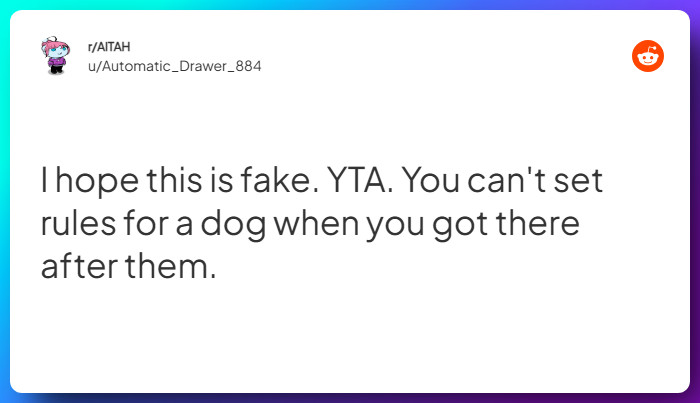
Comment from u/Automatic_Drawer_884
Comment from u/Paddfoot13

After the dog bit OP’s wrist and he kicked the coffee table, his girlfriend showed up furious like he was the one who caused it.
Feelings of distress following a pet bite highlight the psychological concept of fear response.
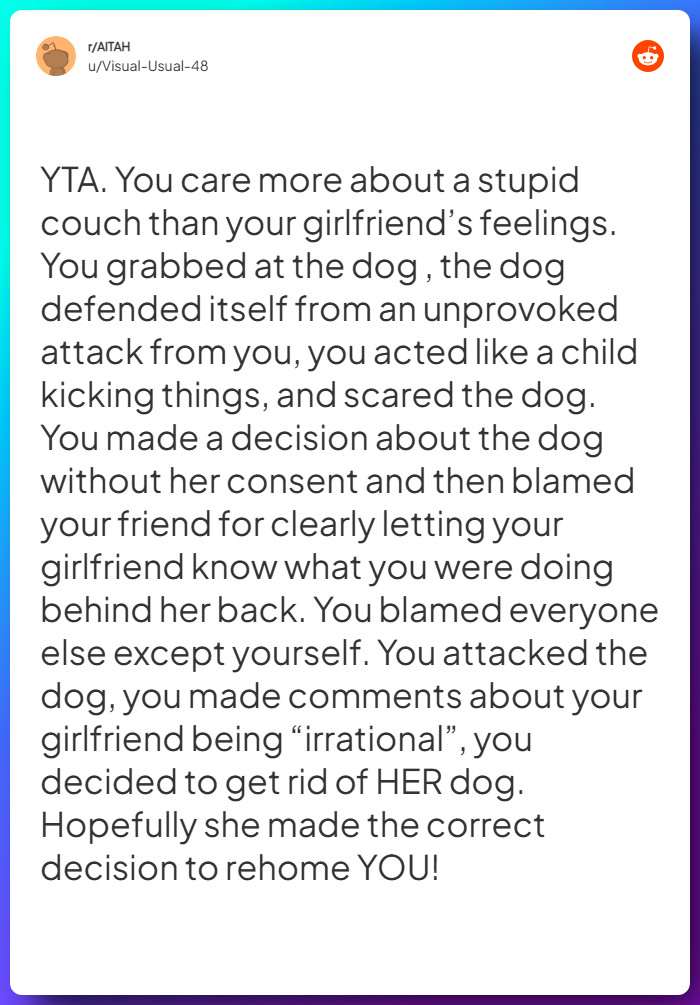
Comment from u/Visual-Usual-48
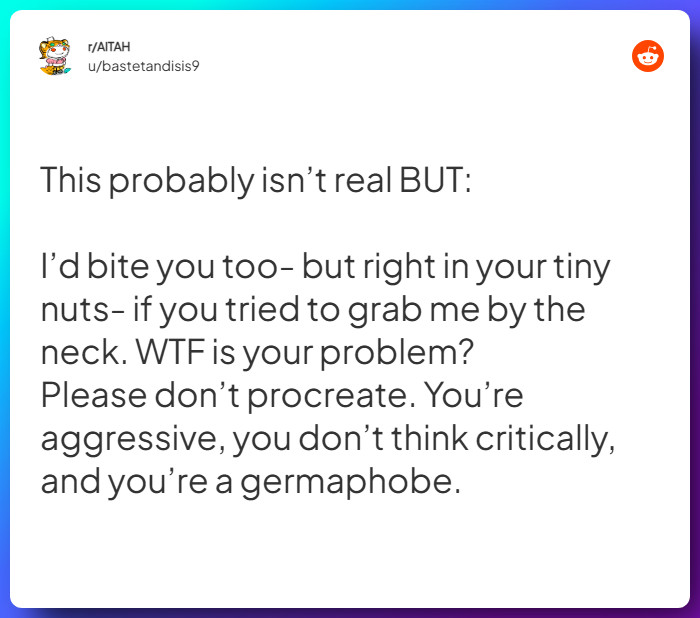
Comment from u/bastetandisis9
Moreover, studies show that pets can evoke deep emotional attachments, making decisions about their future particularly challenging. Understanding this emotional connection is crucial when navigating conflicts involving pets.
Comment from u/[deleted]
![Comment from u/[deleted]](https://static.pupperish.com/posts/comments/comment_681f6c157e6fd.jpg)
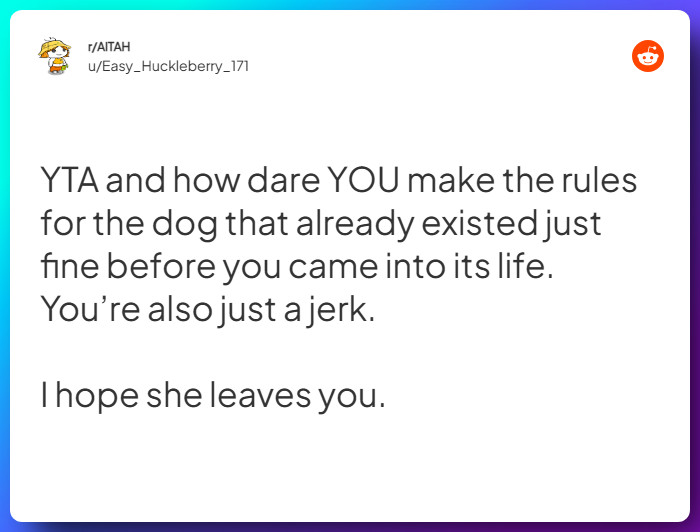
Comment from u/Easy_Huckleberry_171
When she locked herself in the bedroom with the dog and OP ended up on the couch for two nights, the argument stopped being about safety and became about control.
Effective communication is essential when navigating conflicts surrounding pets. When addressing the desire to sell the dog, framing it as a means of ensuring safety may help mitigate potential backlash and promote understanding.
Using 'I' statements to express feelings about the incident can help convey personal emotions without placing blame, creating a safer space for discussion.
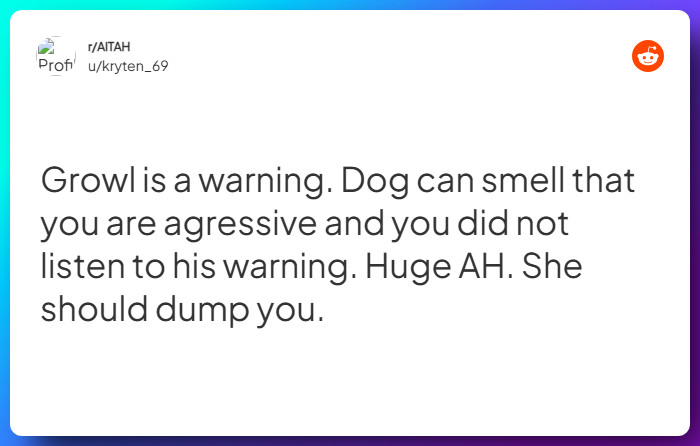
Comment from u/kryten_69
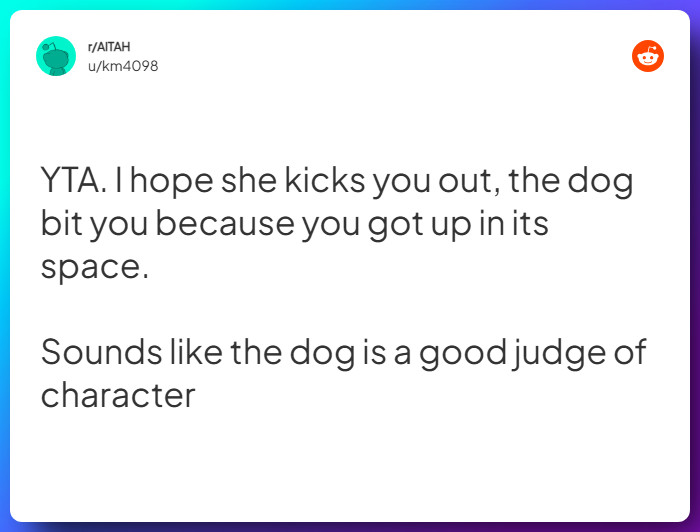
Comment from u/km4098
In situations involving pets, fostering open communication is essential.
This also echoes the Reddit fight where a man hit his untrained dog and his GF called him a monster.
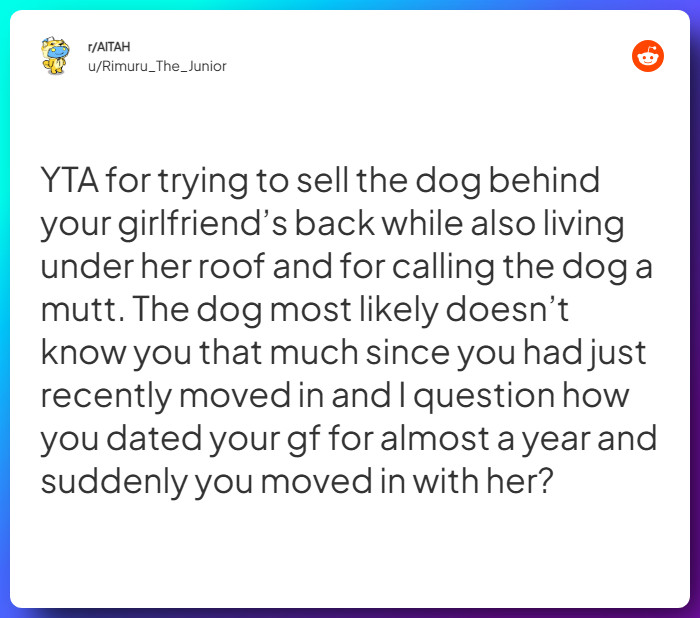
Comment from u/Rimuru_The_Junior
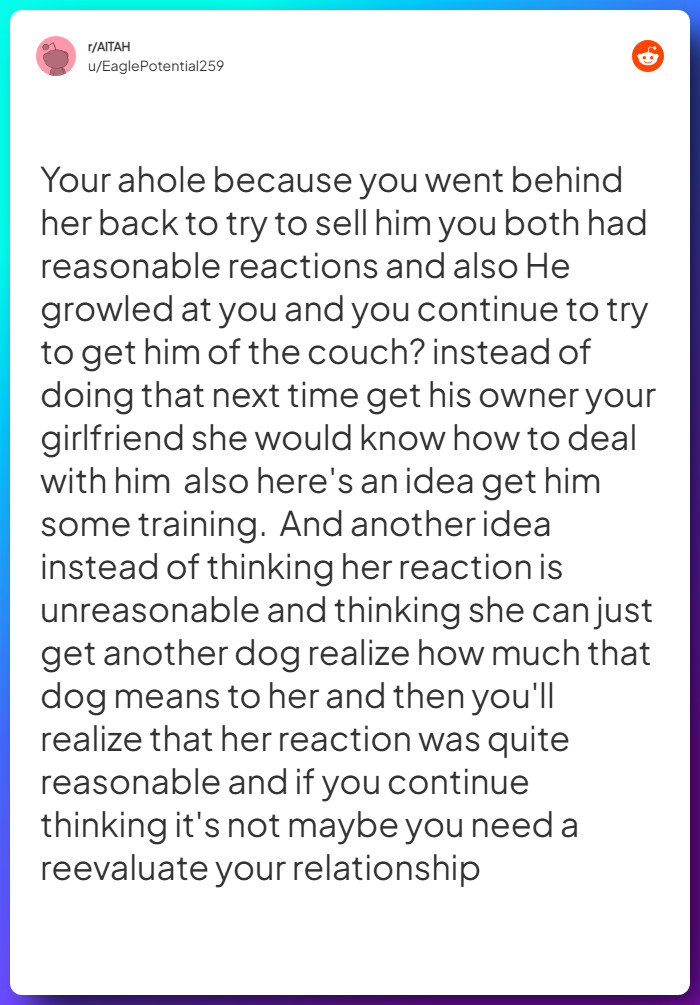
Comment from u/EaglePotential259
The moment OP tried to sell the dog for $200 through his breeder buddy, it stopped being a “temporary fix” and turned into a trust bomb.
The emotional bond between humans and pets can complicate decisions surrounding their care.
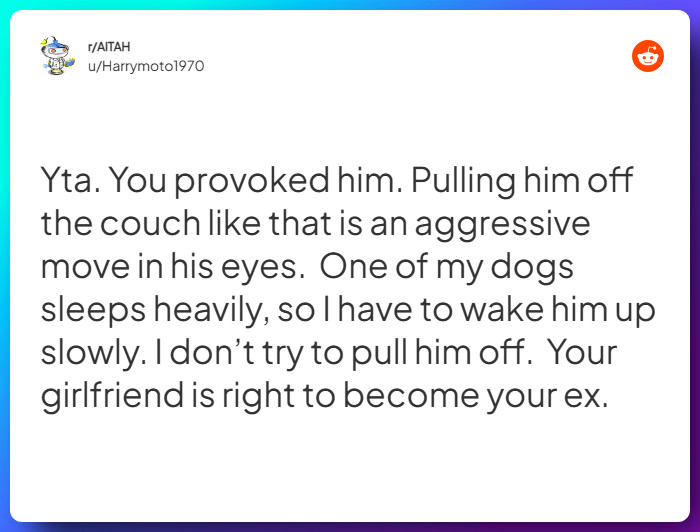
Comment from u/Harrymoto1970
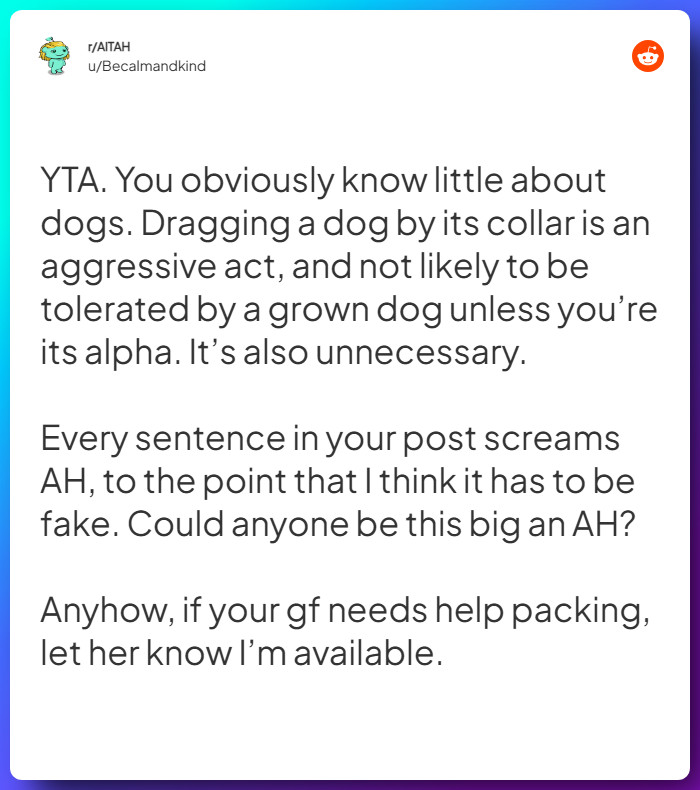
Comment from u/Becalmandkind
Additionally, the incident of being bitten may trigger underlying fears related to safety and trust within the relationship.
Comment from u/BrushIndependent5210

Comment from u/[deleted]
![Comment from u/[deleted]](https://static.pupperish.com/posts/comments/comment_681f6c2cec157.jpg)
Now that she’s posting passive-aggressive “protecting those who can’t speak” stories and friends are blowing up his phone, OP is stuck wondering if he really picked the wrong side.
Practical Steps for Addressing the Situation
When discussing the possibility of selling the dog, it may be helpful to approach the conversation with empathy and understanding. Consider setting aside time to discuss the incident and feelings surrounding it, allowing both partners to express their perspectives openly.
Exploring alternatives to rehoming, such as training or behavior modification, can also provide a more constructive path forward while addressing safety concerns. Engaging a professional trainer may help alleviate fears and create a safer living environment.
Conflicts over pet ownership often reveal underlying tensions in a relationship, as illustrated by the recent Reddit post about a user contemplating selling their girlfriend's dog after being bitten. The incident occurred while attempting to enforce a no-furniture rule, highlighting how differing expectations can lead to emotional friction. The need for empathy and open dialogue becomes crucial in these situations. Addressing the dynamics of pet care and shared living spaces can not only resolve the immediate issue but also fortify the couple's bond, turning a potentially divisive moment into an opportunity for growth and understanding.
The recent Reddit post highlights a common yet complex dynamic that arises when pets are involved in romantic relationships. The situation escalated when the user attempted to enforce a no-furniture rule, only to be met with aggression from the dog, leading them to consider selling the pet. This incident underscores the emotional weight that pets carry within a household and the challenges that arise when boundaries are tested.
In such scenarios, it is crucial for couples to engage in open dialogue about their expectations and concerns regarding their pets. The decision to sell a pet should not be taken lightly, as it can have profound implications on the relationship and the well-being of the animal. By fostering understanding and seeking collaborative solutions, couples can navigate these conflicts more effectively, ultimately strengthening both their bond and the environment in which the pet lives.
To navigate these complex emotions, finding a compromise that respects both partners' feelings is essential.
What would you do in this situation? Share your opinion in the comments.
Ultimately, decisions about pets can serve as reflections of deeper relational dynamics.
Ultimately, prioritizing the emotional well-being of both partners and the pet is crucial.
He might be safer, but he definitely isn’t safer from the relationship fallout.
For another biting-in-bed conflict, see what happened when a woman ignored her BF’s request and let her dog sleep on the bed.
Share this article: