
Am I Wrong for Rehoming the Rescue Dog My Partner Adored?

A 28-year-old guy thought he was doing the right thing when he and his partner fell for a senior rescue dog named Max. It looked like a perfect rescue-movie moment, at least at first, because his 26-year-old girlfriend was instantly obsessed with Max and even cried in the shelter.
But Max came with real-world baggage. Within weeks, his health problems meant nonstop vet visits, expensive meds, and special care that started crushing both their finances and their emotional stability. Then the worst part happened, he made the tough call to rehome Max to a family with more time and resources, and his partner found out he did it.
Now he’s stuck wondering if he’s the jerk, while she insists he betrayed her trust and stole the part of her heart she fell in love with.
Original Post
I (28M) recently stumbled upon a rescue dog shelter. For background, my partner (26F) and I have been discussing getting a pet for a while, and she's always had a soft spot for animals.
During our visit to the shelter, my partner instantly connected with a sweet, senior rescue dog named Max. Max was abandoned by his previous owners and really touched my partner's heart.
She was in tears seeing him and begged me to adopt him. However, I had reservations about caring for a senior dog due to potential health issues and financial commitments.
After some deliberation, I agreed to adopt Max. Fast forward a few weeks, caring for Max became overwhelming.
His health issues required frequent vet visits, costly medications, and special care. It was taking a toll on us emotionally and financially.
I felt like I couldn't provide Max with the best quality of life he deserved. I made the difficult decision to rehome Max to a family with more resources and time to care for him.
When I broke the news to my partner, she was devastated and accused me of betraying her trust and breaking a promise. She feels like I took away a part of her heart.
So, am I the jerk for rehoming a rescue dog my partner fell in love with, even though it was becoming too much for us to handle?
The Emotional Toll of Rehoming
When faced with the decision to rehome a dog, owners often experience significant guilt and anxiety, which can lead to emotional distress.
These feelings stem from the human-animal bond and the perceived betrayal of an unspoken commitment to the pet. Understanding this emotional landscape can help owners navigate their feelings and make more informed decisions regarding pet care.
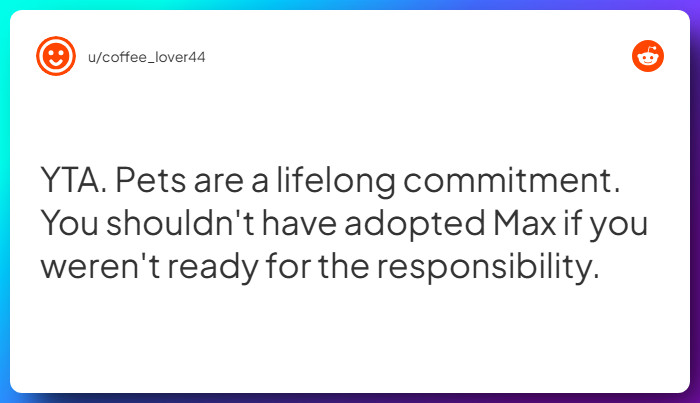
Comment from u/coffee_lover44
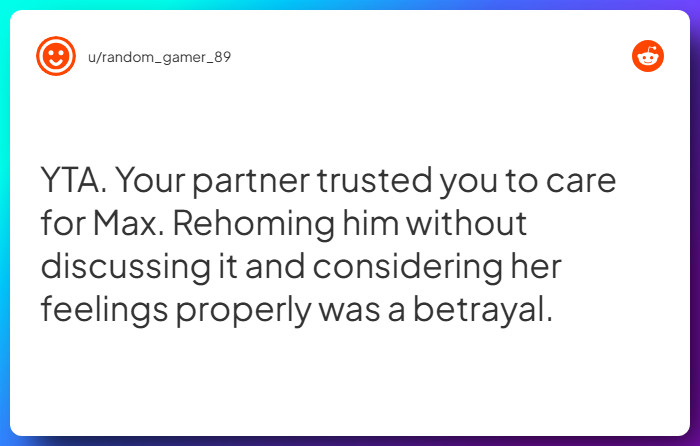
Comment from u/random_gamer_89
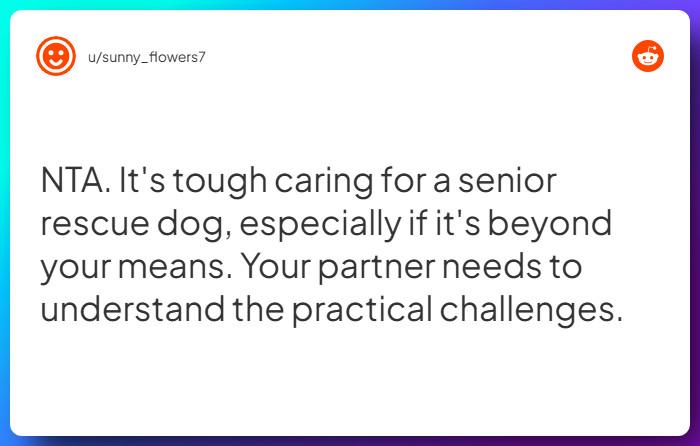
Comment from u/sunny_flowers7
Right after Max stole the show at the shelter, the whole plan seemed romantic, until the “senior rescue” label started getting real fast.
It’s crucial for potential adopters to fully understand the responsibilities involved, especially with older dogs that may require extra care and financial resources.
Providing a detailed overview of a dog’s needs, including health and behavioral issues, can help potential adopters make informed decisions that suit their lifestyle. This proactive approach can prevent situations where rehoming becomes necessary, ensuring a stable environment for the animal.
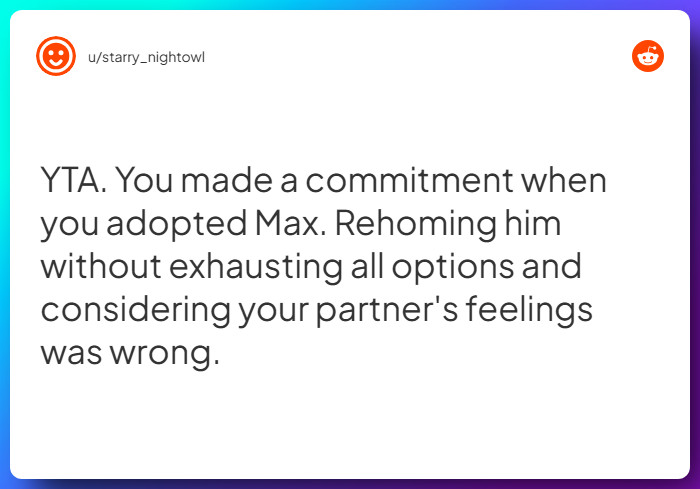
Comment from u/starry_nightowl
Comment from u/moonlight_dreamer
Comment from u/whimsical_dragonfly
Once the vet bills, meds, and constant special care hit, the senior-dog dream turned into a daily stress test for both of them.
This is similar to the AITA fight over adopting a rescue cat against a partner’s wishes, with Luna involved.
Financial Considerations in Pet Ownership
Financial planning is essential when adopting a pet, especially a senior dog. Unexpected medical expenses can quickly escalate, burdening owners who may not have budgeted for such costs.
Creating a pet budget that includes potential veterinary care, food, and emergency funds can help owners provide the necessary care without compromising their financial stability, which is crucial for both the pet's well-being and the owner's peace of mind.
Comment from u/adventure_seeker22
Comment from u/midnight_snacker
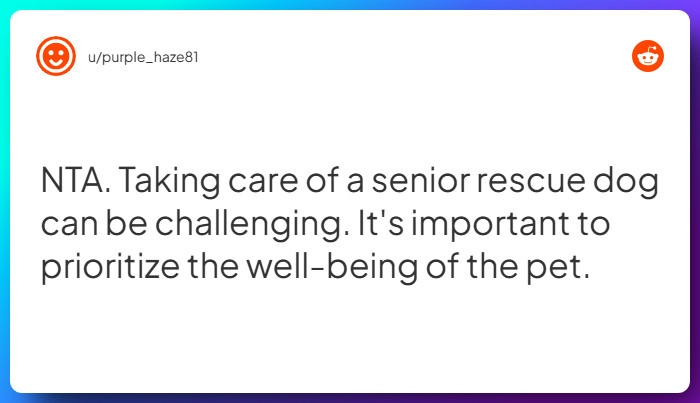
Comment from u/purple_haze81
When he told his partner he rehomed Max, her tears flipped into anger, because she felt like he broke a promise she never stopped believing in.
Communication between partners about pet care is vital.
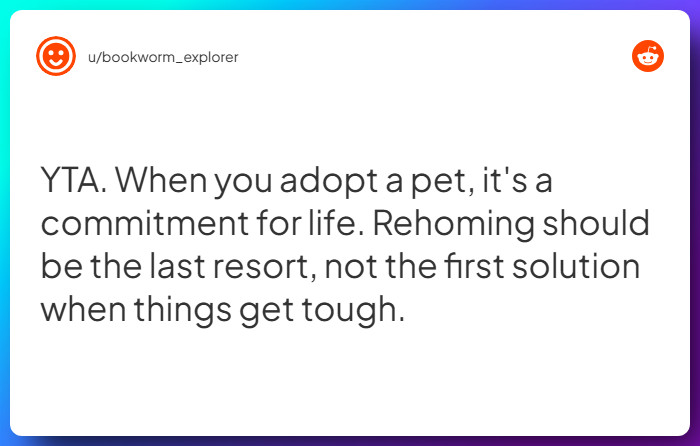
Comment from u/bookworm_explorer
Now, with Max gone and their relationship still tangled up in the fallout, he’s left asking if the only way to help him was actually the wrong way.
We'd love to hear your take on this situation. Share your thoughts below.
This situation highlights the clash between emotional attachment and practical realities in pet ownership. The partner's deep connection with the dog reflects a common psychological phenomenon where we project feelings of love and loyalty onto pets, making the decision to rehome particularly painful. On the other hand, the original poster's choice underscores the importance of recognizing one's limits and the ethical responsibility to ensure a pet's well-being, even when that means making difficult choices.
The situation surrounding the rehoming of Max, the senior rescue dog, underscores the intricate emotional landscape pet owners navigate. The original poster's struggle reflects a broader reality where the challenges of pet ownership can strain even the strongest relationships. In this case, the lack of open communication about the responsibilities and expectations associated with adopting Max led to a painful decision.
Furthermore, the article hints at the importance of proactive planning and financial considerations in ensuring a harmonious living situation for both pets and their owners. By addressing these practical dimensions early on, potential heart-wrenching choices like rehoming might be mitigated, thus preserving the cherished bonds that accompany pet ownership.
He might not have betrayed Max, but he definitely rocked the girlfriend’s heart, and that’s why he’s worried he’s the villain.
For the “rehome her” nightmare choice, read what happened when one Redditor decided to rehome her troubled rescue dog.
Share this article:





