
Girlfriend Confronts Boyfriend Because He Keeps Leaving The Door Cracked And Their Cat Keeps Escaping

A girlfriend didn’t start a fight over “communication,” she started one over a door that wouldn’t shut right. Luna kept noticing the same cracked gap, and every time her cat slipped close to it, her stomach dropped.
What should have been a quick fix turned into a whole relationship debate. He saw one failed escape attempt as proof she was overreacting, while Luna kept replaying the times she’d already watched Luna try to make a run for it. Even when he argued it was “supervised” or blamed airflow, she heard dismissal, not safety.
And once strangers started weighing in on cat custody, the door crack stopped being petty and started feeling like a bigger problem.
A simple question opens the door to a much bigger tension in their home.
Luna already has a proven track record of slipping past that door, which is why her worry runs high.
Seeing that gap before bed brought every past escape rushing back.
What felt like precaution to her felt like an overreaction to him, and the conversation spiraled.
Supervised or not, the sight of that same cracked door brought all her concerns back.
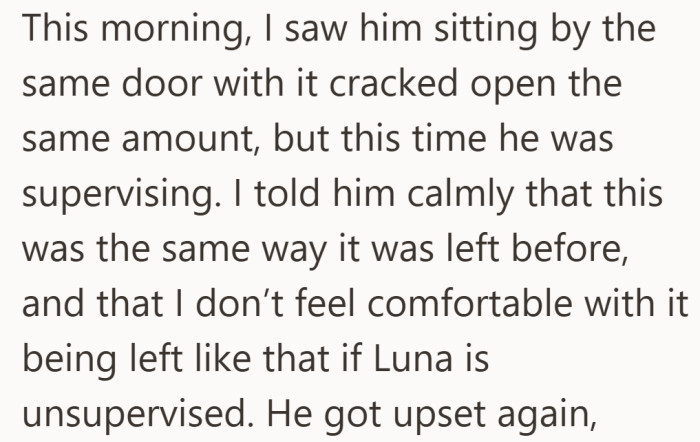
He treated one failed attempt as proof she shouldn’t have worried in the first place.
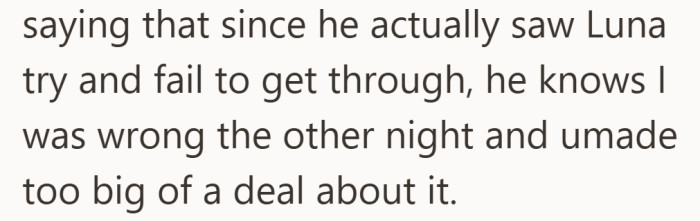
Both felt dismissed, which left them wondering whose version of “reasonable” actually held up.
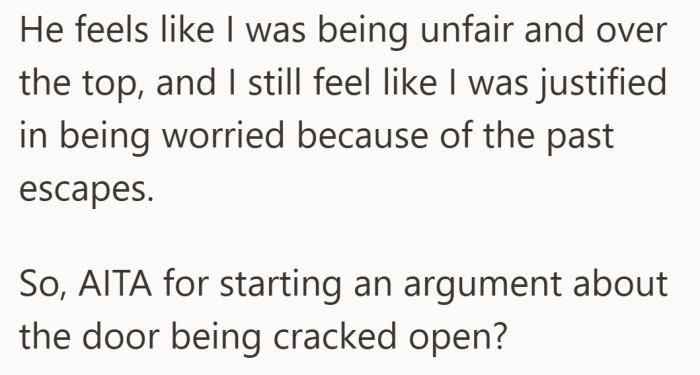
Nothing like a runaway door gap to make strangers vote in favor of the cat’s custody.
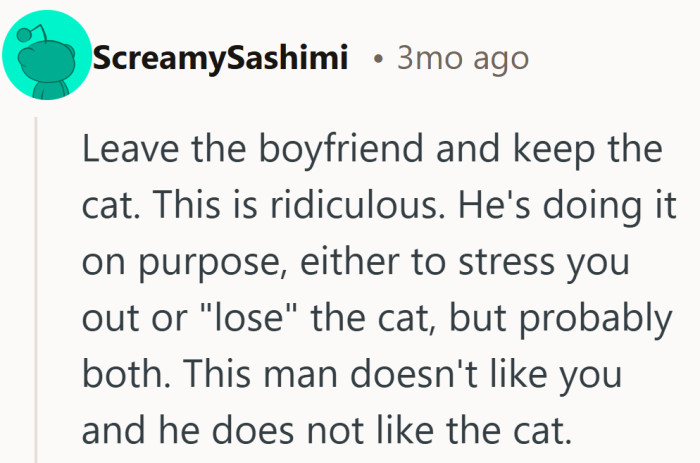
To many, this wasn’t drama at all. It was basic pet safety with an obvious answer.
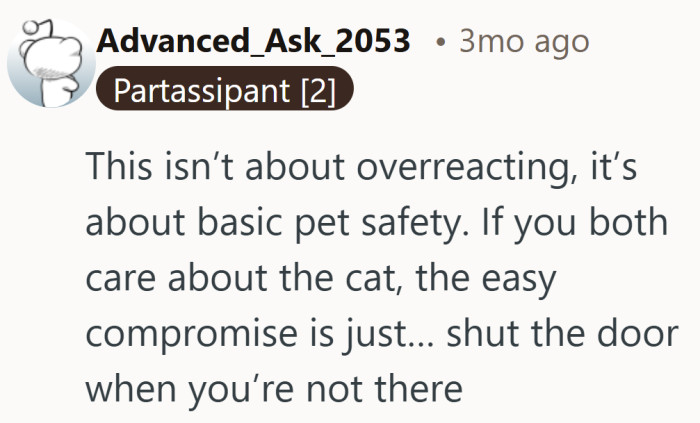
This take jumped straight past frustration and into suspicion about his motives.
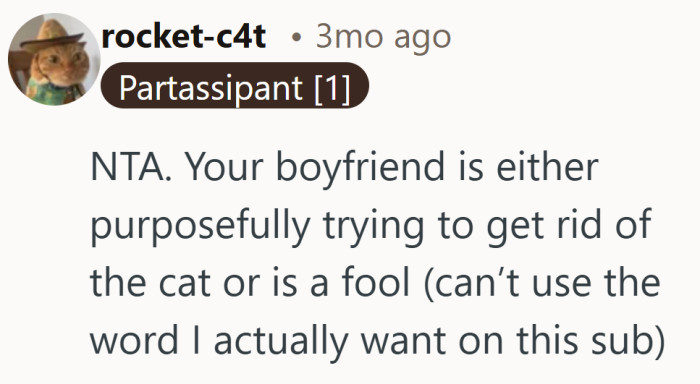
It also echoes the roommates fight over a kitten, when one roommate demanded the other lock it away.
Nothing humbles a human faster than learning cats are basically liquid with whiskers.
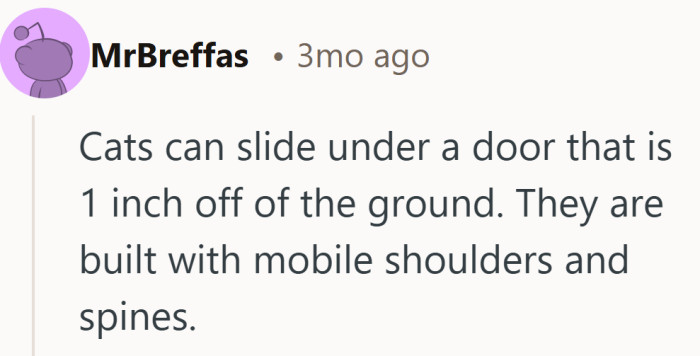
When people start suggesting motives, it’s usually a sign the frustration hit a nerve.
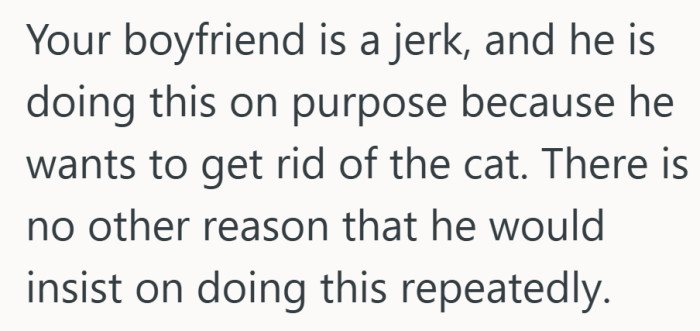
For others, the message was blunt. If he ignores your fear, what else is he ignoring?

When even the airflow excuse doesn’t add up, folks start getting suspicious fast.
Cat owners chimed in fast, reminding everyone just how strong and curious these little escape artists are.
This take added a dose of reality. Once a cat learns the trick, a tiny gap becomes a full exit.
Cat owners kept reminding everyone that once a feline learns the trick, no door is truly closed.
For many, the solution was simple. Protect the cat and draw a hard line if needed.
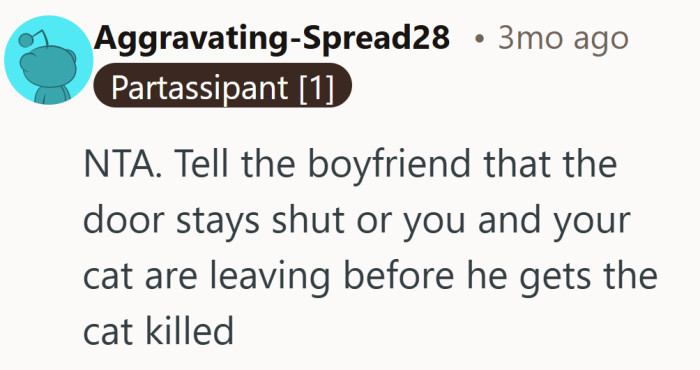
The issue wasn’t her pet slipping out. It was him acting like the risk didn’t count.
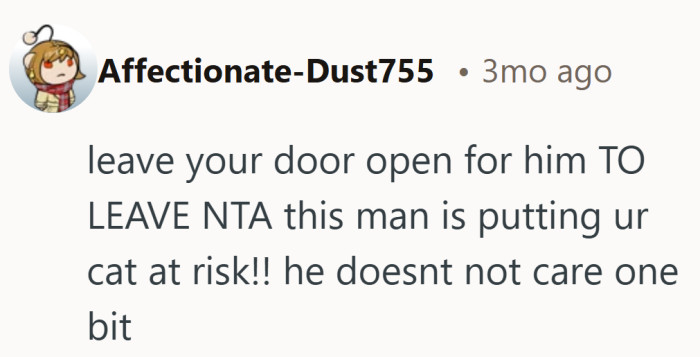
Some took the stance that caring for the cat mattered more than protecting his feelings.
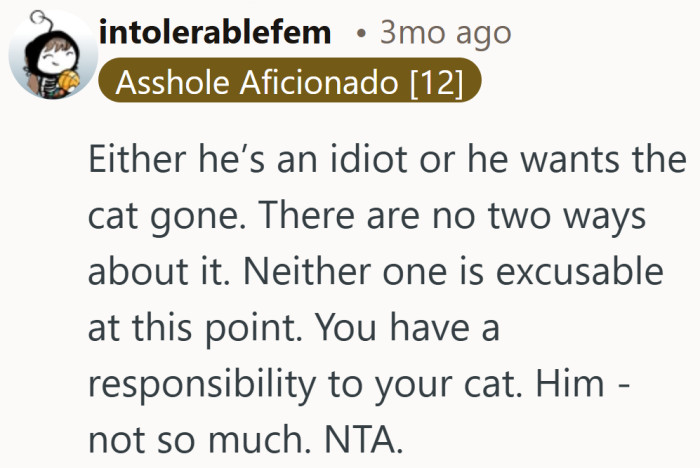
A quiet gap in the door turned into a loud message about whose concerns were being dismissed.
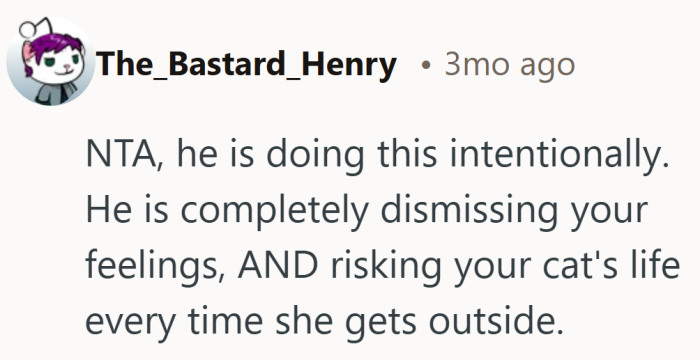
That cracked door Luna spotted before bed is what kicked the whole argument into high gear, not some vague “tone” issue.
When he brushed off her concern after “one failed attempt,” Luna’s worry stopped sounding like caution and started sounding like something he refused to take seriously.
The airflow excuse only made it worse, because Luna could still see the gap, and the cat still had the skills to exploit it.
By the time people were joking about cat custody and calling the door gap an open invitation, their disagreement looked less like pet drama and more like trust breaking.
This kind of clash isn’t really about a sliding door or even a determined cat. It’s about how two people handle fear, risk, and the memories that won’t stop replaying once something has gone wrong. One partner trusted their judgment, the other trusted their instincts, and both walked away feeling unheard. It sparks a simple but loaded question: how much reassurance do we owe the people we live with when their worry comes from experience, not imagination?
Would you have pushed the issue or let it go? Share this with someone who knows exactly how it feels to guard a pet like a tiny, furry escape artist.
Now he’s wondering if he really is the problem, and Luna is still one cracked door away from proving her point.
For another home unraveling over cat chaos, read how new neighbors turned one kitten into a battleground, here.
Share this article:





