
Freeloader Friend Demands Woman Pay For His Gaming Mouse After Her Cat Got Poop On The Cord

A 28-year-old woman thought she was being kind when she let a freeloading “friend” crash on her couch, then the kindness turned into a full-on home maintenance disaster. Eight months later, he still has no job, no plan, and somehow plenty of opinions about how her place should be run.
Then her cat got into its usual bathroom chaos, and one small accident turned into a total meltdown. The poop hit the gaming mouse cord, he decided the mouse was “cursed,” and suddenly it was her job to fix his problem, even though he’s been living there rent-free since spring.
By the time she finally asked for compensation, it was less about the mouse and more about whether he was ever going to act like a real guest.
Eight months on the couch and still no job—this “temporary stay” already sounds like a long-term headache waiting to happen.

A fluffy cat with bathroom quirks and a guest obsessed with cleanliness—what could possibly go wrong?
One streak of bad luck (and cat poop) later, and suddenly no amount of cleaning could convince him the mouse wasn’t cursed forever.
Regular check-ins allow roommates to express grievances before they escalate, fostering a more harmonious living environment.
Moreover, understanding the emotional underpinnings of conflicts over cleanliness can aid in conflict resolution. A therapist might suggest exploring the origins of each person's cleaning habits, which can reveal deeper values and priorities.
This exploration can open up productive conversations about shared standards and expectations, paving the way for a more harmonious living arrangement.
The logic? Her cat, her responsibility. The irony? He’s been freeloading in her condo since spring.
He’s not paying bills, not looking for work, and not leaving anytime soon—a guest who’s long stopped feeling like one.
After months of unpaid couch-surfing, she figures his “warranty” on special treatment has officially run out.
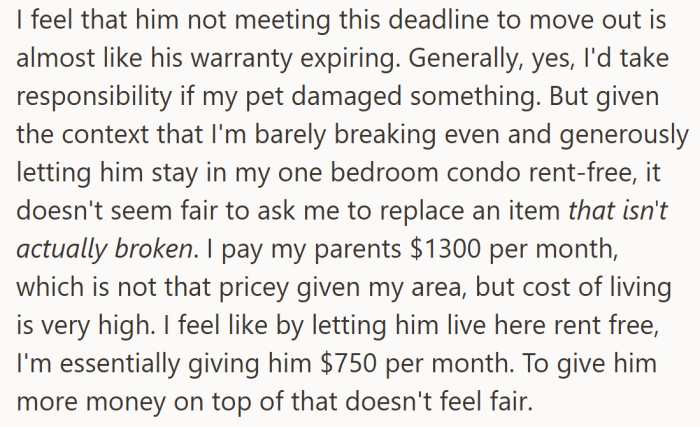
The whole thing starts with her cat ruining the gaming setup, right after she’s already had to tolerate him living on her couch for months.
When someone feels disrespected or taken advantage of, it can trigger anger and resentment.
Nothing like a rent invoice to make a man rethink his passion for gaming hygiene.
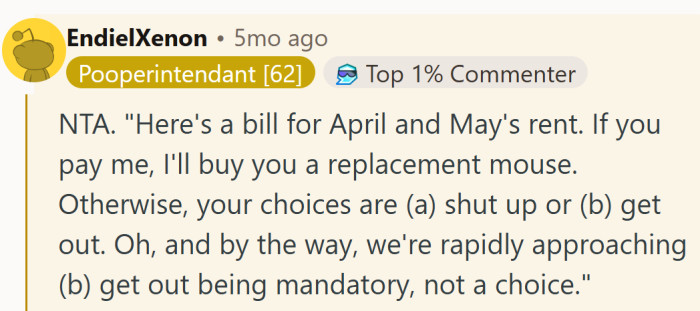
“No job, no rent, but yes to compensation”? That’s a bold budgeting strategy.
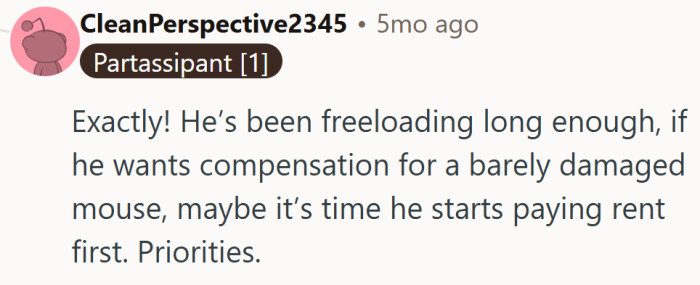
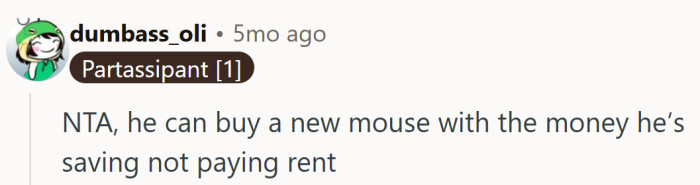
If he can afford to freeload, he can afford a new mouse. Problem solved.
After “regular check-ins” about the mess, he still can’t accept that the cord got hit by a pet, not a personal vendetta.
The situation involving the demand for compensation for a gaming mouse after a pet mishap highlights how financial disputes can unearth deeper issues in personal relationships. Such conflicts often arise from differing values and priorities, especially when boundaries in shared living spaces are already fragile. The tension is not merely about the monetary aspect of the mouse but reflects a broader struggle over respect and responsibility within the friendship.
Open communication about feelings and expectations is crucial in navigating these disputes. When individuals take the time to discuss their perspectives, it fosters understanding and paves the way for compromise. This incident serves as a reminder that addressing underlying tensions can lead to stronger relationships, even in the face of seemingly trivial accidents.
This gets painfully familiar, just like when a man demanded his brother pay for new jeans after his cat ruined them overnight.
Rent-free and still complaining about the cat? Sounds like it’s time to evict both entitlement and bad vibes.
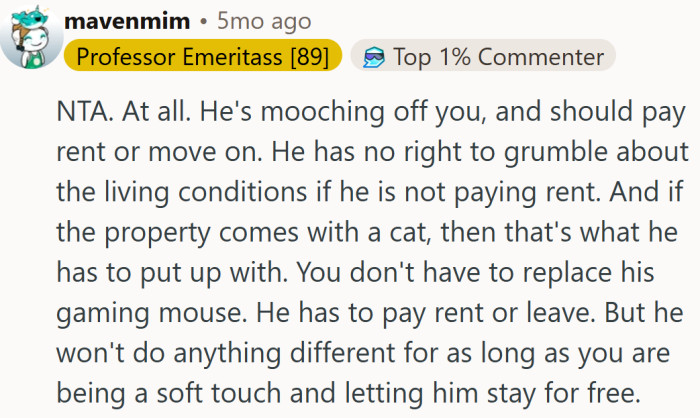
A little mischievous, but honestly, poetic justice has never smelled so fitting.
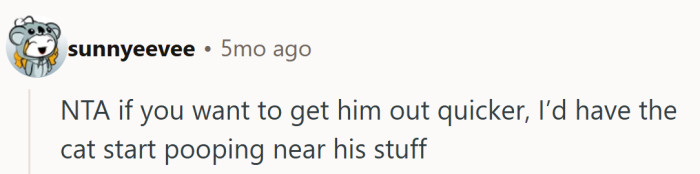
Tension’s already high enough; eviction might just be the ultimate reset button.
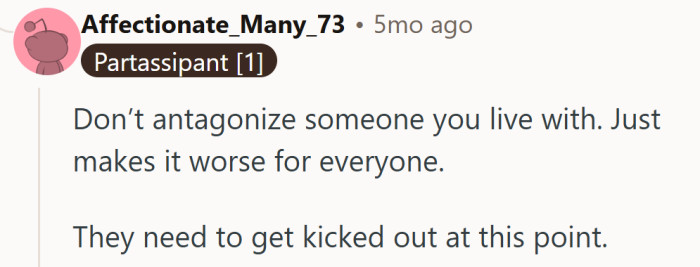
By genuinely hearing the other person's perspective, individuals can de-escalate tensions and foster empathy.
Practicing phrases like 'I hear you' or 'I understand where you're coming from' can create an environment that encourages collaboration rather than confrontation.
Sure, the scent might be stubborn, but so is he—especially when it comes to not paying rent.
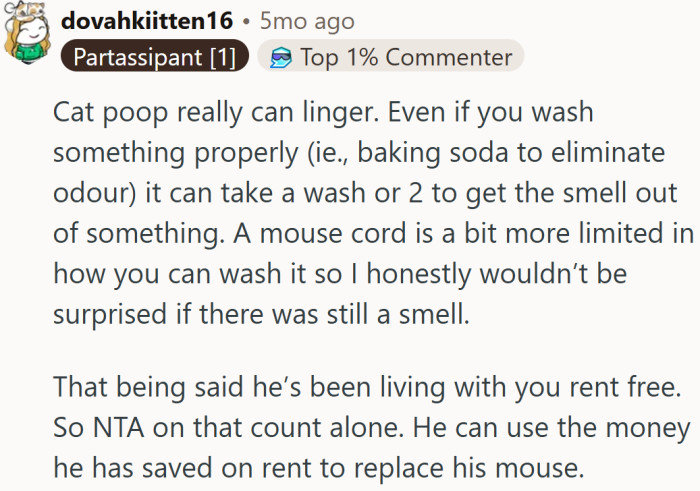
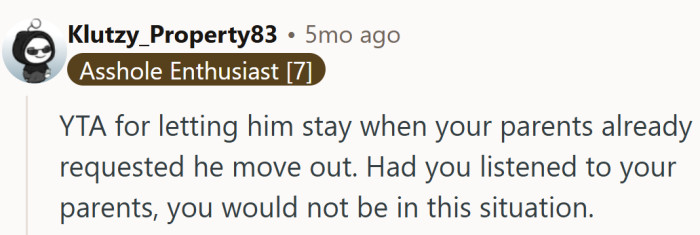
Guess mom and dad saw this freeloading fiasco coming from a mile away.
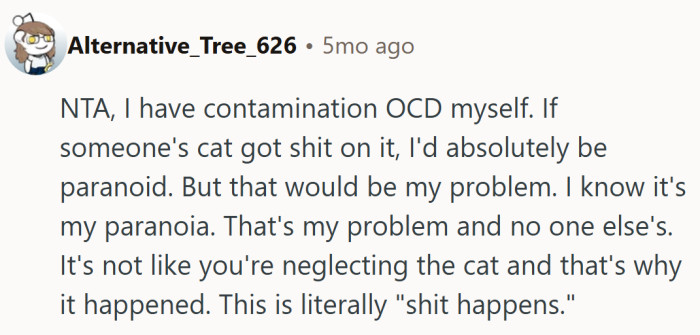
A refreshingly self-aware take—understanding your triggers doesn’t mean making them someone else’s problem.
When she points out he’s not paying bills or working, his demand for a new mouse suddenly sounds like rent disguised as gaming rage.
Practical Steps for Conflict Resolution
Therapists recommend using 'I' statements to express feelings without placing blame.
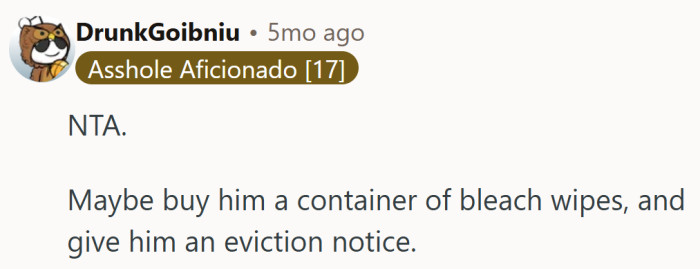
Nothing says “we’re done here” like Clorox and a move-out deadline.
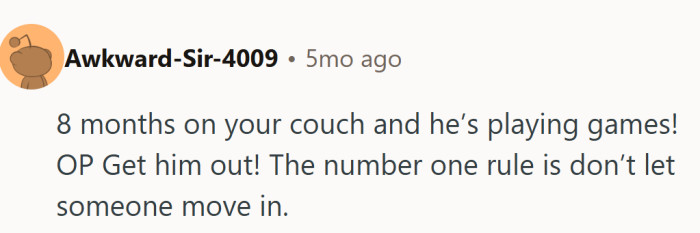
Eight months of free rent and he’s still logging playtime instead of job time.
The only thing broken here is his sense of entitlement, not the mouse.
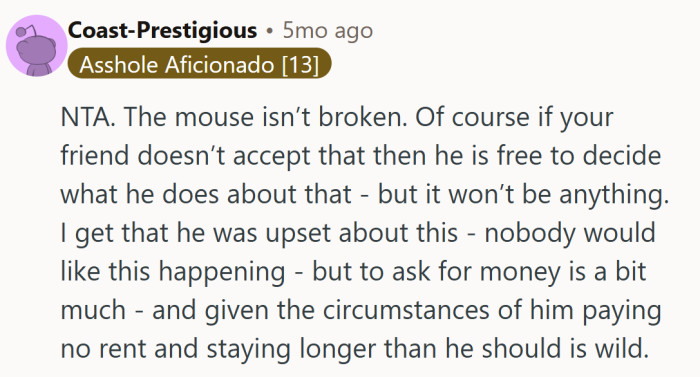
That’s when she flips the script, basically saying, if he can afford to be picky about cleanliness, he can afford to replace what the cat destroyed.
Experts also advise setting up a shared agreement or guideline for using each other's belongings.
Rent-free living comes with a price—and apparently, that’s one slightly smelly mouse cord.
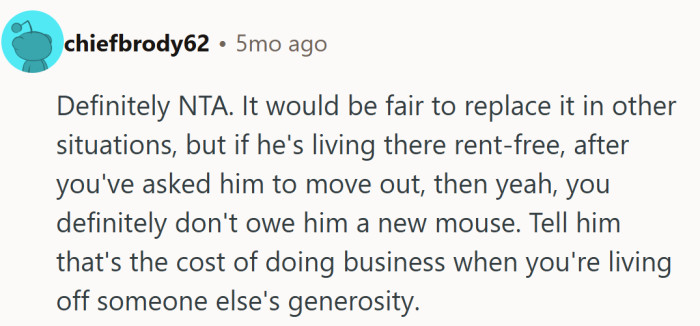
At this point, he’s not a guest—he’s a tenant who should’ve known better than to store gear in the cat zone.
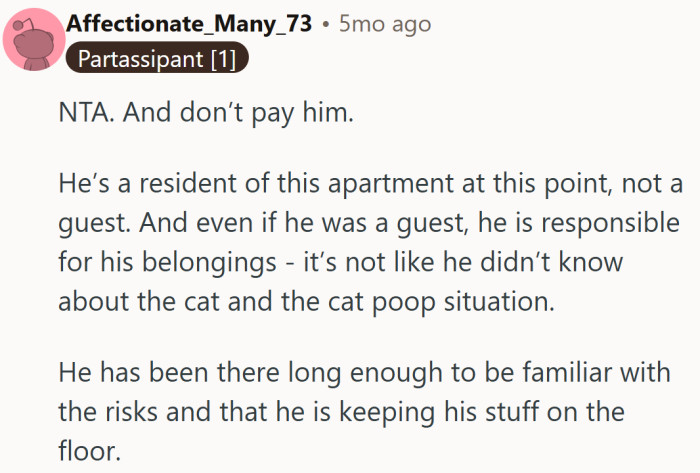
The mouse is functional, but their living arrangement? Definitely not.
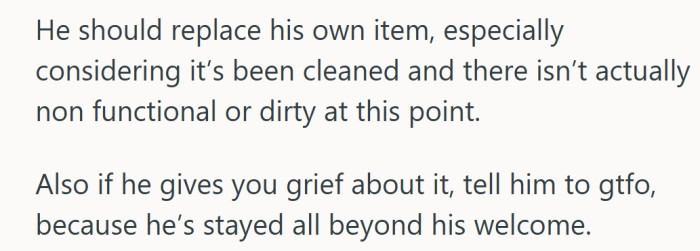
She explains that cleanliness can significantly affect comfort levels in shared spaces and how individuals perceive each other.
Some say she should replace the mouse to keep the peace, others argue she’s done enough by giving him a home for months. At what point does generosity stop being kindness and start becoming a loophole for someone else’s comfort?
Living with friends can blur those lines until one small accident—literally—forces everyone to confront them. Would you have paid for the replacement or stood your ground? Share this with someone who’s ever had to draw a boundary they didn’t want to.
The friend's insistence on reimbursement for a gaming mouse after an unfortunate incident with a cat reveals deeper issues of entitlement and an imbalance within their relationship. This kind of dynamic can easily breed resentment, especially when one party feels their kindness is being exploited. The clash between compassion and practicality in this situation resonates with anyone who has navigated the challenges of cohabitation, where minor accidents can escalate into major conflicts when personal boundaries are not respected. The woman's experience serves as a poignant reminder of the need for open communication and defined expectations in shared living situations.
Ultimately, the dynamics of shared living require ongoing communication and adaptability.
Now he’s left wondering if he should have just bought his own mouse instead of treating her condo like an unpaid subscription.
Ready for more cat-fueled chaos? See how a woman’s breakup followed a boyfriend’s shocking cat hygiene habit.
Share this article:





