
Reddit Responds As Cousin's Fight Over 'No Dogs Allowed' Policy For Christmas

A 28-year-old woman didn’t expect a “no dogs allowed” Christmas rule to turn into a full-on family emergency, but that’s exactly what happened after her parents offered to host dinner at their house.
OP agreed to the switch, thinking it would be a normal holiday night, until she realized at least three dogs were showing up. Then her cousin, whose dog was apparently the one everyone was circling around, got furious, called it a tradition being ruined, and took it personally instead of just treating it like a new rule for one year.
By the time the texts started flying and her aunt got involved, the dinner was no longer just about pets, it was about who felt welcome.
The OP shared a story about a Christmas conflict their family was having.
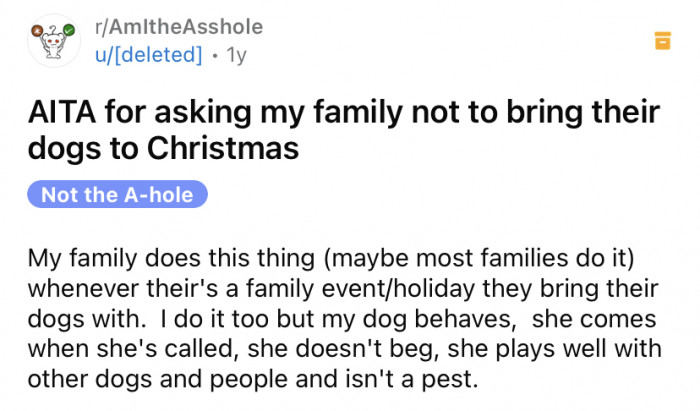
It was OP's parents' turn to host Christmas, and they had asked the Redditor if they would mind having the dinner at their house instead.
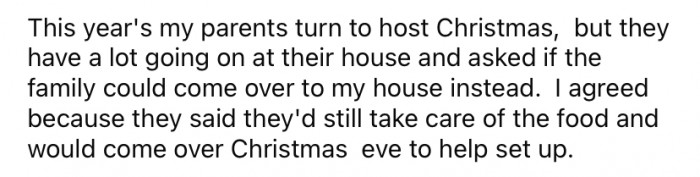
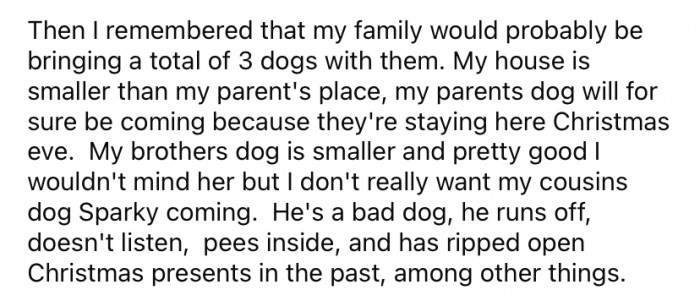
The OP agreed since their parents would still be doing the hosting. But then OP realized that there would be at least three dogs coming as well.
The ongoing conflict surrounding the 'No Dogs Allowed' policy for Christmas highlights the delicate balance that family traditions must maintain. While these traditions are often designed to foster emotional connections, they can just as easily lead to feelings of exclusion and resentment when not everyone feels included. In this case, the Redditor's family dispute reveals how a seemingly simple policy can unravel deeper issues of belonging and identity.
The emotional weight of such family customs cannot be underestimated. When individuals feel sidelined from cherished traditions, it disrupts the sense of unity and may spark significant conflict, as demonstrated by the Redditor's experience. This situation serves as a reminder of the importance of accommodating all family members in the creation and maintenance of these traditions to ensure everyone's emotional well-being is upheld.
The Emotional Significance of Family Traditions
Family traditions often carry deep emotional meanings, serving as anchors of identity and connection across generations.
The cousin's upset reaction to the 'no dogs allowed' policy reflects a strong attachment to these traditions, highlighting how changes can evoke feelings of loss or betrayal.
When OP spoke to their parents about their concerns, they suggested it would be best to just tell everyone not to bring their dogs this year, as it wouldn't be fair to only exclude Sparky.
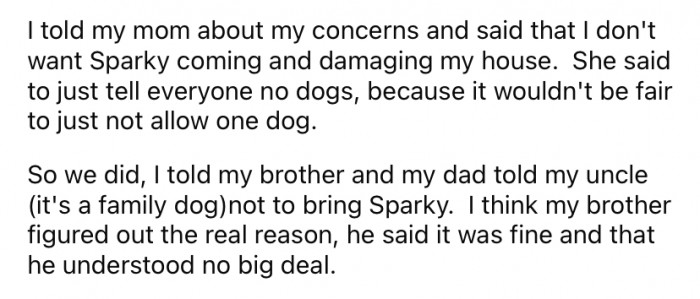
But, Sparky's human was very upset and texted OP, saying they were "ruining a family tradition."
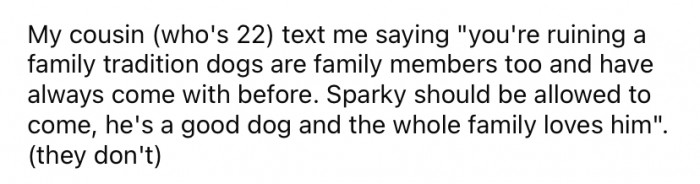
Not long after, their aunt called to say that OP's cousin didn't want to attend Christmas at all anymore.
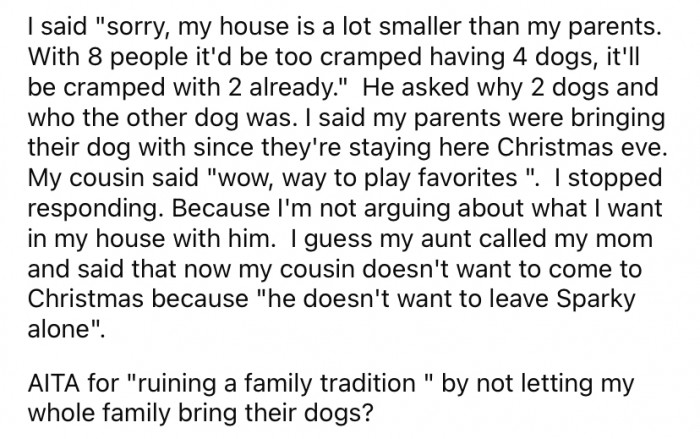
OP’s parents asked her to move Christmas to their house, and she assumed it would be simple until she counted the dogs coming along.
Moreover, the emotional attachment people have to pets often complicates family dynamics.
Moreover, the social dynamics involved in familial disagreements can often mirror broader societal issues, such as individual versus collective needs. A social psychologist might argue that when individual desires clash with family norms, it can lead to significant distress, as seen in this situation.
Studies indicate that navigating these conflicts requires empathy and a willingness to understand differing perspectives, which is essential for maintaining family ties.
Here's how people reacted.
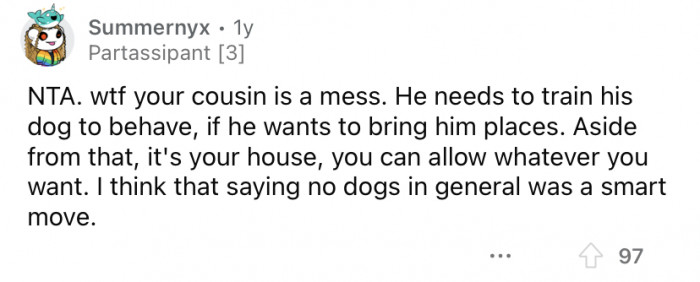
"Definitely NTA."
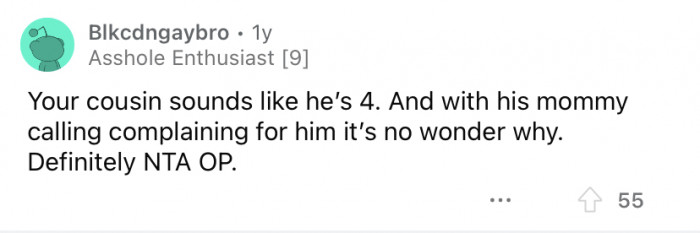
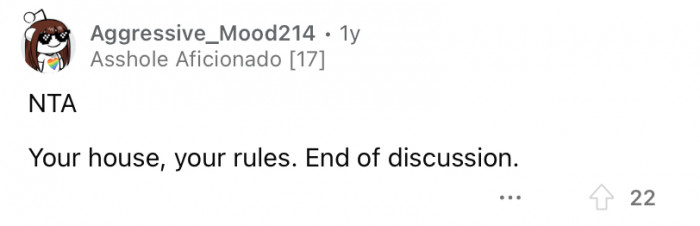
"Your house, your rules."
Finding Compromise in Family Disputes
Creating a space for compromise is often vital in resolving family disputes.
It's always the worst dog owners.
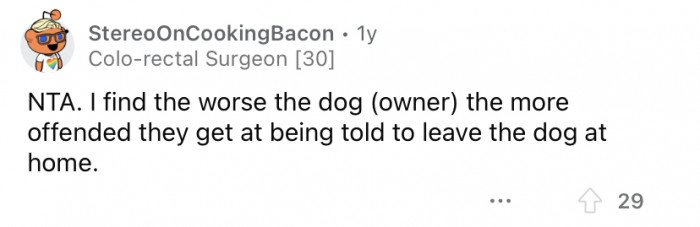
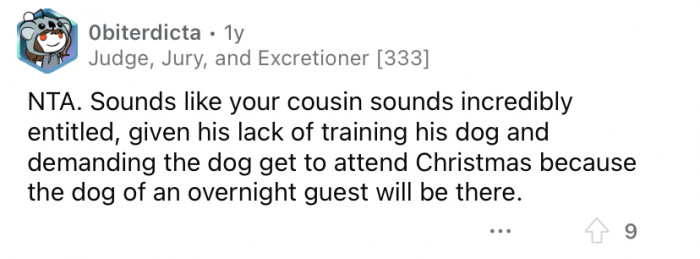
"Your cousin sounds incredibly entitled."
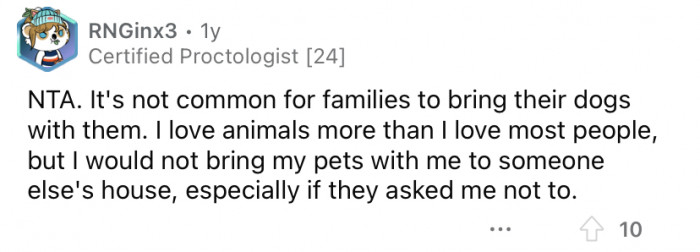
"It's not common."
That’s when the “no dogs allowed” policy stopped being a guideline and started becoming a personal attack against Sparky’s person.
This echoes the host who turned away a long-flight guest because his dogs were coming.
A practical approach could involve family discussions where everyone shares their views about pets during holidays.
Additionally, using techniques such as mediation may help families navigate these conflicts more effectively. By employing a neutral third party who can guide discussions, family members may feel more comfortable expressing their views without fear of backlash, leading to more productive outcomes.
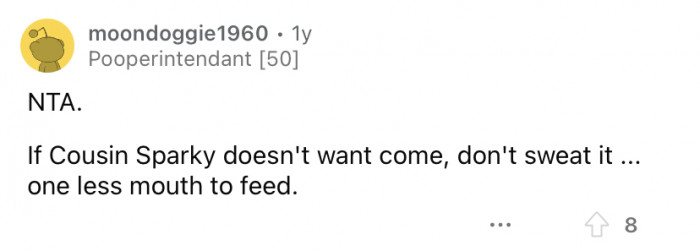
"One less mouth to feed."
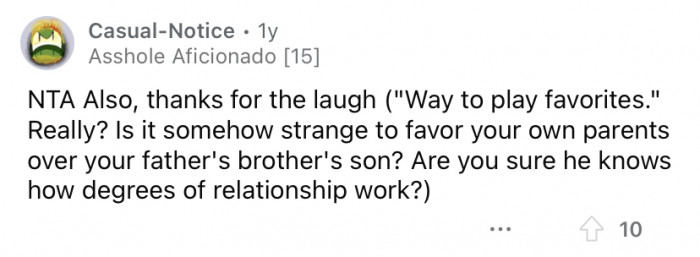
"Thanks for the laugh."
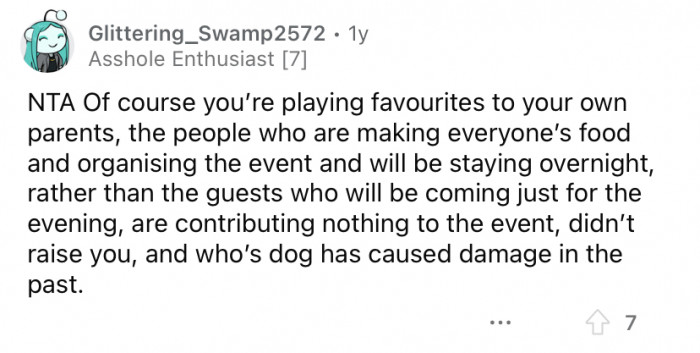
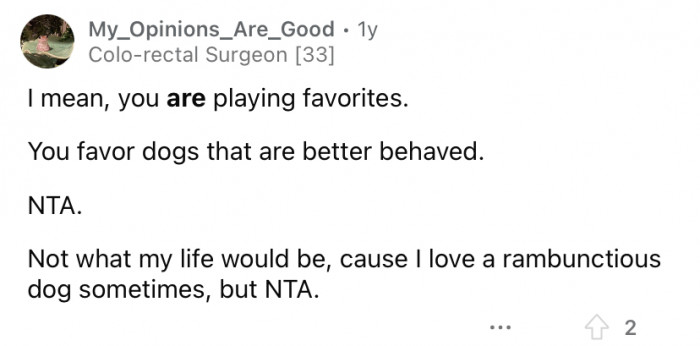
"Of course you're 'playing favorites' to your own parents."
OP tried to keep it fair by suggesting everyone gets the same message this year, but her cousin’s human interpreted it as “ruining a family tradition.”
Empathy plays a critical role in resolving conflicts, particularly in family settings.
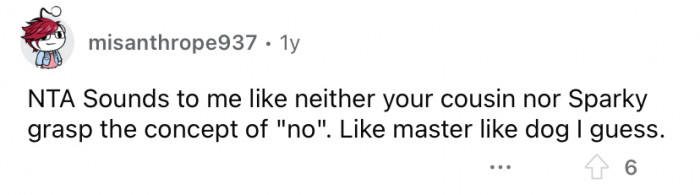
"Like master, like dog."
"You're allowed to have boundaries."
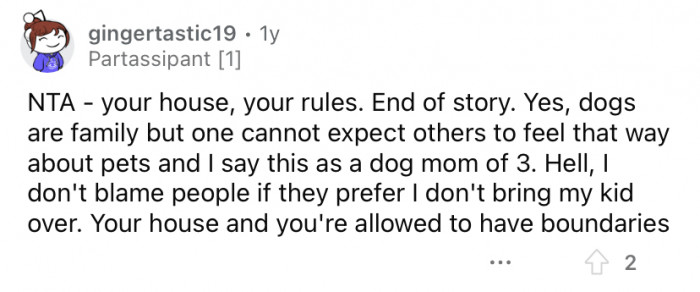
"It's your house."
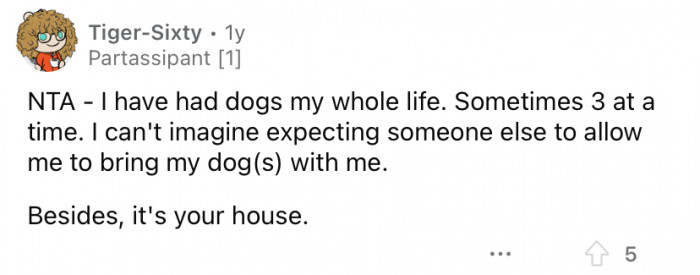
Encouraging family members to express their feelings about the 'no dogs allowed' policy can lead to a deeper understanding of each person's perspective. This dialogue can pave the way for finding compromises that honor everyone’s feelings.
"Out of control."
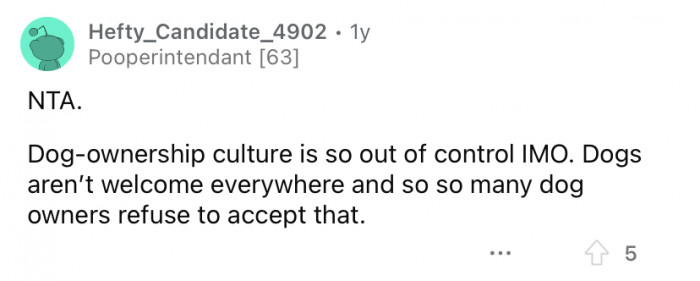
You make the rules in your own house.
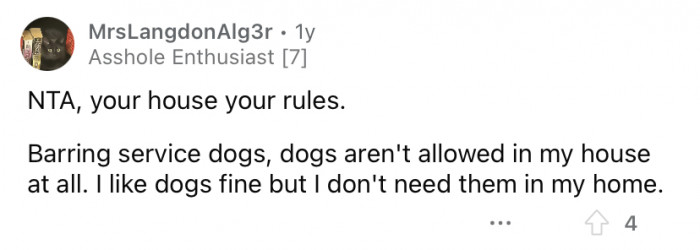
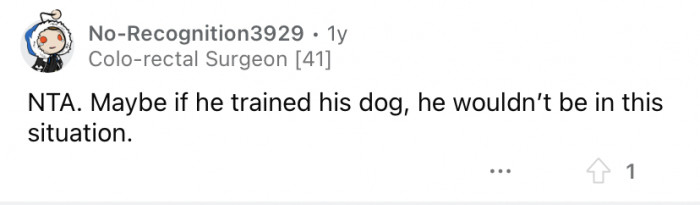
NTA.
Then the aunt called to say the cousin didn’t even want to attend anymore, because the dog drama had already taken over the holiday.
Compromise as a Path Forward
Finding a middle ground is often essential in family disputes.
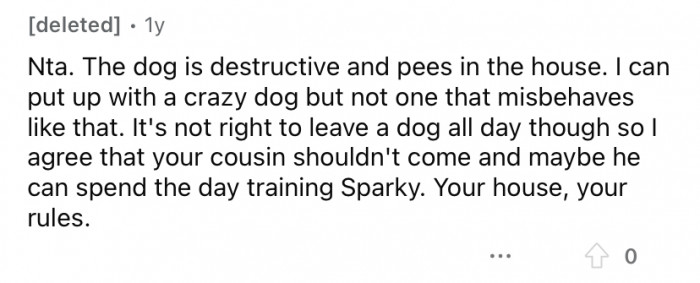
"Maybe he can spend the day training Sparky."
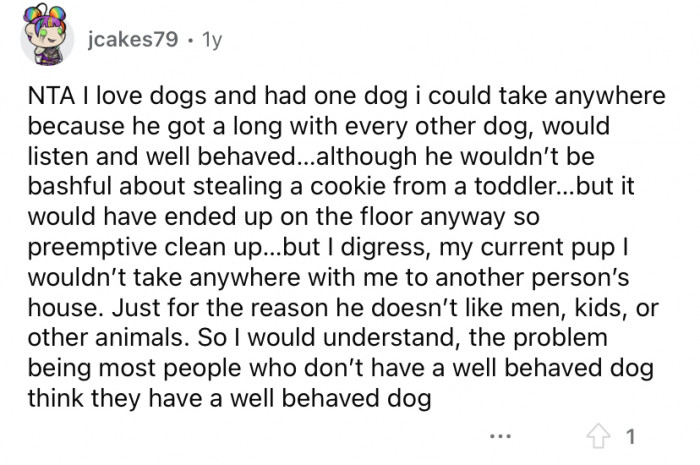
He probably thinks the dog IS well-behaved.
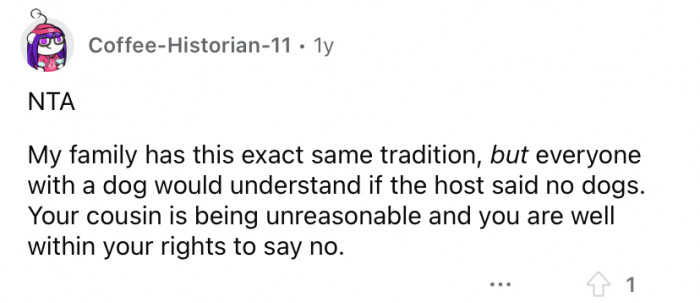
"Your cousin is being unreasonable."
Practical solutions might include designating specific areas or times for pets during family gatherings, allowing for both the inclusion of pets and adherence to house rules.
This approach demonstrates respect for everyone's preferences while fostering a more inclusive family atmosphere.
Train the dog - problem solved!
What's your take on this situation? Is the OP being unfair for not allowing the dogs to attend, or is their cousin being unreasonable by reacting the way he did?
Either way, it's OP's house, and therefore, it's their rules. It's understandable that their cousin would be disappointed, but it's not fair of him to try and make OP feel guilty.
We would love to hear your opinions on this. You can share your thoughts with us in the comment section.
Family traditions, like the one highlighted in the Reddit saga regarding the 'No Dogs Allowed' policy for Christmas, are central to our emotional bonds but can also ignite disputes. This situation illustrates how a seemingly simple rule can lead to significant friction, revealing the complexities of family dynamics. The Redditor's struggle to reconcile their love for their dog with their family's established customs speaks to the broader challenge of balancing individual desires with collective traditions. Encouraging open dialogue, as seen in the Reddit discussion, is crucial in navigating these disagreements and finding a compromise that respects everyone’s feelings while preserving cherished practices.
The clash over the "No Dogs Allowed" policy during Christmas highlights the emotional complexities intertwined with family traditions and the role pets play in them. The Redditor's predicament underscores the necessity of open dialogue among family members to address disagreements without straining relationships. By prioritizing empathy, families can find pathways to compromise that honor both cherished customs and the inclusion of beloved pets.
Striking a balance between upholding traditions and fostering an inclusive atmosphere should be the ultimate aim. This approach ensures that every family member, whether human or canine, feels appreciated and respected during the holiday season.
The family dinner did not end well, because one dog rule turned Christmas into a loyalty test.
Before you judge the cousin, read how Reddit reacted to Christmas fireworks upsetting neighbor dogs.
Share this article:





