Sister Returns After 6 Years Abroad And Demands The Dog Her Brother Raised As His Own

A simple favor turned into a six-year love story, and now the original owner wants to hit “undo” on the life her brother built with the dog. Now she’s back, showing up with strong opinions and a bigger claim, insisting the dog is still hers and demanding he be returned. OP is stuck, because the dog knows his routine, his voice, and his home, and after half a decade of care, “temporary” suddenly sounds a lot like theft.
Here’s the part where family love collides with paperwork, and the dog’s loyalty makes it messy.
A simple favor turned permanent—and now his sister wants back the pet he’s raised as family.
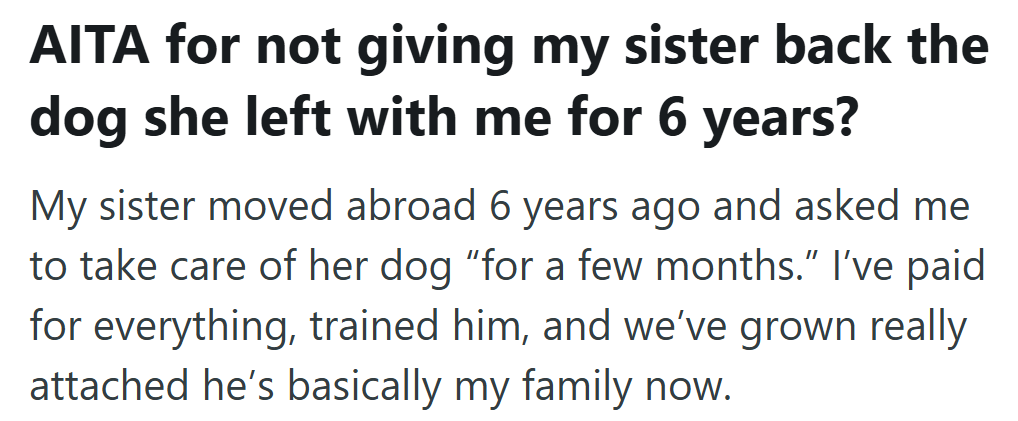
She insists the dog is still hers, but he argues love and years of care can’t be undone by ownership.

He’s torn between family and the bond he’s built—six years of loyalty isn’t easy to give up.

This bond can complicate situations like the one described, where the original owner returns after a long absence.
Creating a Positive Transition for Pets
This can help the pet acclimate to the new arrangement while minimizing anxiety.
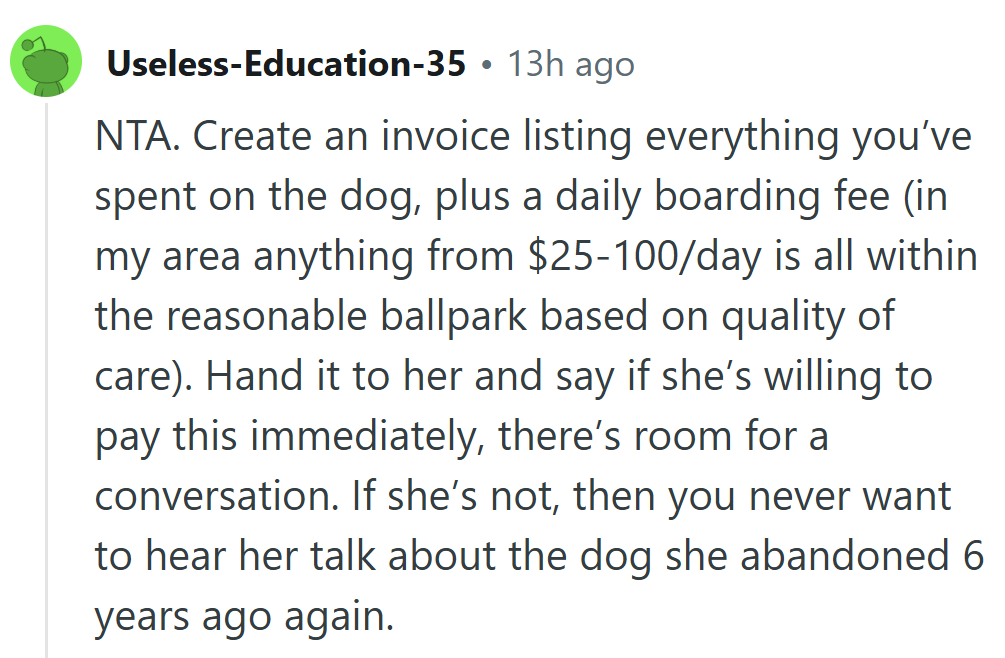
Sometimes fairness looks like numbers on paper—it’s not about revenge, just recognition.
Caring for a pet that long turns obligation into love, and love doesn’t come with a refund policy.
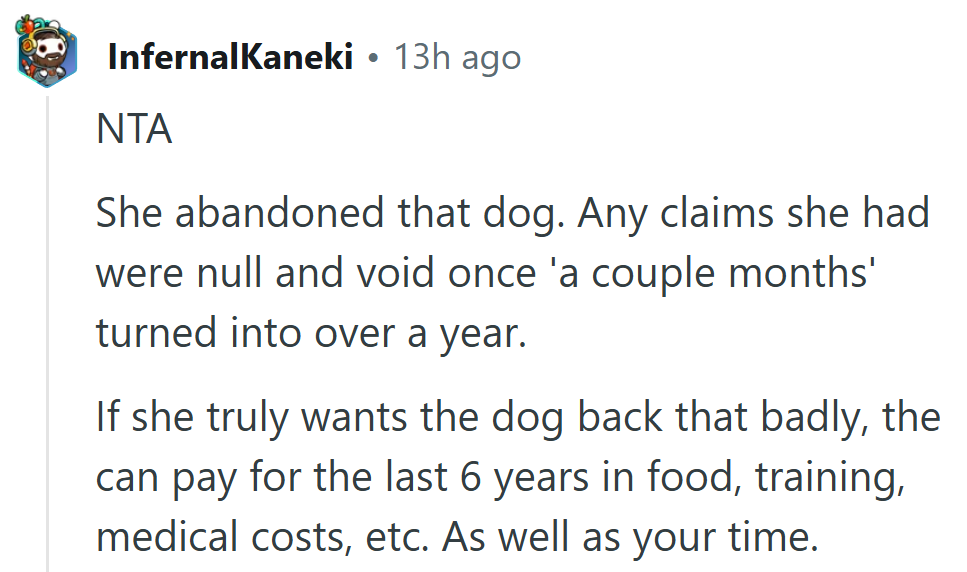
After that much time, the dog’s heart already decided where home is.
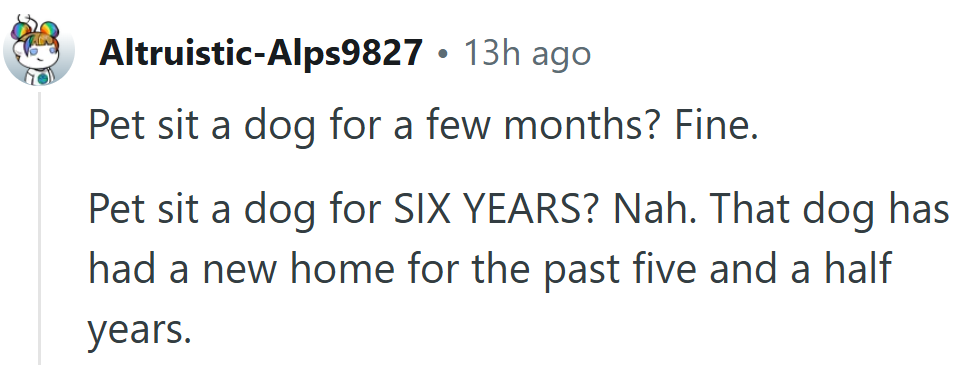
Six years of loyalty deserves an upgrade from “temporary sitter” to “official owner, with chip.”

Six years of vet bills and kibble tabs say it all—ownership comes with receipts.
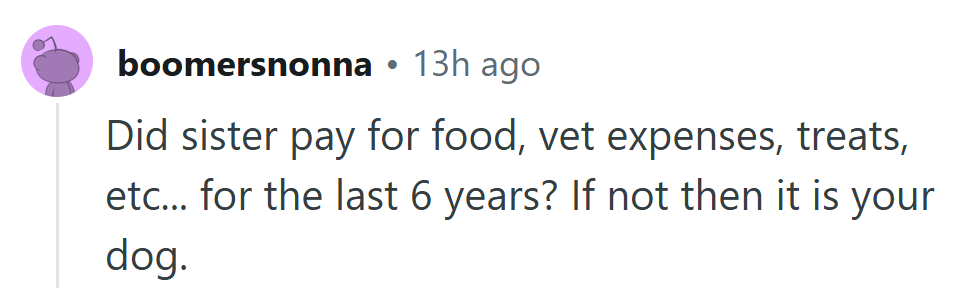
Sometimes the selfish choice isn’t keeping the dog—it’s trying to take him away from where he feels safe.
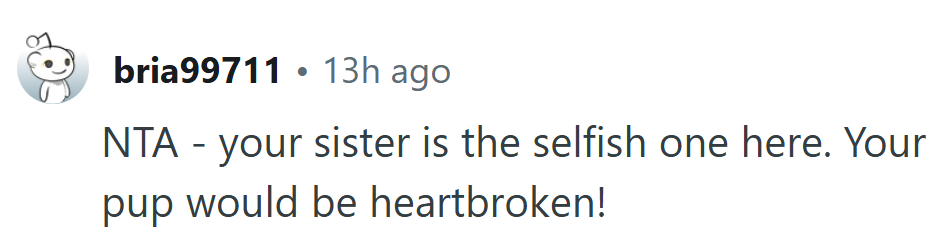
When OP’s sister returns and says the dog is “still hers,” the whole “simple favor” story suddenly starts sounding like a custody battle.
OP tries to explain that six years of feeding, vet visits, and daily routines do not reset just because she’s back in town.
Veterinary behaviorists argue that pets can experience trauma from separation. Dogs often experience a sense of loss when their primary caregivers are absent for extended periods.
Reintroducing a dog to a former owner should be done gradually, allowing the animal to adjust to the change without feeling overwhelmed. This approach can help minimize stress and establish a positive relationship between the pet and its original owner once more.
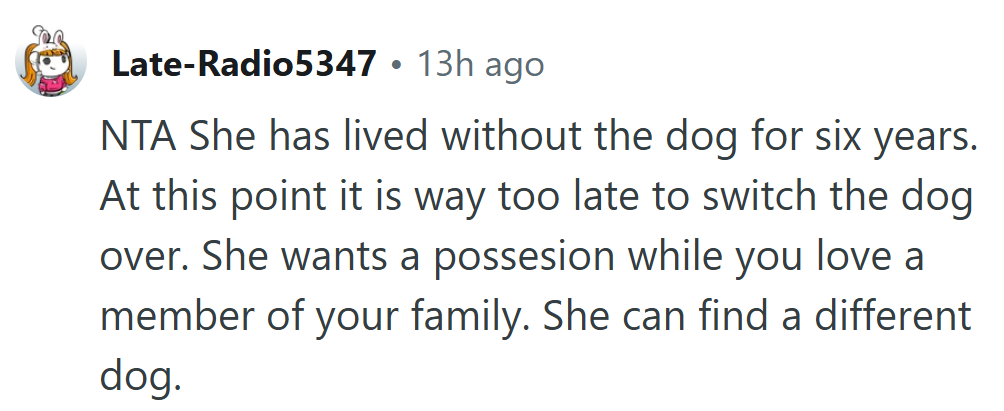
She wants a possession, but he’s protecting a family member—good luck rehoming that kind of love.
Nothing says “he’s mine now” like a microchip and a name on the paperwork.

The best choice isn’t about who bought the leash, it’s about what’s right for the dog.
these relationships are built on trust and consistent care.
This is similar to the woman who demanded her dog back after gifting him to a friend, and they would not let it go.
For a dog, home isn’t a place you return to, it’s the person who never left.
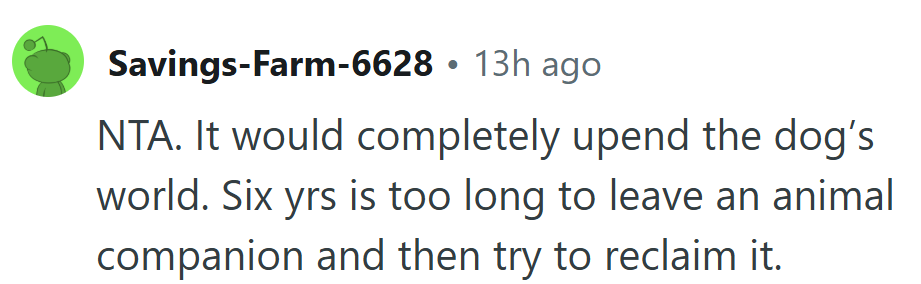
He didn’t just give the dog shelter, he gave him stability—and that’s what real care looks like.

Sounds like her memory’s shorter than the dog’s loyalty—some things you can’t fake.

Then the sister pushes harder, bringing up ownership like it’s just about the microchip and not the bond the brother actually built.
Pet ownership often raises complex emotional issues, particularly around custody disputes.
Time has a way of turning care into family, and this bond clearly crossed that line long ago.

Forget court, just cue the Air Bud showdown and see who gets the tail wag.
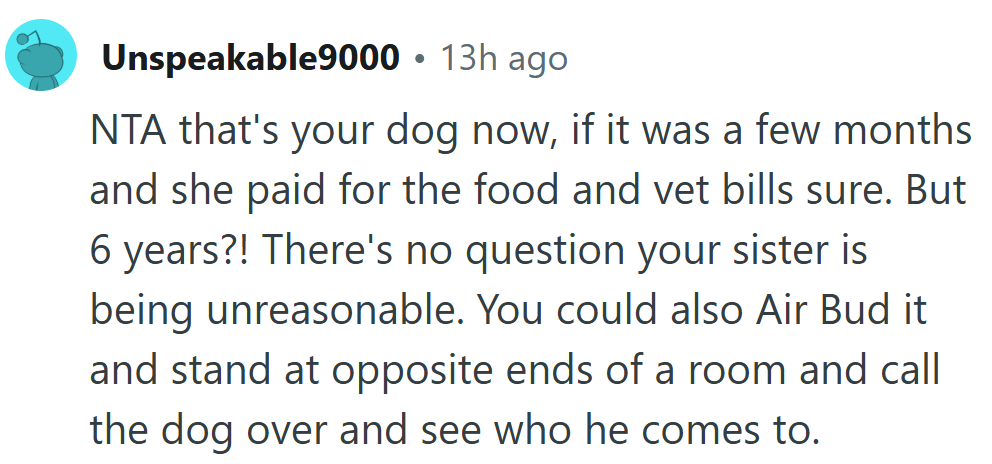
If she could leave him for six years, maybe she should stick to houseplants next time.
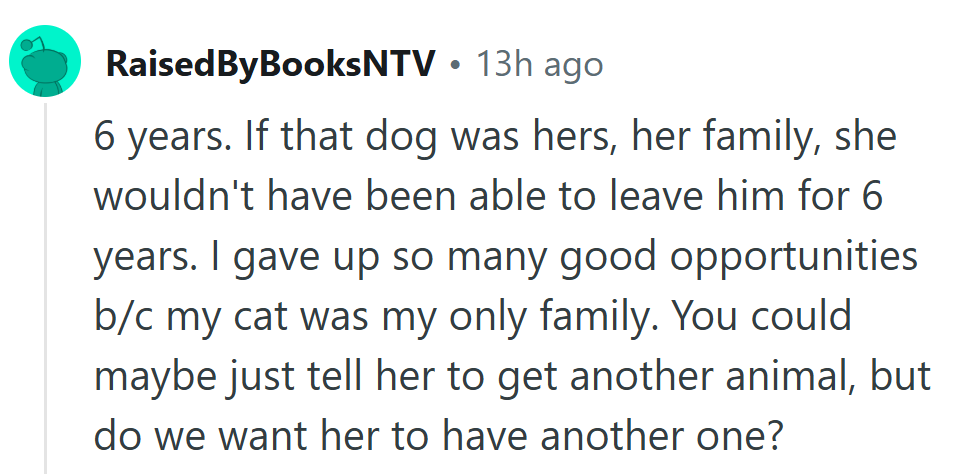
By the time the family dinner conversation spirals, OP is forced to choose between keeping the dog safe or handing over the one constant that never left.
The emotional complexity of pet ownership disputes is vividly illustrated in the article, where a sister's return after six years ignites a conflict over a dog that her brother has raised as his own. Establishing a co-parenting agreement could serve as a practical solution in such scenarios, akin to human child custody arrangements.
This structured approach would allow both the sister and the brother to maintain a role in the pet's life, fostering a sense of shared responsibility. Such arrangements ultimately serve the best interests of the pet, ensuring its emotional well-being amidst the turmoil of human relationships.
Forget court drama, just drop the stack of vet bills and let the evidence bark for itself.
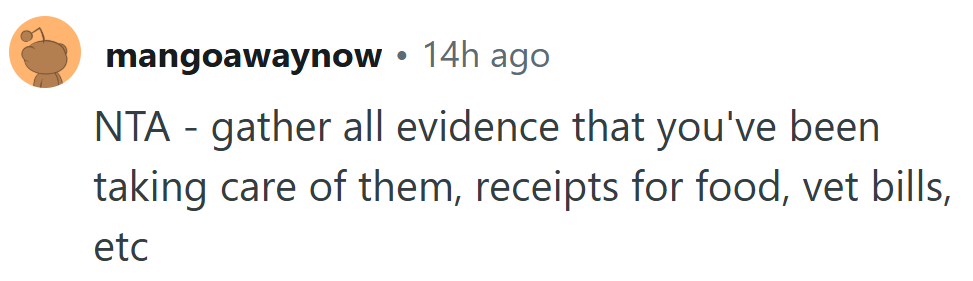
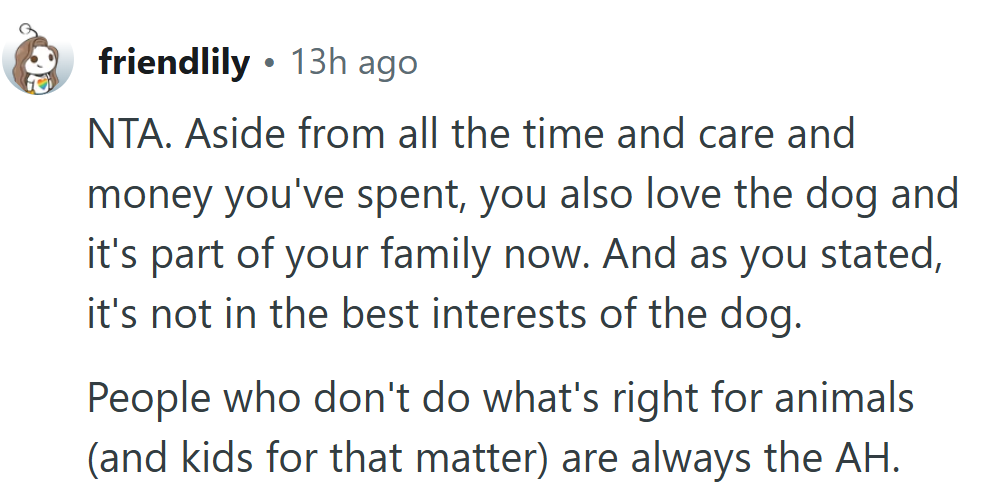
The one who feeds, trains, and cares becomes the real owner in every way that matters.
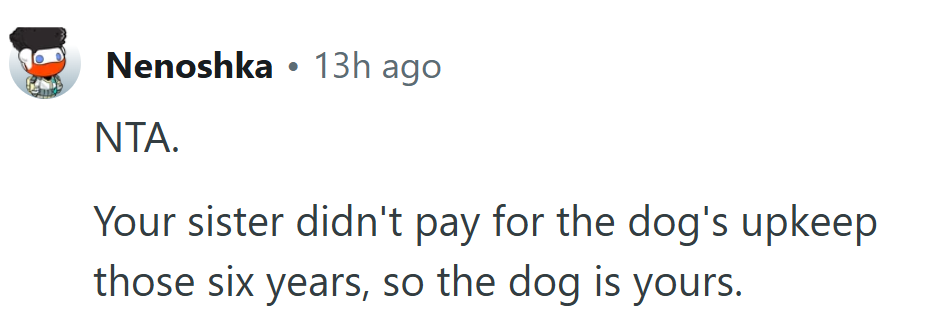
The dog’s already made his choice, and it’s the one who fills his bowl and his world.

Understanding animal attachment is crucial in custody disputes.
Thus, both parties should prioritize the well-being of the pet above their own desires to ensure a smoother transition.
For some, family means giving back what isn’t yours; for others, it means protecting what’s grown in your care. Six years is a long time—for love, for loyalty, and for a dog who’s built a life in a new home. Is it right to undo that for the sake of ownership? Or does love rewrite the rules?
Share this story with someone who’d have a hard time choosing between blood and bond!
This situation poignantly illustrates the intricate nature of emotional attachment and the concept of ownership.
The emotional turmoil surrounding the return of a sister demanding custody of a dog raised by her brother highlights the intricate dynamics of love and ownership. The article illustrates how love manifests differently for each party; for the sister, it may be about reclaiming her past, while for the brother, it reflects the deep bond he has formed with the dog during her absence.
Resolving such disputes requires more than just a declaration of ownership. It calls for understanding the emotional needs of the pet caught in the middle. A collaborative approach, where both parties prioritize the pet's well-being, can create a more harmonious resolution, allowing for a smoother transition regardless of the outcome.
He’s not refusing a dog, he’s refusing to erase six years of “home.”
Talk about a messy family dog drama, read how the teen broke into his cousin’s house to rescue a friend’s dog.
Share this article: