Relationship On The Rocks After Woman Discovers Boyfriend’s Shocking Cat Hygiene Habit

A 28-year-old woman thought she was just chilling with her boyfriend’s cat, until the smell hit her and she immediately clocked it as something way worse than a normal litter-box moment.
At first, she tried to play it cool, assuming the stink was just from the usual places cats do their business. But by the next morning, there was actual poop on the cat’s body, and suddenly it wasn’t a “maybe it’s nothing” situation. Now it was a full-on debate between her and her boyfriend over how to get it out of the fur, and the cat was the one stuck dealing with the fallout.
Two days later, she still wasn’t seeing poop-free fur, and that’s when the relationship started to feel like it was on the rocks for real.
Let’s dig into the details

While snuggling with her boyfriend’s cat, she smelt cat poop, but didn’t react since she thought it was coming from the litter box
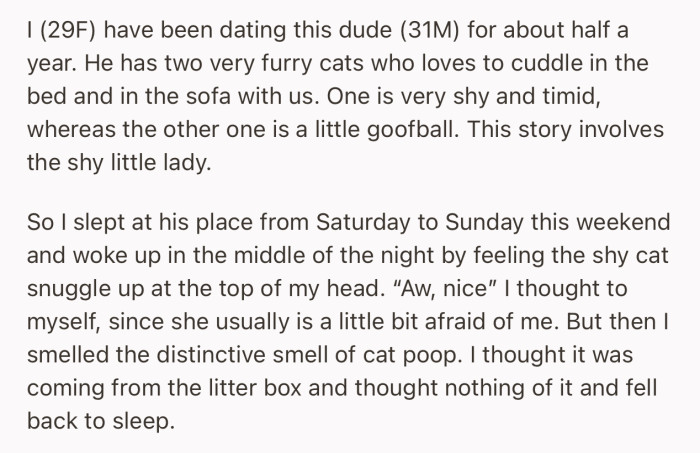
By the next morning, she noticed poop on the cat’s body, and they both started going back and forth on the best way to get it out of its fur
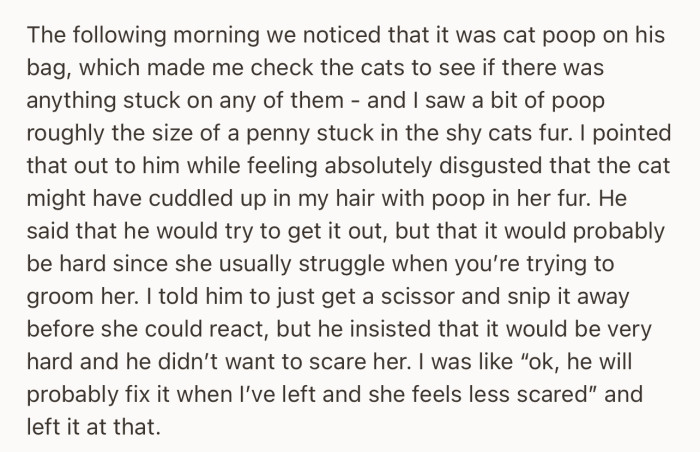
She went from thinking it was litter-box funk to finding poop on the cat itself, and that’s when the boyfriend’s “cat care style” stopped sounding normal.
Neglecting basic grooming can lead to serious health issues, including skin infections and discomfort for the animal.
In navigating the rocky terrain of relationships, the discovery of a partner's questionable hygiene habits can be particularly jarring. The woman in this scenario faced a daunting challenge when she uncovered her boyfriend's troubling approach to cat care, namely allowing feces to cling to his pet's fur. This situation calls for a delicate balance of communication and compassion.
Addressing these hygiene concerns is not just about pointing fingers; it involves creating an open dialogue aimed at finding solutions. Couples might find it beneficial to establish regular grooming routines, which can serve as an opportunity to bond while tackling an unpleasant task together. Exploring resources for pet grooming or even professional services could further empower both partners, equipping them with the knowledge and skills needed to maintain their pet's hygiene. Ultimately, fostering a sense of teamwork in this aspect can alleviate tension and strengthen their relationship.
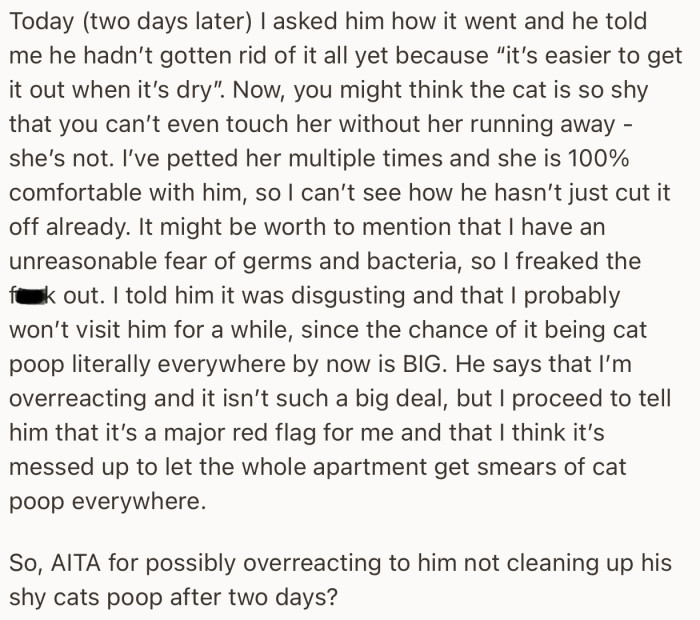
Two days later, she inquired about how he handled it, only to discover that he still hadn’t gotten the poop out of the cat’s fur
We gathered some interesting reactions from the Reddit community
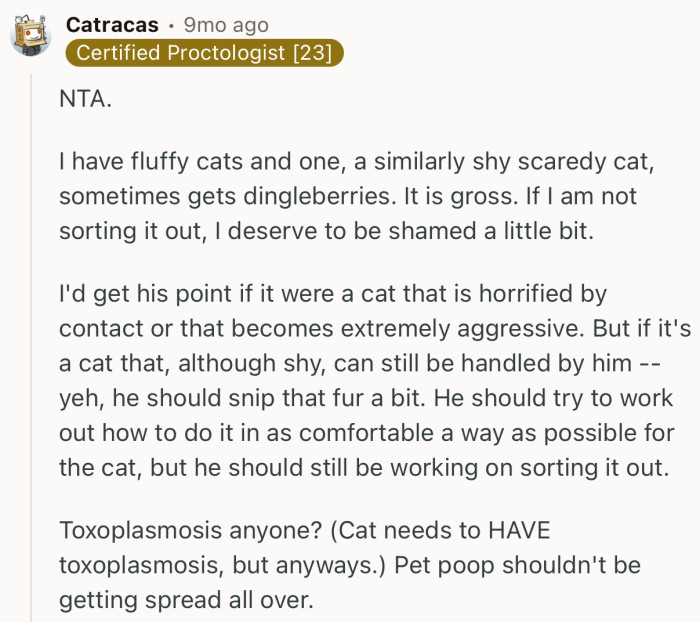
“Apart from being really unhygienic for the environment it's really unfair on the cat.”
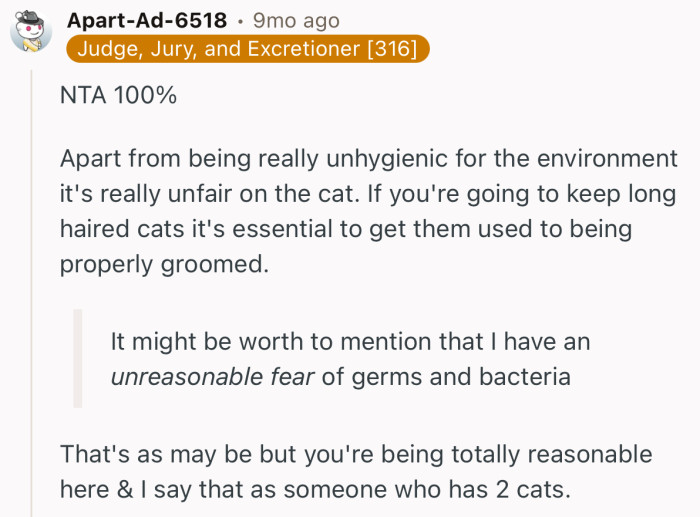
The back-and-forth about cleaning the fur turned from an awkward moment into a recurring problem, not a one-time fix.
Veterinary experts generally recommend establishing a regular cleaning routine for pets. A consistent schedule can prevent unpleasant surprises, such as the situation described here. Regular bathing and brushing can help keep cats clean, especially those with long fur. If a pet has a habit of getting dirty, investing in specialized grooming tools can be beneficial and ensure a happier, healthier pet.
This is similar to the night school argument over litter box duty, after cat pee sparked a fight.
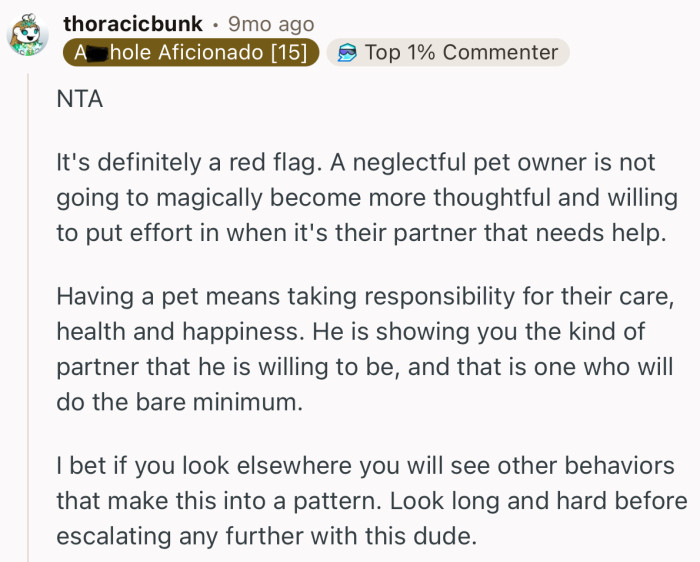
“Having a pet means taking responsibility for their care, health and happiness.”
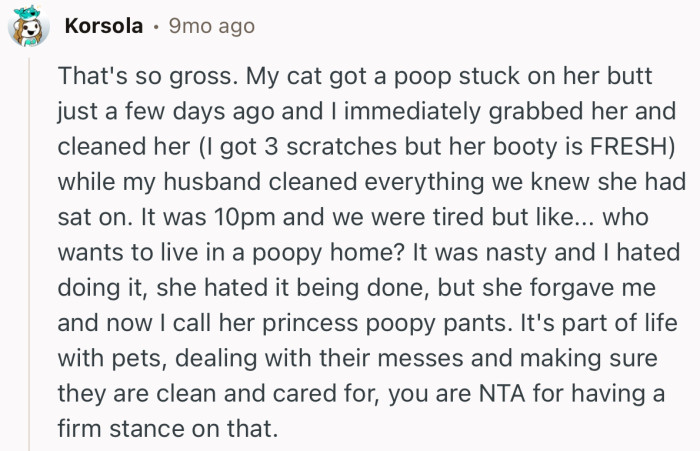
“That's so gross. My cat got a poop stuck on her butt just a few days ago and I immediately grabbed her and cleaned her.”
“This is a health concern for you guys, and a real hygiene red flag for him.”
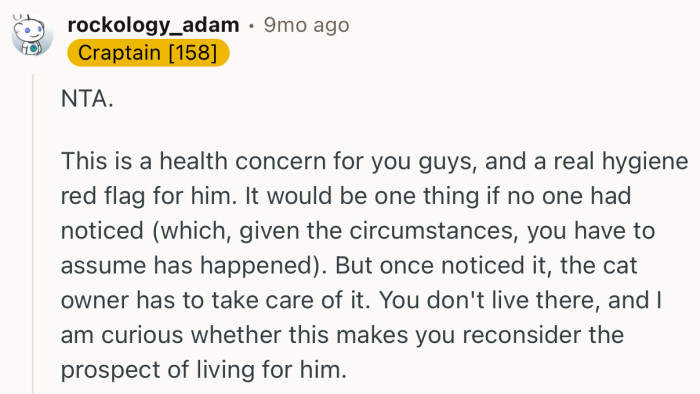
When she asked how he handled it two days later, the answer was basically, he still hadn’t gotten the poop out.
The Emotional Toll of Pet Care
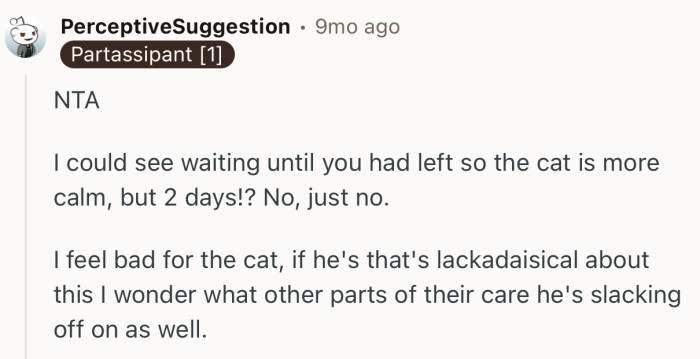
“I could see waiting until you had left so the cat is more calm, but 2 days!? No, just no.”
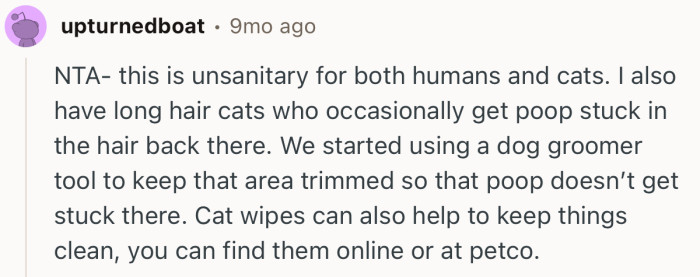
“NTA- this is unsanitary for both humans and cats.”
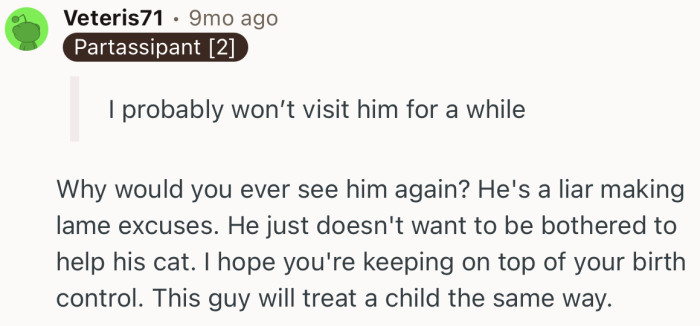
“I hope you're keeping on top of your birth control. This guy will treat a child the same way.”
Reddit jumped in fast, with people calling him unfair to the cat, and that pressure made the whole situation feel even more uncomfortable.
Pet ownership can greatly influence relationship satisfaction. However, when one partner's pet care habits clash with the other's standards, it can lead to conflicts. Establishing a routine where both partners contribute can alleviate tension and promote a healthier living environment.
There’s a difference between being laid-back and being careless, and this story walks that line.
The overwhelming majority of Redditors are on OP’s side.
Relationships often reveal red flags in unexpected ways, and this one just happened to involve a very unfortunate cat.
What do you think? Was she right to be disgusted, or was she blowing things out of proportion?
Share your thoughts in the comments.
This scenario underscores a profound clash in values and responsibilities within the relationship.
Ultimately, maintaining a harmonious relationship while caring for pets requires open communication and shared responsibility.
Now he’s wondering if he’s the problem, while the cat is stuck paying the price.
Wait until you see how a cat poop mouse incident turned into a fight.
Share this article: