Teen Loses Childhood Dog And Family Refuses To Allow Another Pet

A teen lost their childhood dog, and the grief did not magically uninstall itself when the calendar kept flipping. On Reddit, the conflict was not really about fur, toys, or walk schedules, it was about the emotional math the family started doing afterward.
Here’s the complicated part: the teen wanted another dog, but the family, led by Mum’s firm “not yet,” refused. The argument turned into a tug-of-war over readiness, with the teen trying to prove they were okay while everyone else treated a new pet like a shortcut around real loss. Even when the debate got boiled down to ownership and authority, the feelings underneath kept showing up as hesitation, fear, and a cold, clinical kind of “no.”
And that’s where the real problem starts, because the family dinner did not end with a dog decision, it ended with a relationship one.
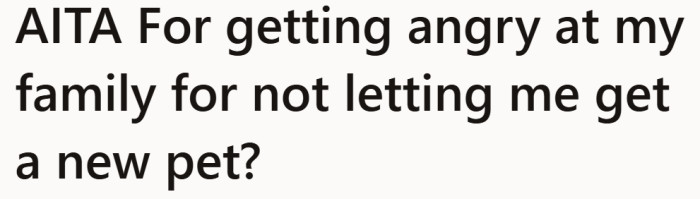
A straightforward question that hints this is less about a pet and more about everything that came after the loss.
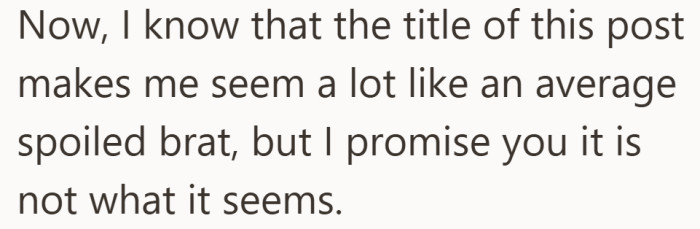
The classic preface that quietly says, please hear me out before you decide.
Losing a pet during childhood leaves a mark that does not fade just because time passes.
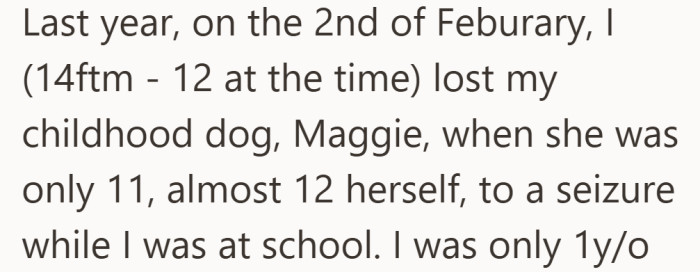
Time passing does not always mean healing has finished, especially after a childhood loss.
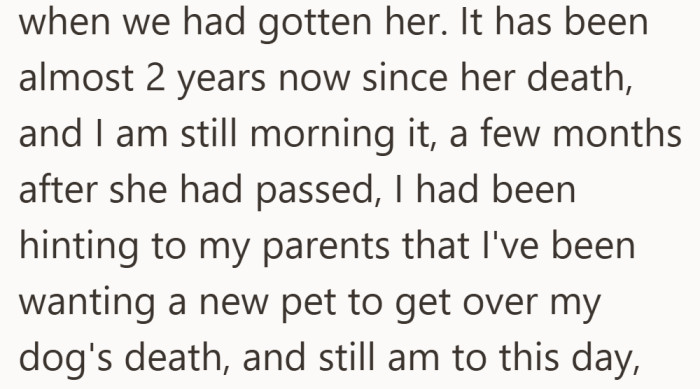
Sharing the real reason took courage, especially when the response did not change.
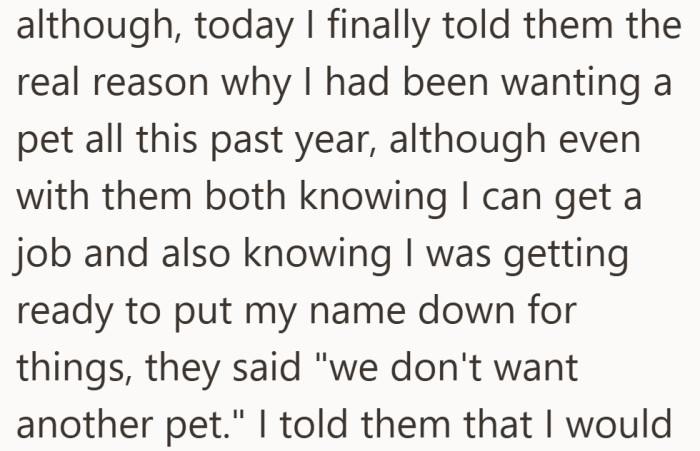
Trying to prove readiness while still carrying grief is a hard place to stand.
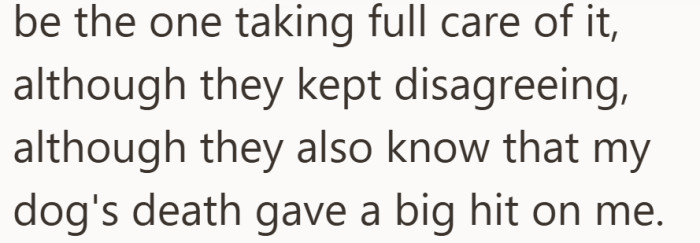
When the argument ends, the feelings do not. They just get louder in private.

Grief does not always show up as sadness. Sometimes it shows up as hesitation and fear.
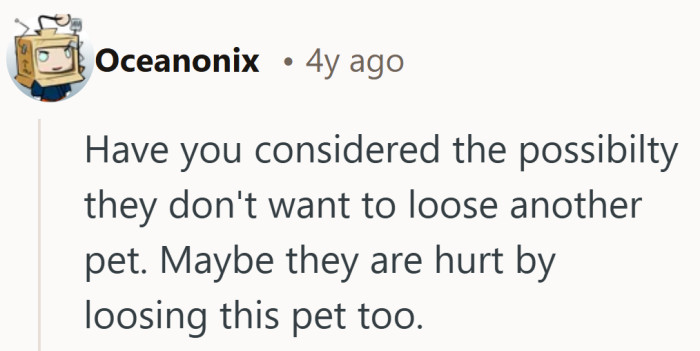
That word replacement lands hard, and turns grief into something colder and more clinical.

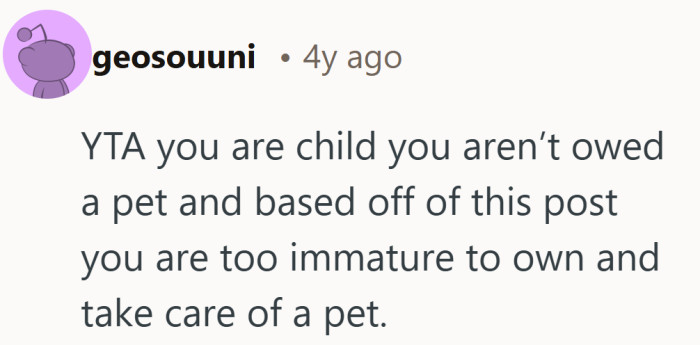
When the internet puts on its stern parent voice and delivers the no without cushioning.
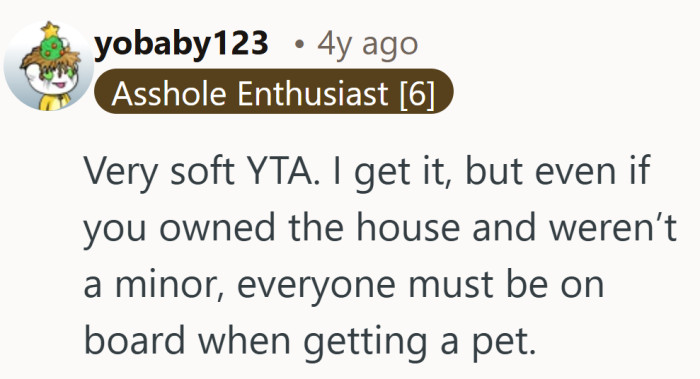
A gentler no, but still a firm reminder that pets are a group decision, not a solo one.
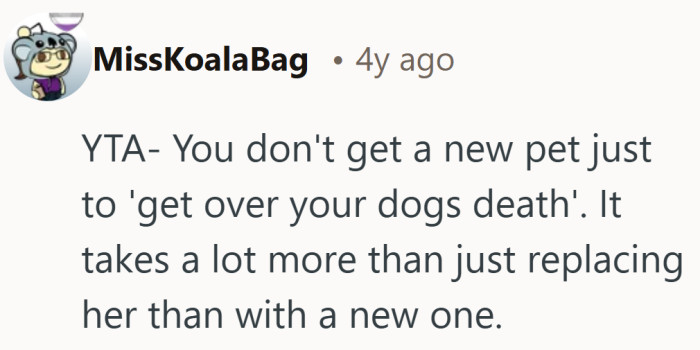
The word replacing does a lot of heavy lifting here, and not in a comforting way.
The long version of saying grief does not run on a fixed schedule, no matter how much we wish it did.
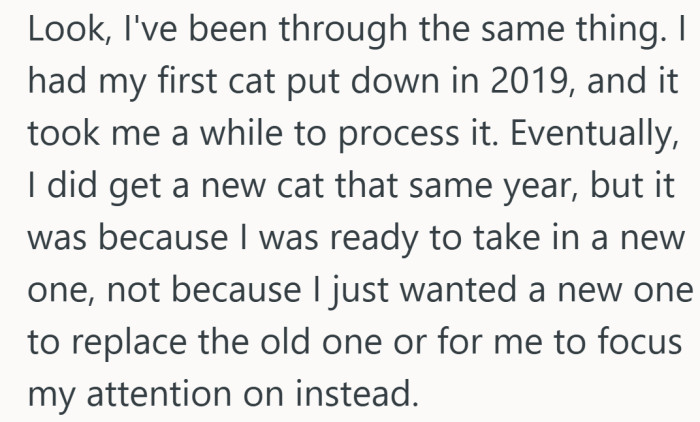
A rapid-fire set of what-ifs that lands less like comfort and more like cross-examination.
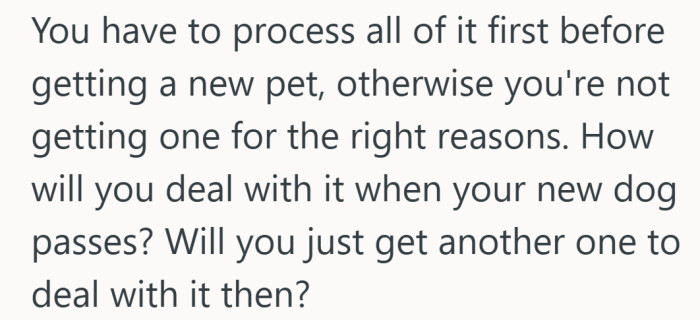
The heart says get another dog. Real life, and Mum, say not yet.
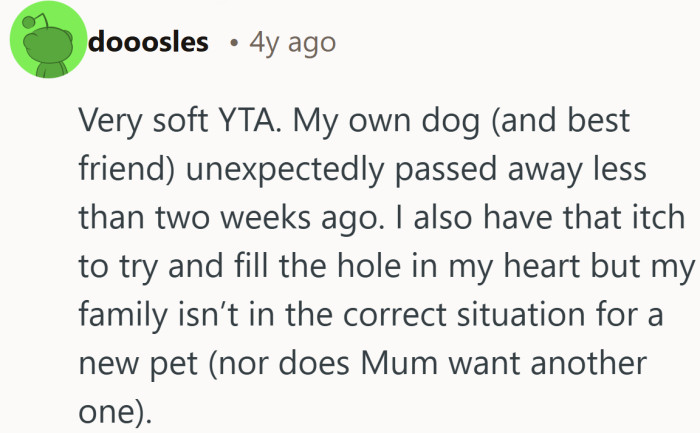
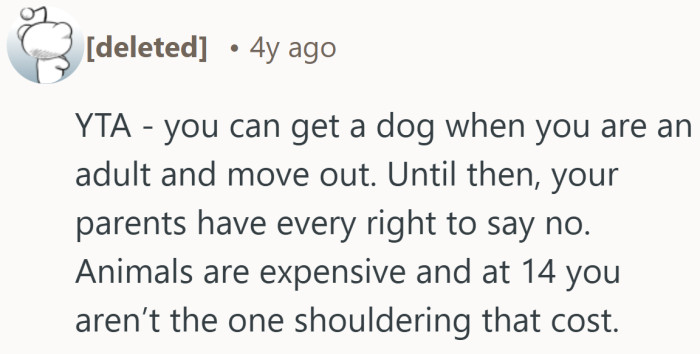
Practical advice wrapped in tough love, with independence framed as the long-term solution.
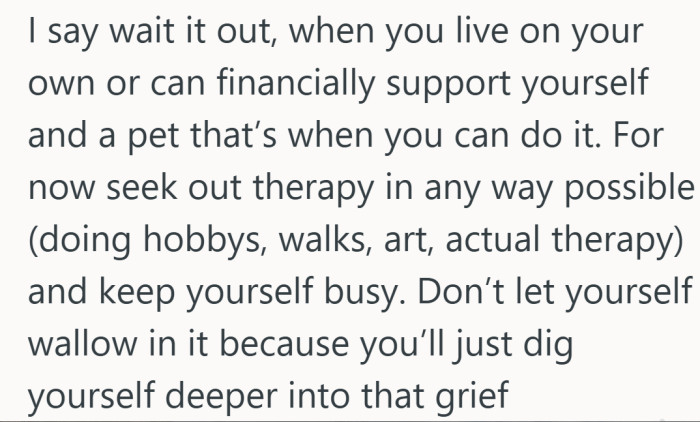
Freedom later, dog later. For now, the adults get the final vote.
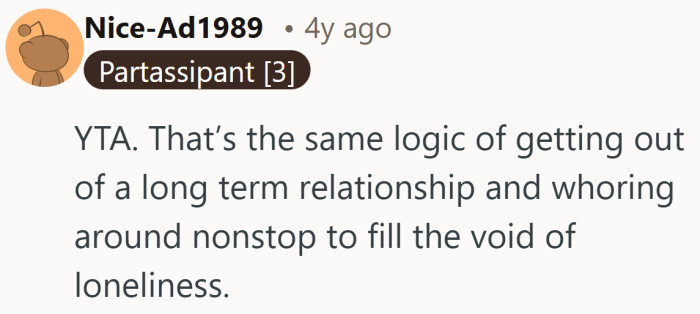
A harsh comparison meant to warn against rushing into comfort before the grief settles.
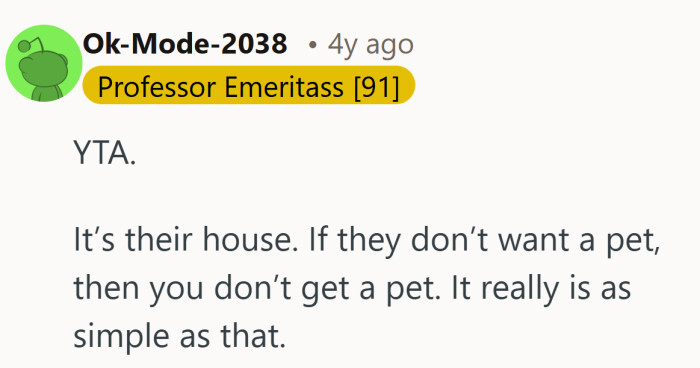
When the debate gets boiled down to ownership, authority, and a very firm no.
A blunt correction that draws a hard line between grief and distraction.
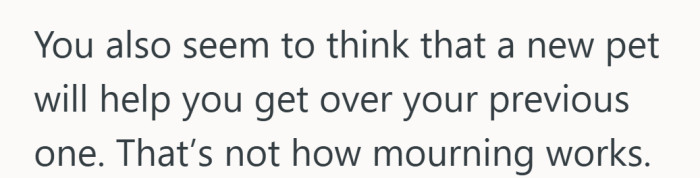
It assumes the new pet would be a shortcut around grief, not a companion through it.
That “not yet” from Mum lands harder than the teen expects, because it is basically blocking a whole coping plan.
The teen keeps pushing, trying to turn grief into proof, while the family keeps treating another pet like a distraction.
Once the conversation shifts to who gets the final vote on ownership, it stops being about the dog and starts being about control.
When the argument ends, the teen is left with louder private feelings, and everyone else still thinks the next dog can wait.
At its core, this story touches on a familiar question: who gets to decide what healing looks like, and when? Some see love as protecting the household from another loss, while others see love as allowing space for attachment again. Both instincts come from care, even when they clash.
It also raises a quieter question about growing up. How much responsibility should young people be allowed to take on when their emotional needs feel urgent? Would you have handled this conversation differently, or stood firm on the same boundary? Share this with someone who knows how complicated family grief can be.
The teen might not be “the problem,” but the household still decides when love is allowed to move forward.
For a similar “we are not replacing him” battle, read how a couple refused to “move on” after their ten-year dog died.
Share this article: