Roomie Refuses To Reimburse A Girl For $500 Of Damages After Her Dog Ate The Crotches Out Of Her Pants

One dog, one pair of pants, and one very expensive roommate dispute turned a normal living situation into a mess. What started as a pet problem quickly became a question of who should pay when the damage kept adding up.
A Redditor posting as u/sarah_kyle_ said her sister's dog destroyed several of her belongings, including a pair of pants with the crotch eaten out of them. The bigger issue was that the sister refused to take responsibility for the damage, even after the costs reached $500.
Now the comments are split, and the whole thing is getting more awkward by the minute. Read on.
Here's the original post by Reddit user u/sarah_kyle_:
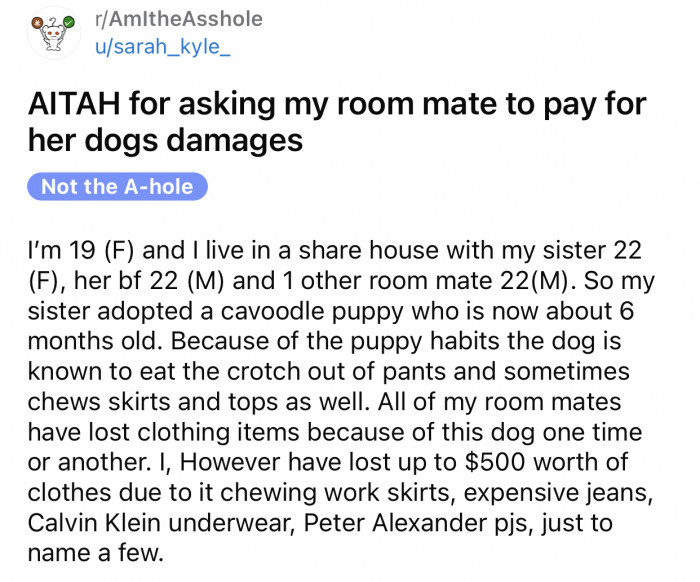
The dog's bad habit started costing OP a significant amount of money.
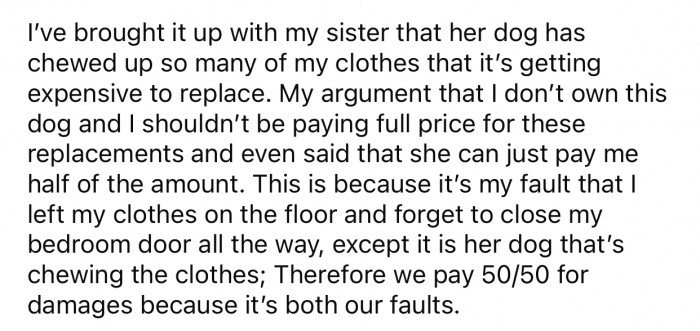
OP's sister refused to take responsibility for the damages her dog caused.

The dynamics of shared living spaces often reflect underlying psychological principles of conflict resolution and interpersonal negotiation.
Original Post
OP thinks she might potentially be the a-hole for the following reason.

My sister and I live together. She has a dog, and he has a habit of getting into my room and destroying my stuff. He has eaten the crotches out of 2 pairs of pants, chewed up a pair of shoes, and ruined a shirt.
I asked her to pay me back for the pants and shoes, which came to about $500. She said no, because I should have kept my door shut. I told her that her dog is her responsibility, not mine, and she said I was being unreasonable.
Now she is mad at me for asking her to reimburse me, and she says I am making a big deal out of nothing. AITA?
That is where the argument really starts to heat up.
Here's how the Reddit community reacted to u/sarah_kyle_'s post:

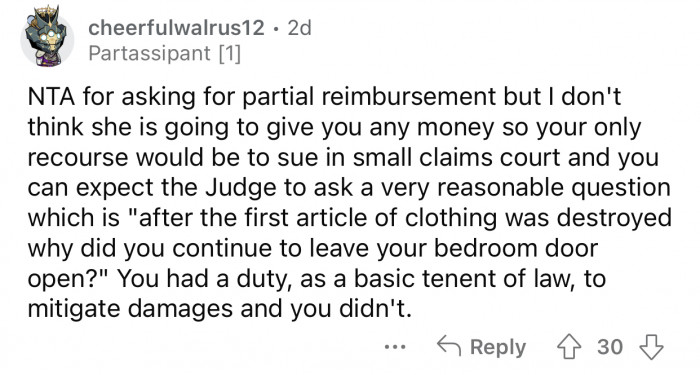
OP could sue her in small claims court if she refuses to comply.
The Psychological Impact of Pet Ownership
Pet ownership is often associated with numerous psychological benefits, including increased emotional well-being and social support. A study published in the Journal of Personality and Social Psychology found that pet owners often report higher levels of happiness and lower levels of loneliness compared to non-pet owners. This suggests that while pets can bring joy, they also introduce a set of responsibilities and challenges that can strain relationships when complications arise, such as damage to belongings.
Furthermore, research indicates that pet ownership can lead to increased anxiety when it comes to managing shared responsibilities and potential financial liabilities, creating a complex emotional landscape. Understanding these dynamics can help individuals approach roommate conflicts with empathy, recognizing that the frustrations may be rooted in broader feelings about responsibility, trust, and companionship.
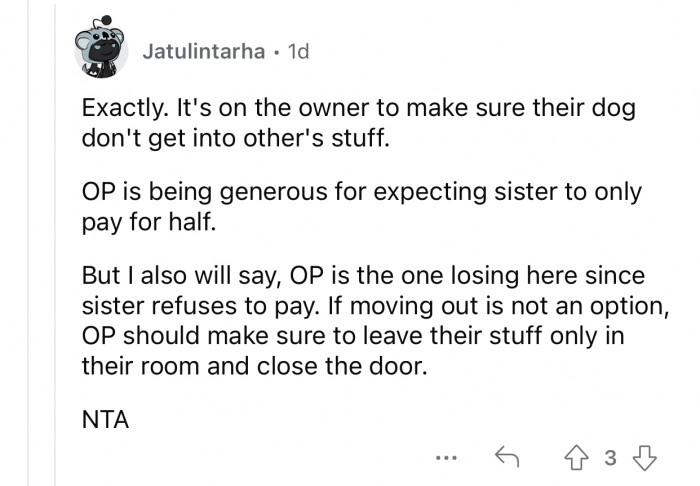
OP should have made sure the dog couldn't get to her clothes.

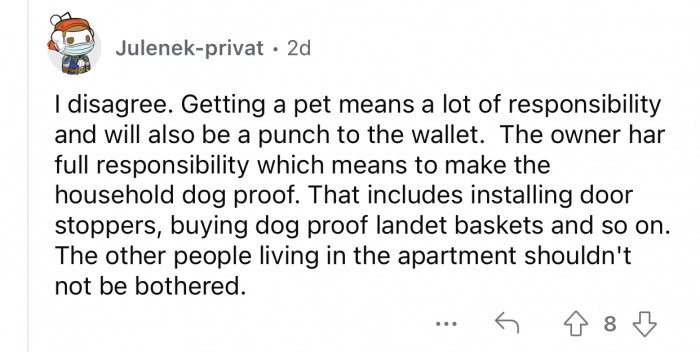
The owner of the dog normally has full responsibility.
OP's offer is way too generous since she only expected half.
Behavioral economics provides insight into how individuals perceive value and fairness in financial disputes. The concept of loss aversion suggests that people tend to feel the pain of losses more acutely than the pleasure of equivalent gains. In the context of the article, the roommate who has incurred damages may be more focused on the loss of $500 than on the subjective value of the damaged items, which could lead to an inability to see the situation from the other person's perspective.
This psychological principle highlights the importance of framing discussions around fairness and responsibility in terms that resonate with both parties' feelings of loss and gain.
Another messy boundary fight, the woman refusing to pay vet bills after her brother’s dog ate underwear in her room
Besides the damage, eating clothing can harm the dog.

The roommate is responsible for her dog's behavior.

OP should start shutting the door and stop letting clothes lay around.
Conflict Resolution Strategies
Research on conflict resolution suggests that collaborative approaches yield better outcomes than competitive ones. In the case of a roommate dispute over pet damage, adopting a collaborative style can facilitate a more constructive dialogue.
This involves both parties working together to reach a solution that respects each other's concerns and feelings. For example, they might negotiate a shared payment plan for the damages or agree on future preventive measures. By prioritizing collaboration over confrontation, roommates can not only resolve the immediate issue but also strengthen their relationship for the future.
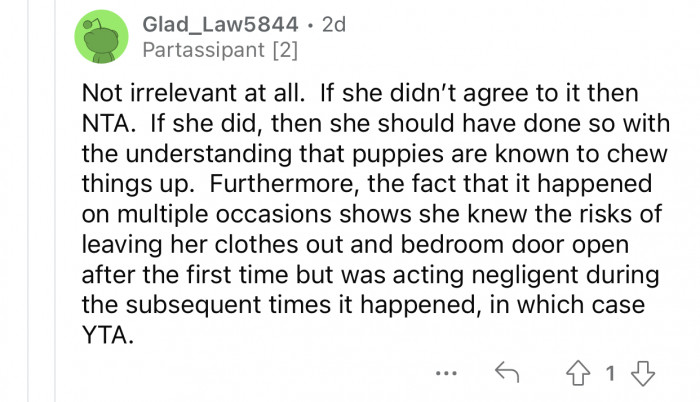
It doesn't take much time for the dog to start causing damage.

OP would have saved tons of money by investing in a clothes basket.

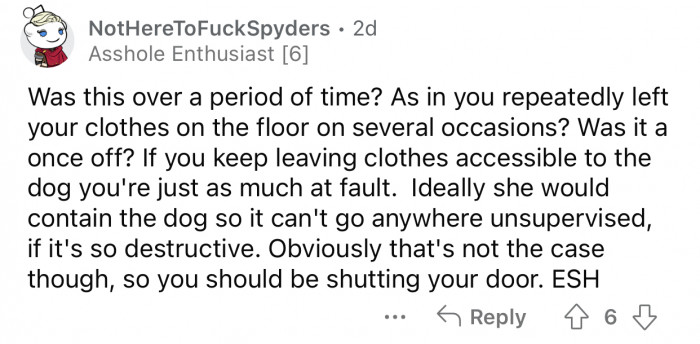
It depends on whether OP knew about the dog beforehand.

When conflicts arise in shared living situations, underlying issues often manifest, revealing deeper psychological themes such as trust, responsibility, and emotional regulation. Research published in the Journal of Social and Personal Relationships highlights that disputes about material possessions can evoke feelings of betrayal and insecurity, particularly when one party feels unfairly burdened. The psychological impact of these conflicts can be exacerbated if individuals are already experiencing stressors in other areas of their lives.
Understanding these emotional triggers can help individuals address conflicts more compassionately. It may be beneficial for roommates to engage in self-reflection prior to discussions, considering how their own emotional states could influence their perceptions and reactions. This awareness can promote a more empathetic approach during negotiations.
Agreeing to live with a dog does not mean you signed up for this.

Puppies are known to behave this way, and OP should have known better.
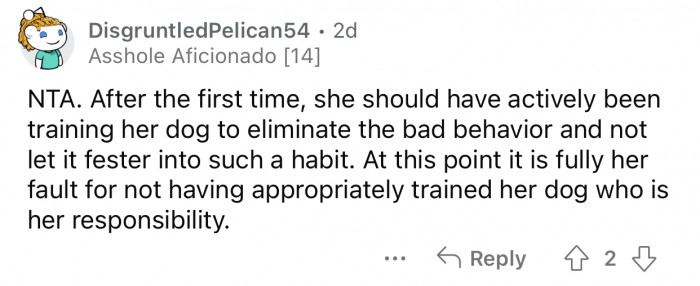
The sister is at fault for not properly training her dog.
The Role of Empathy in Conflict
Empathy plays a crucial role in resolving conflicts, particularly in shared living situations.
You can't constantly be on the lookout for a rogue dog.

The sister should be held responsible for any damages.

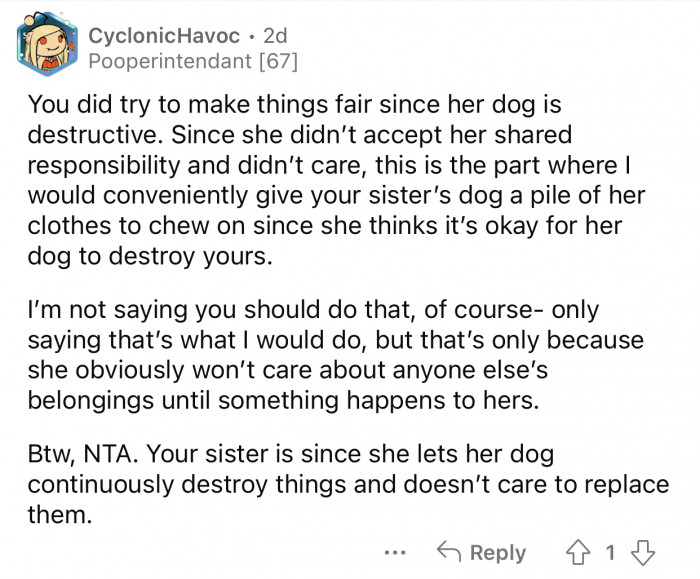
"She obviously won’t care about anyone else’s belongings until something happens to hers."
In the context of roommate relationships, the concept of reciprocity can be particularly influential. When one roommate feels they are bearing the financial burden of a pet's misbehavior, it can disrupt the balance of give-and-take, leading to resentment and conflict.
To restore this balance, it's essential for both parties to engage in open dialogue about their expectations and responsibilities. For instance, setting up a written agreement regarding pet care and household responsibilities can help clarify roles and prevent future conflicts.
OP's sister should reimburse her for the damages caused by her dog. She is responsible for training her dog and taking the necessary precautions to prevent incidents from happening.
OP is entitled to compensation and should seriously confront her sister about it. If you enjoyed reading this, make sure to check out similar content on our platform.
The incident involving the dog damaging a roommate's clothing underscores the complex dynamics of shared living situations.
That $500 is not going away on its own.
Wait until you see the pet sitter who got stuck with a vet bill after a dog ate paper-wrapped bread and grapes, when the owner refused to share the expenses.
Share this article: