Brother Accuses Sister Of “Choosing the Dog Over Him” After She Refuses A Loan

A 28-year-old woman refused to sign off on a holiday loan request from her brother, and somehow that small “no” detonated the entire family’s mood.
It was supposed to be simple timing and simple math, her budget already stretched thin, knowing she could not comfortably cover the amount he wanted. Then weeks later a real emergency hit, and she finally had to move fast for the one situation that couldn’t wait, the one with the dog in crisis.
That’s when her brother reframed everything as betrayal, insisting she chose the dog over him, and the rest of the relatives jumped in like they were casting votes at dinner.
What started as a money problem quickly turned into a loyalty test no one expected.
One choice, and suddenly the whole house is treating it like a referendum on her character.
The moment parental disappointment turned a simple boundary into an emotional spiral.
It all started with a holiday money request she knew she couldn’t comfortably meet.
The timing could not have been tougher, and her budget was already stretched thin.
She knew the stakes, she just didn’t have the spare cash to change the outcome.
Just weeks later, a real emergency hit and she had no choice but to act fast.
And here’s where the anger finally erupts.
He turned the numbers into a moral verdict and pinned the entire fallout on her.
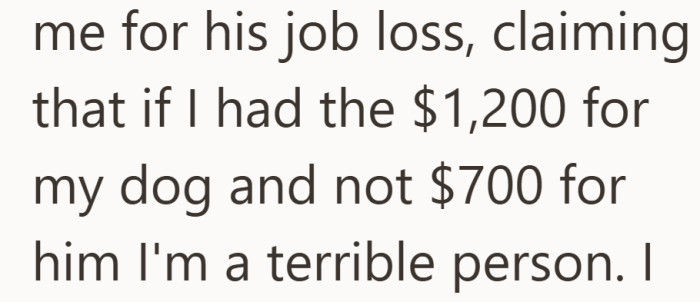
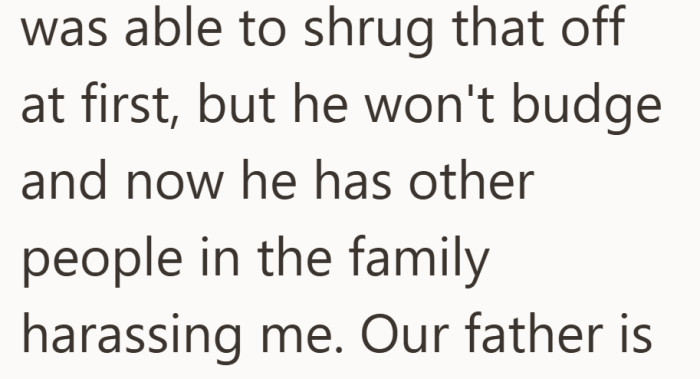
The more she tried to move past it, the more relatives joined the pressure campaign.
Speaking of “dog over people” drama, read how Redditors backed a woman who prioritized her dog over her twin sister, who only shows up when she’s in jail.
Hearing a parent demand an apology only made the whole mess sting more.

The nuance was simple, yet somehow it became the core of the accusation.
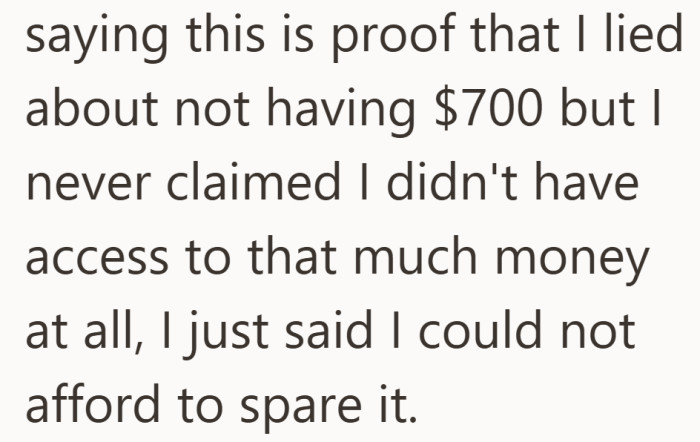
Every attempt to explain her side hit the same wall.
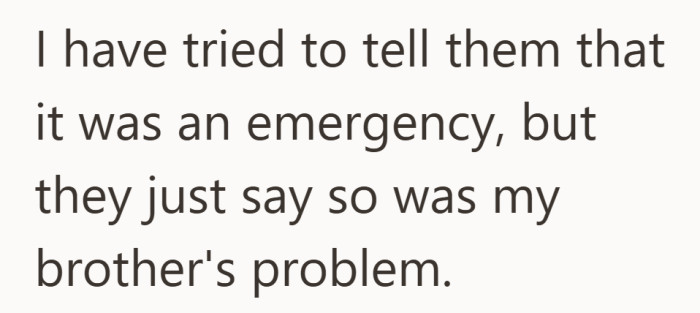
She wasn’t choosing favorites, she was choosing the one who couldn’t call anyone else.
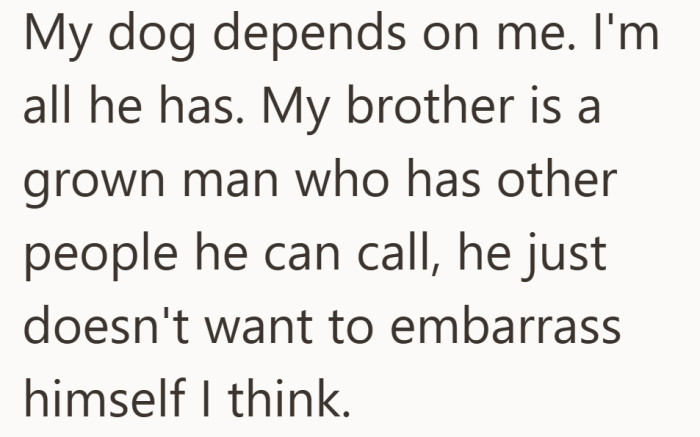
The fight hit at the worst possible time, piling on to stress she was already carrying.
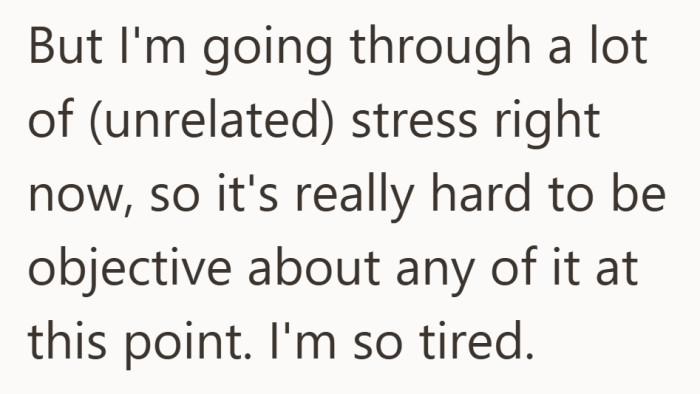
Funny how people forget their age the moment someone else’s wallet looks easier.

It’s amazing how clear priorities become when the crisis has fur and can’t speak for itself.
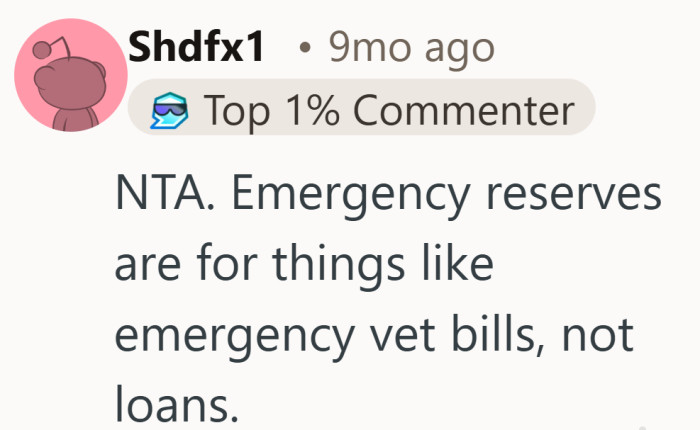
Family math can be strange. Everyone has opinions, only one person was asked to pay.

The quickest way to quiet a crowd is to ask what they personally contributed.
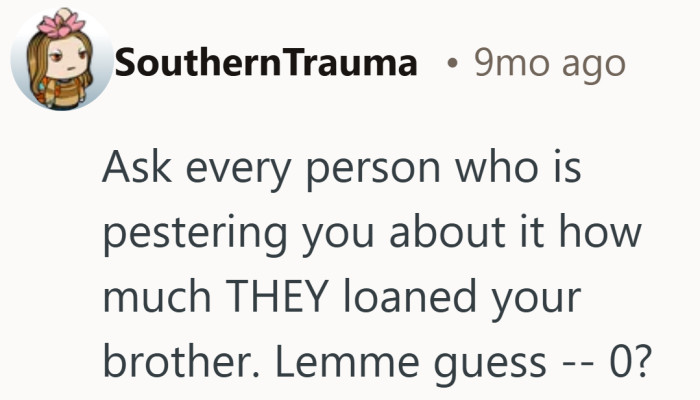
Hard to argue about priorities when the most vocal critic had the same chance to step in.
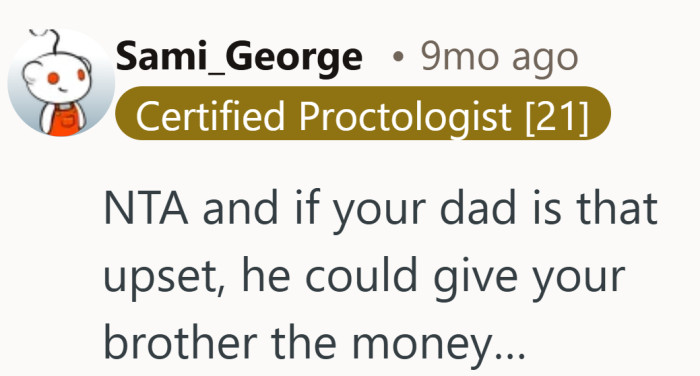
One depends on her for survival. The other just wanted her to fix his mess.
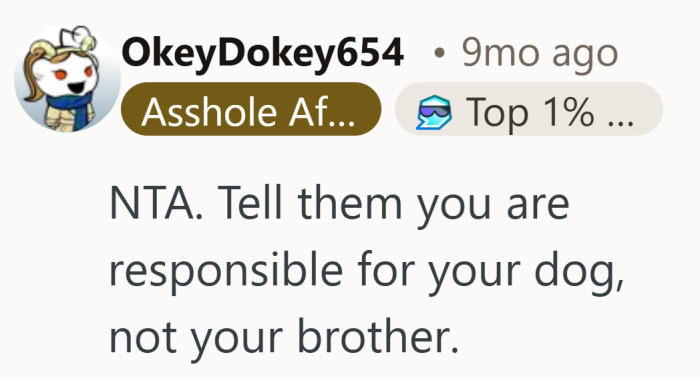
That’s when her brother started treating her refusal as a loyalty test, not a financial limit, and the house went from tense to accusatory fast.
Then the emergency weeks later made her “no” look even worse to him, because he saw her acting for the dog while he felt left holding the bag.
Relatives piling on for an apology turned a boundary into a full-blown family referendum, with every attempt at explaining her side hitting the same wall.
And when the brother’s big talk ran straight into the fact that she’s the one who depends on him for survival, the whole argument about “duty” started to crumble.
The heart of this conflict comes down to competing definitions of duty. One person saw a pet in crisis and acted. Another saw a sibling who should have stepped in sooner. Families often struggle in that gap between what feels fair and what feels possible.
It raises a bigger question about how far we’re expected to stretch when everyone is hurting in their own way. Would you have made the same call, or drawn a different line? Share this with someone who knows that money and family rarely stay separate, and see where they stand.
Now he’s wondering if he really is the problem, or if he just wanted her to pay for his mess.
It gets even messier when a man with a shaky repayment history begs his friend for a loan for his dog’s life-saving surgery.
Share this article: