
Online Community Facepalming Over Post That Asks People If Dogs Have Brains

A single screenshot on Reddit sparked a surprising amount of facepalming, all because someone asked if dogs have brains. Not “what are dogs capable of,” not “how do dogs think,” just a straight-up, baffling question that made the comment section light up like a warning sign.
In the thread, people weren’t just reacting to the obvious answer. They were reacting to the vibe, the confusion, and the fact that the post seemed to come from a place where basic animal cognition was treated like a debate club topic. The whole thing got even messier as users suggested it might be trolling, and then someone added that the question was asked by a YouTuber, which made the internet outrage feel way less random.
A Redditor shared this screenshot with the community.
Of course, dogs have brains! Just like humans, dogs have complex nervous systems that enable them to think, feel, and interact with their environment.

Discovering the answer must be mind-blowing for the person who asked the question.
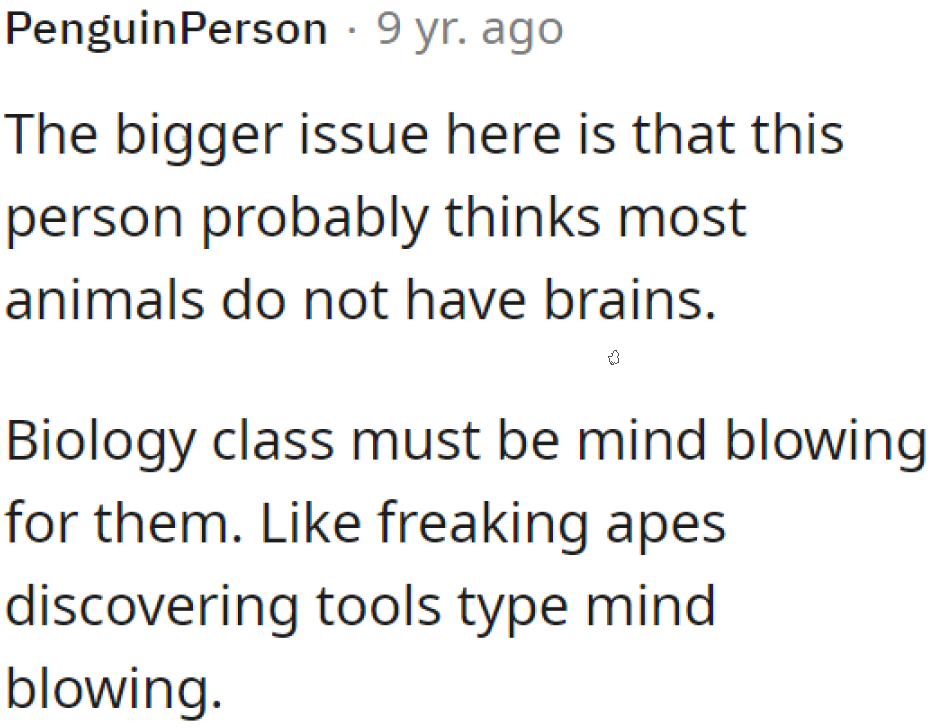
The comment section immediately pounced on the “do dogs have brains” question, like someone had just tried to argue the sky isn’t real.</p>
The Misunderstanding of Animal Cognition
Questions about whether dogs have brains underscore a significant gap in understanding animal cognition. Research in cognitive ethology shows that dogs possess complex cognitive abilities, including problem-solving skills and social intelligence.
This misunderstanding may stem from anthropocentrism, where humans prioritize their own cognitive abilities above those of other species, leading to misguided perceptions about animal intelligence.
Some people out there won't bother listening to class.
But they've got plenty of time for the internet, though!
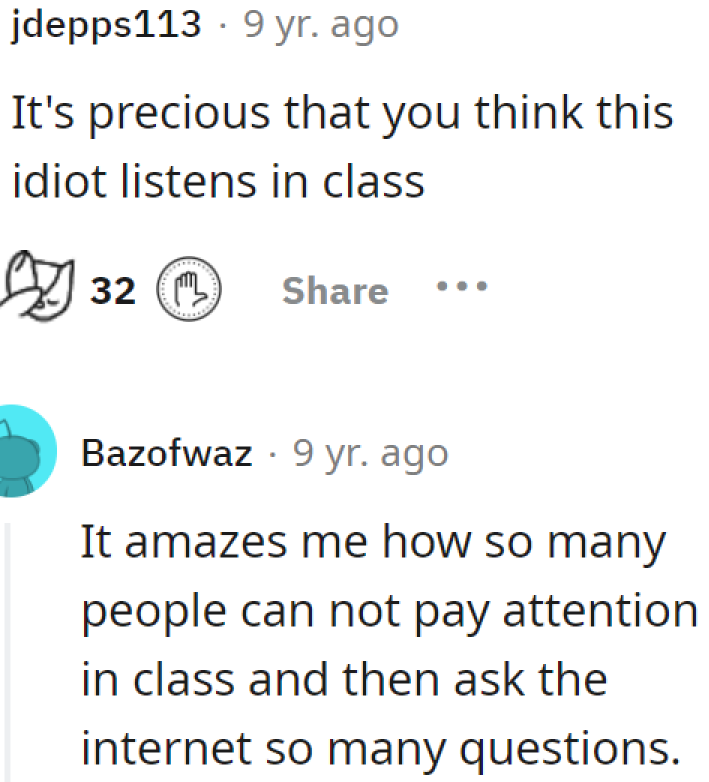
One Redditor points out that the person who posted this was probably trolling.

The recent uproar over a post questioning whether dogs have brains underscores a troubling disconnect in public understanding of animal cognition. This moment reflects not only individual ignorance but also a broader societal trend where misconceptions about intelligence and education persist. The idea that one could seriously ponder the cognitive capabilities of dogs reveals a significant gap in knowledge that education should bridge. When people question the intelligence of non-human animals, it highlights a need for better educational frameworks that can foster a more informed perspective on complex topics such as animal behavior. This incident serves as a reminder that our understanding of the natural world is often shaped by the quality of our educational experiences, and it is vital for society to cultivate a deeper appreciation for the intelligence that exists beyond our species.
A user shared that the question was asked by a YouTuber.
Now it makes sense why the question was posted in the first place, doesn't it?

The video in question.
Okay guys, serious debate. Topical question we have going on. We had a big Twitter feud over this. I tweeted, "Do dogs have brains?" Because I, like, seriously wanted to know...
Those were enough to attract that number of viewers.

Then the thread started zooming out, with users pointing to the bigger “people don’t get animal cognition” problem behind the screenshot.</p>
It’s like the guy who got b*tchslapped by a dog while petting it the wrong way, and the dog had zero patience.
That’s when someone suggested the whole thing was probably trolling, because the timing and wording felt too perfect to be sincere.</p>
Educational Approaches to Improving Understanding
To combat misconceptions about animal cognition, educators can employ interactive methods that engage learners with hands-on experiences.
One Redditor feels sarcasm from the blonde lady.
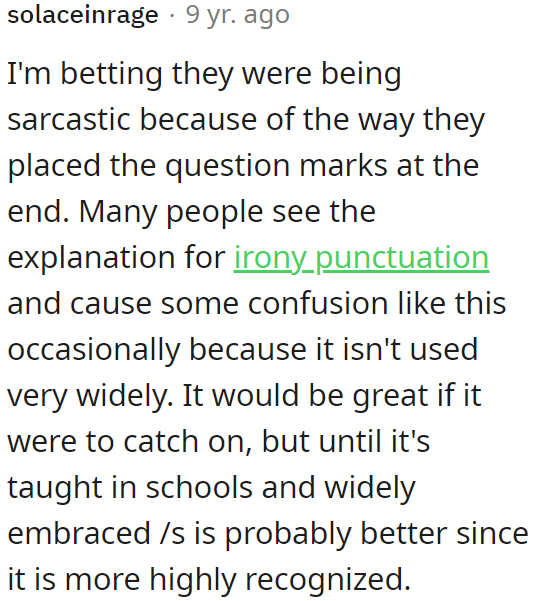
Of course, we have people who started questioning the asker's intellect.

And once a user said the question came from a YouTuber, the facepalms turned into “oh, so that’s where it started” energy.</p>
The YouTuber behind the question turned out to be the plus-size model and actress Trisha Paytas. While some are facepalming over the apparent stupidity, others are applauding her success in trolling people. Some people who claim to know her personally even assert that she's quite intelligent.
One of her videos, "How to Eat a Banana," amassed over 1.6 million views and attracted its fair share of hateful comments. Online users have labeled her as an "illiterate cow" or "dumb blonde."
With the video going viral, she's evidently cashing in on the attention.
We all can be stupid sometimes, but some people's stupidity is just mind-blowing.

The recent online uproar over a post questioning whether dogs possess brains underscores a significant gap in public understanding of animal cognition. This incident highlights the necessity for a comprehensive approach to education that includes both informative content and engaging experiences. Encouraging active participation in discussions about animal intelligence is essential to dispelling such misconceptions.
By confronting these outdated beliefs, we not only cultivate a deeper appreciation for the intelligence of our canine companions but also contribute to a society that values scientific literacy. As our knowledge of animal cognition expands, it becomes increasingly important to reassess our relationships with these creatures, acknowledging their intricate nature and the vital roles they play in our lives.
Furthermore, the role of social media in perpetuating these misunderstandings cannot be overlooked. Online platforms often amplify sensationalized content that misrepresents scientific facts, leading to widespread misconceptions.
Research indicates that misinformation can spread rapidly in digital environments, making it crucial for educators and scientists to actively engage in public discourse to clarify animal cognition and promote accurate information.
The only thing that needed explaining was why anyone thought “dogs have brains” was a mystery in the first place.
Want more dog-lover justice? See how a man tried to kick a harmless doggo, then faceplanted.
Share this article:





