
Redditor Seeks Advice On Handling Boyfriend's Fear Of Something Happening To Their Dog If Taken Out

Some couples fight over money. This one is fighting over walks, and it’s getting personal fast. A Redditor’s boyfriend is so convinced something bad will happen to their dog outside that he flat-out refuses to take the pet out, even for a normal outing.
Here’s the messy part: their dog already had an incident in their yard, an attack that didn’t seriously injure her, but it planted the fear seed in the boyfriend’s head. He’s terrified of other dogs, and when the Redditor took the dog hiking and later even walked a second dog, he snapped. He blamed her for the dog coming back limping, like her hiking shoes were the problem.
Now OP is stuck trying to figure out how to keep the dog happy without triggering her boyfriend’s panic every time the leash comes out.
OP's boyfriend thinks it's too risky to take their small-medium-sized dog out of the house; he's concerned about potential accidents or harm from other animals or people.
Her boyfriend was furious when he found out that she took him for a walk with another dog.
The dilemma faced by the couple in this story exemplifies a common yet complex issue among pet owners. The boyfriend's intense fear regarding the safety of their dog when taken outside reveals more than just a protective instinct. It may reflect deeper anxieties about control and responsibility within their relationship. Such fears often manifest as a need for security, which can strain the dynamics between partners. Addressing these concerns is not merely about the pet’s safety; it requires a collaborative effort to navigate the underlying attachment insecurities that may be at play. This situation challenges them to find a balance between safeguarding their beloved pet and fostering a trusting environment where both partners feel secure in their roles. By tackling these fears together, they can not only enhance their dog's quality of life but also strengthen their relationship in the process.
Their dog was once attacked in their yard, with no serious harm, but her boyfriend is fearful of other dogs and avoids them.
OP took the dog hiking a few months ago, and he came back limping; her boyfriend blamed her for the limping.
That’s when the boyfriend’s “no walks” rule collided with OP’s real-world plan, including that furious blowup after she walked another dog.
Studies published in the Journal of Family Psychology suggest that anxiety can manifest in various ways, often causing individuals to engage in protective behaviors that might seem irrational to others.
In this case, the boyfriend's reluctance to take the dog out could stem from a desire to protect not just the dog, but also to safeguard his emotional state amidst fears of potential loss.
This dynamic emphasizes the need for partners to engage in supportive discussions about their fears and expectations regarding pet care.
OP disagrees with her boyfriend about sheltering their dog; she believes the dog should experience more than just the house and yard, while the boyfriend thinks otherwise.
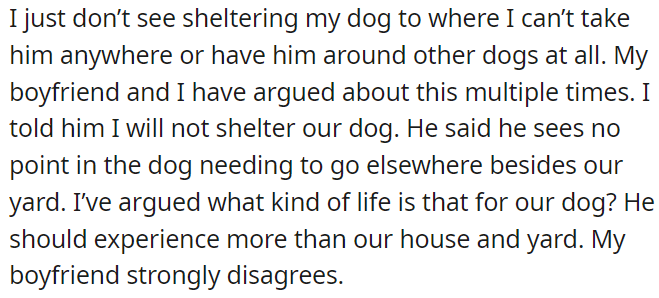
Despite their dog having fun on various outings, her boyfriend is fixated on past incidents like limping and minor attacks.
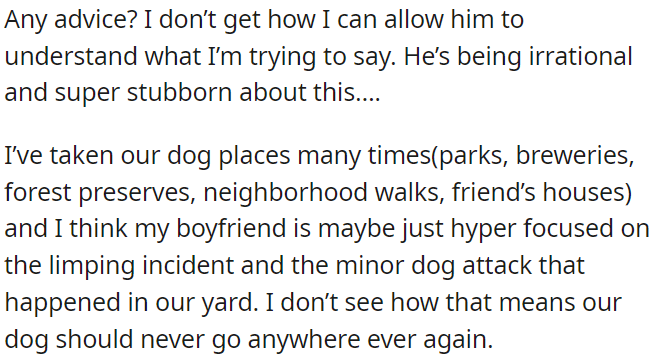
Then the hiking trip turned into a whole new argument, because the dog came back limping and he pointed the finger at OP.
Communication and Compromise
To effectively address this issue, open communication is essential.
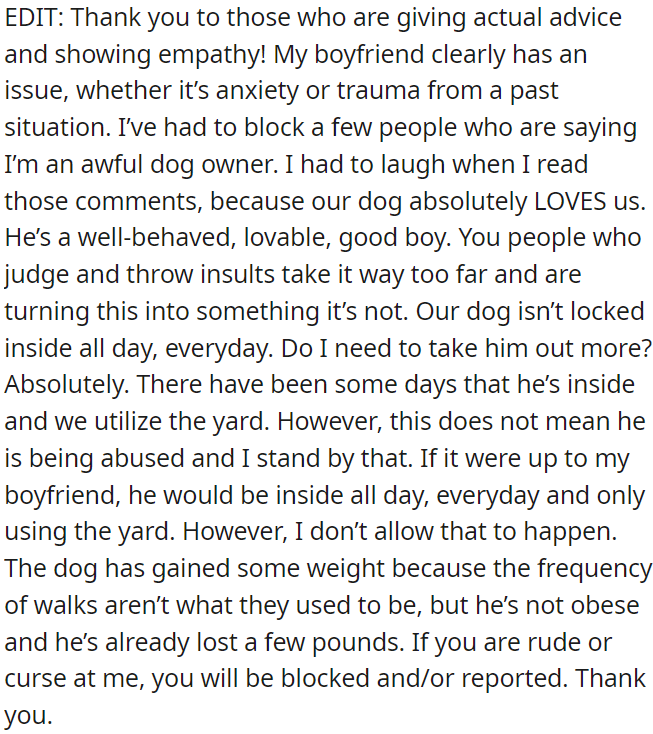
OP appreciates the supportive advice and empathy.
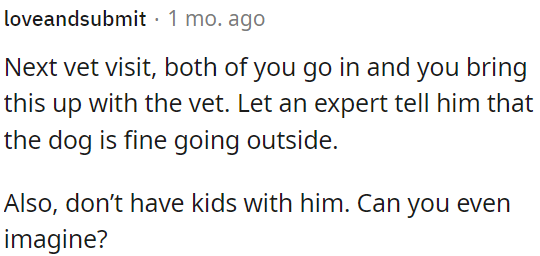
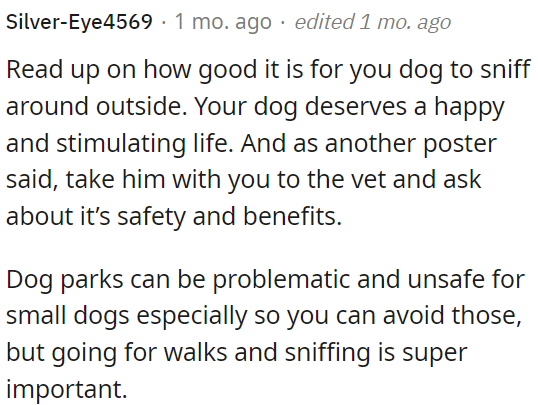
At the next vet visit, OP should discuss the dog's outdoor needs with the vet.
Creating a shared plan for the dog's outings could alleviate some of the boyfriend's fears while allowing OP to maintain their pet's socialization.
Developing a schedule together that includes both partners in walks or playdates can help balance their emotional needs and promote a sense of teamwork.
Moreover, involving a professional trainer could provide additional strategies for managing the dog's behavior and assuring both partners about safety during outings.
The boyfriend needs help with anxiety.
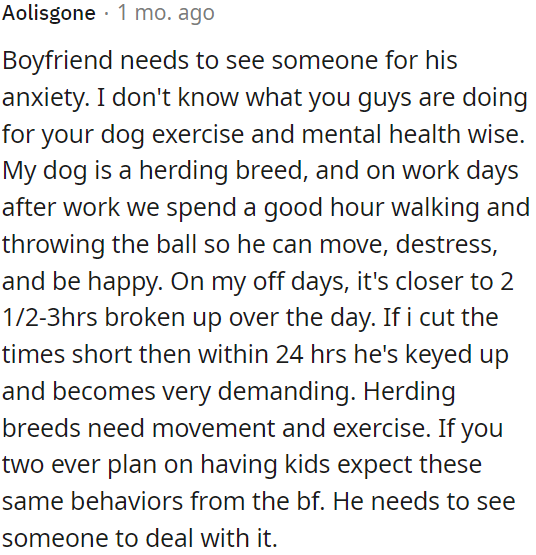
OP's boyfriend seems to be struggling with severe anxiety, and it's important to urge him to seek help.
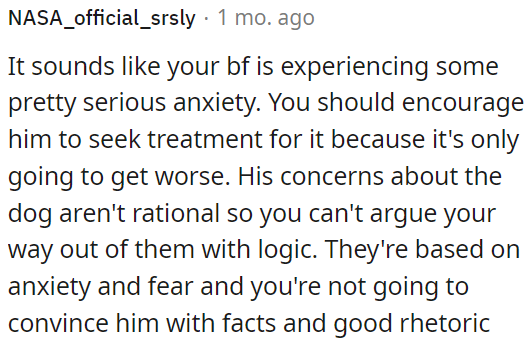
The yard attack that “wasn’t that bad” still haunts him, and it’s the reason he treats any dog encounter like a disaster waiting to happen.
When OP takes their dog to the vet next time, they should talk about how much the dog needs to go outside and play. Also, OP's partner is really worried all the time, which is why he is so protective of the dog. It's important to encourage him to get help for his anxiety.
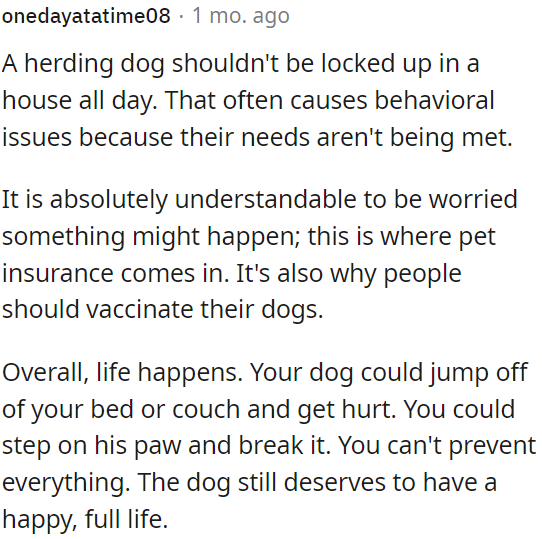
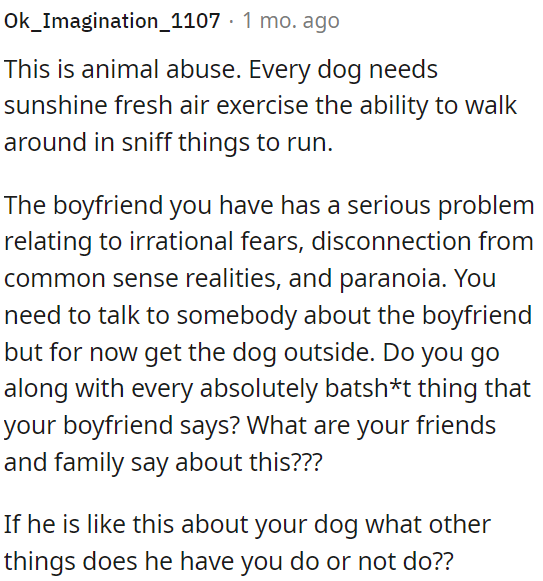
Even though accidents can happen, dogs still need to have fun and explore the world around them. They need fresh air, sunlight, and exercise just like we do.
OP should be careful, especially at places like dog parks, but they should still take their dog for walks and let them sniff around outside. By finding a balance between keeping the dog safe and letting them enjoy life, OP can ensure their furry friend stays happy and healthy.
This dog requires regular exercise and mental stimulation.
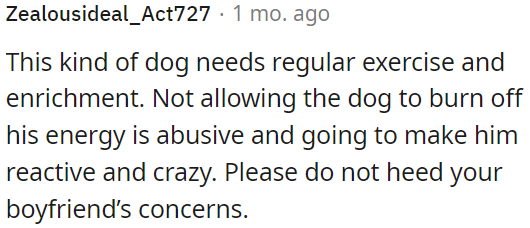
Despite precautions, accidents can happen, but dogs still deserve a fulfilling life.
And with OP disagreeing about sheltering the dog, the couple is left stuck in the same loop, every time the door opens.
Addressing Underlying Issues
It's important to recognize that anxiety around pets can sometimes be a projection of broader, unresolved issues in the relationship.
By identifying and addressing these underlying issues, couples can strengthen their emotional bond and create a more supportive environment for both themselves and their pet.
Every dog needs fresh air, sunlight, and exercise.
OP should avoid potential risks at dog parks, particularly for small dogs, but prioritize walks and sniffing outings.
The concerns raised by the Redditor about their boyfriend's fear of something happening to their dog illustrate the complexities of emotional attachments within relationships. The couple's struggle underscores the need for open communication, as both partners must balance their protective instincts with the dog's need for freedom.
Establishing shared responsibilities in pet care is crucial in this scenario. By discussing their feelings openly, the couple can develop a mutual understanding that fosters a healthier partnership. Addressing these fears with patience and empathy can help alleviate anxieties, ultimately leading to a more secure bond not only between the partners but also within their family unit.
He might be happier in a different apartment, because the dog’s life can’t be on lockdown forever.
Wait till you see the girlfriend whose boyfriend yelled violently at her dog on the bed, then tried to control everything.
Share this article:





