
Redditor Annoyed With Neighbor Dumping Fried Chicken Remains In Her Yard To “Feed The Squirrels” - AITA

A 28-year-old woman thought she was dealing with a one-off neighbor annoyance, then it turned into a full-on yard cleanup saga. The neighbor, convinced she was doing something kind, started dumping fried chicken leftovers on the OP’s property, calling it “feeding the squirrels.”
Except it wasn’t just a couple crumbs. The OP says the neighbor tossed the chicken into her yard, refused to treat it like litter, and then acted emotionally upset when the OP asked her to come pick it up and move it somewhere else. Now it’s not just gross, it’s boundary-stomping, because squirrels do not need a fast food drive-thru in someone else’s yard.
And the worst part is, the OP just wants to know if asking for basic cleanup makes her the AH.
The headline...
OP's neighbor decided the squirrels in the area were craving some fast food
OP asked her if she could pick it up and keep the trash in her yard since she wanted to feed the squirrels
The moment the neighbor dumped fried chicken into OP’s yard and labeled it “for the squirrels,” the whole thing stopped being cute and started being messy.
Feeding wildlife, particularly through careless actions like leaving fried chicken remains in a neighbor's yard, raises significant concerns about the impact on local ecosystems. The article illustrates how such behavior not only disrupts the natural foraging habits of squirrels but also risks making them reliant on human-provided food sources. This reliance can lead to health issues for the animals, highlighting the potential harm of well-intentioned but misguided actions.
Rather than resorting to this form of feeding, a more thoughtful approach would involve creating environments that support natural wildlife behaviors. For instance, planting native species that attract squirrels without the need for artificial feeding can promote a healthier and more balanced ecosystem. These strategies would benefit both the animals and the community, fostering coexistence rather than conflict over property boundaries.
Behavioral Perspectives
The OP just wants to know if they are an AH
OP has offered the following explanation for why they think they might be the AH:
(1) I asked her to pick up the chicken that she threw into my yard and put it into hers. She had to spend time cleaning it up. (2) Again, she had to spend time picking up every little piece of chicken in my yard and was emotionally upset when I asked her to do it.
Let's head into the comments section and find out what other Redditors have to say about the story
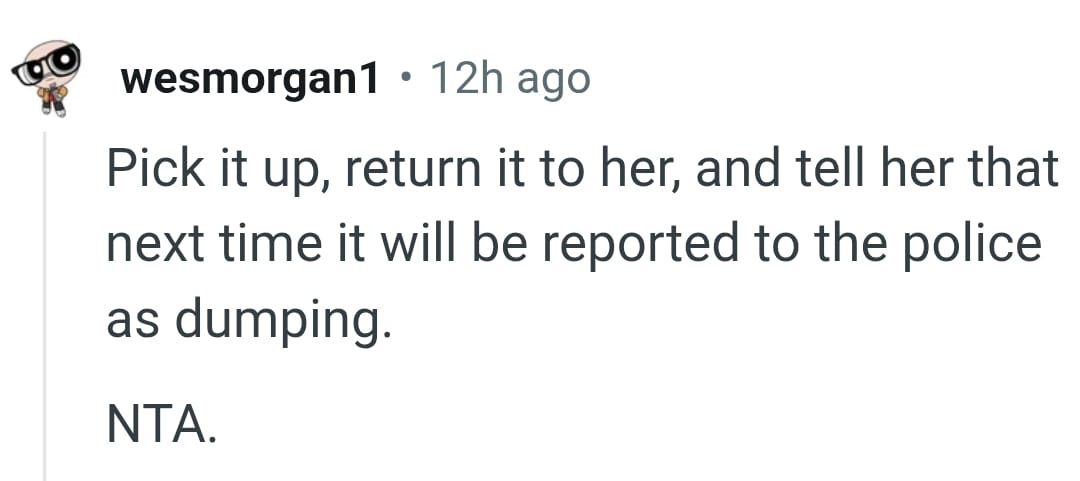
It's obvious the neighbor threw it for the rats
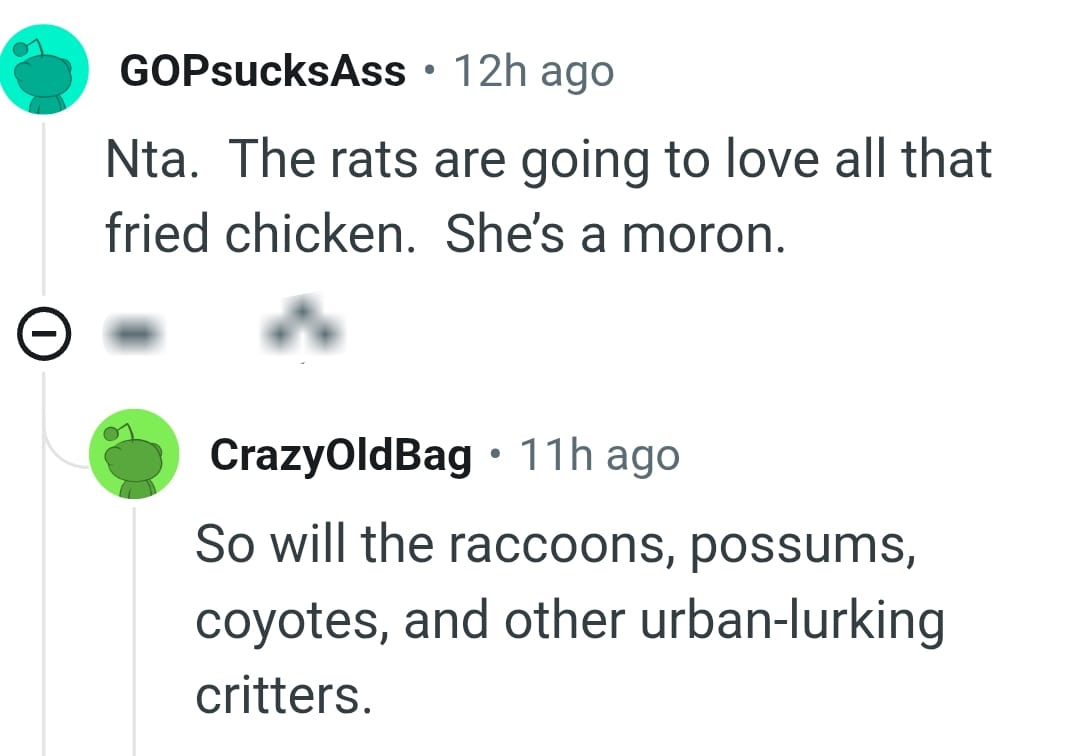
OP then asked the neighbor to pick up the chicken, and suddenly it wasn’t “helping wildlife,” it was extra work and hurt feelings for her.
This is similar to the Redditor praised for refusing to remove her pet chicken after it made her neighbor uncomfortable.
Environmental psychologists argue that littering can create a sense of community neglect, impacting residents' mental well-being. A study published in the Journal of Environmental Psychology indicates that maintaining clean spaces contributes not only to environmental health but also to residents' feelings of safety and belonging.
As such, addressing littering behavior with open dialogue between neighbors can enhance community ties. Encouraging residents to participate in neighborhood clean-up events can foster a sense of ownership and responsibility towards shared spaces.
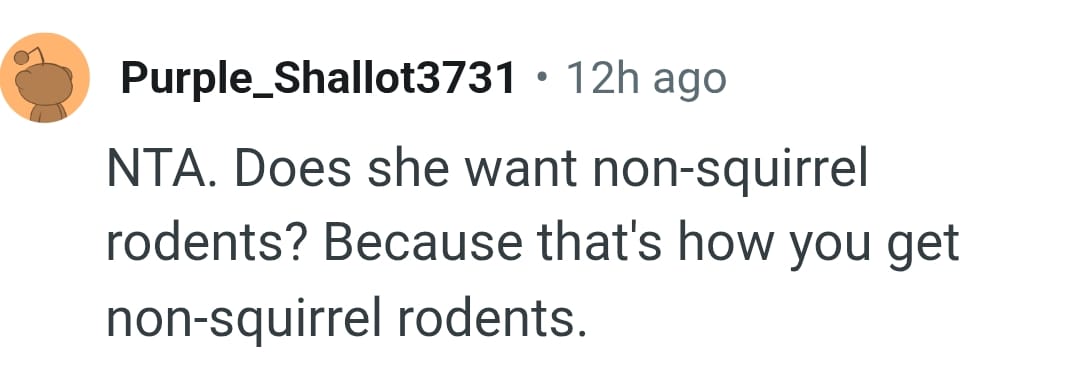
An easy way to get non squirrel rodents
She might try to do something unhinged
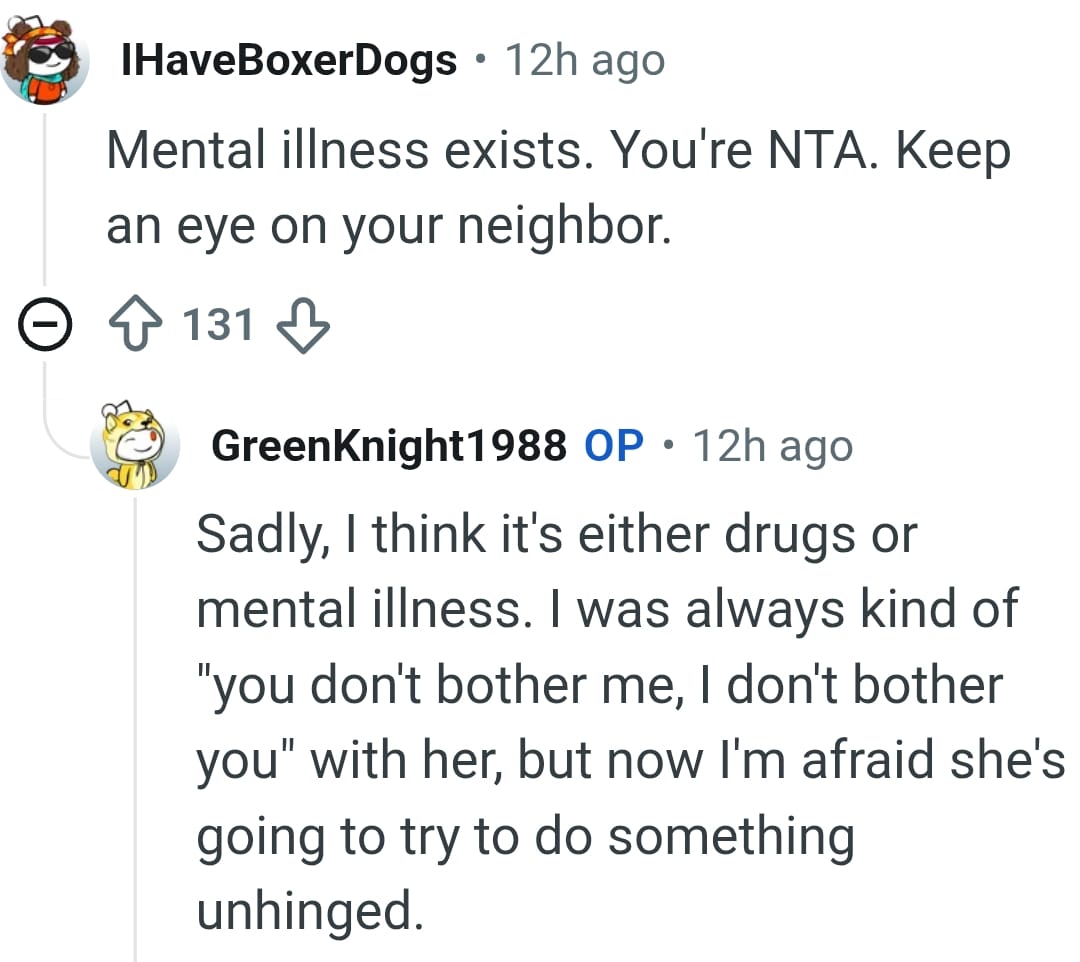
She might have been feeding something else other than the squirrels
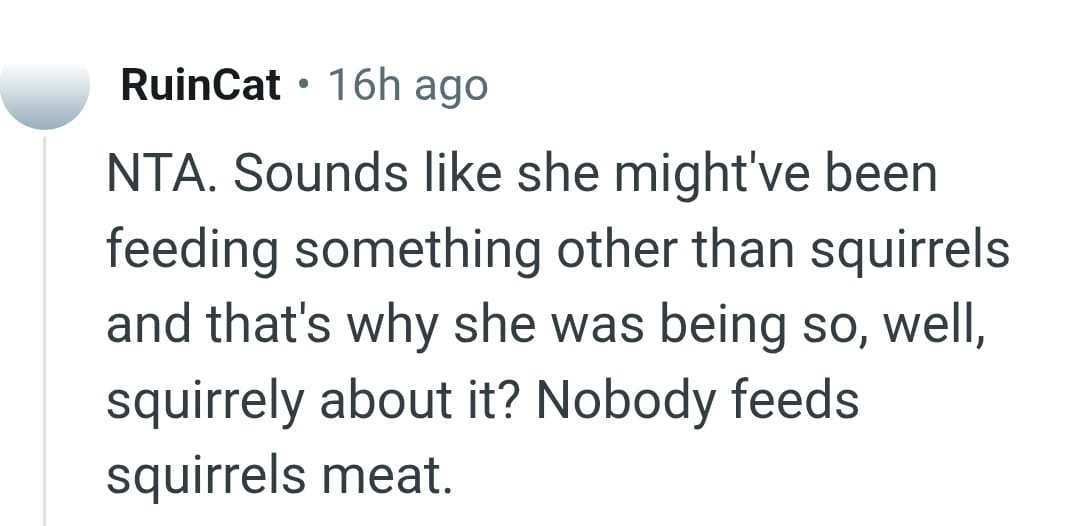
With every little piece of chicken still sitting in OP’s yard, the argument becomes less about squirrels and more about who’s responsible for the mess.
Community Solutions
Additionally, organizing community meetings can help set shared guidelines for maintaining cleanliness.
Some raw chicken at the end of its shelf life
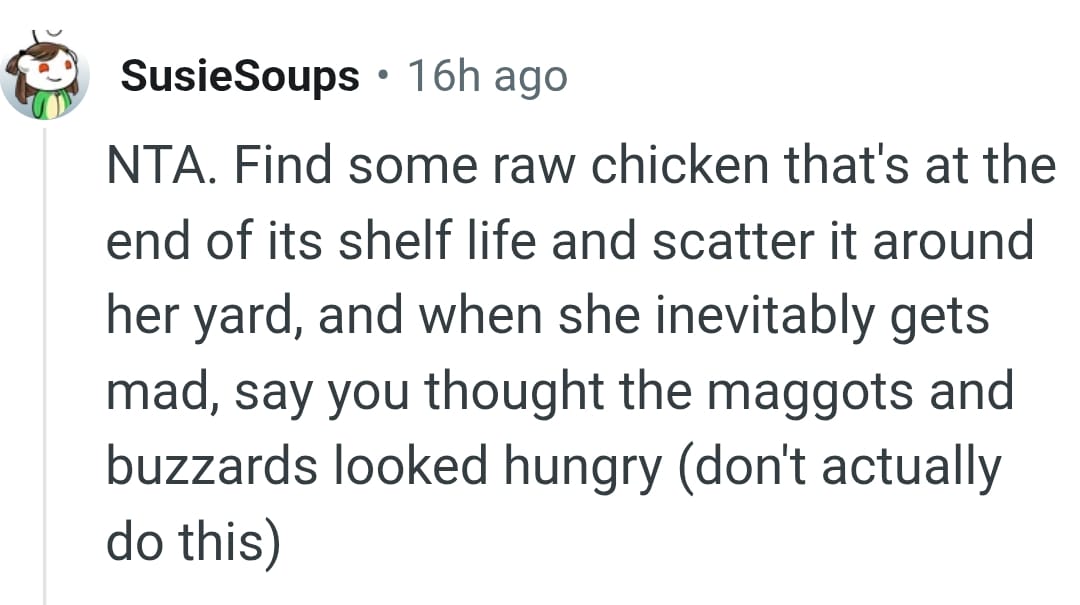
The OP said they didn't know how to react
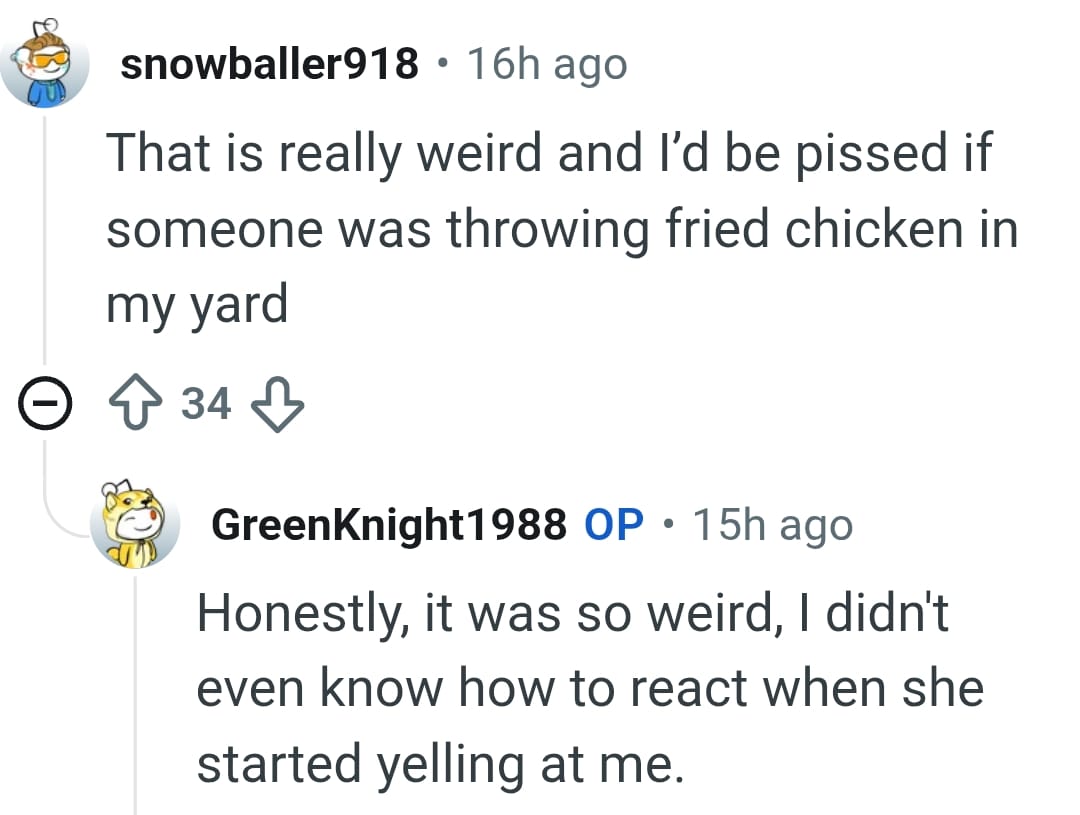
The OP should throw something in her yard
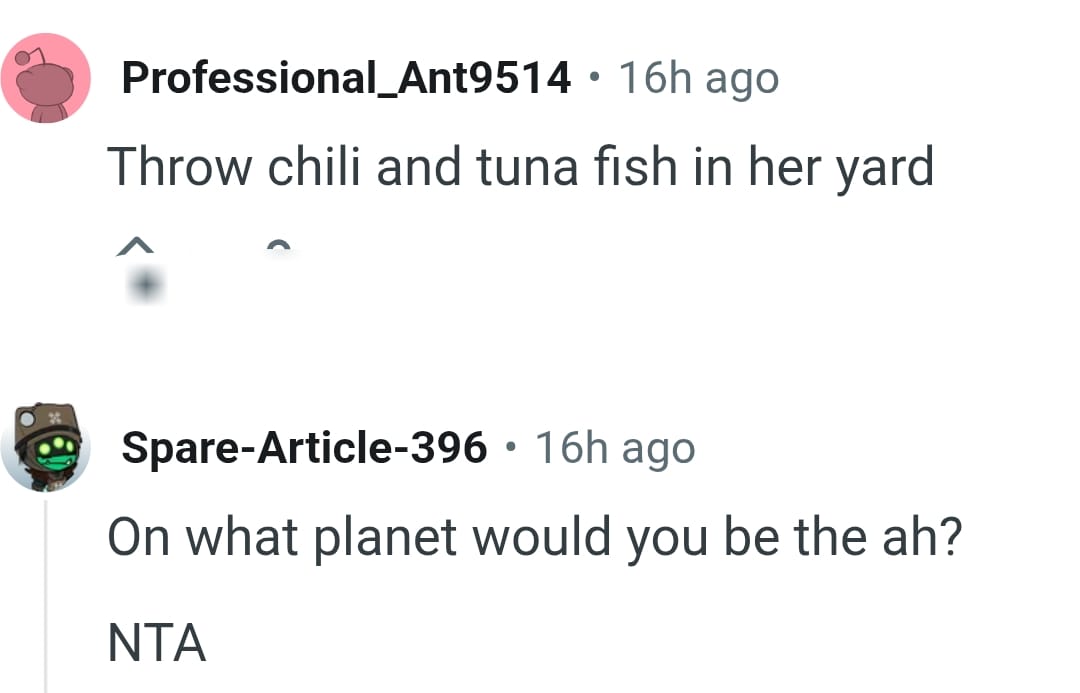
By the time the comments roll in, people are already side-eyeing the neighbor’s motive, because rats and “fast food leftovers” tend to show up when nobody cleans.
The situation described with the neighbor dumping fried chicken remains in the yard highlights a broader issue of irresponsible behavior impacting local wildlife. When food waste is carelessly discarded, it does not just attract squirrels; it can also invite other animals that may pose risks to the community. This can escalate into situations where wildlife becomes overly reliant on human food sources, leading to potentially aggressive encounters.
Educating the community about the proper disposal of waste is crucial. By fostering an understanding of the negative consequences of feeding wildlife, residents can develop a more respectful relationship with their environment. Such awareness is essential for maintaining the balance between human activities and the natural behaviors of local wildlife, ultimately promoting healthier ecosystems.
OP's reaction seems justified, considering the mess and potential health risks associated with discarded fried food.
This incident underscores the tension that can arise when personal intentions collide with social norms and boundaries. The neighbor's decision to dump fried chicken remains in her yard, presumably to feed the squirrels, reflects a misguided kindness that neglects the impact on her neighbor's property and emotional well-being. While the act may stem from a desire to connect with nature or to feel helpful, it ultimately disregards the established boundaries of shared living spaces. Such well-meaning gestures can easily spiral into resentment and conflict, highlighting the delicate balance required in neighborly relations.
The situation described in the article underscores the need for a balanced approach to neighborly relations and environmental stewardship. The act of dumping fried chicken remains in someone else's yard, under the guise of feeding squirrels, reflects a lack of consideration for community standards and personal boundaries. Such thoughtless actions not only disrupt the immediate living environment but can also attract unwanted wildlife, which complicates interactions between residents and animals.
Encouraging a sense of community pride is vital in addressing these issues. Initiatives that promote responsible behaviors, such as proper waste disposal and respect for neighbors' property, can foster better relationships and create a more pleasant living atmosphere. By cultivating awareness and understanding of how individual actions impact the community, residents can work together towards a more harmonious coexistence, benefiting both people and wildlife.
Nobody wants to be the cleanup crew for someone else’s “squirrel snack” experiment.
For more backyard fallout, see how a woman called cops on “therapy chickens,” then got called heartless.
Share this article:





