Friend Hosts Grieving Guest Then Demands Payment For “Dog Mess” That Never Happened

Grief has a way of knocking people off their axis. When a loss hits, routines scatter, priorities warp, and you reach for whatever support you can find.
In moments like these, the people who offer a couch, a room, or even a few quiet days become anchors you didn’t realize you needed. Hospitality carries emotional weight, and the unspoken hope is that kindness won’t come with a surprise invoice taped to it.
But there’s another layer here: pets. Even the best-trained animals shed, track in dirt, or shake off a long car ride at the worst possible moment. Anyone who lives with dogs knows this truth, and anyone who invites dogs into their home usually knows it too.
And that’s where expectations tend to blur. How much mess is reasonable? How much cleanup falls on the guest? And what exactly does “I’m happy to host you and your dogs” mean when grief, travel, and good intentions all collide?
This story drops right into that grey zone where boundaries, politeness, and emotional overwhelm meet. It raises a question that applies far beyond one visit with two shedding dogs. When someone opens their home during a crisis, what should generosity look like, and what does fairness actually mean in moments already stretched thin?
A friend stepped in to help during a family emergency, but the stay came with an unexpected twist.
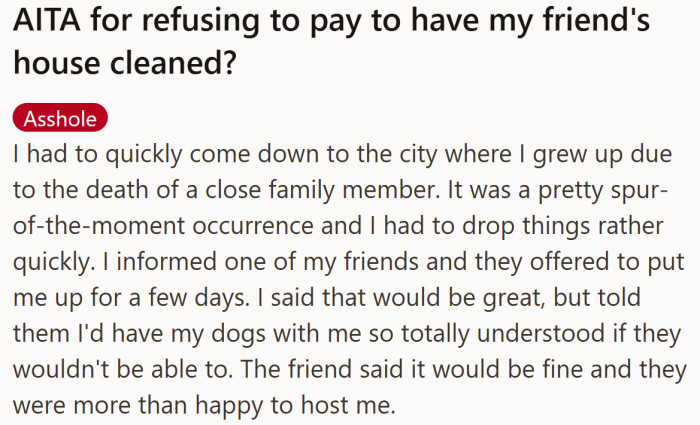
The pups were sweet, just… large enough to count as temporary roommates rather than guests.
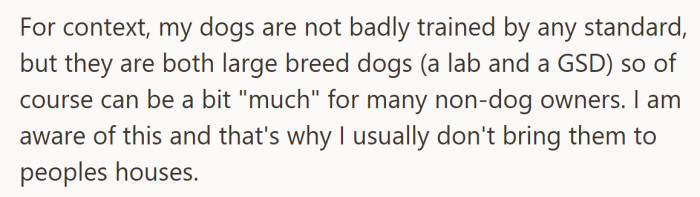
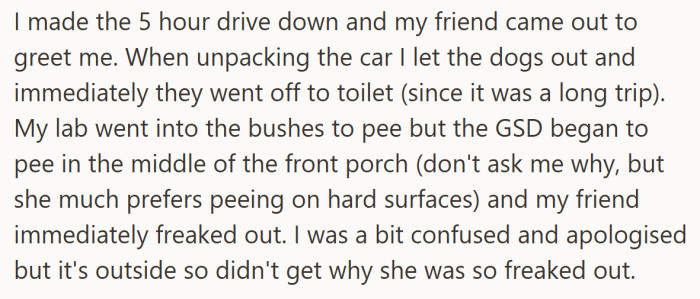
After hours on the road, the dogs rushed to relieve themselves, but one unexpected porch puddle set the friend on edge.
This bond can help alleviate feelings of loneliness and sadness. Understanding this connection can make the emotional landscape surrounding pet ownership even more profound.
Building Emotional Resilience
Ultimately, navigating grief and hospitality requires emotional resilience.
“When we allow ourselves to experience discomfort and communicate our needs, we open the door to deeper connections,” she explains. By fostering a culture of openness and understanding, individuals can create environments where support flourishes, transforming grief into a shared experience of healing.
Inside the house, the dogs were model guests, leaving nothing behind except the occasional tumbleweed of fur.

The goodbye text took a turn when the friend asked for cleaning money, all because of floating fur.
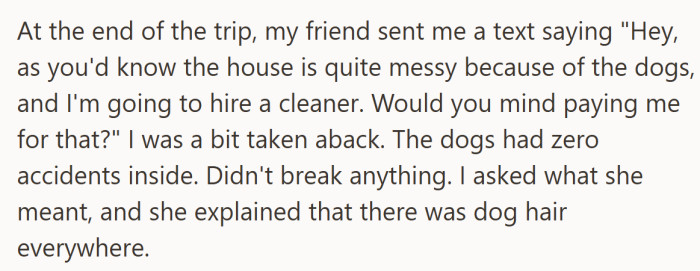
Dog hair happens, and the guest figured a quick vacuum would fix it, especially since the stay was offered with full knowledge of the pups.
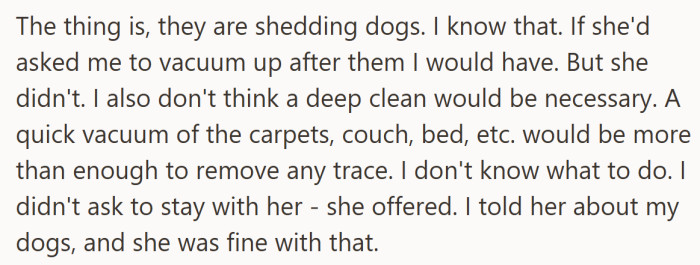
OP thought the stay was handled, then the porch “puddle” allegation popped up like it was evidence in a case.
The unfolding drama of a grieving guest confronted with a demand for payment for a supposed “dog mess” encapsulates the complexities of human relationships during times of emotional turmoil. In these moments of profound loss, individuals often rely on the kindness of friends to provide solace and comfort.
The situation underscores the importance of open communication when one is in distress. Establishing expectations before entering a space of vulnerability can help ensure that acts of hospitality remain genuine and supportive. Without these conversations, the risk of turning a compassionate gesture into a transactional exchange looms large, potentially damaging the very relationships that should provide refuge. In this case, what could have been a nurturing experience became a source of conflict, highlighting the delicate balance between offering support and maintaining mutual respect.
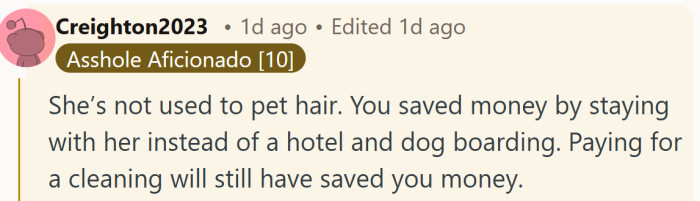
Grief makes even simple expenses feel heavier, but the point about saved costs lands gently.
Nothing like a shepherd, a lab, and one porch puddle to spark a full hygiene debate.
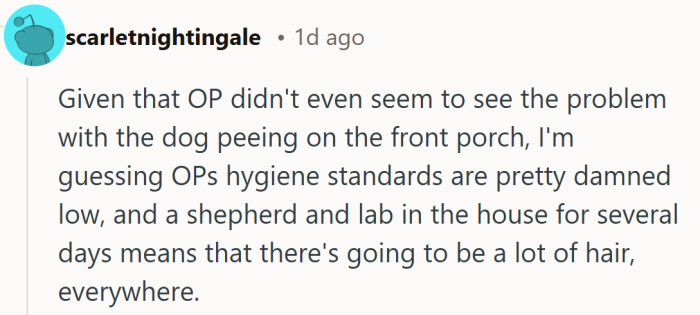
In a non dog home, vacuuming becomes the love language no one asked for but everyone appreciates.
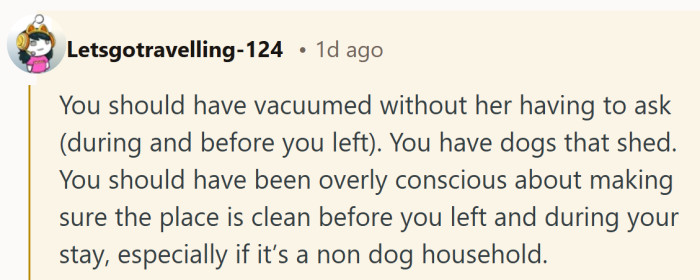
After the dogs behaved like model guests and only left fur behind, the friend still decided to demand cleaning money.
Emotional labor often surfaces in moments of crisis, particularly when one friend feels obliged to shoulder burdens alone.
Even good intentions can backfire when a vacuum meets a blizzard of dog hair.
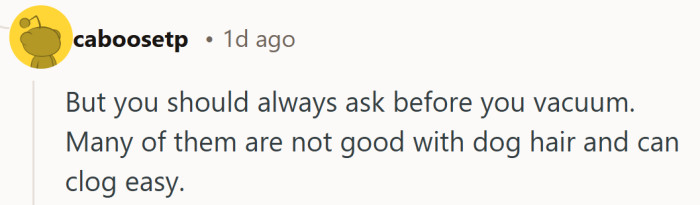
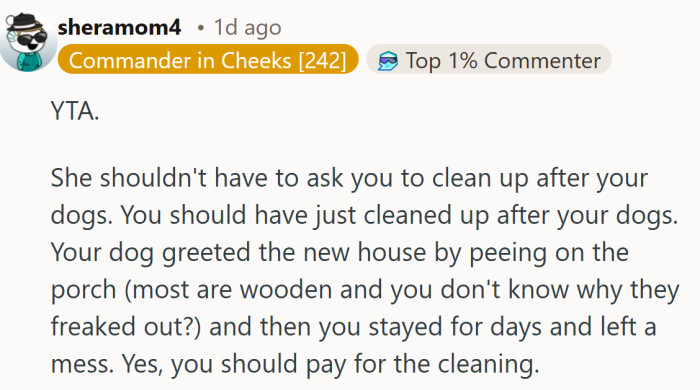
A tough verdict, delivered with the kind of certainty that leaves no room for debate.
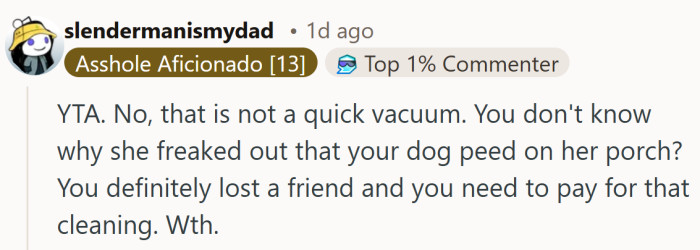
For a lot of people, tidying up without being told feels like basic respect in a borrowed space.

The situation described in the article highlights how a lack of transparency can lead to misunderstandings and resentment.
Living with pets can make fur feel invisible, but a non animal home notices every strand.
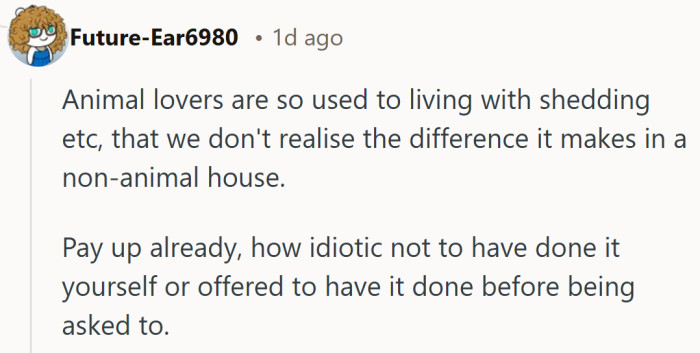
A blunt bottom line that skips the emotions and goes straight to the invoice.
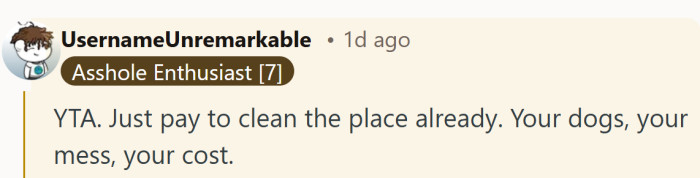
Softer take that still circles back to the same conclusion: gratitude comes with chores.
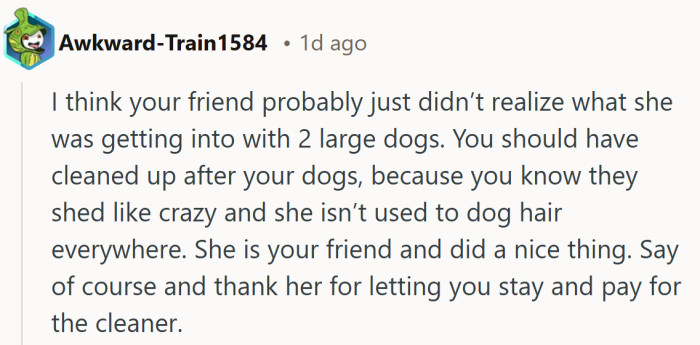
The guest claiming a supposed “dog mess” showed up after the fact, right when the vacuum was the only “crime scene” anyone could point to.
during grief, people often rely heavily on their social networks. “Being surrounded by understanding friends, even in silence, can ease emotional burdens,” she remarks. This further illustrates how community support is essential in navigating the tumultuous waters of grief.
For some, the cost comparison made the situation feel clear cut, especially with two big dogs in the mix.
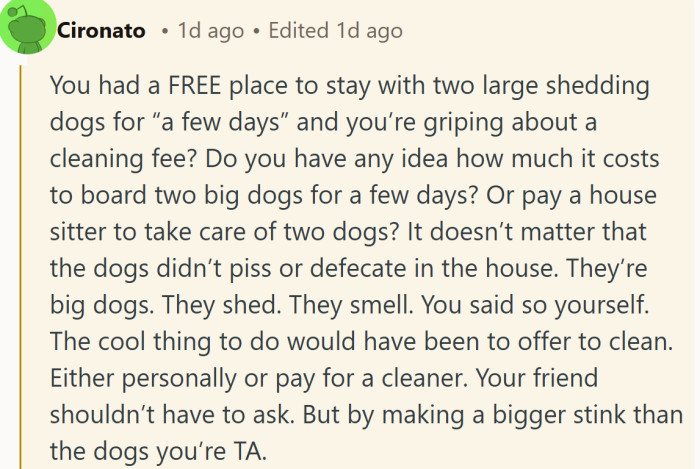
A reminder that even outdoor moments can shift the vibe when two people have very different mess thresholds.
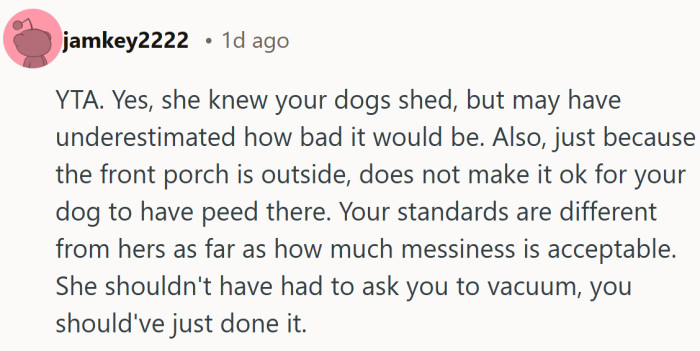
Firm reminder that standards don’t have to match for cleanup to still land on the guest.
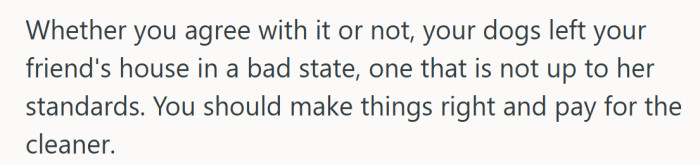
That’s when things got complicated, because the grieving situation and the payment demand landed in the same text thread.
Transforming Hospitality Expectations
To prevent future misunderstandings, it's essential to establish guidelines for hospitality.
The real friendship test wasn’t the stay, it was noticing the fur storm and tackling it before hitting the road.
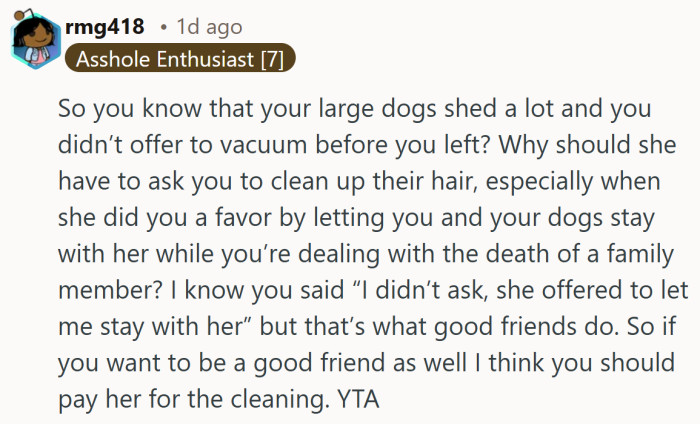
With dogs lovingly called german shedders, this angle treats the cleanup as an expected part of the package.
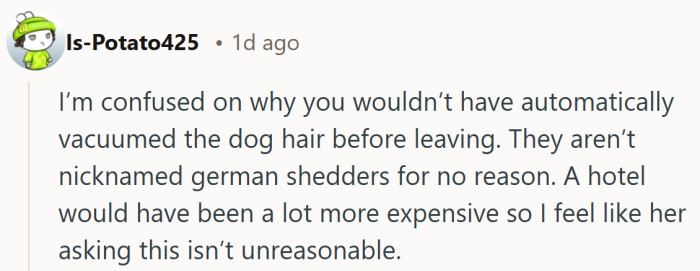
The pups made their grand entrance and the cleaner bill became the encore no one asked for.
The situation described highlights a critical aspect of human relationships during times of grief.
Stories like this linger because they touch something tender. Friendship, support, and hospitality all sound simple until real life walks in with muddy paws and unspoken expectations. Some readers will say that cleaning is the cost of being a host.
Others will insist that guests, pets or not, should always leave a space exactly as they found it. It leads to a bigger, quieter question about care and reciprocity. When someone offers help during a loss, how much responsibility shifts in return? Would you have paid for the cleaner or pushed back on the request? Share this with someone who’d have a strong opinion!
This situation starkly illustrates the ways in which grief can warp perceptions and expectations for both the host and the grieving guest. The host, likely overwhelmed by their own emotions, may have misinterpreted the circumstances, viewing a non-existent mess as a burden that required financial compensation. This reaction reflects how stress can cloud judgment in moments of vulnerability. On the other hand, the guest, already grappling with their own sorrow, was caught off guard by the unexpected demand, revealing how emotional turmoil can complicate even the simplest gestures of kindness and hospitality. The tension between these two perspectives underscores the delicate balance required when offering support during times of loss.
The situation outlined in the article sheds light on the often-overlooked intersection of grief and hospitality.
Nobody wants to be billed for floating dog fur when the “mess” was never real.
Wait until you see how the host demanded a service dog “on duty” all birthday.
Share this article: