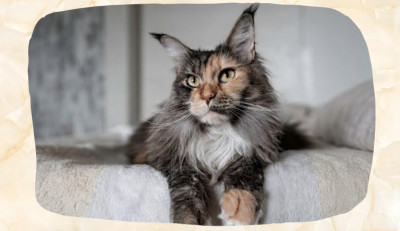
Friends Needy Cat Puts Petsitter in a Tough Spot

A 28-year-old woman agreed to petsit her friend’s rescue cat, Whiskers, for “a few weeks,” and immediately realized she just signed up for chaos. This cat was not the gentle, nap-in-the-sun type. Whiskers was needy, anxious, and apparently allergic to the idea of being alone.
Emily, the friend who adopted him, didn’t mention any of that before dropping him off. Day one looked like a horror movie for productivity: constant meowing, knocking stuff off shelves, and even peeing outside the litter box. Meanwhile, OP is working remotely from home, so it wasn’t just stressful, it was nonstop.
When OP finally called Emily after a week of sleepless nights, the argument turned into a question Reddit can’t stop debating: is OP the a*****e for refusing to keep doing this for another three weeks?
Original Post
I (28F) have a friend, let's call her Emily, who recently adopted a rescue cat named Whiskers. Emily's job requires a lot of travel, so she asked me to petsit Whiskers for a few weeks.
As an animal lover, I agreed without knowing what I was getting into. For background, Whiskers is not your typical laid-back cat.
This furball is high-maintenance, demanding attention 24/7, and gets anxious if left alone for more than a few hours. Emily failed to mention any of this before dropping Whiskers off at my place.
The first day was chaotic. Whiskers meowed incessantly, knocked things off shelves, and even peed outside the litter box. Despite my best efforts to make Whiskers comfortable, the behaviors continued.
I work remotely from home and having a constantly needy cat around made it impossible to focus. Emily had assured me that Whiskers was easy to care for, but the reality was far from it.
After a week of sleepless nights and frayed nerves, I called Emily to discuss my concerns. I told her that I didn't anticipate Whiskers needing this level of attention and that it was impacting my work and mental health.
I suggested that maybe it would be better for Whiskers to go to a professional pet sitter who could meet his needs. Emily was furious, accusing me of not fulfilling my promise to help her out and being insensitive to Whiskers' needs.
She demanded that I keep caring for Whiskers until she returned, even though it would be for another three weeks. I felt trapped and overwhelmed by the situation.
So, Reddit, with Emily expecting me to continue petsitting a difficult cat, am I the a*****e here?
By recognizing these signs, pet sitters can better respond to the cat's needs, providing reassurance through gentle interaction and creating a safe space for them.
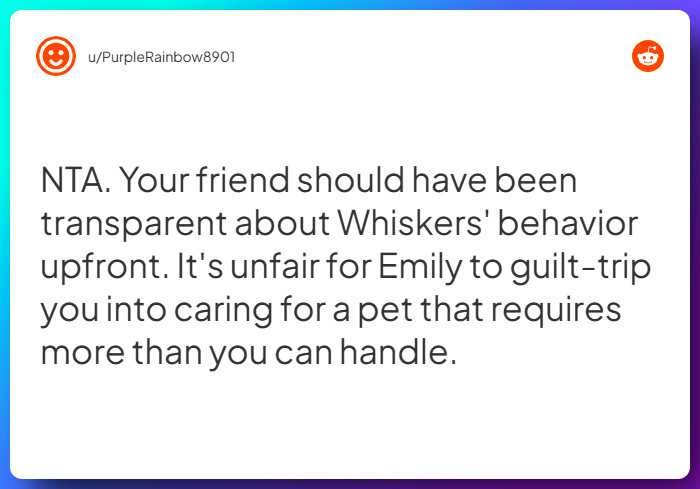
Comment from u/PurpleRainbow8901
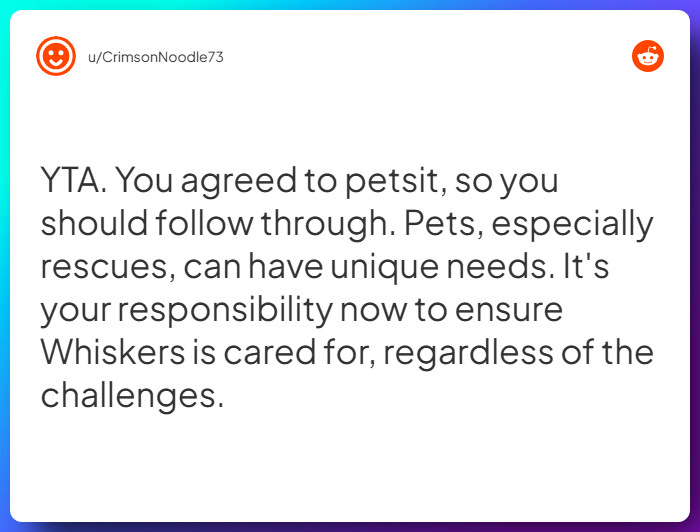
Comment from u/CrimsonNoodle73
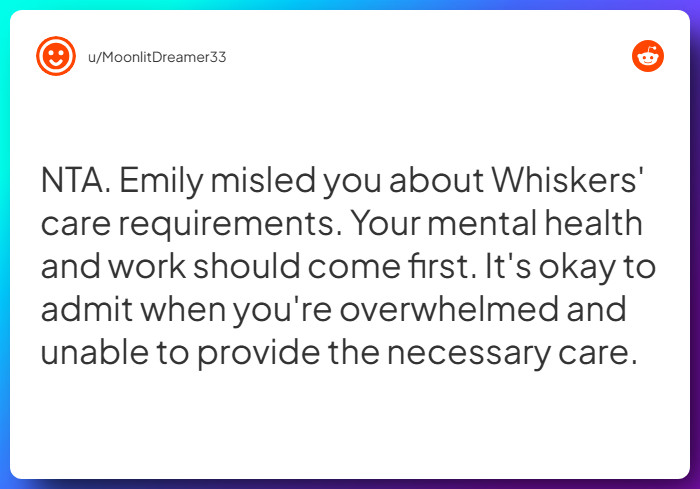
Comment from u/MoonlitDreamer33
The minute Whiskers started meowing nonstop and knocking things over, OP’s “simple favor” turned into a full-time problem with Emily nowhere to be found.
Many pet owners underestimate the commitment required when caring for a pet.
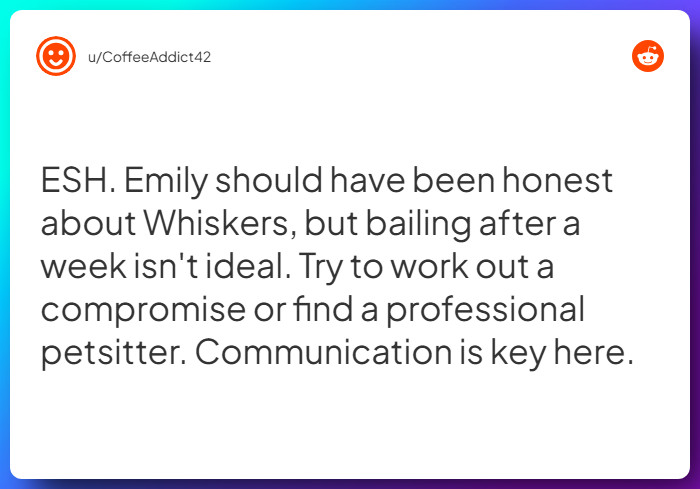
Comment from u/CoffeeAddict42
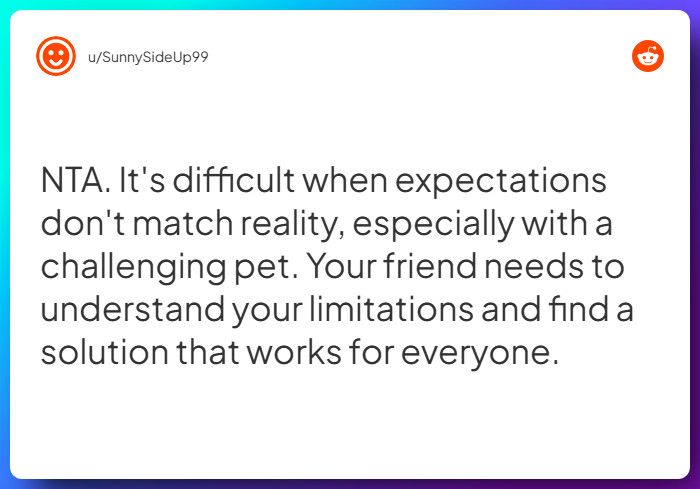
Comment from u/SunnySideUp99
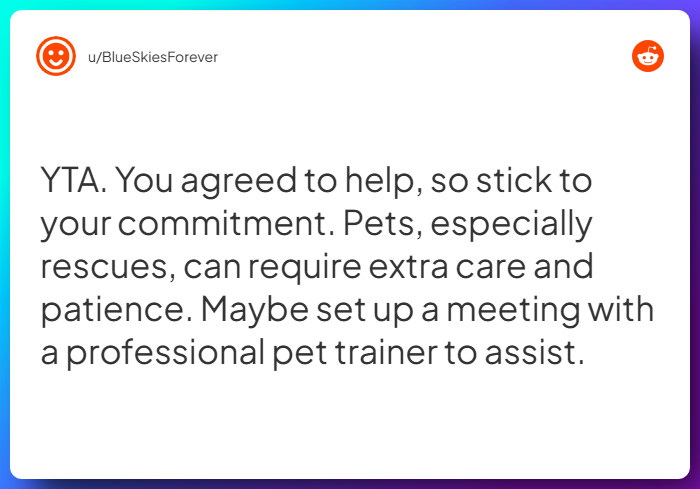
Comment from u/BlueSkiesForever
After Whiskers peed outside the litter box and OP couldn’t focus on work, OP called Emily to explain the situation, and that’s when the blame started flying.
This gets messy like the AITA argument where someone refused to clean up after a friend’s dog while petsitting.
Emily got furious and insisted OP keep caring for Whiskers until she returned, even though it meant three more weeks of the same mess.
To prevent such situations in the future, both pet owners and sitters should engage in open dialogues about expectations, responsibilities, and the pet’s specific needs. This proactive approach strengthens trust and can enhance the overall experience for everyone involved.
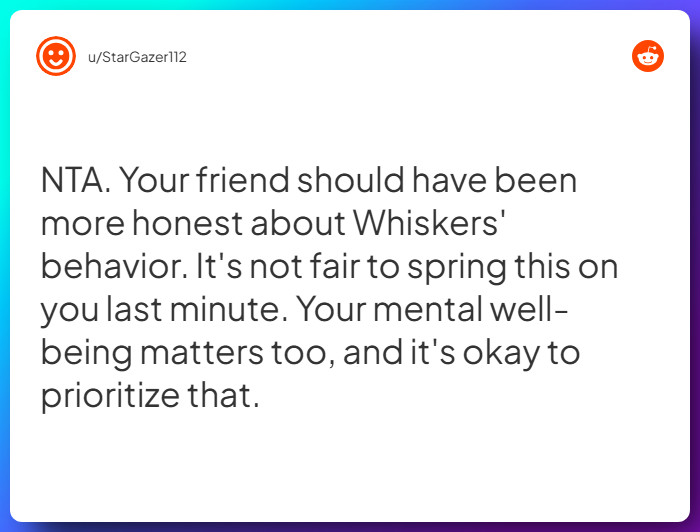
Comment from u/StarGazer112
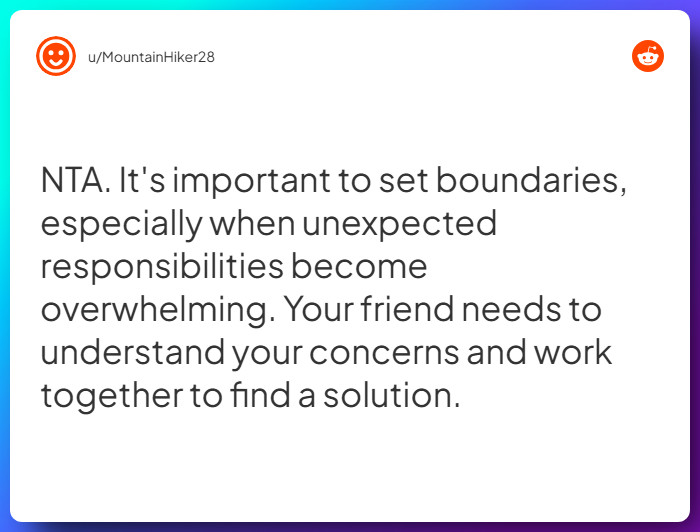
Comment from u/MountainHiker28
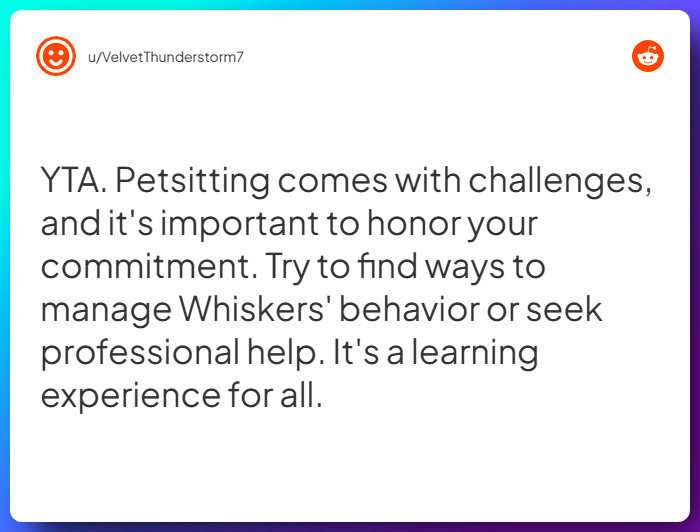
Comment from u/VelvetThunderstorm7
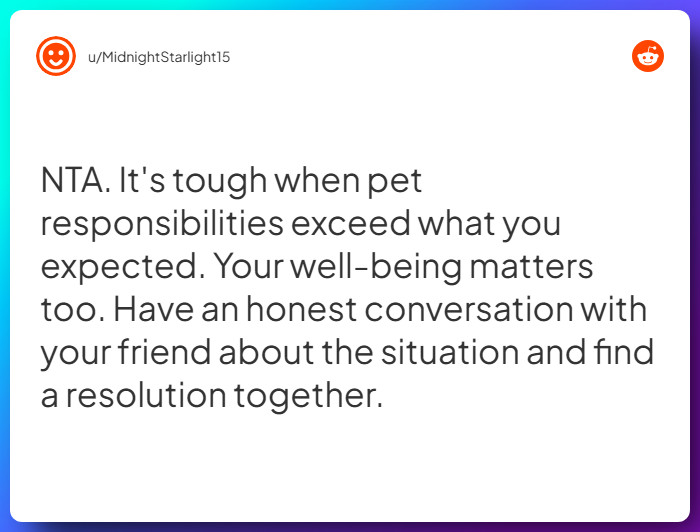
Comment from u/MidnightStarlight15
Now OP is stuck between her promise and her breaking point, wondering if she really messed up, or if Emily missed the entire point of what “petsitting” actually involves.
What's your opinion on this situation? Join the conversation!
The situation involving the OP and her friend Emily highlights the critical importance of communication when it comes to pet sitting. The article illustrates the potential pitfalls that can arise when expectations are not clearly defined, leading to stress for both the sitter and the pet.
Establishing structured guidelines for pet care, as seen in the OP's initial agreement, could have alleviated some of the tension. The lack of clarity surrounding Whiskers' specific needs not only places the OP in a difficult position but also underscores the necessity for open lines of communication in these arrangements.
The original poster likely felt overwhelmed because there was a mismatch between her expectations and the reality of caring for a high-needs pet.
Emily's reaction shows how misunderstandings can escalate into conflict, often stemming from unspoken assumptions and a lack of transparency about what the commitment entails.
Nobody wants to be trapped petsitting a cat that was never described honestly in the first place.
Before Whiskers, was Emily right to adopt anyway, or did you need to stop her? Read this AITA debate over a rescue cat adoption without consulting the petsitter.
Share this article: