The Weird Truth About How Horses Cool Down

There’s a reason horses look like they’re wearing a permanent frothy “work sweat” when they’ve been pushed all day, and it’s not just because they’re tired.
Back in the big picture, humans can outlast a chase because we cool down by sweating across our whole bodies, while a lot of other animals lean on panting, which burns energy and slows them down sooner in the heat. That part sounds simple until you remember horses are basically walking insulation, their thick coats trapping heat and making evaporation harder.
So the real plot twist is that horses needed a cooling hack, and they evolved one that turns sweat into lather.
Humans gained an edge because we cool down far better than panting animals.
Author and academic Vybarr Cregan-Reid explained the science behind this in an article for The Conversation. Most four-legged animals, including horses, do sweat, but not primarily to cool down.
Instead, their sweat plays roles in scent communication and skin maintenance. When it comes to lowering body temperature, most quadrupeds rely on panting - forcing air through their bodies to shed heat.
The problem is that panting is energy-intensive, so if these animals were chased on a hot day, they’d slow down long before a human would.
Humans, on the other hand, cool down by sweating across the entire body, which is far more efficient over long distances. According to Cregan-Reid, this gave early humans an unexpected advantage as hunters: our cooling system didn’t “overheat” as quickly as that of our prey.
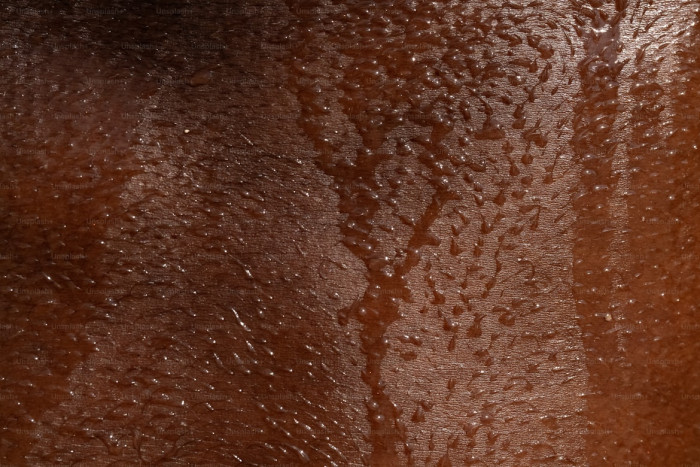
That same human advantage starts sounding less like destiny and more like a design flaw for every panting animal in a hot pursuit.
But horses are different from other quadrupeds in one significant way: they’re incredibly hairy. Their thick coat traps heat and slows evaporation. Sweating alone wouldn’t be enough to cool them efficiently - unless their bodies evolved a workaround.
And they did.
Horses cool down with lather-rich sweat that spreads fast and turns into foam.
Researchers studying equine biology discovered that horses produce a special protein in their sweat called latherin. While human sweat is salty and low in protein, horse sweat is rich in this unusual substance.
Latherin behaves almost like a natural detergent. It reduces water's surface tension, allowing sweat to spread quickly through the animal’s dense coat. This helps moisture travel from the skin to the outer hair, where it can evaporate much more easily.
The side effect? Foam.
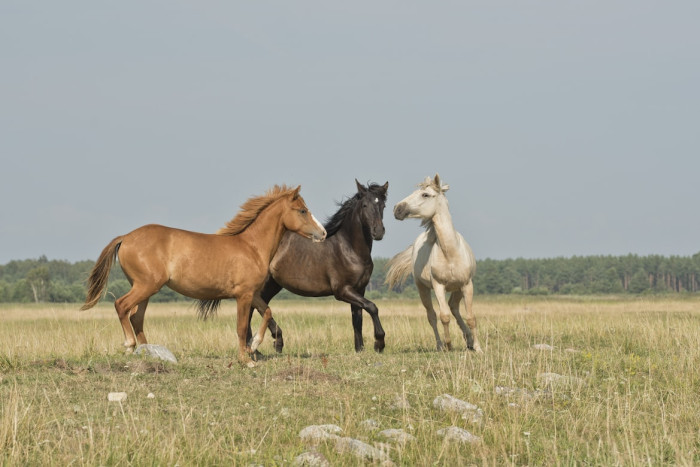
Now picture a horse coming back from a hard run, sweat beading up like usual, then suddenly going white and foamy where the neck and flanks take the heat.
And if you thought only humans could look unreal, the Akhal-Teke that looks bathed in gold
The reason becomes the latherin protein in horse sweat, which spreads fast through the coat like a natural detergent instead of just sitting there.
So when you see a hard-working horse with white froth along its neck or flanks, that’s simply latherin doing its job. The protein creates a bubbly, soapy appearance, especially in areas where the saddle or reins rub.
Kentucky Equine Research further explains that this foamy look is entirely normal. Because horses generate an enormous amount of heat during exercise, they rely on latherin to cool themselves fast enough to stay safe. Without it, their thick coats would trap sweat, slowing the entire process.
It may not be the most glamorous biological feature, but it’s incredibly effective.
And if you’ve ever noticed froth around the saddle or reins, that’s latherin showing off, doing its job and making the mess look almost intentional.
Now you’re in on the secret: horses may look elegant and powerful, but their bodies rely on a cooling system that turns sweat into foam. It can catch people off guard the first time they see it, yet it’s simply nature doing its job efficiently.
It may seem unusual or even a bit unsettling, but this bubbly sweat helps these animals stay comfortable while they run, work, and exercise.
Next time you see a horse covered in soap-bubble sweat, just remember it’s their built-in cooling system, not a spa day.
Ever seen Jingang fake death to dodge a ride? Then read this.
Ever seen Jingang fake death to dodge a ride?
Share this article: