
Granddad Shares 29 Pictures Showing How He Transformed His Garden Into A Halloween Village For Wild Mice

Simon Dell didn’t just decorate his garden for Halloween, he built a full-on Halloween village for wild mice, complete with tiny homes and spooky little details. The result is so specific it feels like a movie set, except the stars are the ones you usually never notice.
And yeah, it gets complicated in the best way. Dell is crafting these mouse-sized dwellings by hand, using recycled materials, then tucking them into a landscape that actually supports what the mice need to survive. Between the pumpkin “monster” moments, the ghost costume trick-or-treat scene, and the “hurry, get back inside” vibe, it’s charming, but it’s also a real habitat, not just decoration.
Here’s how one granddad’s Halloween obsession turned into a tiny refuge, and why the mice’s behavior says more than the photos ever could.
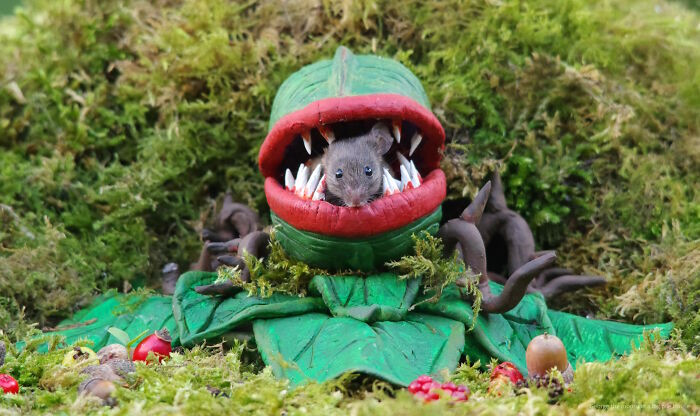
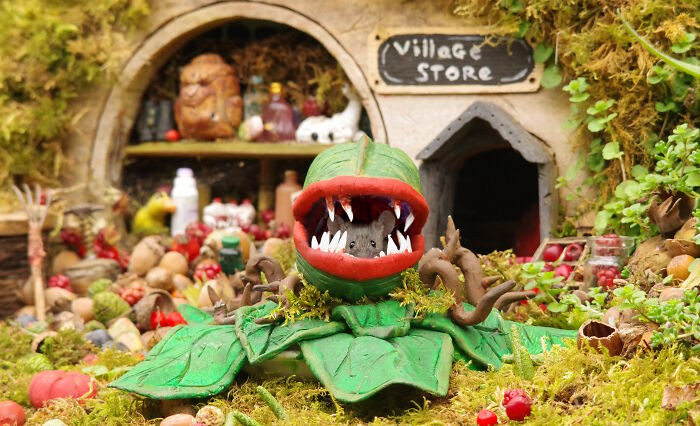
1. The Little Mouse Of Horrors. Inspired By The Movie
2. Take That Pumpkin Monster As The Mouse Takes A Bite
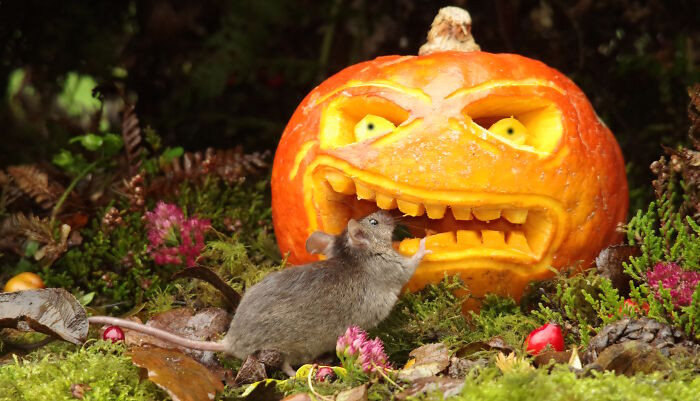
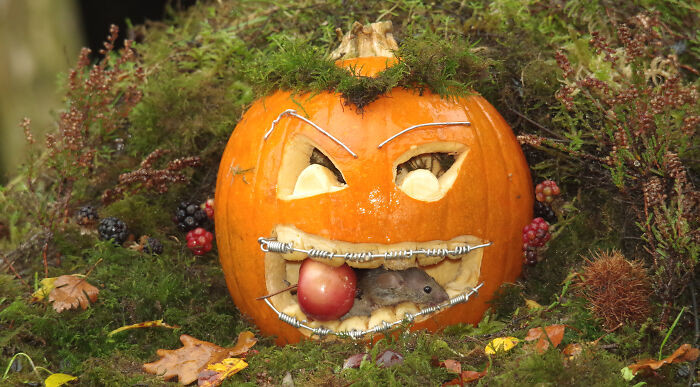
3. Mouse Eating Pumpkin Or Pumpkin Eating Mouse, You Decide
The transformation of Simon Dell's garden into a whimsical Halloween village for wild mice serves as a remarkable case study in urban wildlife habitat creation. By constructing these tiny dwellings by hand, Dell not only enhances the visual appeal of his garden but also fosters a sanctuary for local wildlife. The choice to utilize recycled materials reflects a growing trend among gardeners who prioritize sustainability while contributing to biodiversity.
In this context, the design of the habitats aligns closely with the natural behaviors of the mice. By offering shelter, food sources, and adequate hiding spots, Dell's garden becomes a haven for these small creatures, encouraging them to thrive. Furthermore, the integration of native plants into this environment is crucial, as they support local insect populations, which in turn serve as a food source for the mice. This thoughtful approach underscores the significant role gardens can play in nurturing urban wildlife, showcasing how creativity and ecological responsibility can coexist beautifully.
4. George The Mouse In His Pumpkin House
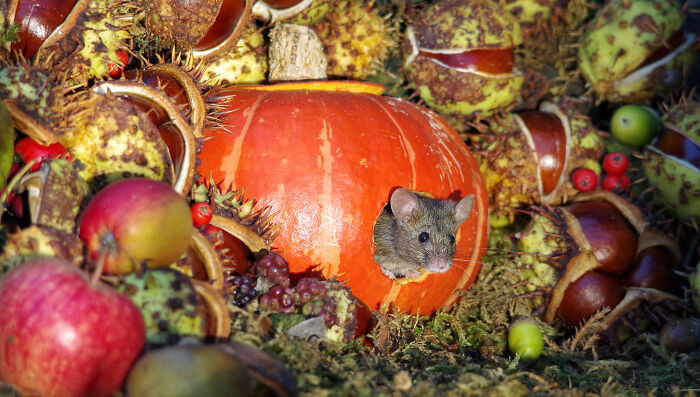
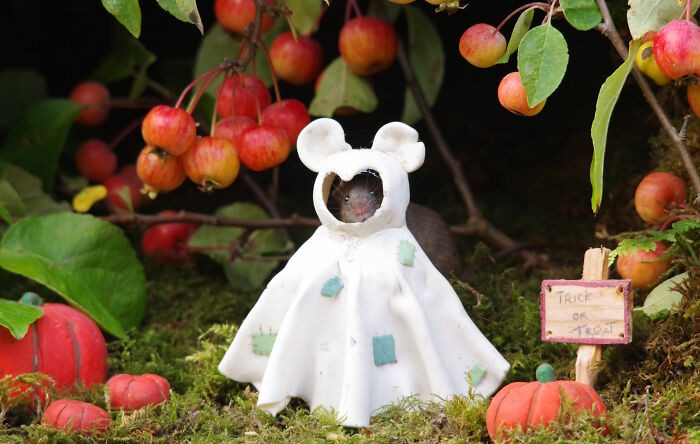
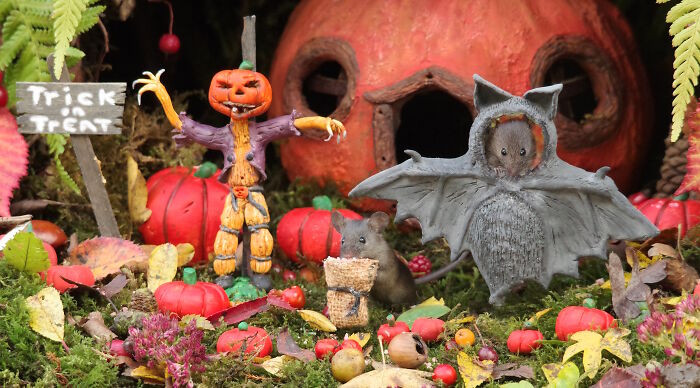
5. A Couple Of The Baby Mice Are Trick-Or-Treating With Their Ghost Costume
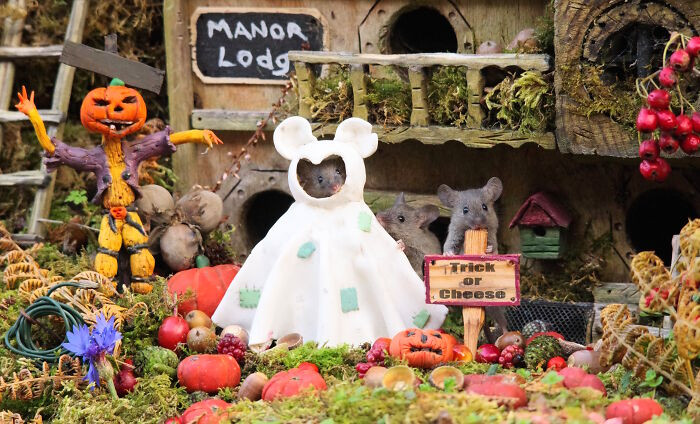
6. Hurry, Get Back Inside, The Giants Are Coming

The “Little Mouse of Horrors” inspiration is what kicks everything off, and suddenly the pumpkin monster isn’t just a prop, it’s part of the plan.
Simon Dell's transformation of his garden into a Halloween village for wild mice offers a remarkable glimpse into the world of these often-overlooked creatures. By crafting a whimsical setting, he not only provides shelter but also creates a controlled environment where their natural behaviors can be observed. The curiosity of the mice is likely to lead to intriguing interactions with the handcrafted decorations and food that Simon has thoughtfully included in the village.
This initiative highlights the potential for urban spaces to coexist harmoniously with wildlife, as Simon's garden becomes a stage for the mice's social dynamics and preferences. Such creative projects can deepen our appreciation of nature and encourage others to think about how they can support local fauna in their own backyards.
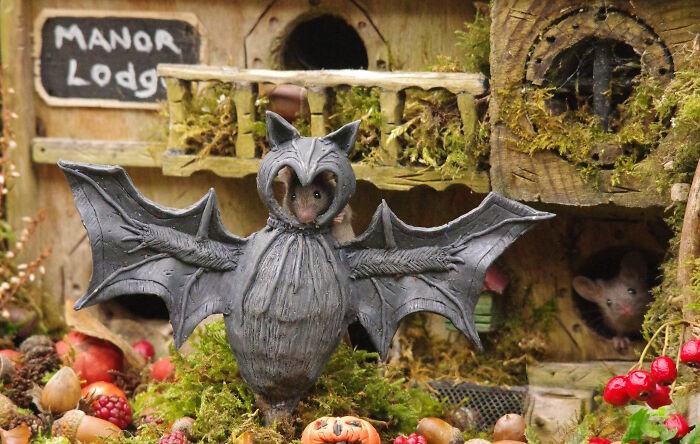
7. One Of The Mice Is In A Scary Bat Costume. Are You Afraid Yet?
Why did Simon Dell start a mouse village? That is a common question and he says it all began in 2018.
"I had just begun getting into photography to help deal with my depression, to give me a reason to get out of the house, and maybe meet new people. My wife and I would travel all over the local Peak District in search of things to photograph, and on the days we couldn’t get out, I would sit in the garden taking photos of birds or other wildlife," he said.
Even back then, while Simon was taking pictures of birds, he would use small props or oddball handcrafted bird tables.
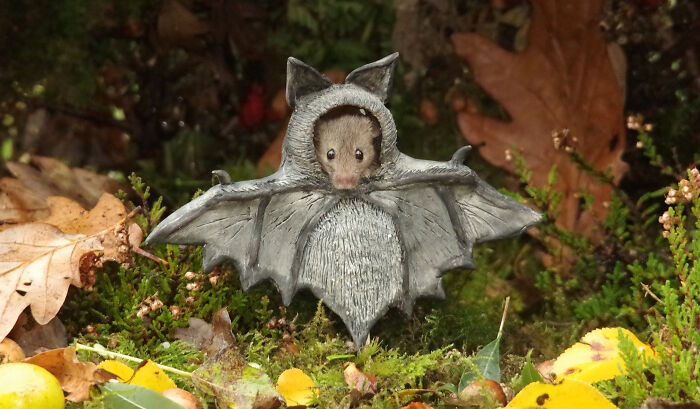
8. Bat Mouse, Now All We Need Is A Robin
9. A Pumpkin Head Mouse

Sustainable Practices
For instance, instead of using synthetic materials, opt for biodegradable options or natural materials like wood and stone. This not only reduces waste but also creates a more natural habitat for the mice.
Moreover, it’s beneficial to plant native species around the village to attract beneficial insects and provide a balanced diet for the mice. This approach not only supports the mice but also encourages a rich biodiversity within the garden.
10. Ghost Mouse, So Very Spooky

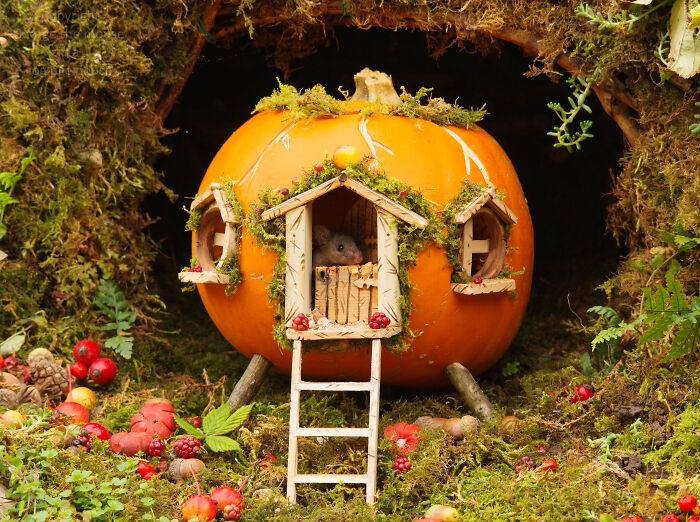
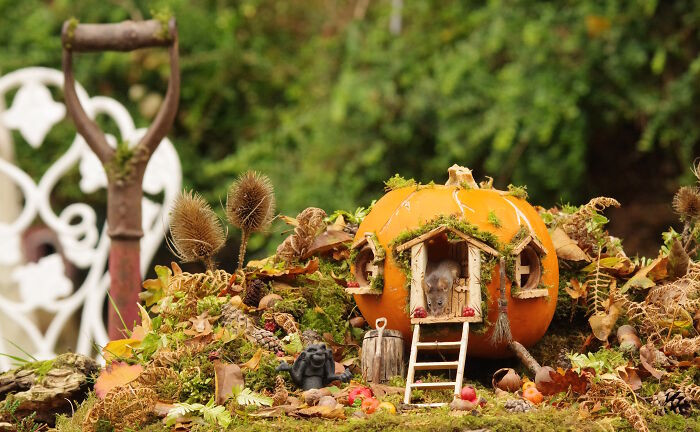
11. Pumpkin Cottage And The Little Mouse That Lives There
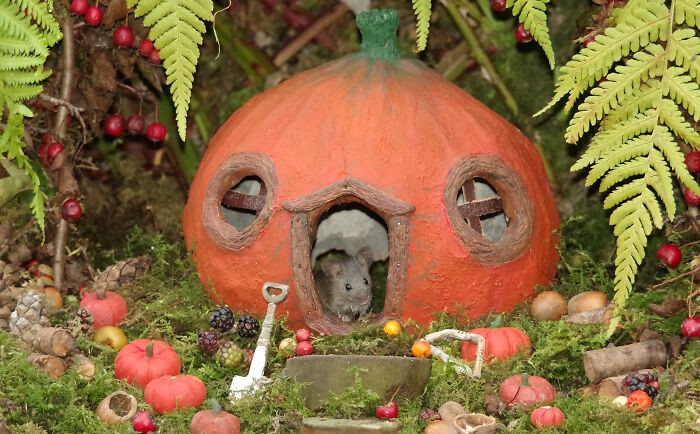
12. The Pumpkin Mouse House Is So Very Spooky
13. The Mouse Pumpkin Seller And His Market Stall
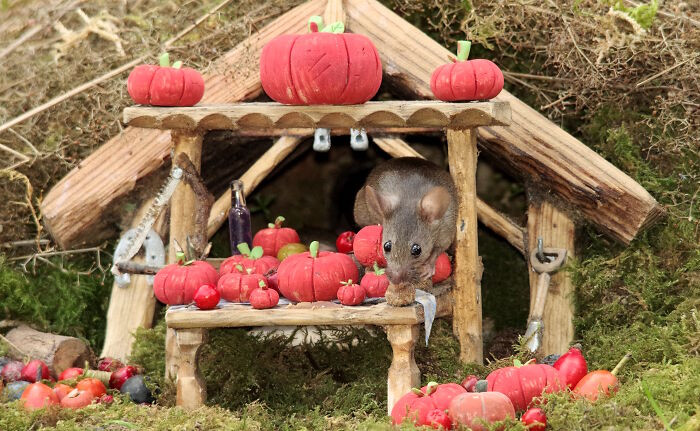
When the mice start “taking bites” from the pumpkins, Simon’s recycled village stops being cute background noise and becomes a functional stopover.
And if you’re curious about what happens when mice avoid social contact, read about “Universe 25” and Calhoun’s “beautiful ones”.
Then one day, after just cutting the lawn, Simon was sitting on the patio when he saw movement in the recently cut grass. George the Mouse, a lone male house mouse amid grass a bit taller than himself, was there as Simon reached for his camera and zoomed in.
"As I started to take photos, he stood up on his back legs like a little meerkat and looked over towards me. I thought he would run away, but he didn’t. He stood there for some time, checking me out," he added.
Everyone adored the pictures when the grand dad shared them in various Facebook groups.
14. The Little Mouse Shop Of Horrors
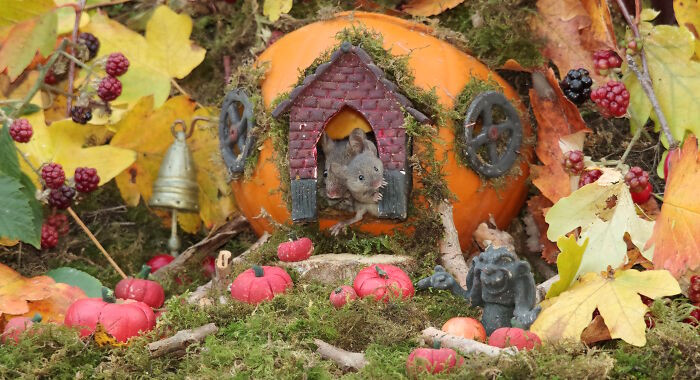
15. Pumpkin Cottage And A Little Baby Mouse At The Door
Impact of Urbanization
16. The Pumpkin House. I Hand-Made The Doors And Windows From Wood To Decorate A Real Carved Pumpkin
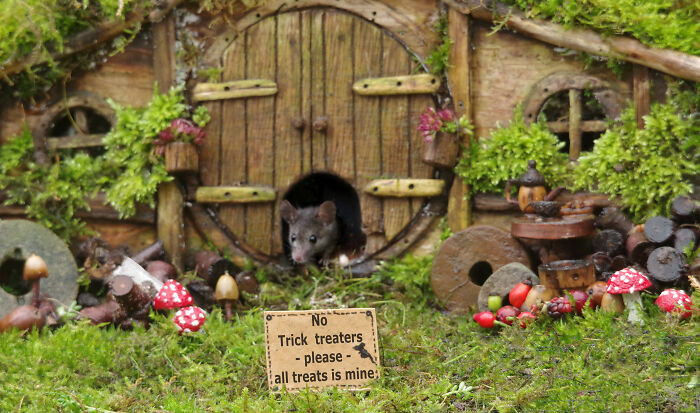
17. A Grumpy Little Hobbit Mouse - "No Trick-Or-Treaters Please, All Treats Are Mine"
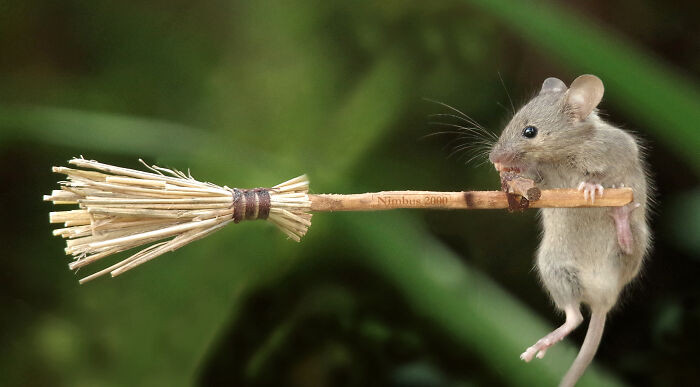
18. A Broomstick-Riding Mouse
Then you spot George the mouse in his pumpkin house, and it’s obvious Dell designed the hiding spots for real mouse routines, not Halloween aesthetics alone.
Animal behaviorist creating engaging environments for wildlife can reduce human-wildlife conflict. When animals feel secure in their habitats, they are less likely to venture into human spaces seeking food or shelter. Simon's Halloween village provides a fun yet functional space for mice, reducing their need to invade homes.
Moreover, encouraging local communities to build similar habitats can lead to a collective effort in wildlife conservation, making cities more wildlife-friendly.
19. Another Pumpkin Mouse House
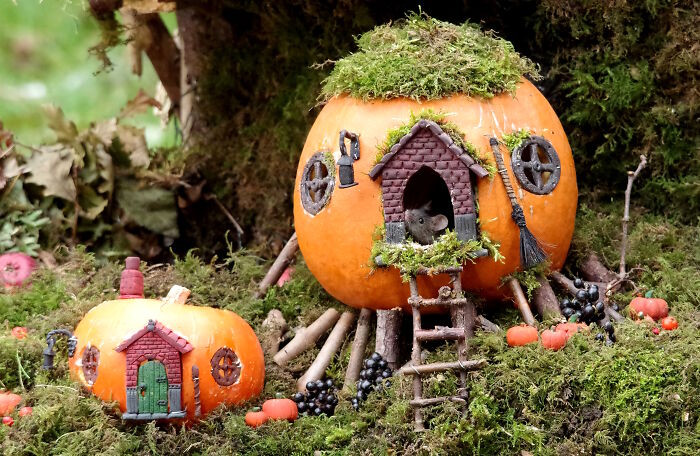
20. Cinderella Mouse In Her Pumpkin Carriage
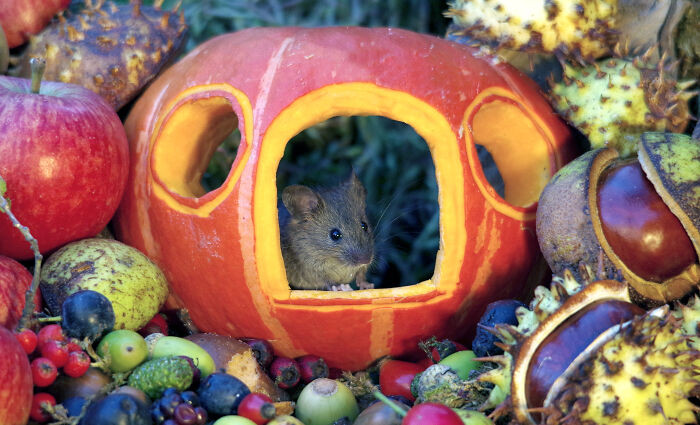
21. Another Scary Ghost Mouse
Encouraging Engagement
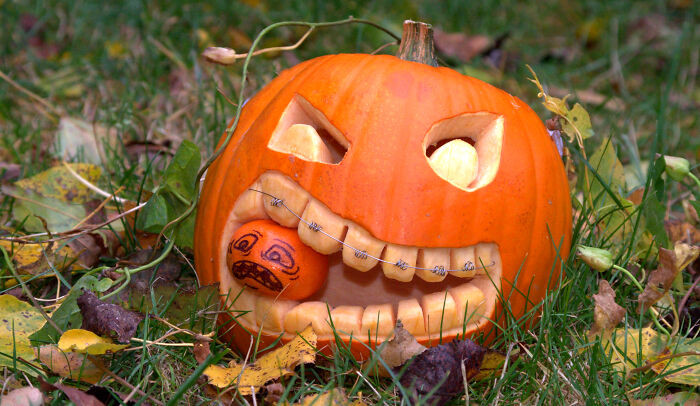
22. Scary Pumpkin
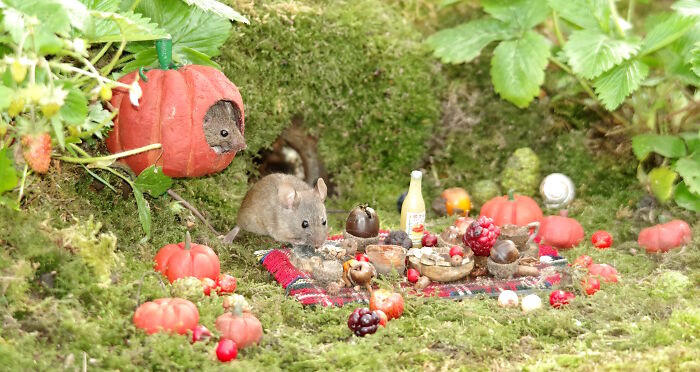
23. The Mice Are Having A Family Halloween Picnic
24.
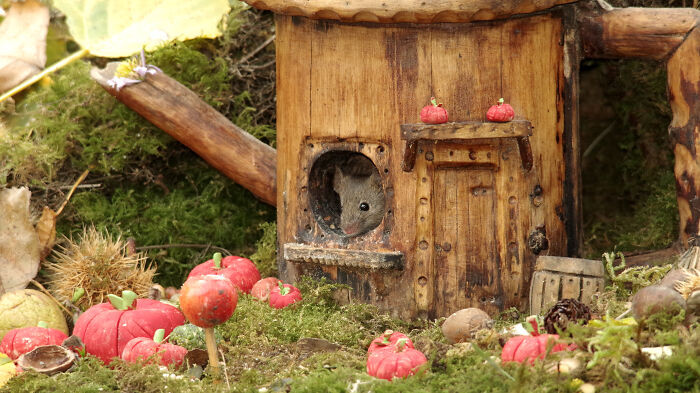
By the time the baby mice are trick-or-treating with their ghost costume, the whole garden feels like it’s hosting a holiday, while quietly doing the work of sheltering wildlife.
Simon Dell's whimsical creation of a Halloween village for wild mice in his Sheffield garden is not just a delightful spectacle but also an opportunity to observe the intricate social behaviors of these small mammals. By providing a controlled environment, Simon allows for the exploration of how mice interact and communicate within their tiny community. This initiative goes beyond mere entertainment; it offers valuable insights into their social dynamics, which can inform better practices in animal care and rehabilitation.
Moreover, Simon's project serves as an inspiring model for community involvement in wildlife conservation. By inviting others to appreciate and engage with nature in such a creative way, he fosters empathy towards these often-overlooked creatures. This kind of initiative can cultivate a deeper respect and responsibility for all living beings, encouraging a harmonious coexistence between humans and wildlife.
25. Pip-Squeak The Baby Mouse
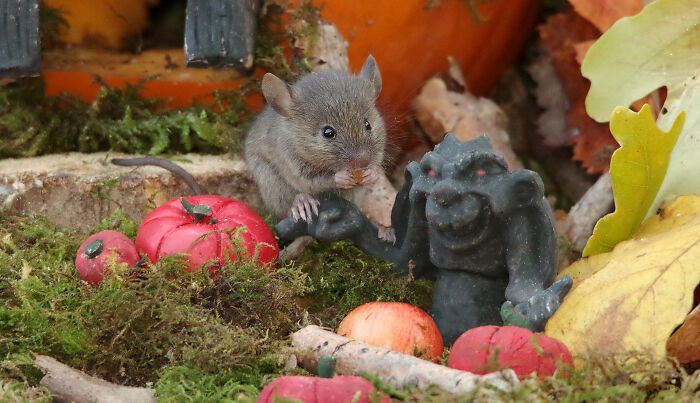
26. Mother Mouse Taking Her Baby Trick-Or-Treating
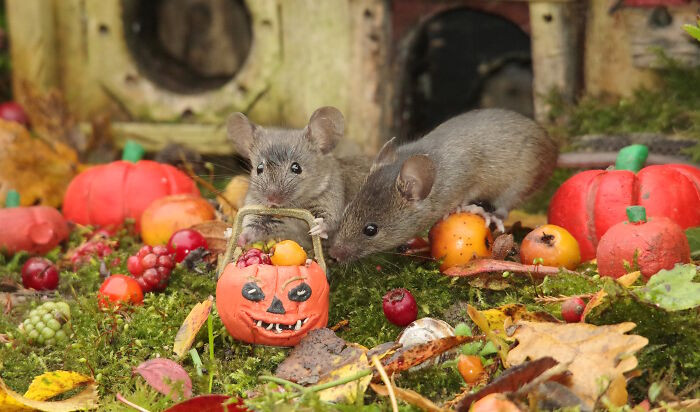
27. A Little Mouse Trick-Or-Treating Outside One Of The Mouse Homes
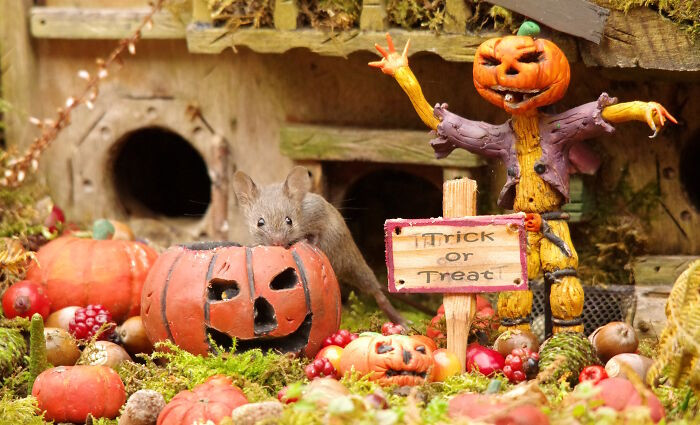
28. The Haunted Halloween Mouse House. Do You Dare To Enter?
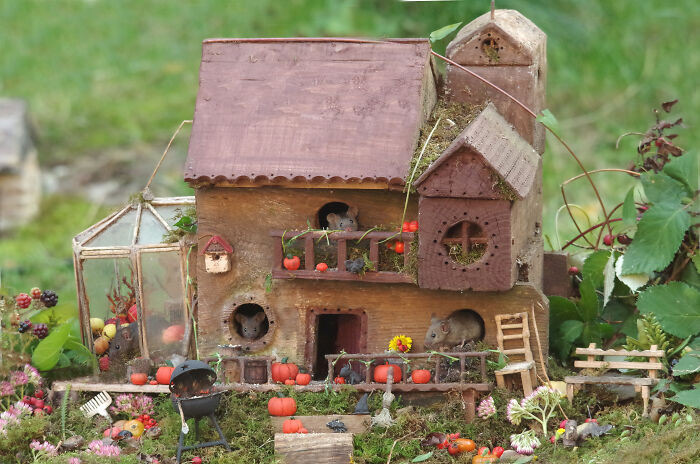
29. Squeak Or Treat
The next day, in the hopes that he would come back, Simon put a peanut beside the tree and fence where he came out and sat. And as he sat eating his peanut, he did—again, not really afraid of him.
It dawned on Simon then that he must need some shelter to protect him from neighborhood cats. So he constructed a simple little log-pile house, and that's about it.
The log pile gradually expanded into a whole village after George the Mouse went viral on the internet. It is still expanding and has the potential to evolve into a town or maybe a metropolis.
Simon Dell's initiative to create a Halloween village for wild mice in his Sheffield garden is a compelling example of how personal passion can blend with wildlife conservation. This unique project not only entertains but also highlights the significance of nurturing relationships with local fauna. By crafting intricate little homes for the mice, Simon demonstrates how hands-on creativity can foster a deeper appreciation for biodiversity. His efforts encourage the community to engage with their natural surroundings, promoting coexistence and understanding between humans and wildlife. Such imaginative endeavors can inspire others to observe and protect the creatures that share our environments, ultimately leading to more meaningful conservation efforts.
By Halloween night, Simon’s garden proves the scariest part isn’t the monsters, it’s how much life was already there.
For more tiny surprises, see how a mama cat adopted a mouse into her litter despite everyone’s doubts.
Share this article:





